
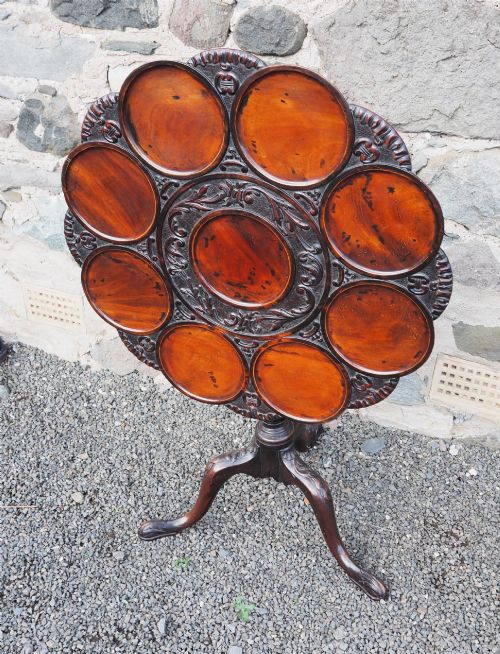
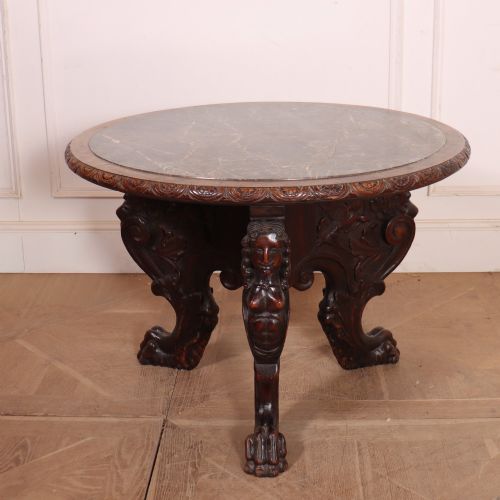
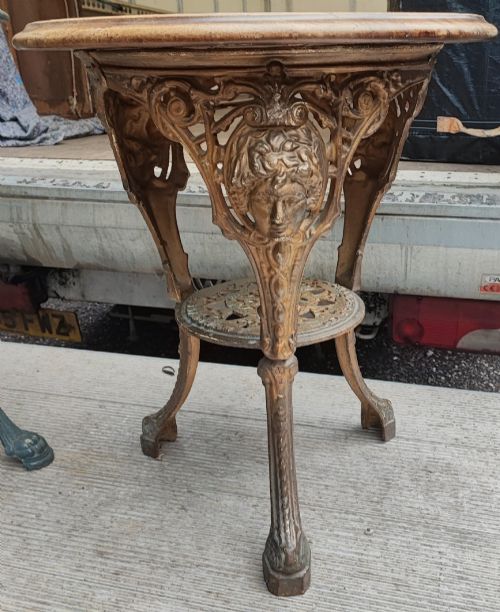
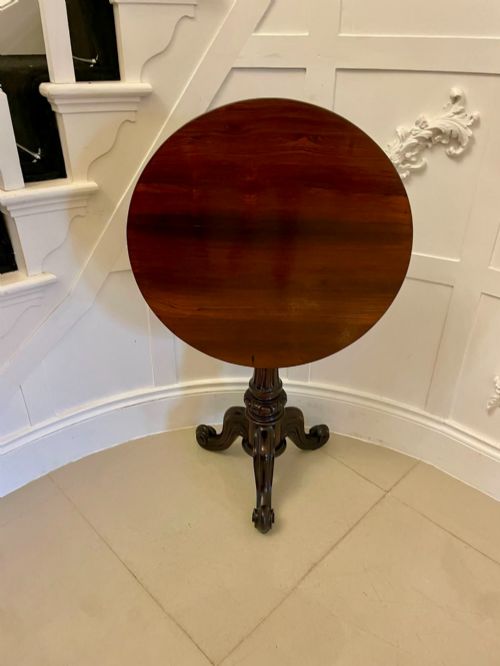
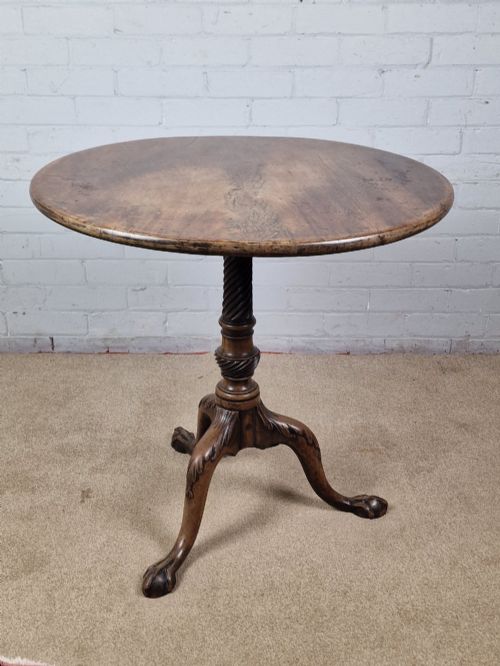


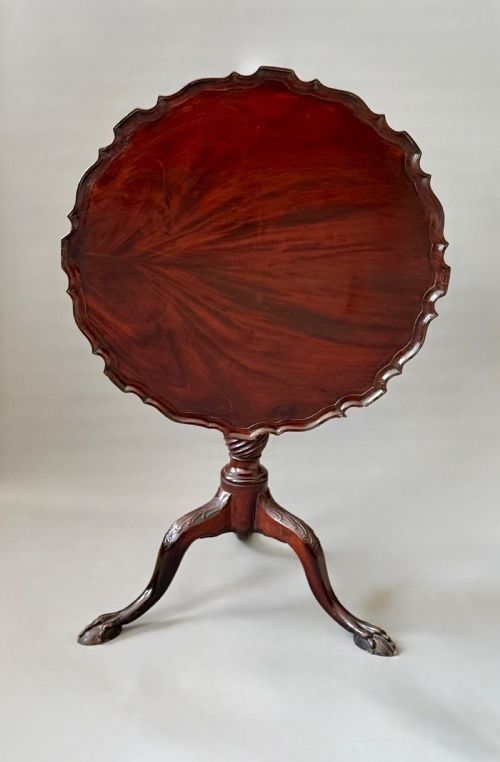
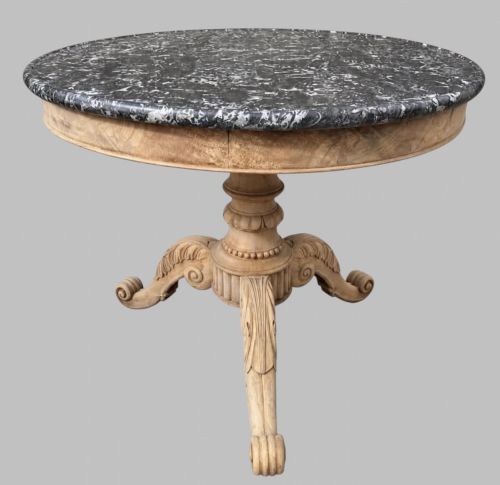
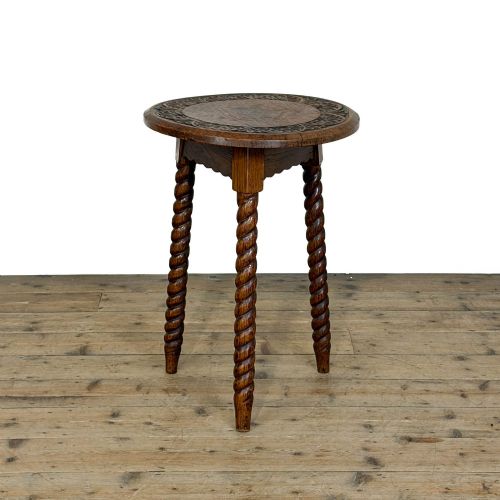
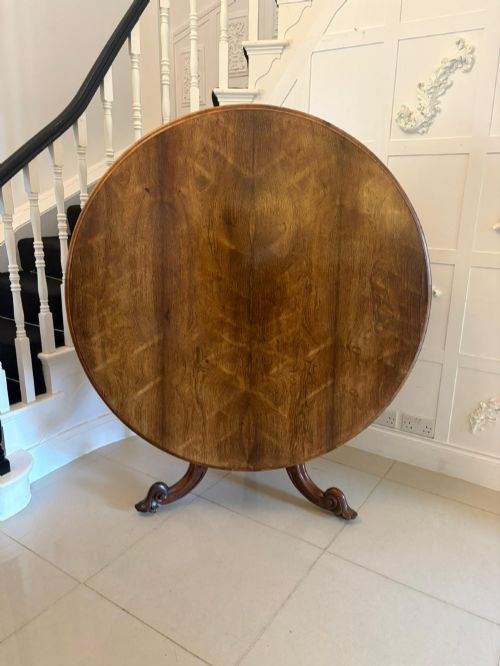
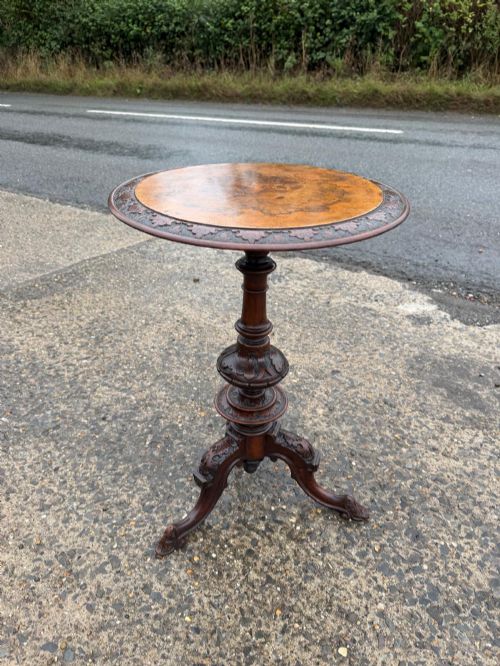
Carved Top Tripod Table
A carved top tripod table brings compact elegance to a corner, uniting a steady three-legged base with a detailed wooden surface.
Carved Top Tripod Table
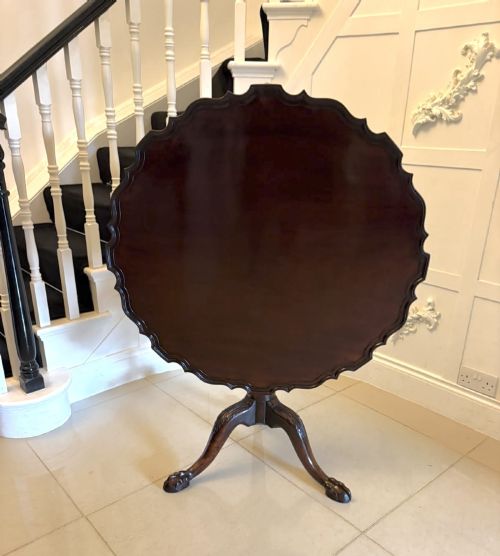
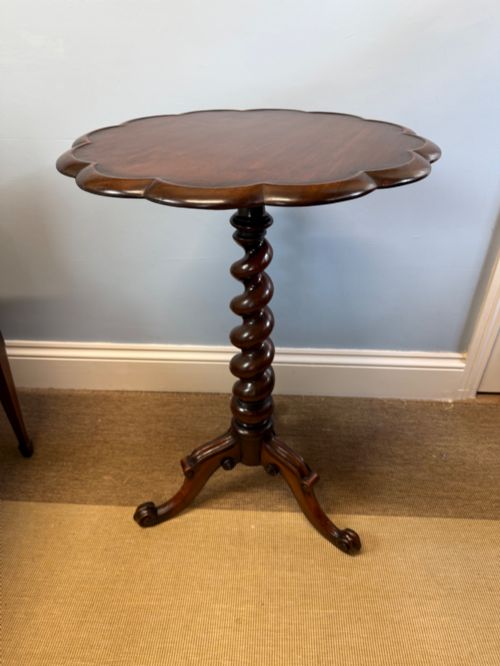
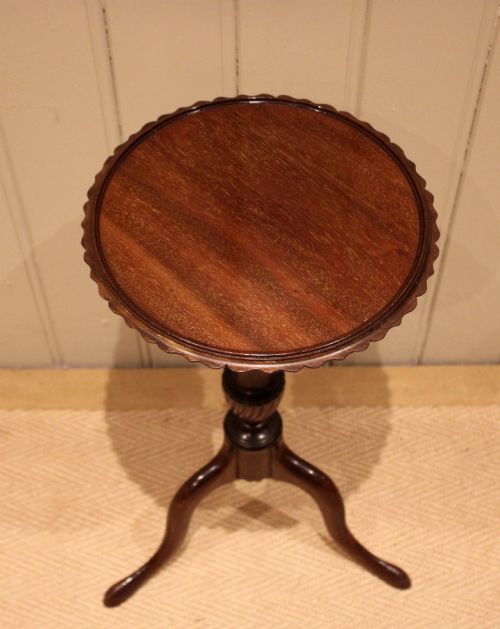
A carved top tripod table is a small support surface designed for wine, tea, or display, resting on three legs that diverge from a central pillar. These pieces appear frequently in mahogany and walnut, spanning periods from the 18th century through the Victorian era and into Edwardian revivals.
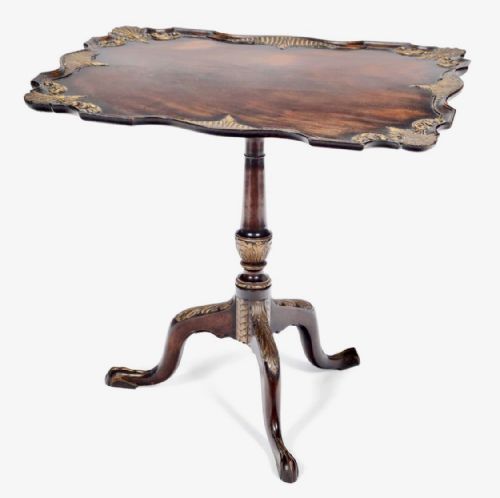
Forms range from simple circular lamp tables to tilt-top supper tables equipped with birdcage mechanisms or pie-crust edges. Examples emerge in various guises such as wine tables, occasional tables, and occasional furniture rooted in Georgian and Victorian workshops.
How they were made
Cabinetmakers constructed these tables using dense timbers like mahogany, walnut, and rosewood, often turning the central pillar on a lathe and shaping the tripod legs by hand. Carved details on knees, feet, and edges required precise chisel work by skilled artisans.
Many examples incorporate a tilt-top or snap-top mechanism with a birdcage block, allowing the top to swivel and fold flat against the pillar when not in use.
Some tilt-top tables double as subtle room dividers when folded flat against the wall.
What varies in quality
Quality rests in the crispness of the carving on the tripod base and the figured grain of the timber selected for the top. Subtle details such as parcel gilding, pie-crust moulding, and the mechanical precision of the birdcage tilt action distinguish finer examples from simpler utilitarian pieces.
Gillow
The Carved Top Tripod Table Glossary
- Tripod table
- A small movable table supported by a central column resting on three legs. This configuration prevents wobbling on uneven floors.
- Tilt top
- A hinged mechanism allowing the table top to pivot into a vertical position. This saved floor space in historical domestic interiors.
- Birdcage
- A wooden framework beneath the table top that permits the surface to rotate and tilt. It is typically found on finer 18th-century examples.
Carved Top Tripod Table: Frequently Asked Questions
What was a tripod table used for?
These tables served primarily for holding tea services, wine decanters, or reading lamps in domestic parlours and drawing rooms.
Their lightweight construction allowed servants to move them easily around the room as social needs changed during an evening.
How do I identify a tilt top mechanism?
Look underneath the table top for a wooden catch or a birdcage block that connects the pillar to the surface.
Lifting the catch releases the top so it can tilt vertically for storage against a wall.
Are these tables suitable for daily use?
Mahogany and walnut tripod tables offer sturdy surfaces for lamps or drinks in modern living spaces.
Care should be taken with antique polished finishes by using coasters to prevent moisture marks.
How can I tell an 18th-century table from a later revival?
Examine the timber shrinkage, hand-cut joinery, and the wear patterns on the underside of the base and feet.
Revival pieces from the Victorian and Edwardian eras often display machine-tooled elements and heavier proportions.