
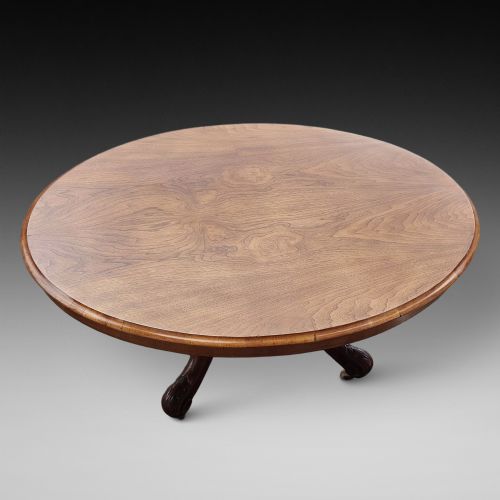


Carved Timber Low Table
A carved timber low table brings immediate warmth to a room, offering low-slung utility shaped by regional craftsmanship across centuries.
Carved Timber Low Table
A carved timber low table spans various regional traditions, taking the form of coffee tables, occasional tables, scholar's stands, and repurposed elements like bullock cart fragments and opium tables. These low surfaces appear across diverse historical periods, from eighteenth-century European examples to nineteenth-century Chinese Qing Dynasty pieces and colonial Indian takhats.
Buyers frequently encounter nineteenth-century pieces alongside early twentieth-century interpretations, including Danish painted coffee tables and English mahogany designs. The selection embraces distinct stylistic revivals and vernacular forms, ranging from Scandinavian country pieces to Chinese export and Georgian revival tables.
Functioning primarily as coffee tables or display stands, these low timber objects adapt easily to modern interiors while retaining their original regional character. The grouping also includes low stools and plant stands that share the same low-slung proportions and carved wooden construction.
Materials and construction methods
Makers utilised a variety of dense timbers, predominantly relying on hardwood, mahogany, teak, oak, elm, fruitwood, and walnut to construct these low tables. Brass accents occasionally appear on hardware or mounts, while certain stool variants incorporate fabric upholstery.
Construction techniques vary by region, combining traditional joinery with detailed surface carving seen in scholarly scholar's tables, ebonised finishes, and painted treatments. Artisans shaped these pieces from solid woods, adapting structural timbers and indigenous furniture types into functional low platforms.
Geographic origins span Chinese Qing Dynasty pieces, colonial Indian takhats, and Danish painted country tables.
Assessing quality and craftsmanship
Quality rests in the crispness and depth of the timber carving, the selection of dense hardwoods like hongmu or mahogany, and the integrity of the original construction. Superior examples display harmonious proportions and careful attention to surface finish, whether ebonised, polished, or retaining old paint.
The distinction between ordinary and exceptional pieces lies in the sophistication of the regional joinery and the preservation of original surfaces. Tables that maintain their authentic patination and structural cohesion stand apart from heavily altered or later assembled adaptations.
The Carved Timber Low Table Glossary
- Takhat
- A low, heavy wooden platform or table originating in India, traditionally used for sitting or lounging. These sturdy pieces often feature substantial carved timber framing.
- Ebonised
- Wood finished to resemble ebony through staining or painting a deep black. This treatment gained popularity in various nineteenth-century and early twentieth-century decorative schemes.
- Cross stretcher
- A structural wooden brace forming an X shape between the legs of a table or stool. It provides additional stability and rigid support to the lower frame.
- Jardiniere stand
- A decorative pedestal or low table designed to hold plants or floral arrangements. They frequently feature circular tops and carved supports.
Carved Timber Low Table: Frequently Asked Questions
How do I use a low table?
These low surfaces function naturally as central coffee tables in living spaces or as display platforms for objects and plants.
Their modest height also suits intimate seating arrangements and relaxed interior layouts.
What woods are commonly found?
Makers utilised various timbers including dense hardwoods, mahogany, teak, oak, elm, walnut, and fruitwood.
Some regional pieces incorporate painted finishes, ebonised treatments, or brass hardware details.
How do I identify the period?
Dating relies on construction methods, timber choice, tool marks, and stylistic indicators associated with nineteenth-century or earlier vernacular traditions.
Regional characteristics from Chinese Qing Dynasty pieces, colonial Indian workshops, or European country furniture further clarify the age.
Are repurposed items authentic?
Many low tables derive from older functional objects, such as opium tables or structural elements from bullock carts.
These repurposed pieces represent traditional regional recycling and practical adaptation of heavy timber.