
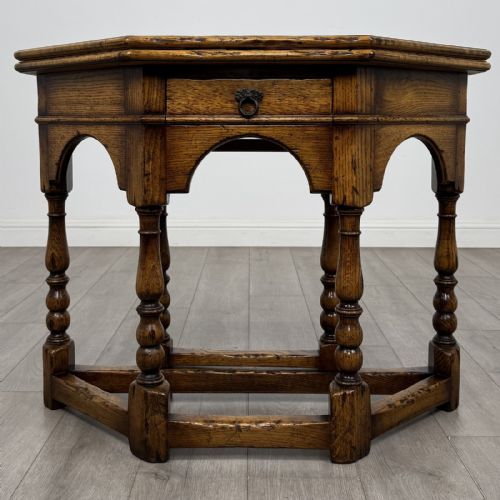
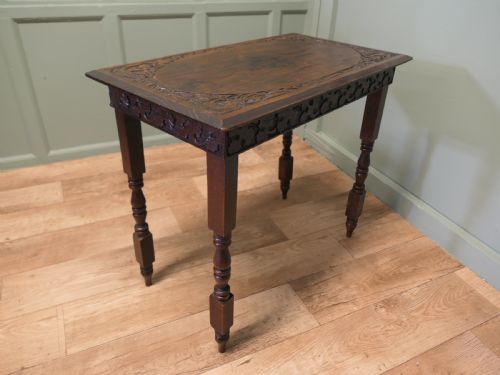
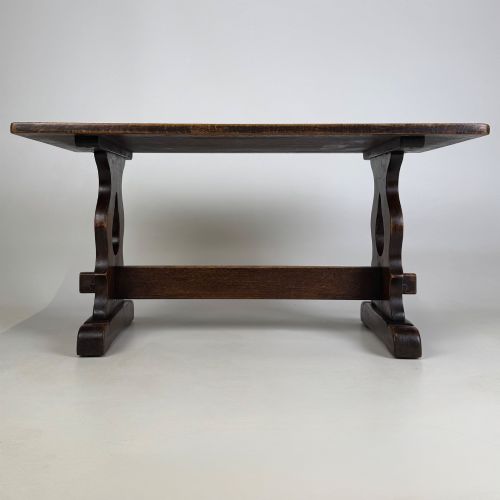
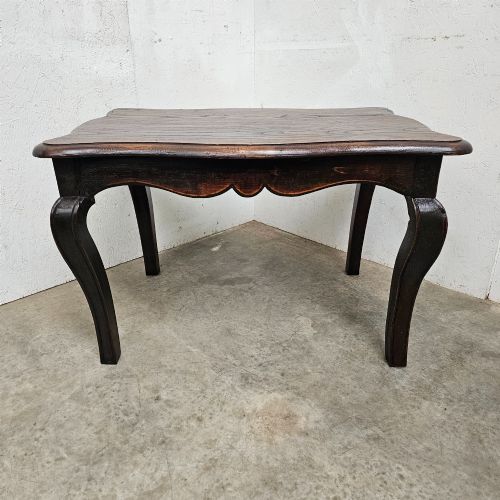


Rustic Carved Tea Table
A rustic carved tea table brings robust timber character and low proportions into a sitting room.
Rustic Carved Tea Table
A rustic carved tea table is a low surface built for informal gatherings, drawing from domestic traditions across European and global workshops. When you search for this phrase, you encounter low tables, side tables, and coffee tables designed for everyday utility rather than formal parlour display.
The pieces listed here span the eighteenth, nineteenth, and twentieth centuries, including Edwardian examples alongside earlier country furniture. Forms range from French chestnut low tables and Danish painted designs to English Arts and Crafts oak tables and Indian low pieces.
You are most likely to meet oak and pine constructions, alongside chestnut, walnut, teak, elm, and hardwood. Styles stretch across French Provincial, English Country, Jacobean Revival, and Scandinavian Country traditions.
How they were made
Makers utilised solid timbers such as oak, pine, walnut, and chestnut, often working by hand to shape boards and construct sturdy frames. Turned legs frequently support these low surfaces, while carved details add texture to aprons and edges.
Surfaces show various finishes including traditional paint, bleached pine, and polished hardwood, reflecting regional preferences from French provincial workshops to English country joinery.
Listings feature pieces spanning the eighteenth, nineteenth, and twentieth centuries, constructed from oak, pine, walnut, chestnut, teak, and elm.
What varies in quality
Quality rests upon the selection of timber and the integrity of the joinery rather than surface ornamentation alone. Heavier hardwoods like oak and walnut command attention for their durability and depth of grain.
The finesse of the carving and the balance of the proportions distinguish standard utility items from more considered regional pieces. Original finishes and honest patination significantly elevate the character of the timber.
The Rustic Carved Tea Table Glossary
- Low table
- A surface built lower than standard dining height, intended for serving tea or resting objects in a sitting area. These pieces often originate from various international domestic traditions.
- Occasional table
- A small, movable piece designed to be used as needed in different parts of a room. These items frequently feature simple timber construction and straightforward joinery.
- Jacobean Revival
- A nineteenth-century style imitating seventeenth-century English furniture characteristics. Pieces in this manner often display heavy turning and geometric carved motifs.
- Arts and Crafts
- A design movement prioritising handcraftsmanship and simple vernacular forms over mass production. Items from this tradition emphasise honest construction and natural materials.
- Bleached pine
- Timber treated to lighten its natural tone, a finish seen on various continental country pieces. This process creates a pale, uniform surface while retaining the grain pattern.
Rustic Carved Tea Table: Frequently Asked Questions
What is a rustic carved tea table?
A rustic carved tea table is a low timber surface designed for informal rooms, incorporating traditional joinery and carved details. These pieces originate from various country and revival traditions spanning multiple centuries.
They function practically as coffee tables or side tables while introducing tactile timber grain and historic character to modern interiors.
How were these tables used originally?
These low tables served domestic purposes in rural and urban homes alike, providing a stable surface for serving tea, meals, or household tasks. Their sturdy construction suited daily family life.
Over time, many of these formats adapted to contemporary living rooms as versatile coffee tables and display surfaces.
How do I live with a rustic carved tea table?
Integrating a rustic table into a modern space relies on balancing the heavy timber tones and patinated surfaces with simpler contemporary furnishings. Use coasters to protect aged wood finishes from moisture and heat.
Position the table where its low proportions and carved details can be appreciated without crowding the room's circulation space.
How can I tell the period of a table?
Dating relies on examining the timber species, tool marks, construction methods, and stylistic cues such as turned legs or carved motifs. Eighteenth-century pieces often display hand-sawn boards and pegged joinery.
Nineteenth-century and Edwardian examples frequently incorporate revival styles like Jacobean or Arts and Crafts, reflecting the manufacturing tastes of their era.