


Antique Wooden Floor Table
An antique wooden floor table brings low surfaces and rich timber into a room, offering both practical utility and distinct regional character.
Antique Wooden Floor Table
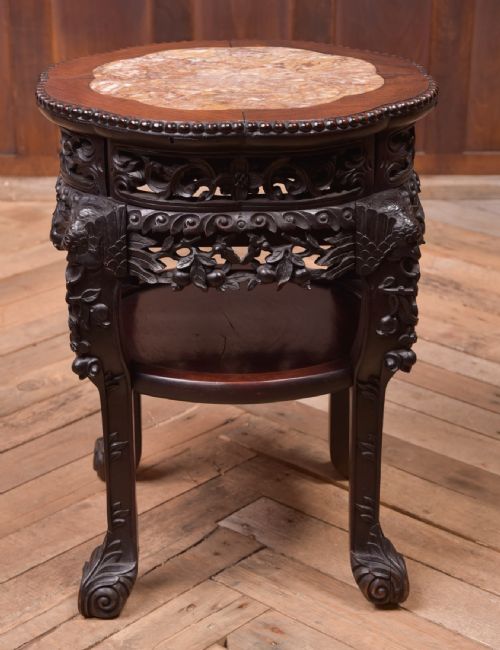
When you search for an antique wooden floor table, you encounter low forms that often draw from specific global traditions rather than standard European cabinetry. These pieces span the nineteenth century and the early twentieth century, incorporating styles such as Colonial Indian low tables and Chinese Qing Dynasty carved vase stands.
The selection on this page relies heavily on low coffee tables and opium tables alongside occasional low writing desks. They provide an unconventional footprint for a living space, sitting low to the ground and offering solid timber construction.
Materials and construction
Makers utilised dense hardwoods such as mahogany, teak, oak, and elm to build these low tables, ensuring structural integrity for daily use close to the floor. These timbers were frequently carved by hand, showing deep relief work as seen on Chinese marble-top stands and Indian low tables.
Joinery techniques relied on traditional framing and pegging suitable for solid wood furniture that needed to withstand pressure without modern adhesives. Secondary materials like brass and marble occasionally appear, adding contrast to the heavy wooden surfaces.
Some nineteenth-century tables served as opium desks, meaning your morning coffee now sits on furniture with a genuinely dramatic past.
Assessing quality and craftsmanship
Quality in these low tables rests primarily on the crispness of the hand carving and the selection of the timber grain. Finer examples display deeply undercut motifs and tight, well-fitted joinery that remains stable across the centuries.
The integrity of the original surface finish dictates the desirability of a piece. Tables retaining their early patination and honest wear outrank examples that have undergone heavy stripping or unsympathetic modern refinishing.
The Antique Wooden Floor Table Glossary
- Low table
- A piece of furniture standing significantly lower than standard dining or writing height, often designed for sitting cross-legged or on floor cushions. These forms are common in Asian and colonial domestic settings.
- Opium table
- A traditional low wooden table originating from East or Southeast Asia, historically used for resting smoking paraphernalia or serving tea. They feature sturdy legs and simple, clean lines carved from solid hardwood.
- Takhat
- A heavy, low wooden platform or table originating from India, typically constructed from robust hardwoods and utilised for seating or display. They often display intricate hand-carved borders and panels.
- Patina
- The surface sheen and softening of edges developed by antique wood through decades of handling, polishing, and natural ageing. A good patina indicates genuine age and careful maintenance.
Antique Wooden Floor Table: Frequently Asked Questions
What is an antique wooden floor table?
These are low-profile tables designed to sit near the floor, drawing from nineteenth-century Asian, colonial, and traditional domestic styles.
They offer an alternative to standard coffee tables, bringing solid timber and regional craftsmanship into contemporary interiors.
How were low wooden tables used?
Historically, these low surfaces served multiple domestic purposes including tea service, writing, and general household display.
Today, they function well as unique coffee tables or accent pieces in modern living spaces.
What timbers should I look for?
The listings feature dense hardwoods such as mahogany, teak, oak, and elm.
These durable woods support the low-slung architecture and heavy carving characteristic of the period.
How do I date these tables?
Dating relies on examining the construction methods, tool marks, timber shrinkage, and the style of the carving.
Nineteenth-century examples often exhibit hand-cut joinery and aged patination distinct from later reproductions.