


Carved Timber Hallway Seating
Carved timber hallway seating encompasses substantial oak, mahogany, and walnut benches, settles, and chairs designed for period entrances.
Carved Timber Hallway Seating
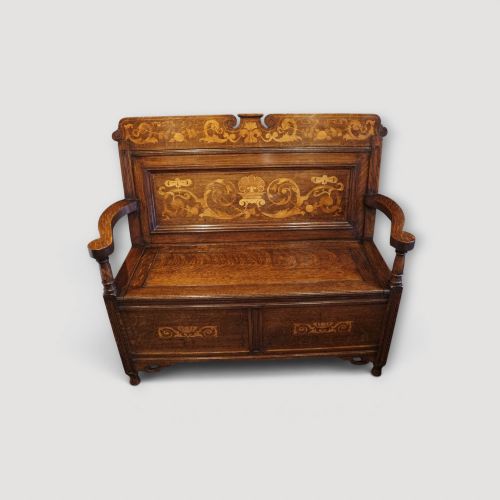
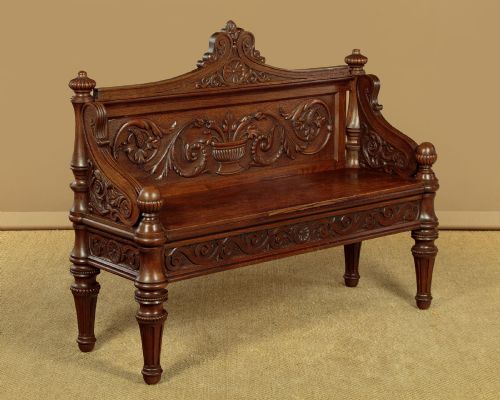
Carved timber hallway seating ranges from individual chairs to long benches and high-backed settles intended for entryways and reception spaces. The pieces appearing here span the eighteenth century, the Victorian era, and the early twentieth century, showing periods such as the Regency and Edwardian years alongside revivalist movements.
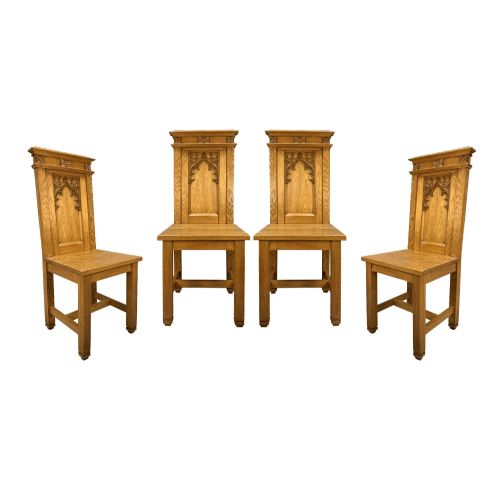
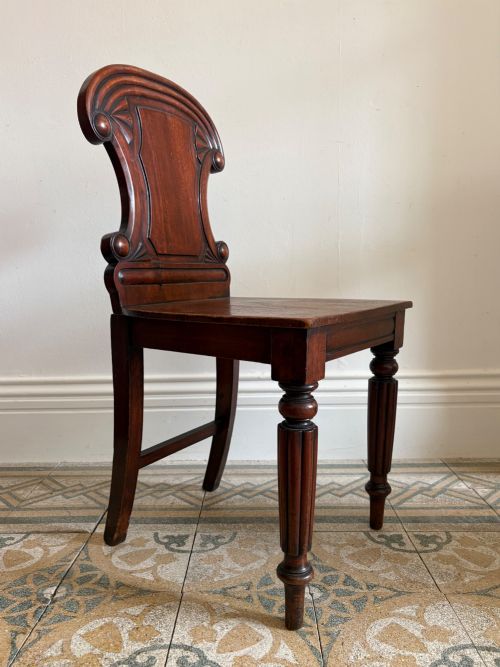
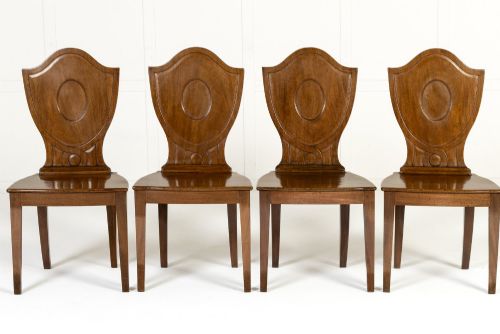
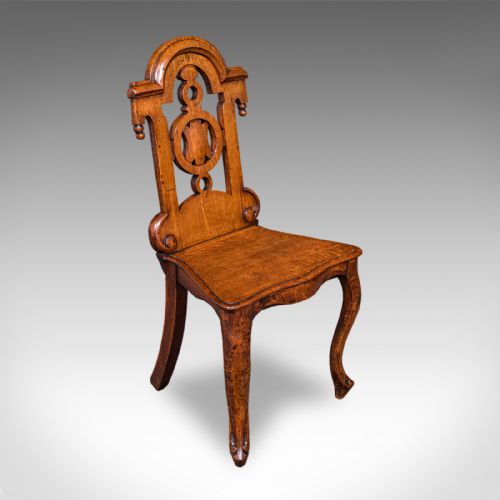
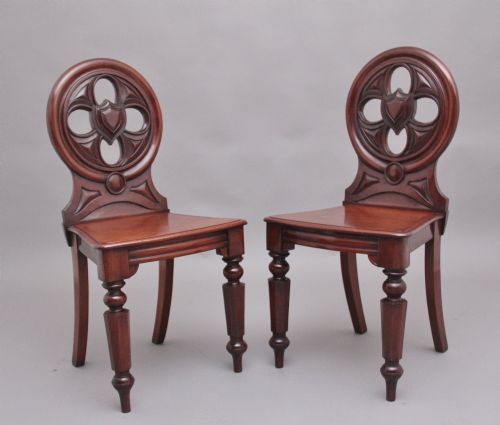
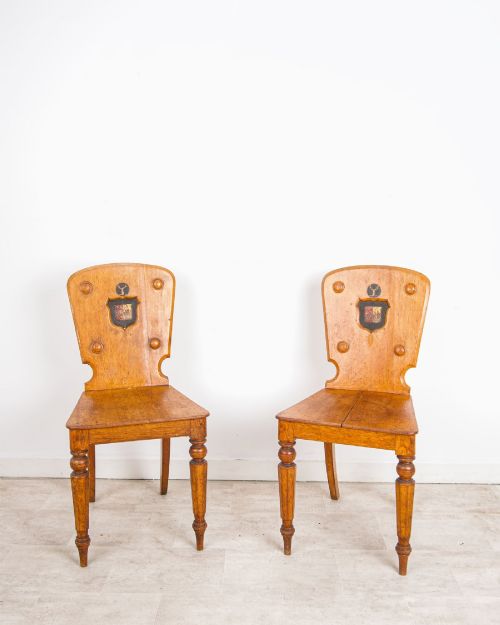
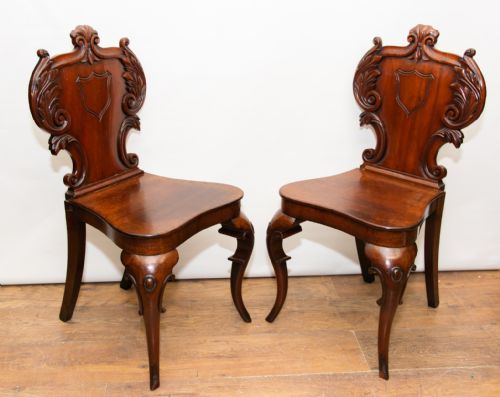
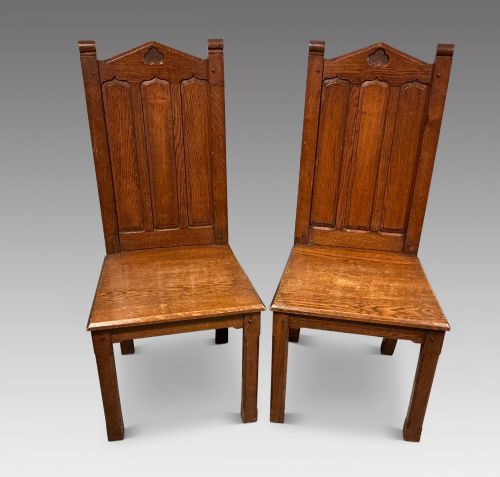
Chairs dominate the selection, often appearing in pairs or sets of four with solid wooden seats and carved backs featuring heraldic shields, shell motifs, or gothic tracery. Larger alternatives include structural oak benches, elm country house seats, and settles incorporating shoe storage or high protective wings.
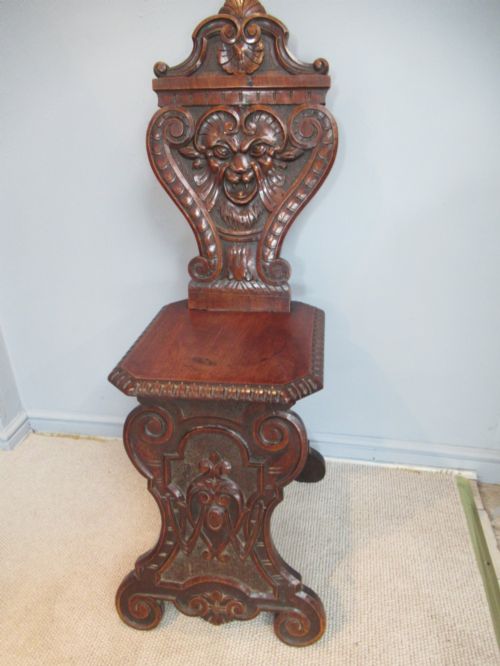
Origins stretch across Britain, Ireland, and continental Europe, incorporating regional variations like Black Forest carving, Welsh high-backed settles, and Italian oak craftsmanship. Buyers encounter both austere domestic forms and heavily ornamented reception furniture designed to impress visitors.
Distinctions in quality and execution
The standard of carving dictates much of the distinction between pieces, moving from stiff, mechanical stamping to deep, confident chiselling that brings out the grain of the oak or mahogany. Crisp definition in heraldic shields, shell backs, and gothic tracery reveals the hand of a skilled maker.
Proportion and timber selection also divide utilitarian workshop output from ambitious cabinet work. Dense, richly figured mahogany and quarter-sawn oak retain their structural integrity and surface depth far better than secondary timbers prone to warping.
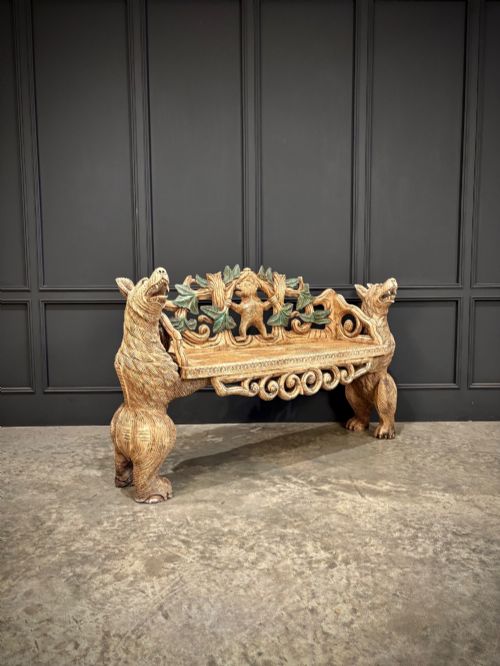
A carved Black Forest bear bench stands ready to hold hats and gloves with ursine persistence.
Holland and Sons·Gillows
The Carved Timber Hallway Seating Glossary
- Settle
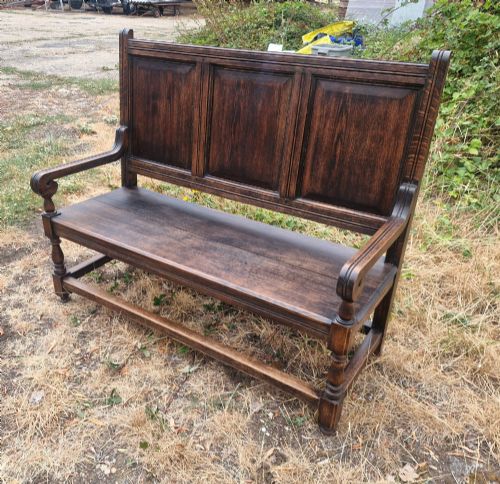
- A wooden bench with a high back, solid arms, and often a storage compartment beneath the seat. This form protected sitters from draughts in entrance halls before central heating.
- Tracery
- Openwork or ornamental stonework-inspired patterns carved into wood, commonly found in Gothic revival furniture. It mimics the stone window designs of medieval ecclesiastical architecture.
- Trefoil
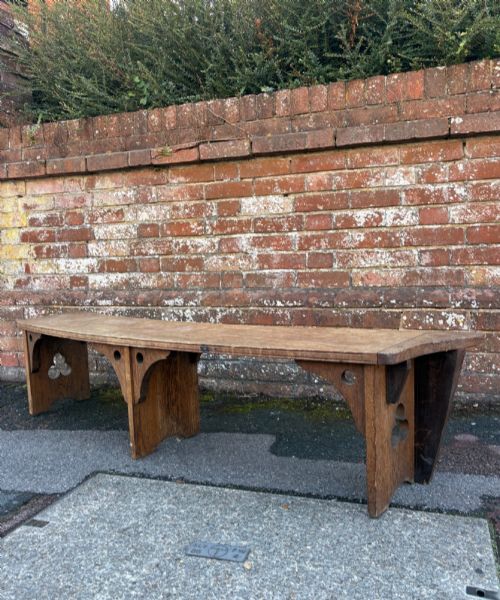
- A three-lobed ornamentation resembling a clover leaf, frequently carved into the supports or backs of nineteenth-century gothic revival seating. It serves as a geometric decorative accent.
- Quarter-sawn
- Timber cut radially from the growth rings, producing a stable board with prominent medullary ray figuring. This method was prized for high-grade oak furniture.
- Elm
- A tough, interlocking-grained timber traditionally used for country house benches and rustic seating. Its resilience prevents splitting under heavy strain.
Carved Timber Hallway Seating: Frequently Asked Questions
What is carved timber hallway seating?
Carved timber hallway seating comprises wooden chairs, benches, and settles made for entrances and reception rooms. These pieces combine structural utility with decorative carving characteristic of their period.
Items range from single mahogany hall chairs to large oak settles and benches spanning multiple centuries of craftsmanship.
How were hall chairs used?
Hall chairs served primarily as formal seating for visitors waiting in reception areas or entrance halls rather than for long lounging. Their solid wooden seats discouraged lingering, keeping visitors upright and prompt.
They also functioned as decorative statements displaying family crests, heraldry, or the stylistic tastes of the household.
How do I identify Victorian pieces?
Victorian hallway seating often displays heavy proportions, dark oak or mahogany timbers, and revivalist motifs such as Gothic tracery or Jacobean carving. The era favoured solid construction and elaborate decorative backrests.
Examining the depth of the hand-carving and the construction methods underneath helps distinguish nineteenth-century production from later copies.
How do I care for antique wood?
Antique timber seating requires stable indoor humidity levels away from direct heat sources and strong sunlight to prevent the wood from drying and splitting. Regular dusting with a dry cloth maintains the surface.
Occasional application of appropriate wax polish nourishes the grain without building up heavy chemical residues on historical finishes.