

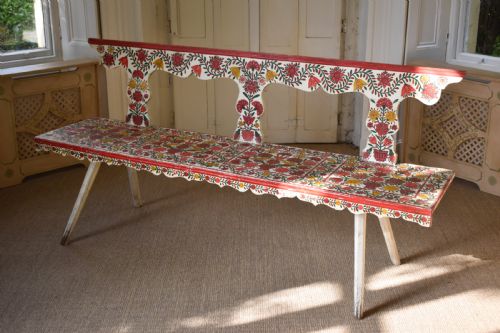
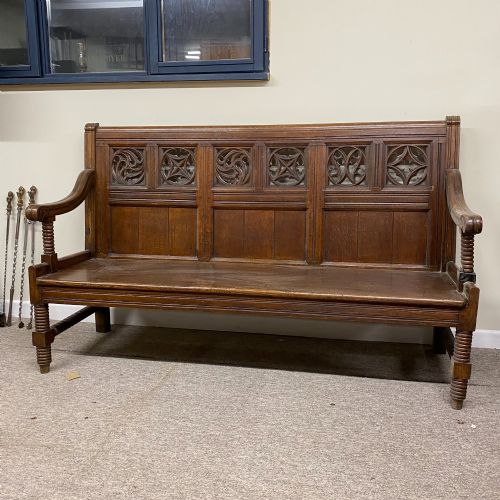
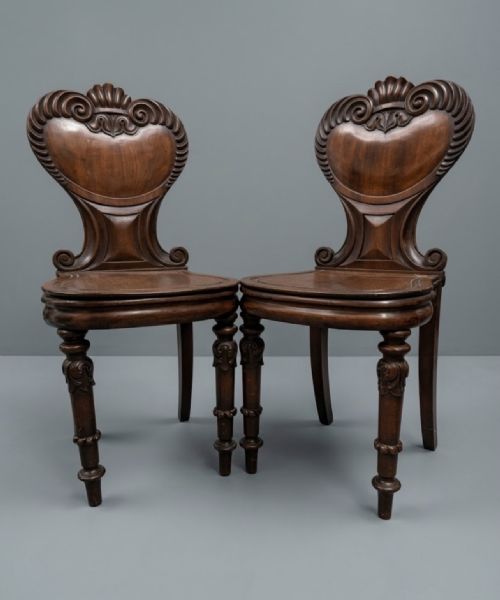
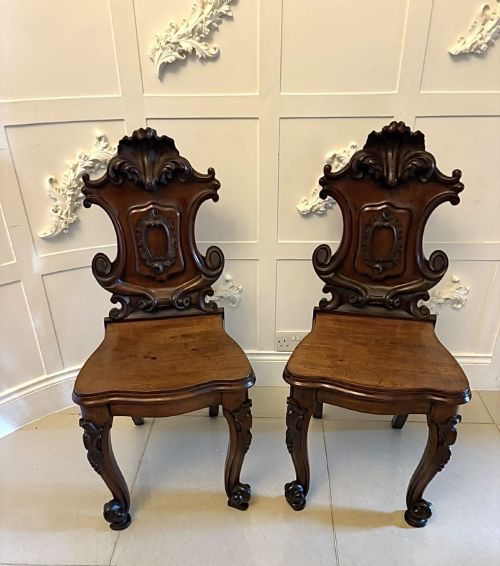


Carved Timber Hall Seat
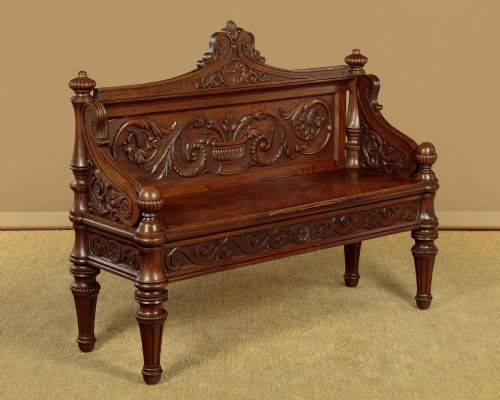
A carved timber hall seat offers an imposing welcome to an entranceway, combining sturdy utility with decorative period carving.
Carved Timber Hall Seat
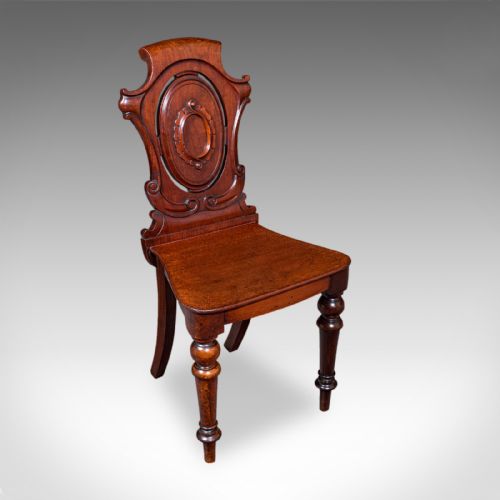
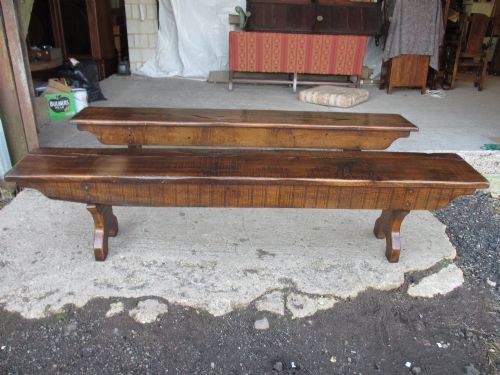
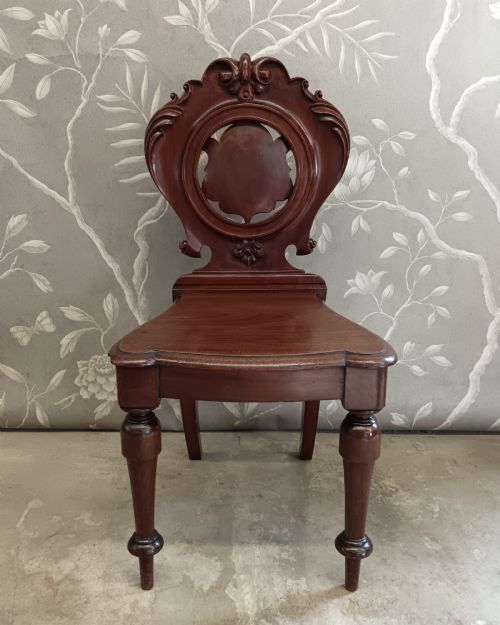
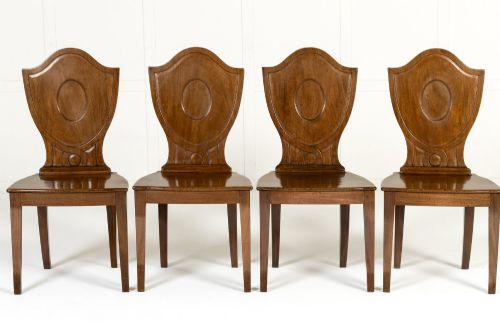
A carved timber hall seat encompasses everything from a single wooden hall chair to a large oak settle or bench, designed primarily for entranceways and reception spaces. These pieces appear frequently across the Victorian and 19th-century periods, alongside earlier George III, Regency, and 18th-century examples.
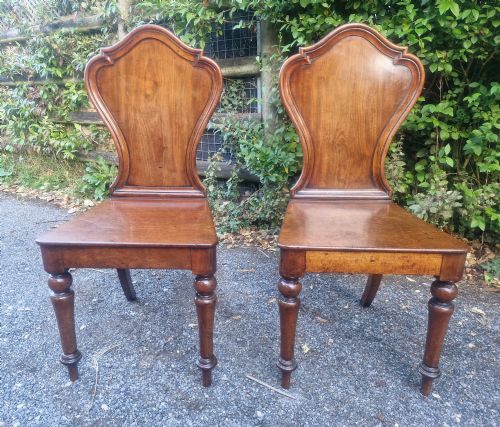
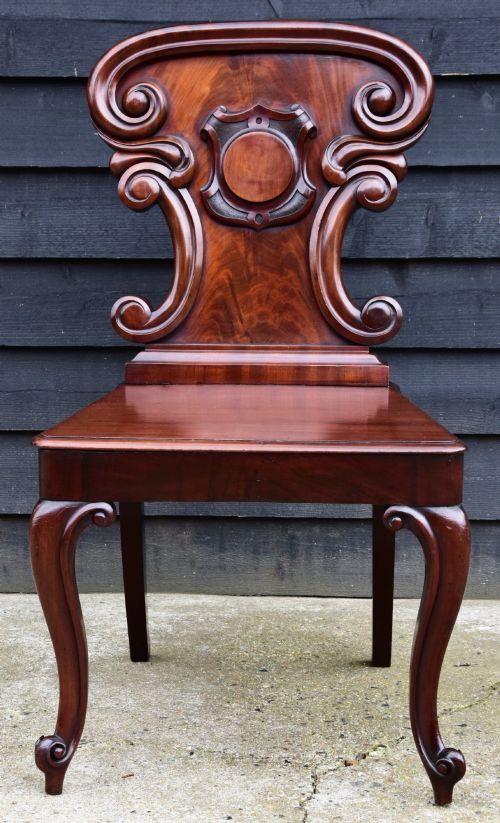
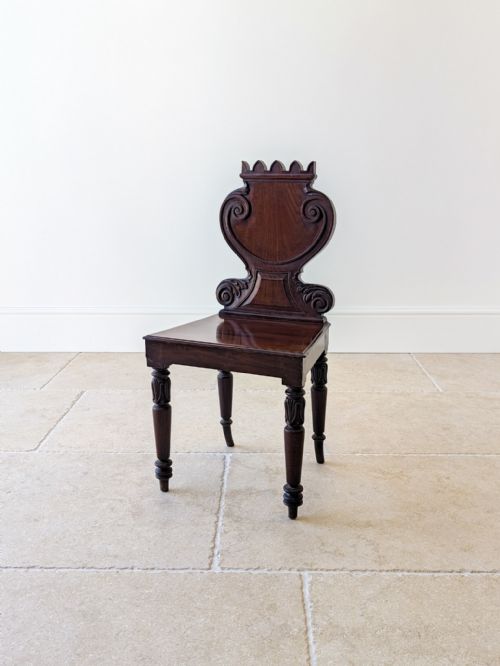
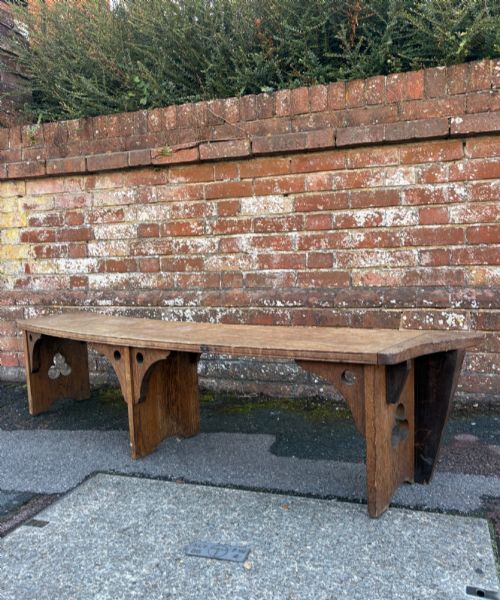
The version most commonly met on this page is the wooden hall chair, typically constructed from mahogany or oak, featuring a carved shield back or heraldic detail. Longer benches and settles also appear, utilising panelled construction and trefoil supports.
Origins span English, Scottish, Spanish, and Italian workshops, reflecting diverse regional tastes from Gothic Revival to Jacobean Revival and Grand Regency styles.
Distinctions in Execution
The distinction between standard examples and superior pieces rests on the depth and crispness of the hand carving, particularly around heraldic shields, gothic tracery, and structural supports. Timber selection also dictates quality, with well-figured mahogany or quarter-sawn oak elevating a piece.
Proportion and integrity of form separate ordinary seating from exceptional regional or attributed items, where balanced design meets robust, honest construction.
Carved Timber Hall Seat Retail Price Guide 2026
Typical asking prices for carved timber hall seat among the pieces listed under this phrase on Sellingantiques today, from the lower quarter to the upper quarter. They describe what is for sale here now, not the wider market.
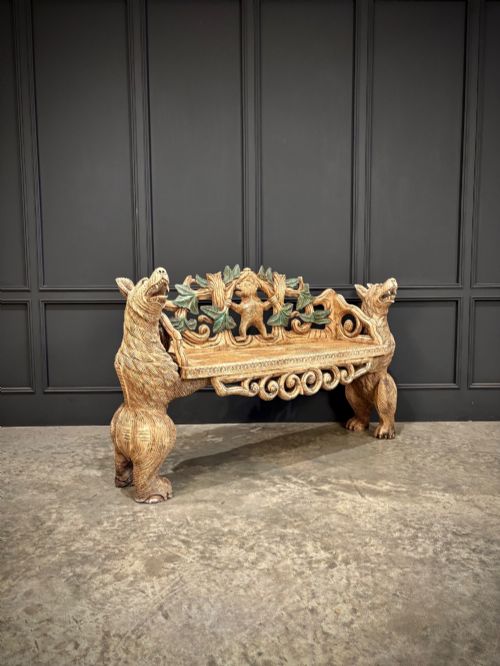
Among the formal timber seats, a Black Forest bear bench stands guard with two carved wooden occupants.
The Carved Timber Hall Seat Glossary
- Hall chair
- A rigid wooden seat placed in an entrance hall, usually featuring a solid timber seat and a carved back bearing crests or shields.
- Settle
- A wooden bench with a high panelled back, solid armrests, and often a storage box beneath the seat.
- Trefoil
- A three-lobed decorative ornament resembling a clover leaf, commonly pierced through Gothic Revival chair backs.
- Gothic Revival
- An architectural and decorative style drawing inspiration from medieval design, featuring pointed arches and tracery.
- Armorial
- Relating to heraldic arms or crests, frequently carved into the wood of formal reception seating.
Carved Timber Hall Seat: Frequently Asked Questions
Where were carved timber hall seats placed?
These pieces sat primarily in grand entrance halls, vestibules, and reception areas of period houses.
They served as functional seating for visitors waiting to be announced rather than for long periods of lounging.
How do I care for antique wood?
Keep wooden seats away from direct heat sources and sudden temperature shifts to prevent timber splitting.
Apply a traditional beeswax polish occasionally to nourish the grain and maintain the surface sheen.
Are these seats comfortable?
Original hall seating prioritised upright posture and architectural presence over soft cushioning.
Most examples feature rigid wooden seats, though some incorporate loose squab cushions for added comfort.
How can I tell the period?
Examine the timber selection, tool marks, and specific decorative vocabulary such as Regency curves or Victorian Gothic tracery.
Construction methods underneath the seat often reveal the age and regional workshop traditions.