

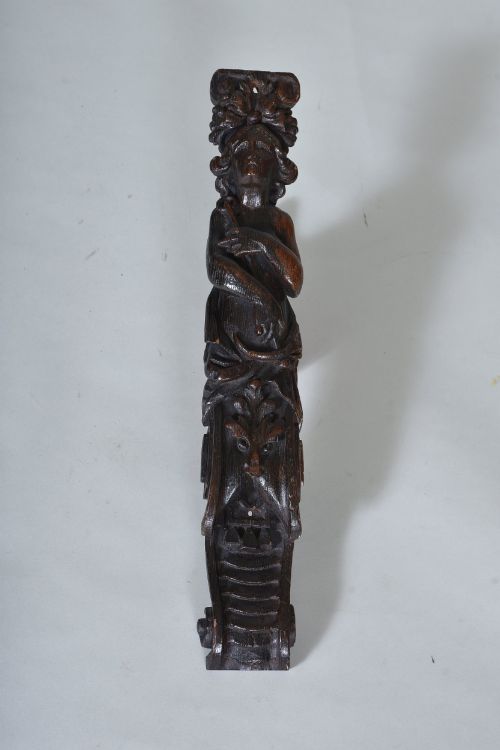
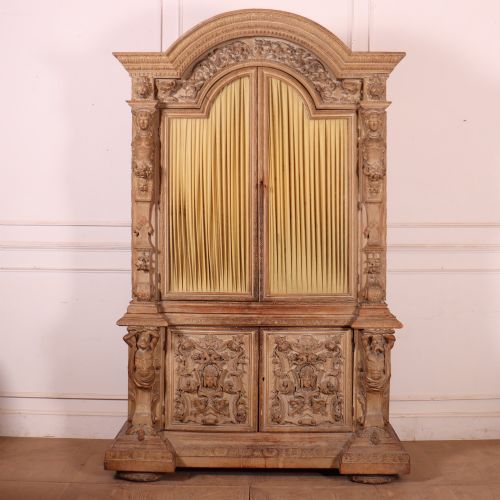
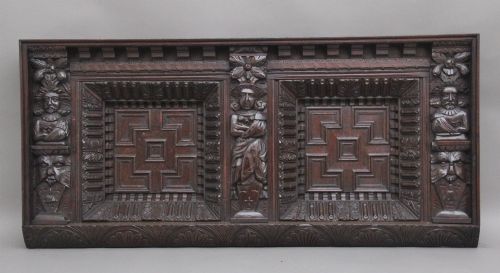


Carved Timber Caryatids
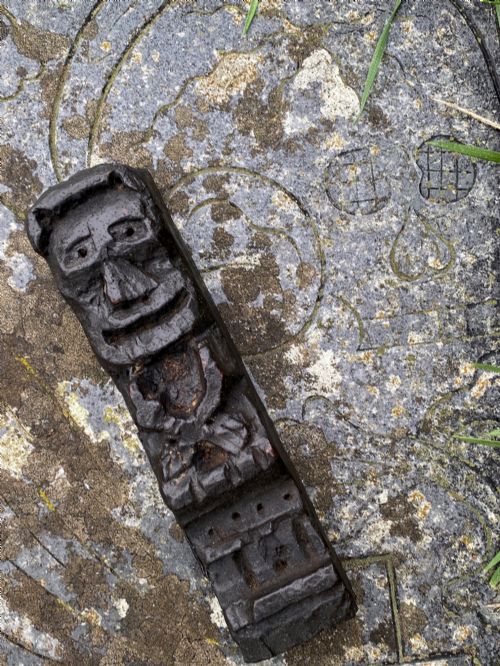
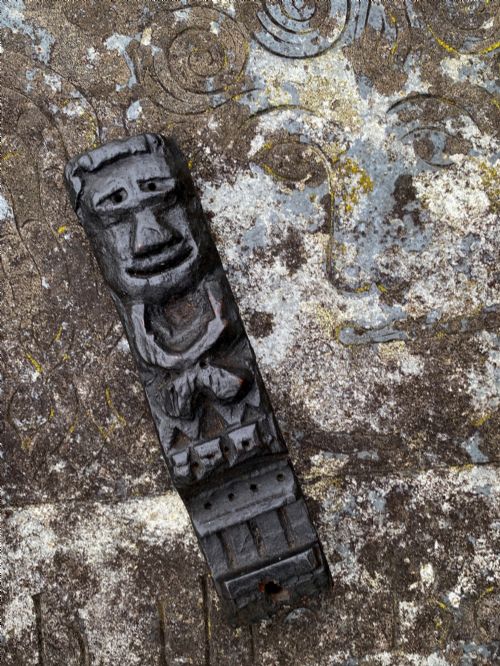
These carved timber caryatids are sculptural support figures hewn from oak, walnut, chestnut, and hardwood, offering classical form and architectural presence.

Carved Timber Caryatids
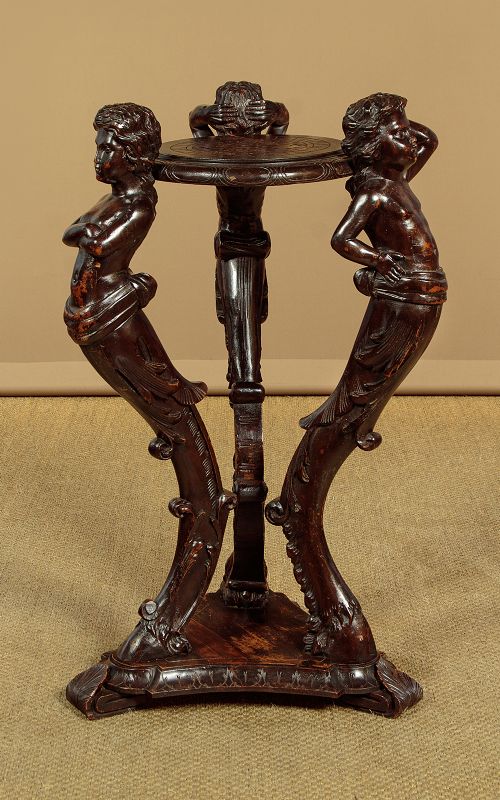
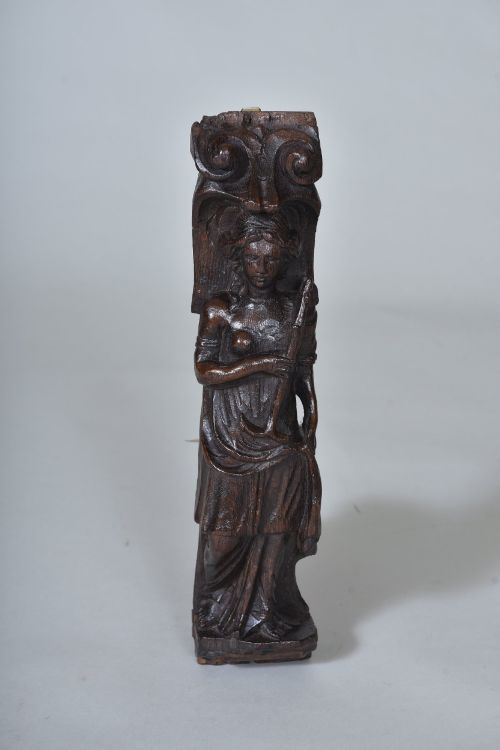
When you search for carved timber caryatids, you encounter architectural salvage, wall reliefs, pedestals, and standalone sculptures originating across the sixteenth, seventeenth, nineteenth, and twentieth centuries. The pieces range from single figures of ladies with folded arms to crouching figure stands and overmantles.
You are most likely to meet seventeenth-century oak carvings and sixteenth-century walnut examples reflecting Jacobean, Italian Renaissance Revival, and Flemish Renaissance styles. These sculptural elements frequently function as corbels, pedestals, or decorative supports integrated into larger furniture and interior woodwork.
How they were made
Many works incorporate joined sections for larger architectural contexts, such as overmantles and vitrines, whilst freestanding figures and pedestals rely on the structural integrity of the heavy wood itself. Surfaces remain unpainted or display historic patination developed over centuries of exposure.
Carved Timber Caryatids Retail Price Guide 2026
Typical asking prices for carved timber caryatids among the pieces listed under this phrase on Sellingantiques today, from the lower quarter to the upper quarter. They describe what is for sale here now, not the wider market.
Listings feature woods including oak, walnut, chestnut, and African hardwood across the sixteenth, seventeenth, eighteenth, and nineteenth centuries.
What varies in quality
Depth of relief and anatomical proportion distinguish the finer carvings from simpler vernacular work, with master carvers achieving realistic movement in limbs and fabric. The crispness of the chisel work dictates visual impact, separating sharp Renaissance revival pieces from worn architectural fragments.
The choice of dense timbers like walnut and early oak allows for sharper detail that survives centuries of handling, whereas softer or less stable hardwoods may exhibit greater weathering and loss of original contour.
Hugues Sambin
The Carved Timber Caryatids Glossary
- Caryatid
- A sculptured female figure serving as an architectural support in place of a column or pilaster. These figures often appear on pedestals, chimneypieces, and furniture.
- Herm
- A carved bust or figure stemming from a plain pillar, tapering toward the base. This form originates from ancient boundary markers.
- Term
- A pedestal or support that narrows toward the bottom, frequently topped by a human bust or upper torso. sixteenth-century French designers popularized this motif.
- Corbel
- A structural piece of stone or timber projecting from a wall to support a weight. In wood, these often take figurative or grotesque sculptural forms.
- Overmantle
- A decorative framework or panel placed directly above a fireplace mantel. These often incorporate carved wooden figures and architectural panels.
Carved Timber Caryatids: Frequently Asked Questions
What is a caryatid?
A caryatid is a sculpted human figure used as a structural support column in architecture and furniture. They carry weight on their heads or shoulders in place of traditional pillars.
In these listings, they appear as standalone wood carvings, furniture elements, and wall supports dating from the sixteenth century onward.
How were they used?
These carved figures served as functional architectural supports and decorative elements within grand interiors. They framed fireplaces, held up overmantles, and formed the bases of display furniture.
Some pieces functioned as corbels projecting from walls, while others formed the structural uprights of pedestals and hall chairs.
What woods were used?
Carvers utilised dense timbers capable of holding fine detail under structural loads. Oak and walnut dominate the European pieces from the sixteenth and seventeenth centuries.
Later works and non-European items employ chestnut and African hardwoods, each offering distinct grain patterns and weights.
How do I date them?
Dating relies on stylistic markers from periods such as the Jacobean, Flemish Renaissance, and Italian Renaissance Revival. Tool marks, wood shrinkage, and natural patination provide physical evidence of age.
Garment styles, such as folded arms and specific drapery folds, help place figures into centuries like the sixteen hundred or eighteen hundred.
How do I display them?
Standalone figures and pedestals require stable, flat surfaces away from direct heat sources that could dry out the historic timber. Wall reliefs and architectural fragments need secure fixings suited to heavy wood.
Allowing space around the sculpture highlights the depth of the carving and its three-dimensional form.