

Carved Tier Stand
A carved tier stand brings multi-level display space into a room through carved woodwork from the nineteenth and early twentieth centuries.
Carved Tier Stand
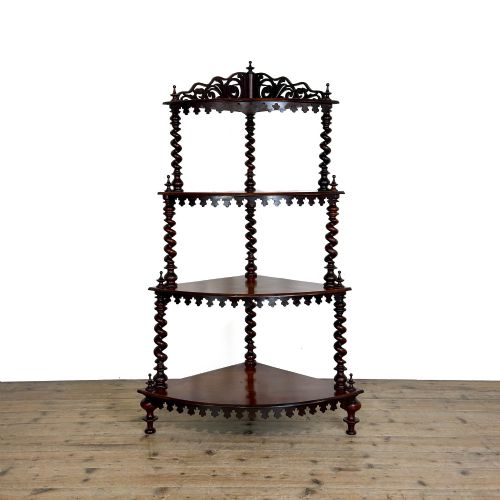
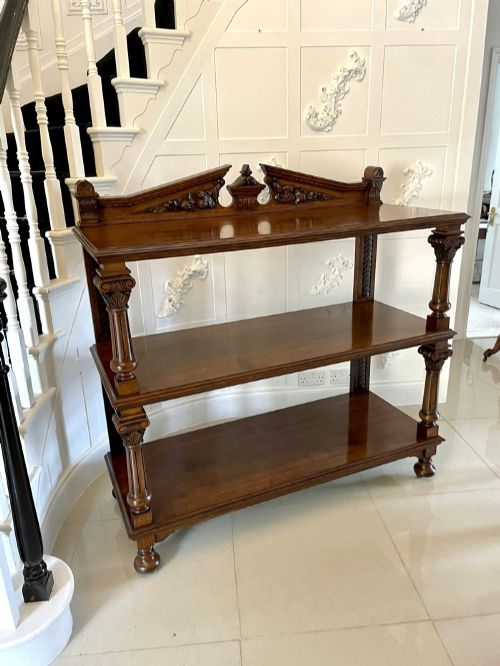
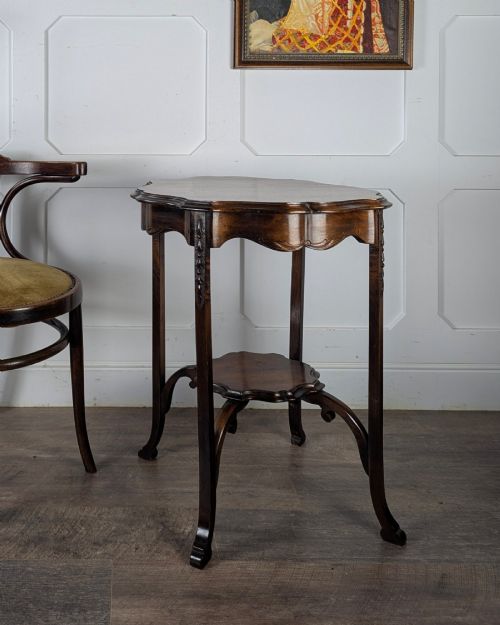
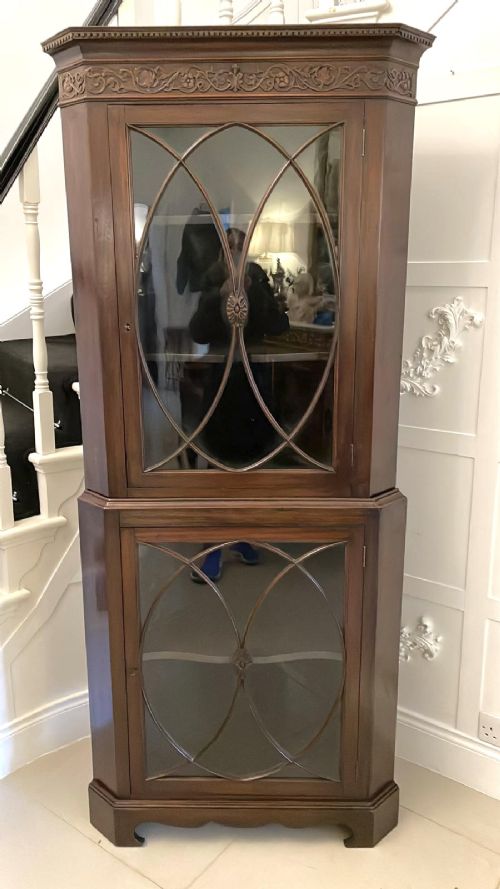
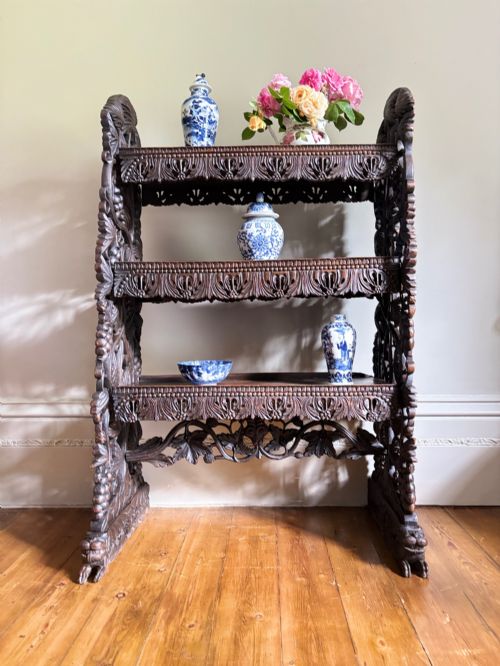
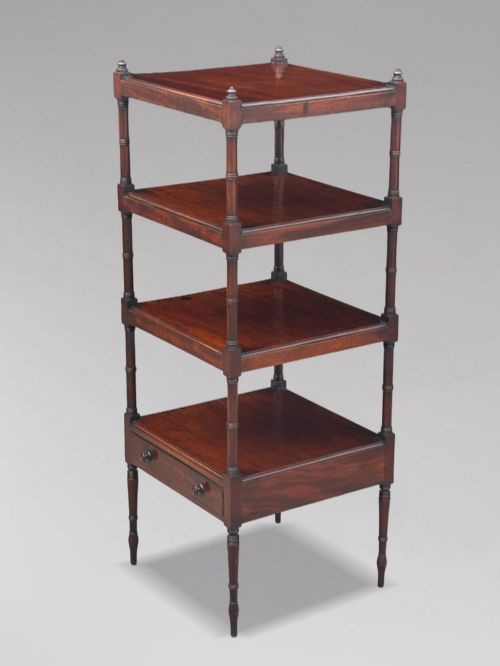
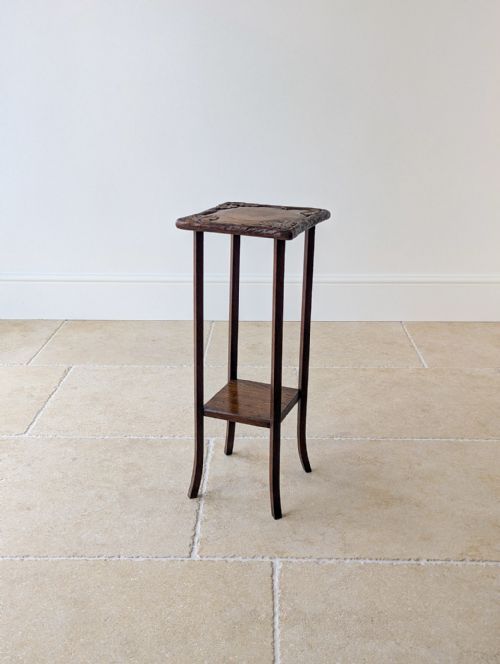
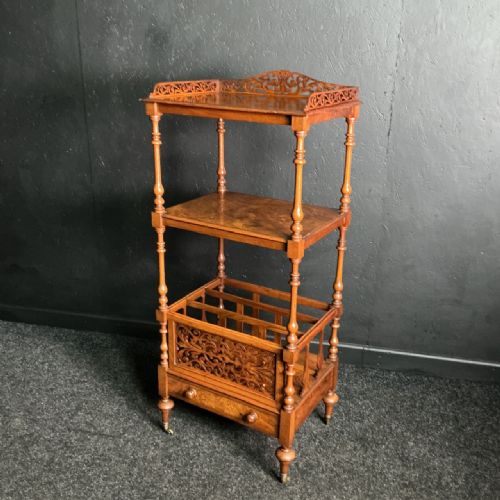
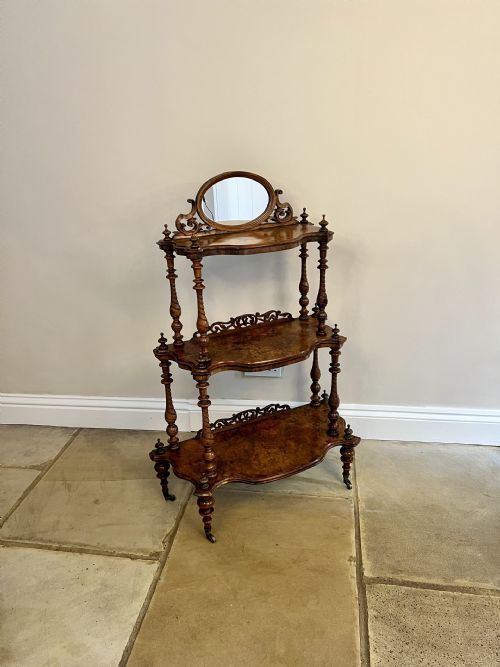
A carved tier stand takes many forms across the inventory, appearing as whatnots, etageres, plant stands, and occasional side tables with multiple levels for display or storage. These pieces emerge from the nineteenth and early twentieth centuries, spanning Victorian, Edwardian, and Arts and Crafts periods.
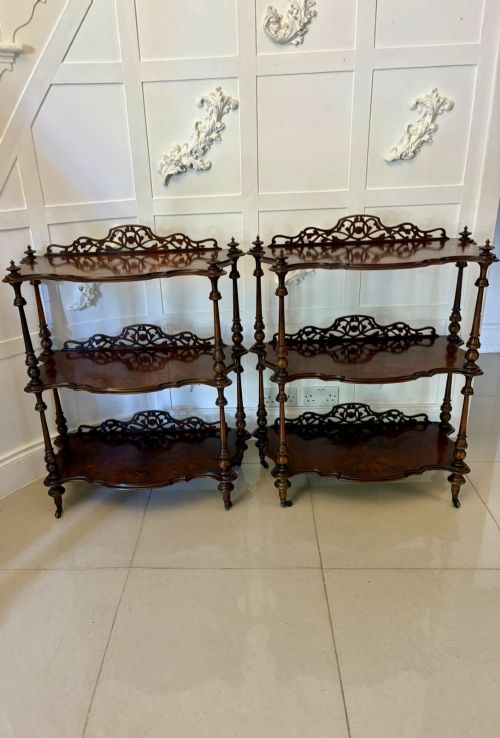
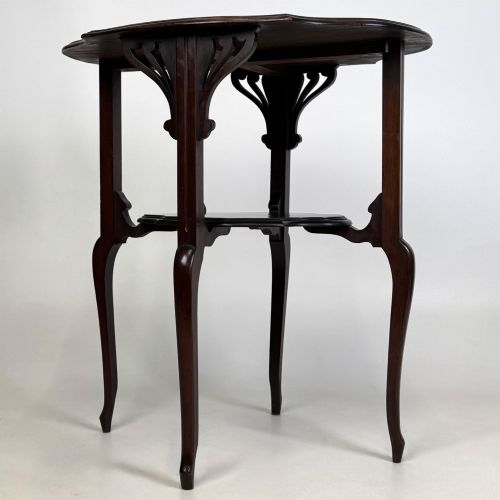
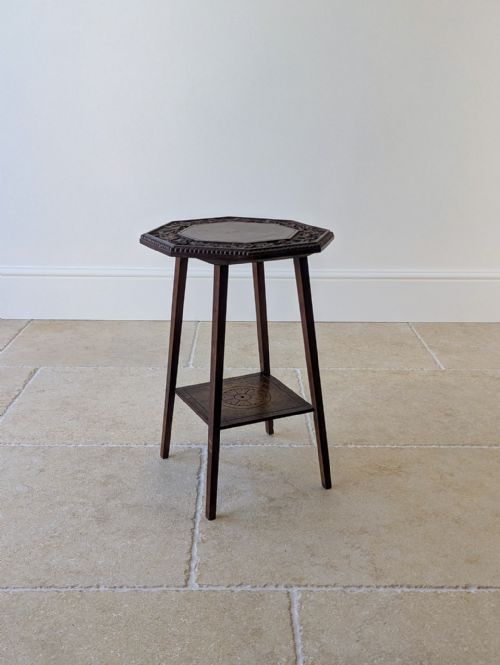
The version most commonly met on this page is the Victorian walnut or burr walnut whatnot, often built with multiple tiers supported by turned columns or barley twist uprights. Alongside these, buyers encounter Edwardian oak plant stands and mahogany occasional tables designed for compact spaces.
How they were made
Cabinet makers utilised dense timbers such as walnut, mahogany, rosewood, and oak to construct the structural uprights and tiered shelves. Burr walnut veneers provided decorative grain patterns on table tops and cabinet surfaces, while solid hardwoods like teak and padauk supported heavier tiered buffets.
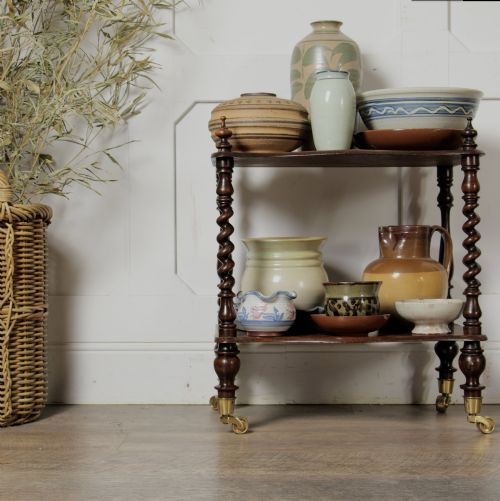
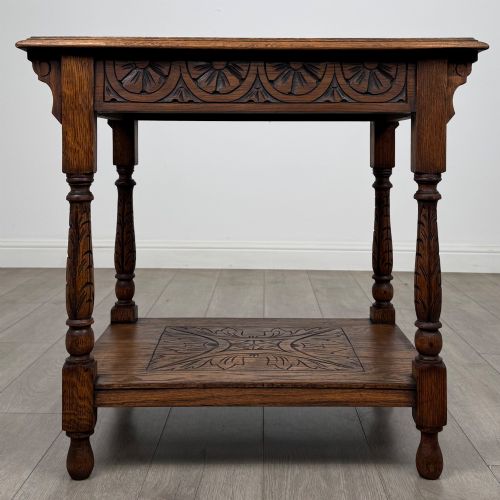
Turning lathes shaped barley twist and columnar supports, and hand-carved detailing adorned edges, friezes, and corner brackets. Metal hardware, including brass castors and hinges, completed pieces intended for flexible placement in domestic interiors.
Design influences range from George III proportions through Victorian revivalism to early twentieth-century Arts and Crafts simplicity.
What varies in quality
The distinction between standard domestic furniture and finer examples lies in the selection of cabinet timbers and the crispness of the hand-carving. Rich burr walnut veneers and well-figured mahogany indicate careful material selection by the maker.
Structural integrity depends on the joinery connecting the tiers to the upright columns, where tighter tolerances and balanced proportions separate sturdy display pieces from utilitarian items.
Liberty and Co·Liberty of London
The Carved Tier Stand Glossary
- Whatnot
- An open set of freestanding or corner shelves with multiple tiers, used for displaying ornaments and small objects. These pieces date frequently to the Victorian era.
- Etagere
- A piece of furniture consisting of a set of open shelves for displaying small objects or ornaments. French and English examples utilise turned legs and multiple tiers.
- Canterbury
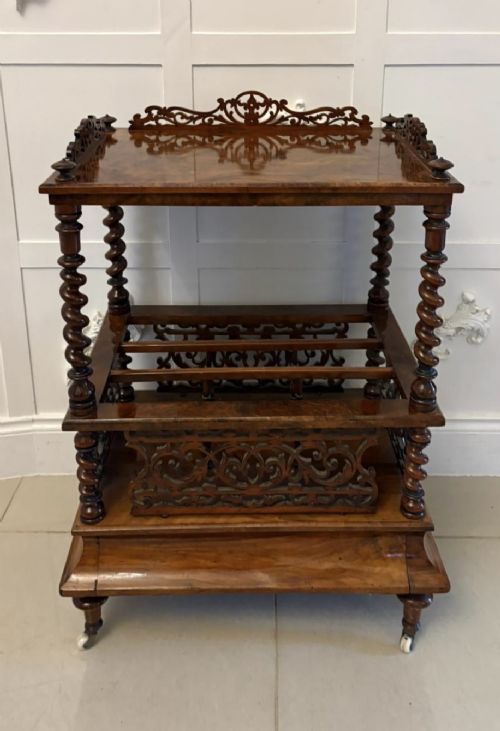
- A low stand with partitioned sections for holding sheet music, magazines, or books, often combined with drawer or table tiers. Victorian makers built these in walnut and mahogany.
- Barley Twist
- A type of turning that resembles a spiralling rope, utilised on the vertical supports of stands and tables. This decorative form appears across nineteenth-century furniture.
- Padauk
- A heavy, durable tropical hardwood with reddish tones, employed in Anglo-Indian furniture production. Nineteenth-century workshops utilised this timber for tiered shelving units.
Carved Tier Stand: Frequently Asked Questions
What is a carved tier stand used for?
These tiered pieces serve primarily as display surfaces for ornaments, plants, and books in sitting rooms and hallways. The multiple levels allow for vertical organisation of decorative objects without occupying excessive floor space.
Historically, they functioned as whatnots or occasional tables where households exhibited porcelain, silver, and floral arrangements. Their open construction keeps rooms feeling spacious while providing practical surface area.
How do I distinguish Victorian from Edwardian stands?
Victorian stands typically feature darker timbers like walnut and rosewood, often incorporating burr veneers, barley twist columns, or elaborate carved detailing. Proportions tend to be heavier and ornamentation more dense.
Edwardian pieces generally present lighter oak or mahogany construction with simpler, cleaner lines influenced by the Arts and Crafts movement or Edwardian Revival styles. Structural forms are frequently more restrained and rectilinear.
Where should I place a tier stand?
Corner whatnots fit neatly into empty room angles, utilising overlooked space for display and storage. Freestanding etageres and plant stands suit larger living areas, hallways, or beside seating.
Position these stands away from direct heat sources and strong sunlight to protect timber surfaces and veneers from drying out or fading over time.
Are these stands sturdy enough for daily use?
Most tier stands are built with multiple fixed shelves supported by turned or carved columns designed to bear the weight of books and ornaments. Heavier buffet tables and plant stands provide substantial stability.
Care should be taken when placing extremely heavy items on upper tiers to maintain balance, particularly on pieces equipped with castors or slender legs.