
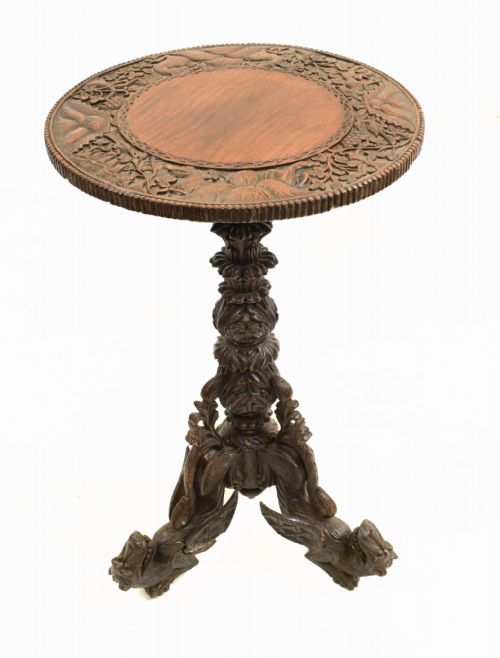


Carved Teak Plant Table
These carved teak plant table examples bring intricate colonial craftsmanship into modern rooms.
Carved Teak Plant Table
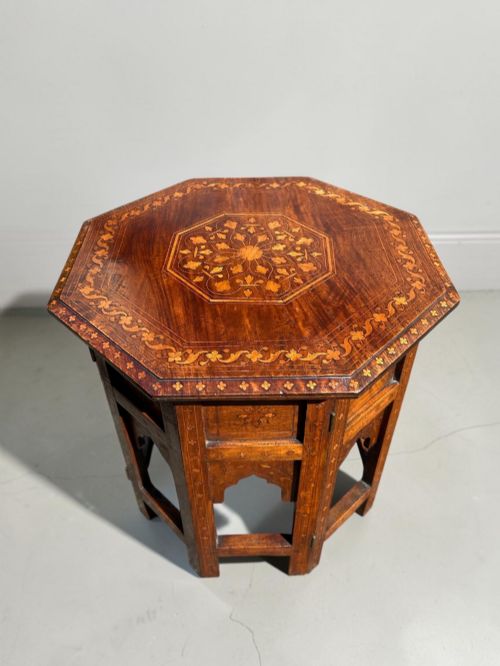
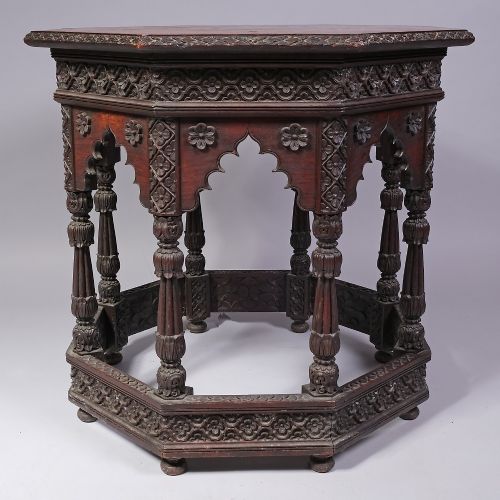
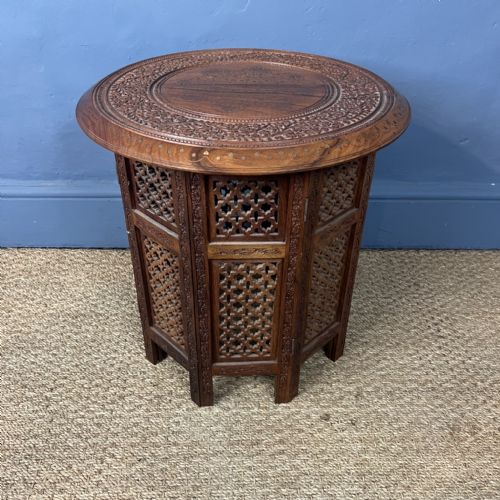
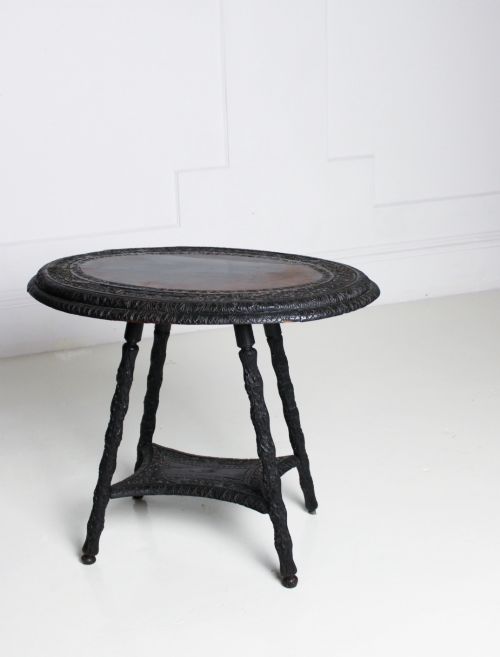
A carved teak plant table takes many forms across the Victorian and early twentieth century periods, appearing most often as octagonal occasional tables, folding campaign stands, and circular pedestals. Buyers searching this phrase meet heavily carved tables originating from Anglo-Indian and Anglo-Burmese workshops, spanning styles from Hoshiarpur to Bombay Presidency.
The selection ranges from small side lamp tables to elaborate elephant and camel tables featuring animal supports and folding tripod bases. These pieces served diverse domestic roles in colonial interiors as tea tables, plant stands, and torchers, adapting easily to compact spaces.
How they were made
Artisans built these tables primarily from solid teak and hardwood, utilising dense timbers capable of holding intricate, deep-relief carving. Many pieces integrate contrasting materials such as brass wire inlay, bone inlay, and rosewood elements to accentuate geometric and floral patterns.
Construction techniques often combined folding mechanisms with intricate fretwork and pegged joints, allowing heavy surfaces to collapse flat for transport. Surface decoration relied entirely on hand chisel work, creating textured panels of foliage, geometric motifs, and figurative animal carvings.
Listings feature teak, rosewood, and hardwood structures accented with brass wire and bone inlay across Victorian, 19th-century, and early 20th-century periods.
What varies in quality
Depth and crispness of the hand carving separate standard production pieces from finer work, where foliage and animal figures retain sharp, undercut details rather than shallow impressions. The density of the inlay work and the tightness of the joinery on folding mechanisms also indicate the skill of the original workshop.
Selection of the timber grain and the integrity of the secondary woods influence the overall durability and visual depth of the surface. Complete preservation of intricate bone and brass inlay without missing elements distinguishes superior examples from heavily restored pieces.
The Carved Teak Plant Table Glossary
- Anglo-Indian
- A descriptive term for decorative arts and furniture produced in British India, combining traditional local craftsmanship with European forms. These items often feature dense botanical carving and intricate geometric inlay.
- Hoshiarpur
- A historic centre in Punjab known for specialised woodwork featuring intricate brass and bone inlay set into teak and shisham wood. Pieces from this region are easily recognised by their dense geometric surface patterns.
- Campaign table
- Portable furniture designed to fold or dismantle easily for military officers or travellers during the colonial era. Many examples utilise clever hinged teak frames that collapse flat.
- Taj Mahal table
- A specific decorative style of table featuring architectural fretwork panels and domed motifs inspired by Mughal monuments. These pieces frequently incorporate bone and brass wire inlay.
- Octagonal table
- A multi-sided tabletop shape favoured in regional Indian and Burmese furniture design for displaying decorative objects or serving tea. This geometry allowed artisans maximum surface area for continuous border carving.
Carved Teak Plant Table: Frequently Asked Questions
How do I care for carved teak?
Dust the deep recesses regularly with a soft brush to prevent dirt accumulation in the intricate carving. Feed the dry hardwood occasionally with a suitable beeswax to maintain the natural sheen of the timber.
Avoid placing these tables near direct heat sources or strong sunlight, which can dry out the wood and cause bone or brass inlay elements to loosen. Gentle maintenance preserves both the finish and the delicate inlaid details.
Are these tables original antiques?
The pieces originate from the nineteenth and early twentieth centuries, spanning the Victorian era through the nineteen-thirties. Workshops in regions such as Bombay Presidency and Burma produced them during the colonial period.
Construction methods reflect the period through hand-cut joinery, traditional timber selection, and authentic regional carving styles. Each piece carries the distinct marks of hand tool execution rather than modern mass production.
Did these function as plant stands?
While many served as occasional tea tables or lamp stands, their sturdy frames and elevated surfaces made them ideal pedestals for heavy planters and torcheres. The compact octagonal and circular tops provided stable display areas for interior greenery.
Foldable campaign versions allowed owners to move heavy decorative arrangements easily around domestic spaces. Their adaptable height and durable teak construction suited both practical serving and decorative display.