



Carved Tea Caddy Furniture
Carved tea caddy furniture brings refined elegance to a room, offering clever compartments once used for storing prized tea leaves.
Carved Tea Caddy Furniture
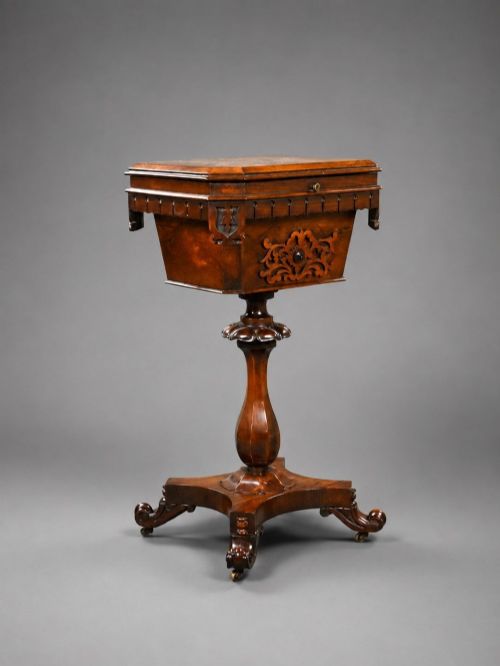
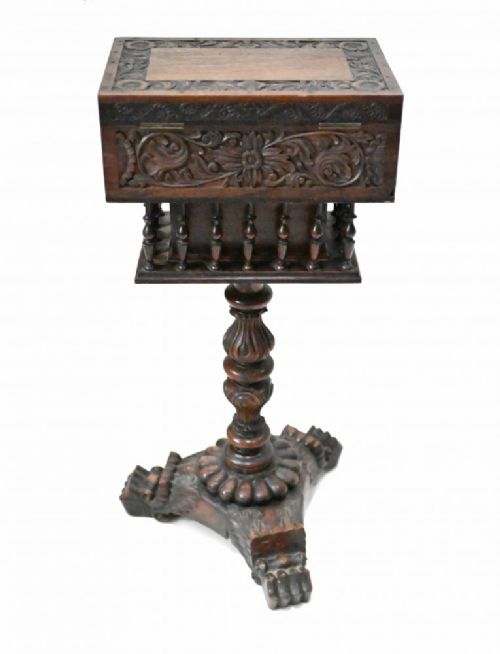
Carved tea caddy furniture encompasses sophisticated tea caddies, miniature sideboards, side tables, and teapoys designed to hold tea in style. These pieces originate primarily from the Georgian, Regency, and Victorian periods, showcasing the craftsmanship of the nineteenth century.
The most common items found in this category are teapoys and tea caddies mounted on stands or legs. Many examples feature rich timber construction and detailed carving associated with William IV and Regency styles.
How they were made
Cabinet makers utilised dense, richly figured hardwoods including mahogany, flame mahogany, rosewood, burr walnut, and padouk. These timbers were selected for their grain and polished to a deep lustre.
Construction involved precision joinery, often incorporating brass mounts and intricate hand carving around the feet and supports to elevate the status of the tea service.
Carved Tea Caddy Furniture Retail Price Guide 2026
Typical asking prices for carved tea caddy furniture among the pieces listed under this phrase on Sellingantiques today, from the lower quarter to the upper quarter. They describe what is for sale here now, not the wider market.
Tea was once so valuable that these little wooden boxes required their own dedicated locks to keep thieving servants at bay.
What varies in quality
Quality rests heavily on the choice of timber and the depth of the carving. Finely figured flame mahogany or burr walnut elevates a piece well above plain utilitarian boxes.
The sophistication of the supporting stand and the crispness of the carved feet distinguish standard workshop production from pieces attributed to notable makers.
Strahan·Gillows
The Carved Tea Caddy Furniture Glossary
- Teapoy
- A small table designed for holding tea equipment, usually featuring a lidded box compartment on top. They became popular in the Regency and William IV periods.
- Padouk
- A heavy, durable tropical hardwood with a distinctive reddish hue. It was frequently utilised in Anglo-Indian colonial furniture.
- Flame mahogany
- A veneer cut from the fork of the mahogany tree to create a distinctive flame-like pattern. It was favoured by cabinet makers for high-end Regency pieces.
- Burr walnut
- A prized timber marked by swirling, knotted growth patterns. It provides a highly decorative surface on nineteenth-century furniture.
Carved Tea Caddy Furniture: Frequently Asked Questions
What is a teapoy?
A teapoy is a lidded container on a stand, often equipped with interior compartments for loose tea leaves. They served as both storage and display pieces in period drawing rooms.
Over time, the form evolved from a tabletop box into a standalone piece of furniture supported on pedestals or carved legs.
How do I date these pieces?
Dating relies on identifying stylistic markers such as Regency curves, William IV proportions, or Victorian walnut grain. Cabinet making techniques also shift across the nineteenth century.
Examining the secondary timbers inside the tea compartments offers further clues to the decade of manufacture.
Where were these pieces used?
These items belonged in the formal reception rooms of substantial houses where tea was served to guests. They kept expensive imported tea secure under lock and key.
Today, they adapt easily as side tables or decorative storage in modern living spaces.
What woods are most common?
Mahogany and rosewood dominate the listings, alongside exotic timbers like padouk from colonial workshops. Burr walnut appears in later nineteenth-century examples.
Each timber brings a distinct colour and grain pattern that defines the visual weight of the furniture.