
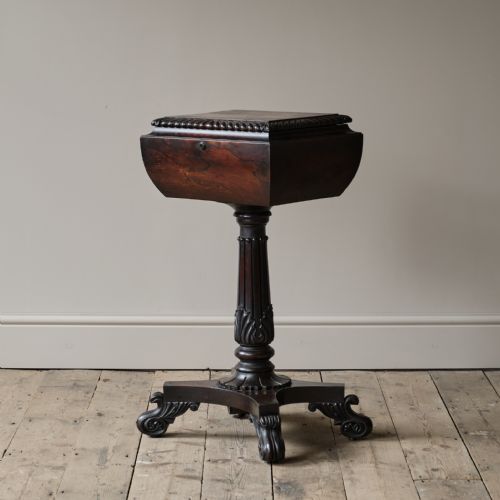


William IV Teapoy Table
A William iv teapoy table is a sophisticated receptacle designed for storing and serving dry tea, combining a lidded timber box with a stable pedestal base.
William IV Teapoy Table
A william iv teapoy table takes the form of a lidded wooden box mounted on a central pillar with a platform or carved feet, serving as a dedicated piece of furniture for the Victorian drawing room. These pieces appear primarily from the nineteenth century, with Georgian, Regency, and Victorian iterations demonstrating the shifting tastes of the era.
The objects listed on this page encompass various forms, from sarcophagus-shaped boxes to examples equipped with glasses stands, work box interiors, or converted spirit storage. Rosewood and mahogany dominate the materials, alongside burr maple, burr walnut, and burr yew, reflecting the cabinetmaker's preference for rich, figured grain.
While the label covers teapoys and tea poys, buyers will encounter substantial stylistic crossover with Regency and Victorian design. The heavier proportions and carved feet typical of the William IV period distinguish these pieces from lighter eighteenth-century precedents.
How they were made
Makers utilised dense timbers such as solid mahogany and flame mahogany for structural integrity, applying fine veneers of rosewood, burr maple, and burr walnut to visible exterior surfaces. The lids and box bodies relied on precise joinery to prevent warping across the seasonal changes in temperature.
Carved details on the pillars and feet required skilled hand chisel work, often incorporating acanthus leaves or heavy scrollwork typical of the period. Brass castors were frequently fitted beneath the feet to allow the heavy tables to be moved across carpets easily.
Mahogany, rosewood, and burr maple appear frequently as the primary cabinet timbers across these pieces.
What varies in quality
The selection of timber veneer determines much of the visual impact, with tightly figured flame mahogany or burr walnut commanding greater attention than plain stock. Cabinetmakers who matched the grain patterns symmetrically across all four sides of the box demonstrated superior skill.
Internal complexity sets individual pieces apart, ranging from simple partitioned compartments for loose tea leaves to elaborate fitted interiors complete with original glass mixing bowls and small canisters. Maker attribution, through stamps or solid attribution to workshops such as Gillows, alters the standing of the piece considerably.
Strahan of Dublin·Gillows
The William IV Teapoy Table Glossary
- Teapoy
- A small stand or table designed to hold tea caddies, originating from the Hindi term for three-footed support before evolving into four-legged or pillar-supported boxes.
- Sarcophagus
- A box shape featuring a domed or steeply sloped lid and a flared rectangular body, mimicking ancient stone coffins and favoured for nineteenth-century tea caddies.
- Veneer
- A thin slice of decorative timber applied to a secondary wood core, allowing cabinetmakers to display striking grain patterns economically.
- Pedestal base
- A single central column rising from a platform base with feet, supporting the main box structure without the obstruction of four corner legs.
- Caddy
- A small container, often fitted inside the teapoy box, used to keep expensive tea leaves dry and secure under lock and key.
William IV Teapoy Table: Frequently Asked Questions
What was a teapoy table used for?
These tables served as secure storage containers for expensive loose tea leaves, which were kept locked away from domestic staff and dampness in the drawing room. The interior compartments held different varieties of tea, while a central glass bowl was often included for mixing the blends before brewing.
Over time, some examples were adapted or built with internal fittings for writing materials, sewing equipment, or glass decanters. They functioned as movable pieces of luxury furniture placed beside chairs or sofas during social gatherings.
How do I tell William IV from Regency?
Regency pieces generally display lighter, more restrained classical lines influenced by Greek and Roman archaeology, often utilising brass inlay and slender supports. William IV furniture tends towards heavier, more robust proportions with bolder carved decoration and substantial pillar bases.
The materials remain similar across both periods, but the William IV style leans heavily into rich, figured veneers and pronounced architectural moulding. Dated examples and maker stamps help confirm the transition between these overlapping eras.
How do I care for a rosewood teapoy?
Keep the timber away from direct sunlight and sudden temperature changes to prevent the delicate rosewood veneer from lifting or splitting. Regular dusting with a dry, soft cloth maintains the finish without the need for heavy modern polishes.
Wax can be applied sparingly if the surface appears dry, but care must be taken around carved details and antique brass fittings. Maintaining a stable indoor climate protects the historic glue and joinery inside the box.