




Brown Walnut Tea Caddy
A brown walnut tea caddy is a refined wooden chest designed to store valuable leaf tea, bringing tactile warmth and period character to any interior.
Brown Walnut Tea Caddy
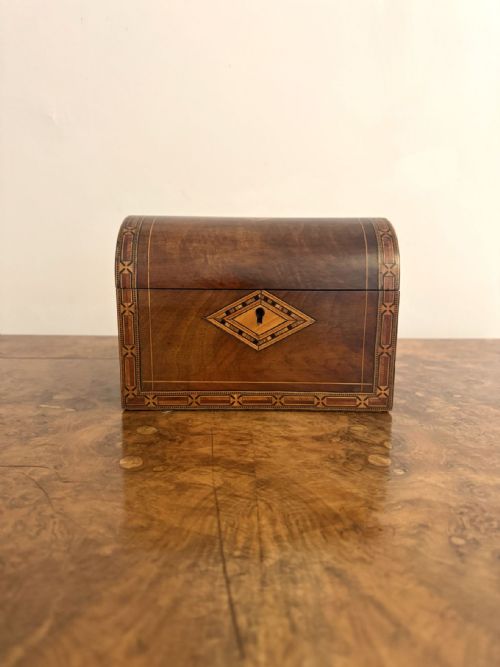
A brown walnut tea caddy represents a historic container utilised for keeping dry tea leaves secure under lock and key when tea was a costly luxury. The pieces seen on this page span Georgian, Regency, and Victorian periods, manifesting primarily as tea caddies alongside related forms such as tea poys and jardinieres.
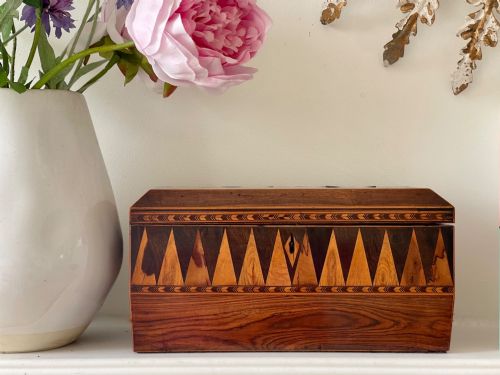
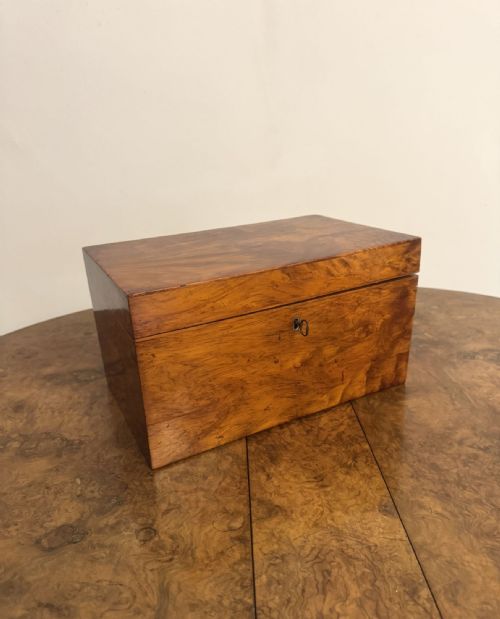
Buyers will encounter rectangular, sarcophagus, and oval formats constructed from walnut and burr walnut. These functional boxes frequently display decorative elements including boxwood, wood inlay, and Tunbridge work.
Origins stretch from the 18th century into the 19th century, capturing shifts in domestic tastes across Georgian, George II, George III, and early Victorian eras. Most examples showcase the rich figuring inherent to walnut timber.
How they were made
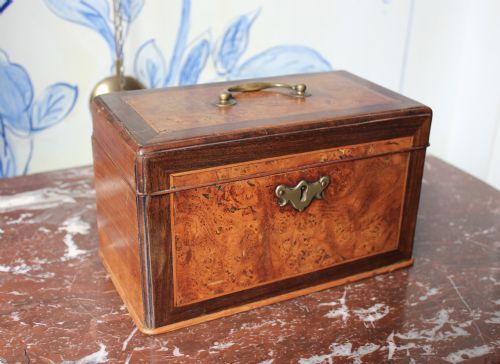
Cabinetmakers constructed these caddies using solid walnut or applied burr walnut veneers over secondary timbers, often accentuating the exterior with contrasting boxwood and wood inlay. Metal hinges, escutcheons, and internal fittings incorporate brass and sometimes bone.
Advanced decorative techniques such as Tunbridge inlay appear on specific examples, requiring meticulous assembly of tiny coloured wood segments to form geometric or pictorial mosaics. Interiors were frequently fitted with compartmented lids and mixing bowls.
Listings feature walnut, burr walnut, and burr elm alongside brass, boxwood, bone, and metal inlay across Georgian, Regency, and Victorian periods.
What varies in quality
The sophistication of the timber figuring and the precision of the inlay set superior examples apart from simpler boxes. Burr walnut yields complex, swirling grain patterns that demand expert veneer selection and matching.
The integrity of the fitted interior and the complexity of decorative techniques like Tunbridge inlay distinguish exceptional specimens. Higher grade pieces maintain original hardware, internal lids, and structurally sound joinery.
The Brown Walnut Tea Caddy Glossary
- Tea Caddy
- A small box or chest designed for storing loose tea leaves. The term evolved from cattee, a Chinese unit of weight.
- Burr Walnut
- A prized timber harvested from walnut tree growths, displaying intricate, swirling grain patterns. Cabinetmakers sliced this wood into thin veneers for decorative surfaces.
- Tunbridge Ware
- Small wooden objects decorated with mosaic patterns made from many tiny pieces of naturally coloured woods. This specialist craft centred on Tunbridge Wells in Kent.
- Sarcophagus
- A monumental coffin shape adapted by Regency and Victorian cabinetmakers for tea caddies, featuring a domed lid and pedestal feet. This architectural form added classical gravitas to domestic interiors.
- Tea Poy
- A small stand or table supported on a pillar and claw feet, carrying one or more tea caddies on top. These pieces served drawing rooms during the Georgian and Victorian periods.
Brown Walnut Tea Caddy: Frequently Asked Questions
How were tea caddies used historically?
Tea was an expensive commodity in the eighteenth and nineteenth centuries, so domestic tea caddies were kept locked by the mistress of the house. Servants brought the caddy to the drawing room when tea was served.
The containers often housed two canisters for green and black teas, alongside a central mixing bowl where the host blended the leaves to taste.
How do I date a walnut tea caddy?
Dating relies on observing the overall form, construction methods, and decorative styles associated with periods like the Georgian era, Regency, or Victorian times. Sarcophagus shapes and bolder proportions typically point toward the nineteenth century.
Earlier eighteenth-century pieces often present simpler rectangular profiles, while specific inlay techniques like Tunbridge work point to mid-nineteenth-century production.
How do I live with a tea caddy?
These decorative boxes function well placed on sideboards, side tables, or open shelving in a sitting room. Their warm walnut tones complement both traditional and modern interiors.
They also provide practical storage for small keepsakes, jewellery, or modern tea bags while adding historic character to a room.