




Carved Table Screen
These carved table screen examples are decorative panels designed to display intricate craftsmanship and enhance an interior.
Carved Table Screen
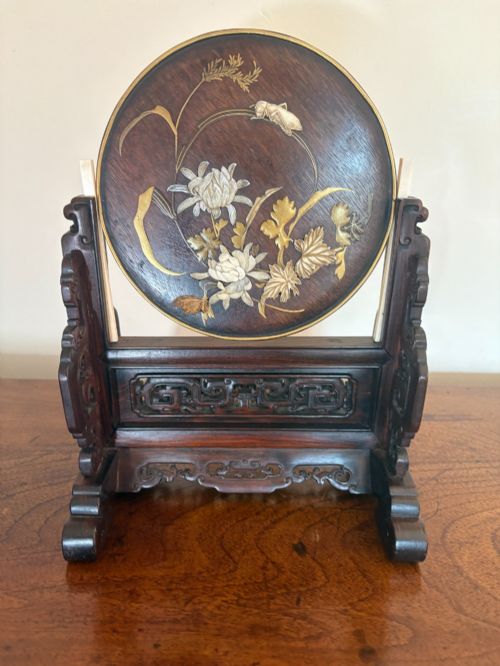
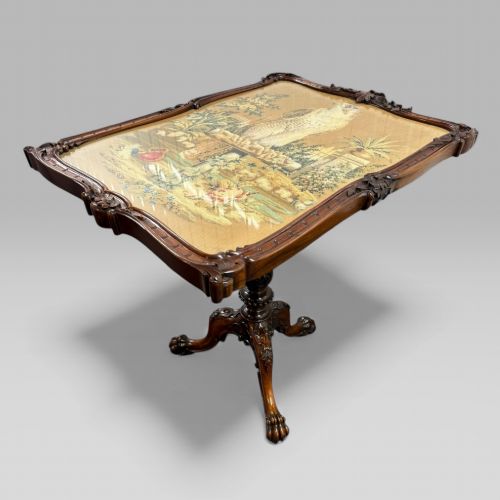
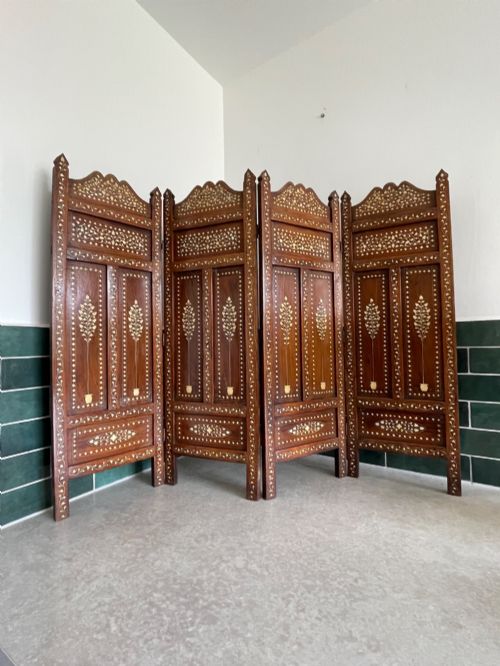
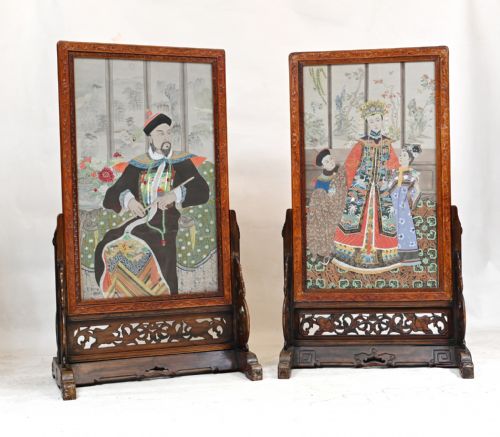
A carved table screen typically sits upon a desk or surface, combining sculptural woodwork with decorative panels of silk, embroidery, or stone. These pieces bring traditional Oriental and Regency craftsmanship into a room.
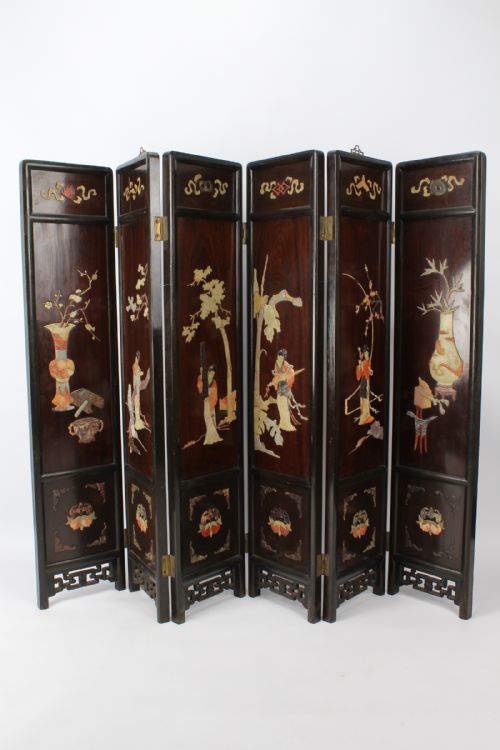
Most examples encountered here originate from the 19th century and the early 20th century, drawing on Qing Dynasty, Meiji Period, and William IV design traditions. Buyers often find rotating stands or folding multi-panel formats.
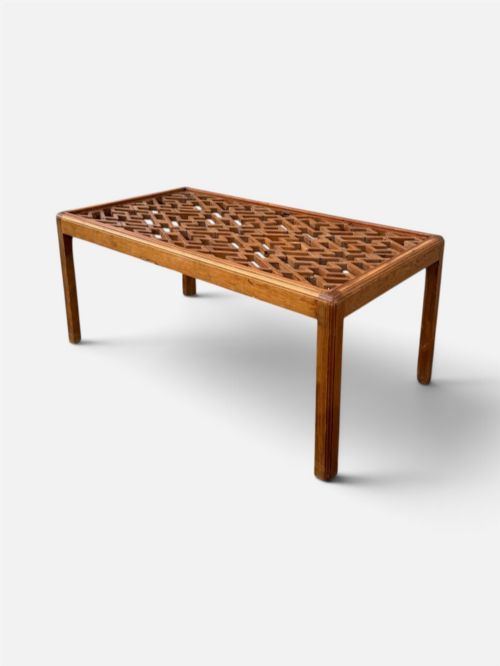
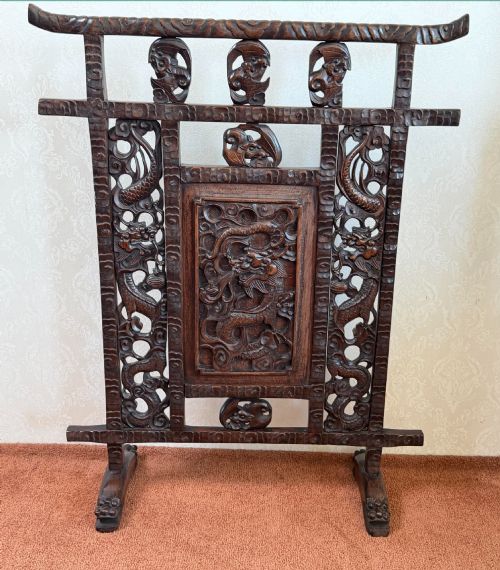
The form spans compact desk pieces alongside larger variants that double as fire screens or low table surfaces. Hardwood is the dominant medium holding these intricate decorative elements together.
How they were made
Workshops utilised dense timbers such as rosewood and general hardwood to construct sturdy frames and display stands. These woods were carved into elaborate fretwork and mounts to secure the central decorative panels.
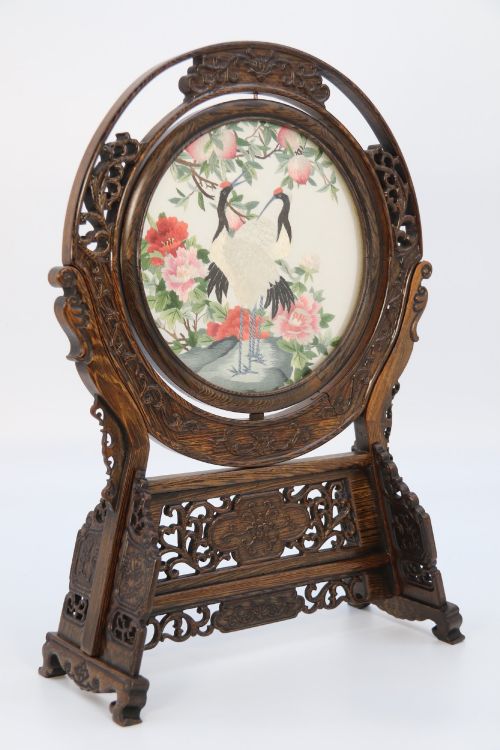
Makers integrated varied media including woven silk embroidery, glass, bone, lacquer, and soapstone within the timber structures. Some panels feature double-sided embroidery or mother-of-pearl inlay requiring precise hand assembly.
Some screens spin on rotating stands, letting an indecisive scholar switch between two completely different silk embroideries mid-thought.
What varies in quality
The refinement of the carving dictates the visual standard, where deep, crisp detail separates standard production from superior work. Pierced fretwork and balanced proportions show the maker's skill.
Condition of delicate elements like silk embroidery or bone inlay heavily influences the integrity of the piece. Intact original stands and rotating mechanisms preserve the functional design intended by the workshop.
The Carved Table Screen Glossary
- Shibayama
- Japanese craft style utilising inlaid materials such as bone and shell on a lacquer or wood base. This technique creates textured, pictorial surfaces.
- Fretwork
- Ornamental perforated woodwork carved in geometric or scrolling patterns. It provides light and decorative detail to panels and stands.
- Soapstone
- A soft, talc-based stone carved into pictorial reliefs or figures. It appears frequently in traditional panels.
- Tilt top
- A tabletop or screen mechanism that pivots on a central axis or hinge. This allows the display angle to be adjusted.
Carved Table Screen: Frequently Asked Questions
Where do carved table screens come from?
These decorative objects originate primarily from Chinese and Japanese workshops, alongside British regional production influenced by global trade.
Craftsmen utilised local hardwoods and traditional motifs that reflect Qing Dynasty and Meiji Period aesthetics.
How were table screens used historically?
Historically, table screens served as decorative desk ornaments, draught shields, or focal points in scholarly rooms.
They demonstrated the owner's taste and appreciation for fine embroidery and intricate woodworking.
Can I use a table screen on a coffee table?
Some period panels have been adapted into modern coffee tables with glass tops placed over the carved fretwork.
Original table screens remain portable objects designed to rest on desks, side tables, or mantelpieces.
How do I identify a William IV screen?
William IV and Regency examples often utilise rosewood and feature British cabinet-making characteristics like tripod tables or pole screens.
They combine European furniture forms with classical turning and carved details distinct from East Asian exports.