


Brown Wood Fire Screen
A brown wood fire screen keeps the hearth heat at bay while adding rich grain and texture to a room.
Brown Wood Fire Screen
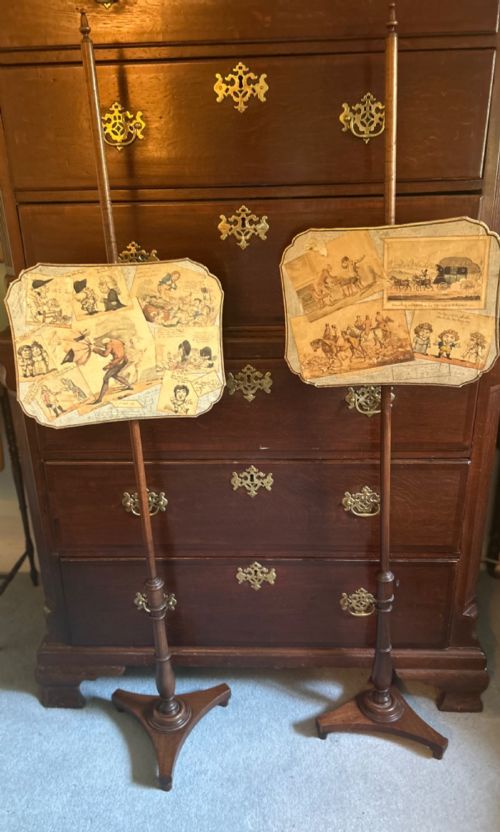
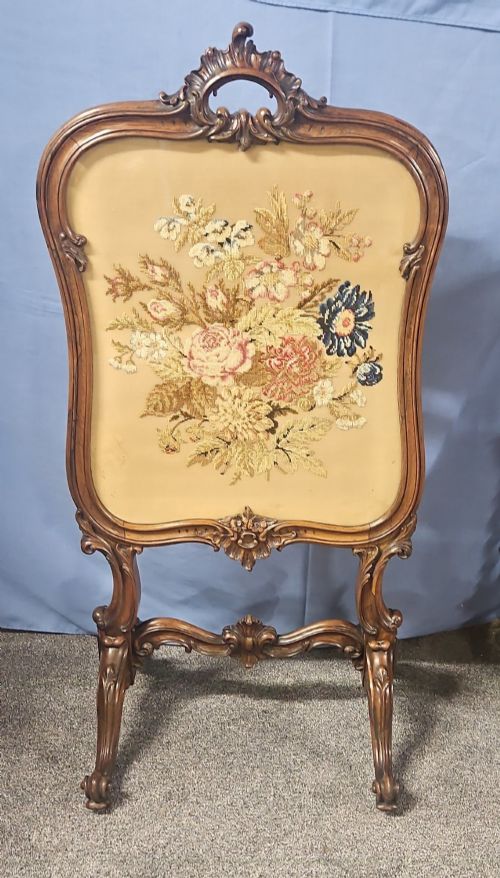
A brown wood fire screen stands near the hearth to block excessive heat from the fire while displaying decorative panels of fabric or needlework. Buyers searching for a brown wood fire screen will find pieces ranging from upright pole screens to folding table screens and larger standing frames.
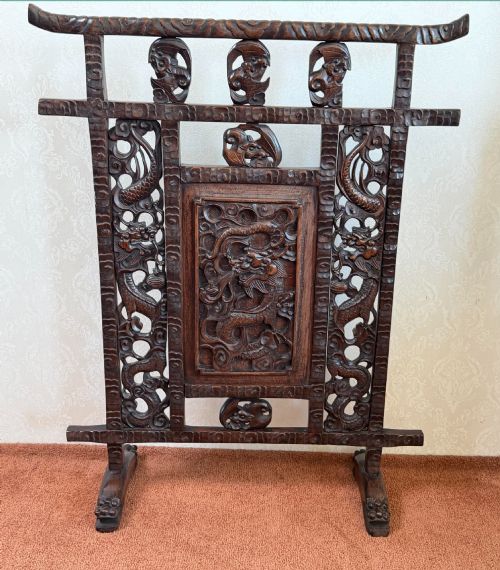
The selections span several periods, featuring Georgian, Regency, and Victorian examples alongside carved oak and Chinese hardwood pieces. Most versions rely on rich timbers like mahogany, walnut, and palisander to anchor the frame.
Beyond traditional hearth guards, the inventory includes writing tables with integrated screens and life-size dummy boards. These variations offer both functional protection and striking decorative presence in period interiors.
Materials and construction methods
Frames are constructed from dense timbers such as mahogany, walnut, oak, and palisander, shaped through traditional cabinet-making techniques like carving, bobbin turning, and inlay. These woods provide the structural rigidity needed for upright poles, folding leaves, and heavy base supports.
The central panels incorporate textiles, needlepoint, tapestry, and framed prints held securely within the wooden framework. Glazed elements and brass adjustments also appear, allowing panels to slide or pivot on poles.
Current listings feature mahogany, walnut, and oak, alongside textiles including needlepoint, tapestry, and wool.
Evaluating quality and craftsmanship
Quality rests in the crispness of the timber carving and the sophistication of the joinery, distinguishing straightforward utility from master cabinet-making. Finer pieces display refined turning, precise inlay work, and robust mechanisms for adjustable poles.
The integrity and artistry of the central panel further define the piece, particularly where hand-woven tapestries, detailed needlepoint, or original satirical prints are preserved. Balanced proportions and heavy, stable footings complete the measure of a superior build.
The Brown Wood Fire Screen Glossary
- Pole screen
- A vertical wooden stand featuring an adjustable framed panel that slides up and down on a central shaft to block radiant heat. These freestanding pieces typically rest on tripod bases.
- Dummy board
- A life-size painted figure cut from wood or metal, sometimes placed near a fireplace to create the illusion of a person or animal in the room.
- Needlepoint
- A type of canvas work embroidery stitched with yarn, frequently mounted inside the wooden frames of nineteenth-century hearth guards.
- Palisander
- A dense, dark timber resembling rosewood, prized by cabinet-makers for its rich grain patterns and deep colouration.
- Bobbin turned
- A style of woodturning featuring repeating spherical or spool-like shapes carved along the length of a furniture leg or upright.
Brown Wood Fire Screen: Frequently Asked Questions
How do I use a fire screen?
A fire screen stands a few feet from an active hearth to shield people from sudden bursts of radiant heat. They also serve to cover an empty fireplace during warmer months.
Position the screen so the decorative panel faces into the room, creating a focal point when the fire is unlit.
Are pole screens adjustable?
Many pole screens feature a small brass thumbscrew or friction collar that allows the framed panel to slide up and down the vertical shaft. This mechanism lets you raise or lower the shield depending on your seating height.
Check that the internal collar holds the panel firmly in place without slipping.
What woods were commonly used?
Cabinet-makers relied on sturdy hardwoods like mahogany, walnut, and oak to withstand the dry heat near a fireplace. Exotic timbers such as palisander also appear on finer Regency examples.
These dense materials take fine carving and provide the weight needed to keep tall frames stable.
How do I care for the fabric panels?
Keep textile and needlepoint panels out of direct sunlight to prevent the wool and silk threads from fading over time. Dust the wooden frames gently with a dry, soft cloth.
Avoid using liquid cleaners near antique tapestries or exposed prints.
What is a dummy board?
A dummy board is a flat wooden silhouette painted to depict a person, animal, or soldier, designed to trick the eye from a distance. These flat panels often stood near hearths or in hallways during the eighteenth century.
They rely on clever perspective and careful shading to appear three-dimensional in low firelight.