
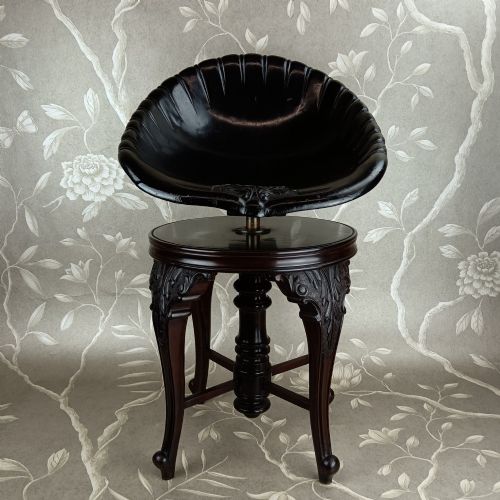
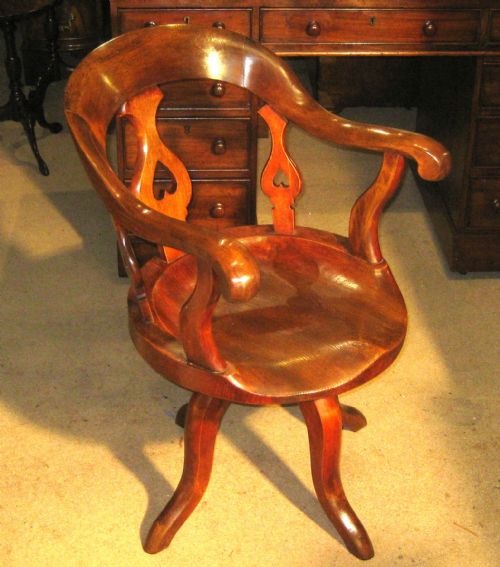
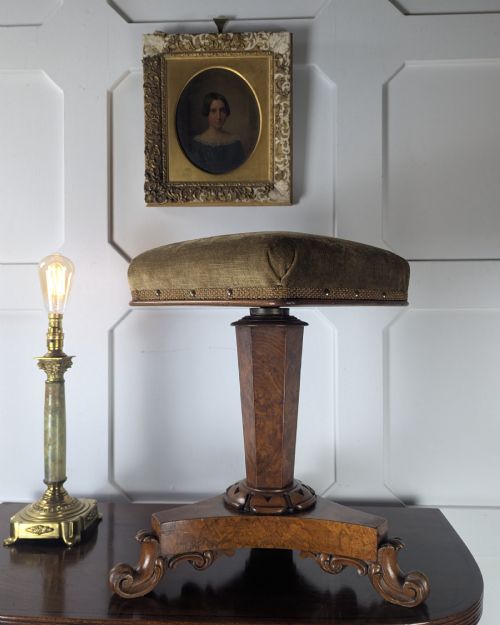
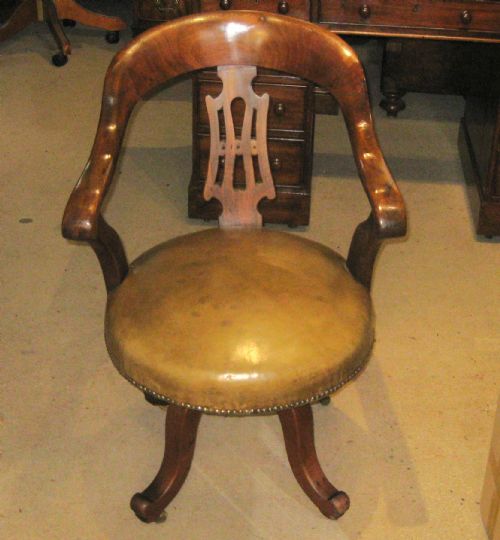
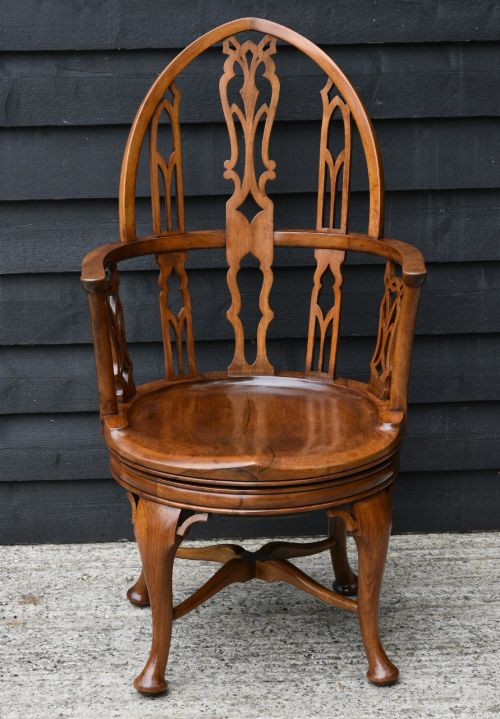
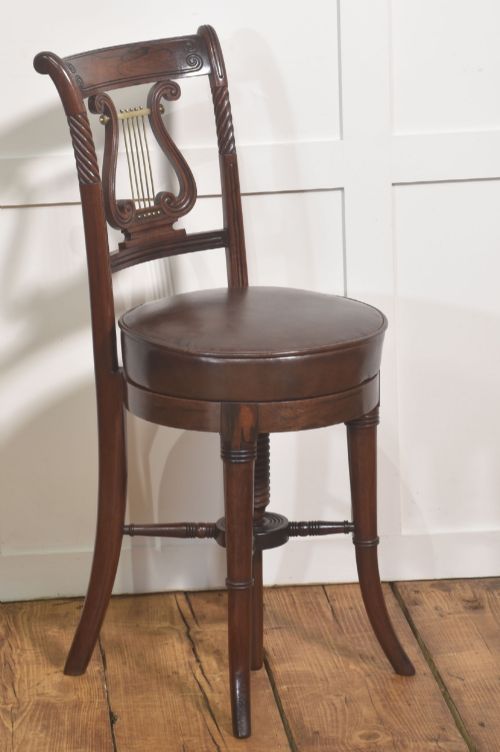
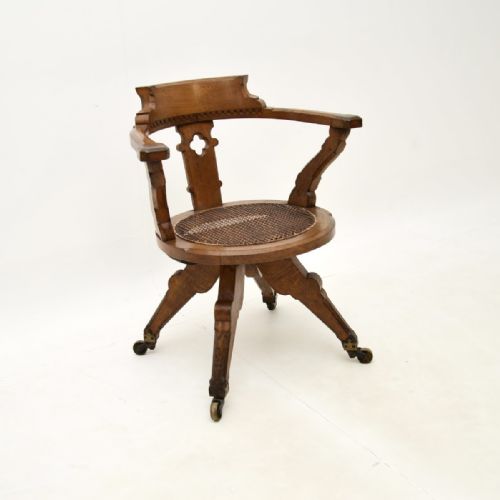
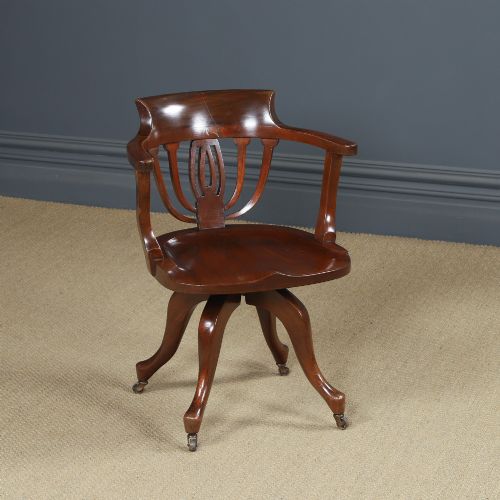
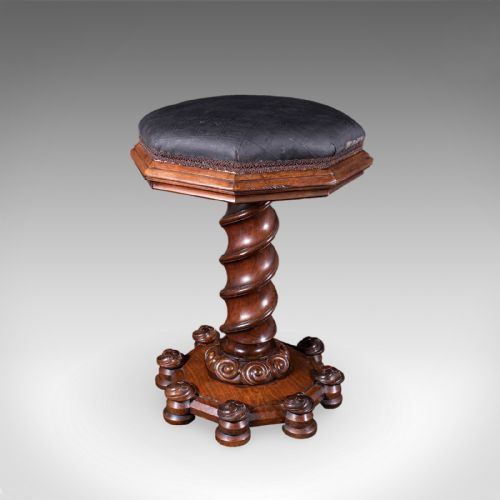
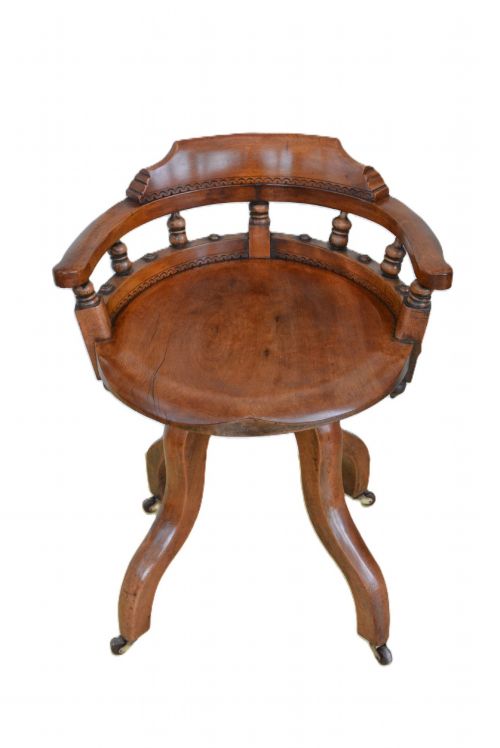
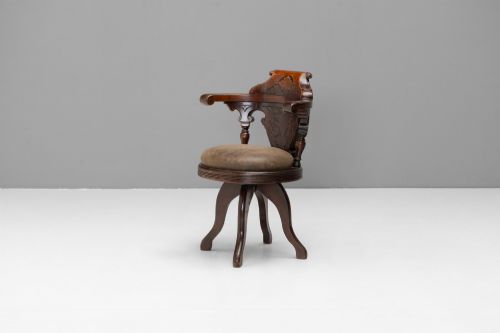


Carved Swivel Chair
A carved swivel chair brings mechanical ingenuity together with solid timber, offering a revolving seat designed for the desk or music room.
Carved Swivel Chair
A carved swivel chair unites rotating seating with carved woodwork, appearing in forms such as desk chairs, piano stools, and music chairs. The pieces span periods from the nineteenth century into the Edwardian era, with Victorian examples appearing most frequently on this page alongside William IV and Regency pieces.
Makers utilised various timber types including mahogany, walnut, oak, and rosewood, often pairing the swivel mechanism with adjustable height functions for desks, dressing tables, and musical instruments.
Materials and Construction
Cabinet makers constructed these rotating seats predominantly from solid hardwoods such as mahogany, walnut, and oak, occasionally turning to exotic woods like padouk or rosewood. They incorporated brass mechanisms and iron fixings to achieve the revolving action and height adjustment.
Upholstery materials such as leather, velvet, and various fabrics were integrated into seats, while frames featured carved detailing characteristic of styles ranging from Gothic Revival and William IV to the Aesthetic Movement.
Secretaries once spun too fast on music stools and launched their sheet music across the drawing room.
Assessing Craftsmanship
The standard of a carved swivel chair rests upon the execution of the timber carving and the engineering of the revolving mechanism. Finer examples display crisp hand-carved detail across the frame and a smooth, stable swivel action that operates without excessive play in the column.
The choice of primary timber and secondary woods affects the piece's integrity, with dense figured walnut or solid mahogany demonstrating superior durability compared to softer hardwoods.
Jennens and Bettridge·S and H Jewell·Shoolbred
The Carved Swivel Chair Glossary
- Revolving desk chair
- A seating form equipped with a central pivot that allows the user to turn full circle while seated at a writing table.
- Piano stool
- An adjustable seat designed for musicians, often featuring a mechanism to raise or lower the height via a threaded screw or rise and fall action.
- Gothic Revival
- A nineteenth-century design style drawing inspiration from medieval architecture, characterised by pointed arches, trefoils, and heavy carved tracery.
- Aesthetic Movement
- A late nineteenth-century design current emphasising visual beauty and artistic craftsmanship over heavy moralising historicism.
- Padouk
- A dense tropical hardwood with a reddish hue, utilised for durable furniture construction and favored in specific regional cabinet making.
Carved Swivel Chair: Frequently Asked Questions
How do I adjust the height on these chairs?
Many of these pieces utilise a threaded wooden or metal spindle screw concealed beneath the seat. Turning the seat clockwise or anticlockwise raises or lowers the platform.
Other examples employ a rise and fall mechanism operated by a lever or pin. Care should be taken not to unscrew the mechanism beyond its intended stop.
Were these chairs meant for offices?
While many examples serve as office or desk chairs, a significant portion were built specifically for musical performance. Harpist chairs, piano stools, and music chairs catered to musicians who required mobility and height adjustment.
Other variations include dressing table chairs and library seating designed for specific domestic rooms.
How do I distinguish Victorian from Regency examples?
Regency and William IV pieces often display cleaner classical lines, rosewood timbers, and precise brass inlays or turned supports characteristic of the early nineteenth century. Victorian pieces frequently feature heavier proportions, darker walnut or mahogany, and revival styles such as Gothic Revival or Aesthetic Movement.
Examining the turning, carving style, and secondary woods helps clarify the period of manufacture.
How do I care for the swivel mechanism?
The internal pivot and screw mechanism benefits from occasional inspection to ensure movement remains smooth. Applying a small amount of appropriate lubricant to metal threads prevents undue friction.
Solid timber frames respond best to stable indoor humidity and regular dusting with a dry cloth.