



Carved Stretcher Stool
A carved stretcher stool grounds a room with solid period presence, offering sturdy seating built with traditional bracing.
Carved Stretcher Stool
A carved stretcher stool brings substantial timber framing and decorative bracing to a room, serving as a functional seat or footrest. When searching for a carved stretcher stool, buyers encounter pieces spanning the eighteenth, nineteenth, and early twentieth centuries, alongside revival interpretations.
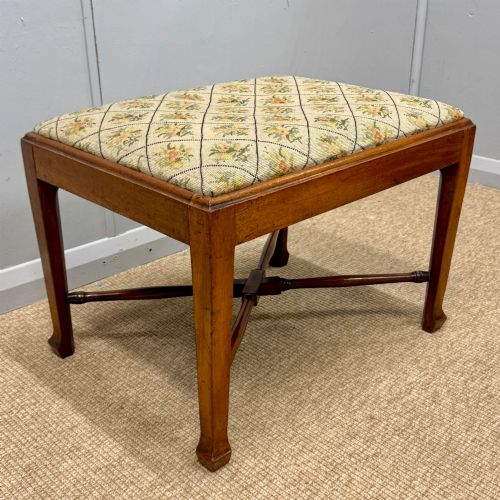
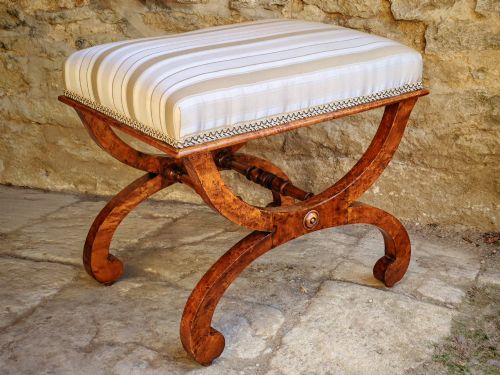
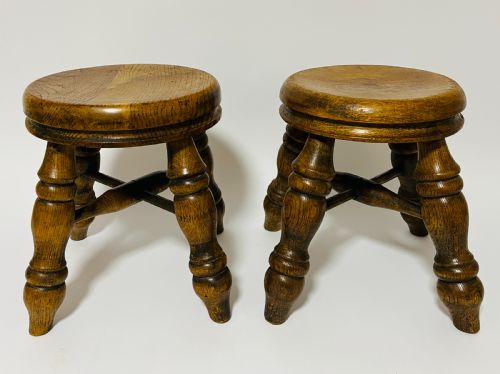
The selection on this page ranges from Georgian and William and Mary eras to later revival pieces from the nineteen-tens, twenties, and thirties. Common forms include dressing table stools, joint stools, and X-frame designs, constructed from woods like oak, walnut, and burr maple.
Originating styles cover Georgian Revival, Jacobean, Regency, and Rustic Farmhouse aesthetics. These seating forms rely on structural cross-bracing and stretcher bars to maintain rigidity beneath upholstered or timber tops.
Materials and construction
Cabinetmakers built these stools using dense hardwoods such as oak and walnut, occasionally incorporating burr maple for figured surfaces. Structural stability depended on solid stretchers fitted between the legs, often reinforced with pegged joints or turned components.
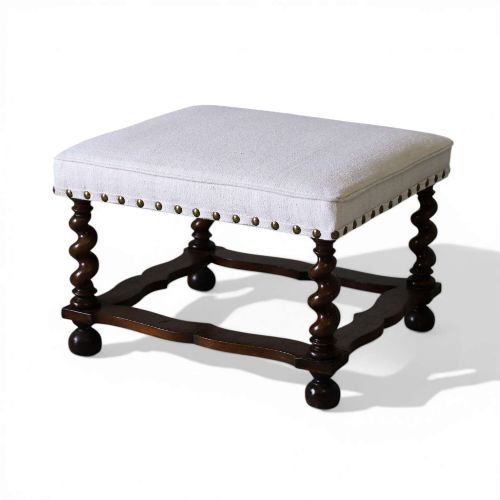
Decorative elements frequently include spiral carvings, barley-sugar legs, and oyster veneers applied to the woodwork. Upholstered tops feature traditional coverings like fabric, linen, and tapestry, secured over padded foundations.
Current listings feature materials including oak, walnut, burr maple, brass, and tapestry across the nineteenth and early twentieth centuries.
Judging quality and character
Superior examples display crisp hand-carving and precise joinery that remains tight across the frame. The choice of timber grain, particularly in walnut and burr maple variations, dictates the visual depth of the woodwork.
Revival pieces differ in execution from earlier foundational eras, where hand-turned elements and structural bracing reflect period-specific joinery techniques. The integrity of the stretcher connections primarily determines the long-term durability of the piece.
The Carved Stretcher Stool Glossary
- Stretcher
- A horizontal timber connecting the legs of a stool to provide structural rigidity. These supports often feature decorative turnings or carvings.
- Joint stool
- A traditional timber stool assembled with mortise and tenon joints rather than glue. This method ensures lasting durability in daily use.
- Barley-sugar twist
- A spiral turning resembling a twisted rope, popular in seventeenth-century furniture design and later revivals. It adds vertical movement to the legs.
- Oyster veneer
- Circular cross-sections of branch wood laid out to create a patterned surface resembling oyster shells. This technique highlights the natural grain of walnut.
- X-frame
- A structural base formed by two intersecting diagonal members supporting the seat. This form appears in formal revival and period seating.
Carved Stretcher Stool: Frequently Asked Questions
What defines a carved stretcher stool?
A carved stretcher stool is distinguished by its structural lower bracing and ornamental woodwork. These elements combine utility with period decorative styles.
Such seating ranges from compact footstools to larger dressing table variants. The framework relies on connecting stretchers for both stability and visual weight.
How were these stools originally used?
These stools served as movable seating throughout domestic spaces, often placed near dressing tables or by the fireside. Their sturdy construction accommodated daily sitting.
Many examples also functioned as footstools to elevate feet away from cold floors. Their portable nature allowed them to be repositioned easily within a room.
How do I date a wooden stool?
Dating relies on examining the timber species, joinery methods, and decorative motifs present on the frame. Earlier pieces show hand-cut joinery and period-specific turning styles.
Revival pieces often emulate seventeenth or eighteenth-century aesthetics while utilising nineteenth or twentieth-century manufacturing techniques. Comparing the wear patterns on the feet and stretchers provides further chronological clues.
What woods appear most frequently?
Oak and walnut form the primary structural timbers across these listings. Cabinetmakers valued these hardwoods for their strength and ability to hold detailed carving.
More decorative surfaces occasionally incorporate burr maple for distinctive figuring. Upholstered sections introduce softer textiles like linen, tapestry, and woven fabrics.
How do I care for antique wood?
Maintain the timber by keeping stools away from direct heat sources and rapid humidity shifts. Regular dusting preserves the surface finish without stripping natural oils.
Avoid excessive moisture on upholstered sections and wooden frames alike. Gentle cleaning ensures the carved details and veneers remain intact for future years.