


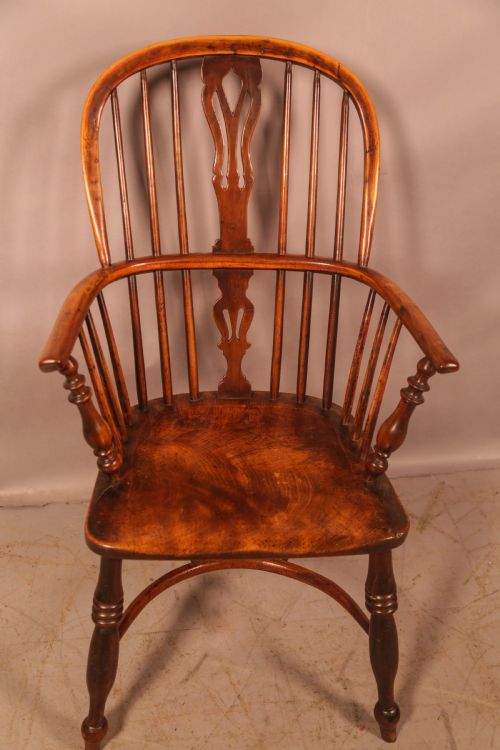


Carved Stretcher Armchair
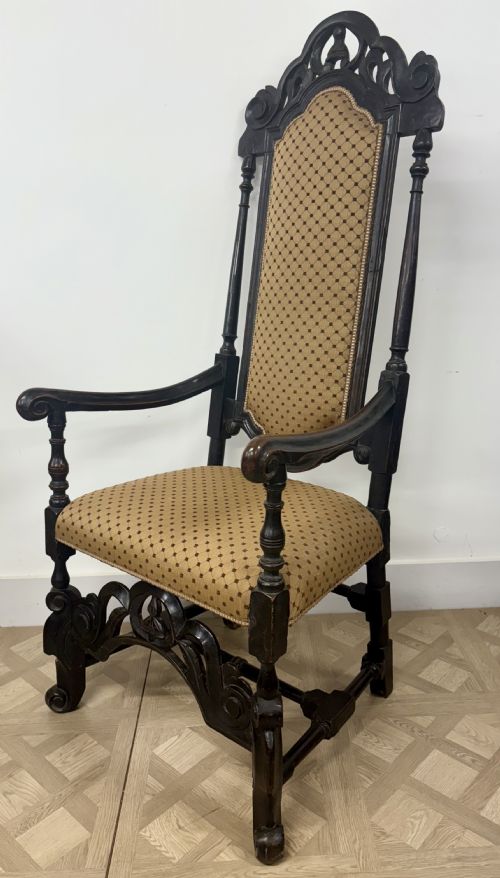
A carved stretcher armchair is a substantial seating form defined by elaborate woodwork linking its lower legs, offering both structural rigidity and period presence.
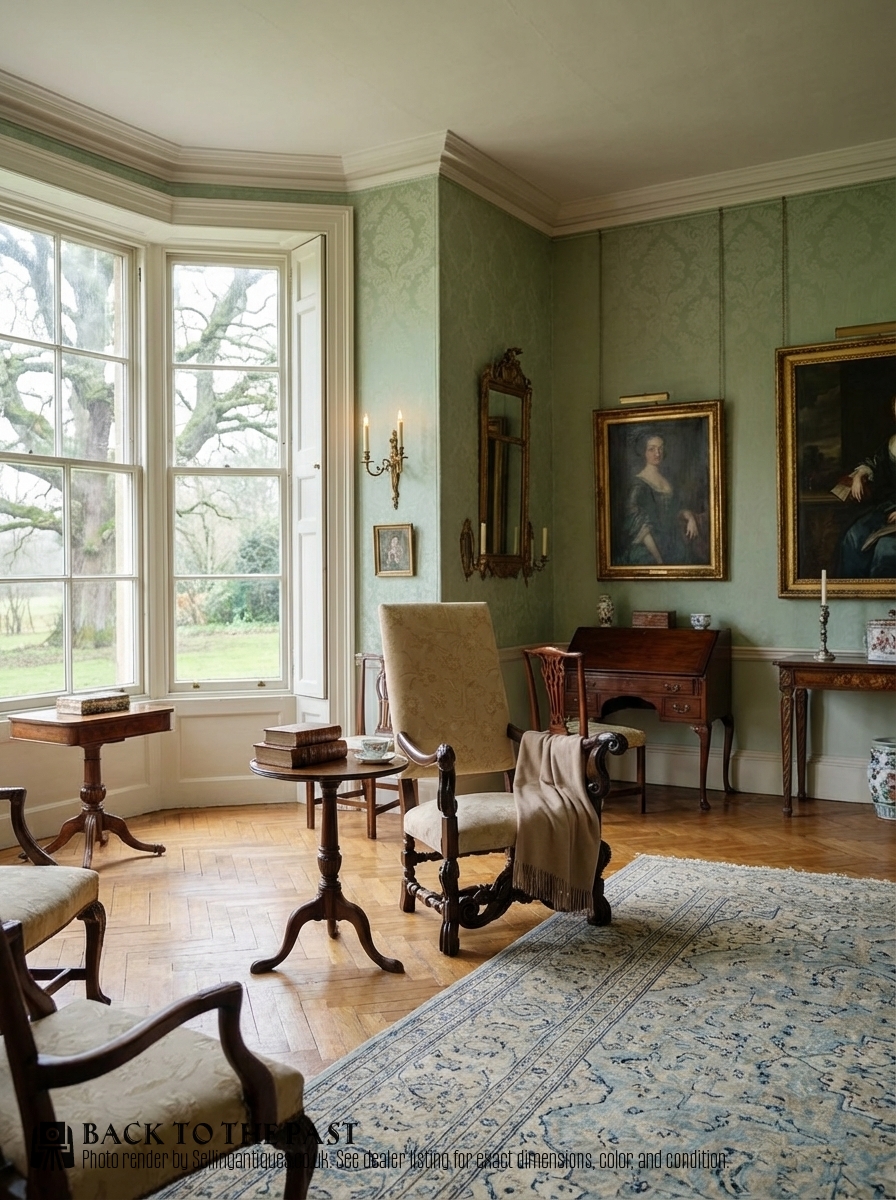
Carved Stretcher Armchair
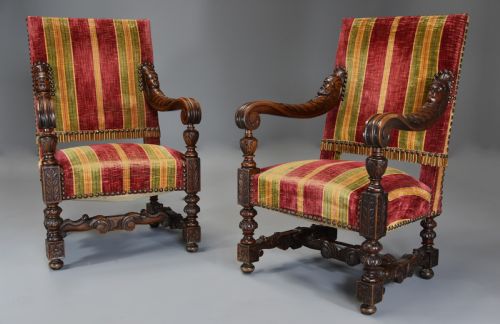
A carved stretcher armchair combines robust wooden framing with decorative lower bracing, emerging across periods from the seventeenth century through the twentieth century. These chairs frequently adopt revival aesthetics such as Carolean, Jacobean, and French Baroque styles, translating historic opulence into domestic seating.
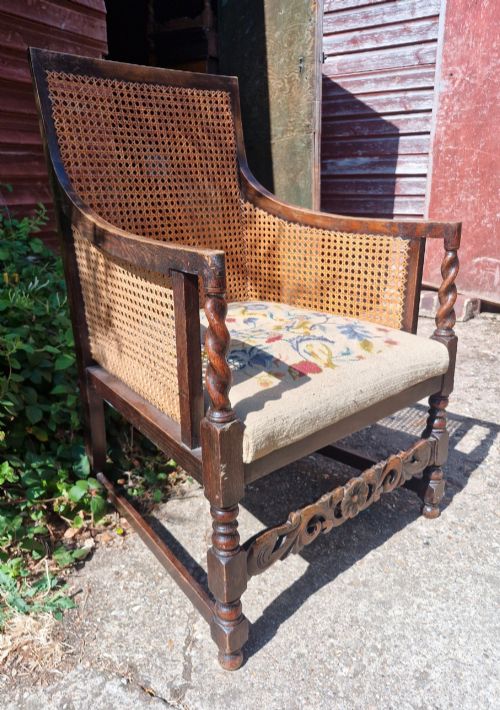
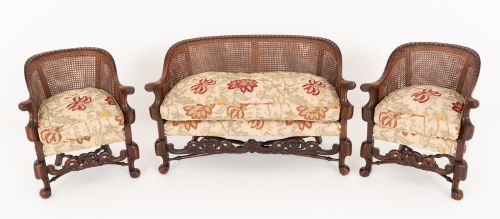
The materials span dense hardwoods like oak, walnut, and yew, often paired with cane panels, tapestry fabric, or modern upholstery. Forms range from high-backed wainscot constructions and open library chairs to expansive wingbacks and bergere suites.
Buyers encounter examples originating from English workshops alongside continental interpretations and provincial vernacular pieces. The defining architectural feature remains the decorated cross-rail or stretcher set between the legs, which anchors the visual weight of the chair.
Materials and construction methods
Construction relies heavily on native and imported timbers, notably oak and walnut, shaped through traditional joinery and detailed hand-carving. Artisans employed turning lathes to produce baluster or spiral supports, then pierced and chiselled the interconnecting stretchers with foliage, scrolls, or geometric patterns.
Seating surfaces incorporate woven cane panels, drop-in pads, or heavy textile upholstery fixed with brass tacks. Secondary timbers such as beech occasionally appear in concealed framing elements, whilst specialised forms utilise steam-bent yew wood for Windsor components.
Listings feature walnut and oak predominantly, alongside cane, brass, and heavy tapestry fabrics across Victorian, Edwardian, and seventeenth-century periods.
Distinctions in execution and integrity
Quality rests upon the crispness of the carving and the selection of timber, where deeply undercut foliage and dense, figured walnut elevate a piece above mechanical or shallow replication. The integration of the stretcher frame with the vertical legs dictates structural longevity.
Original surface finishes, whether polished timber patination or period upholstery textiles, separate examples retaining historical cohesion from those subjected to extensive modern intervention or mismatched components.
The Carved Stretcher Armchair Glossary
- Stretcher
- A horizontal wooden brace connecting the legs of a chair to provide stability. In these pieces, it serves as the primary canvas for elaborate carving.
- Bergere
- An enclosed upholstered armchair with wooden framing and cane or upholstered sides. This form frequently incorporates decorative lower stretchers.
- Wainscot
- An early wooden chair type constructed with panelled backrests and solid seats, rooted in seventeenth-century domestic traditions.
- Carolean
- A seventeenth-century stylistic designation associated with the reign of Charles II, characterised by rich ornamentation, scrolling foliage, and crown motifs.
- Os De Mouton
- A French term describing furniture legs or stretchers shaped in a distinctive, curving scroll resembling a ram's bone.
Carved Stretcher Armchair: Frequently Asked Questions
How do I date a carved stretcher armchair?
Dating relies on assessing the timber species, joinery techniques, and the specific vocabulary of the carving styles. Seventeenth-century originals display hand-split timbers and pegged joints, whereas nineteenth-century revival pieces often reveal machine-sawn components and softer wood patination beneath the finish.
Secondary clues include the wear patterns on the foot stretchers, where regular use leaves distinct abrasion, and the method used to fix upholstery elements or cane weaving to the frame.
Were these chairs used for dining or lounging?
The function varies considerably by form, ranging from heavy oak wainscot chairs designed for hall seating to expansive upholstered wingbacks and library armchairs intended for reading and relaxation. Sturdier open-arm variants often served as single statement pieces rather than matching dining sets.
Low seating heights and wide elbow rests on Carolean and Baroque examples suggest they were positioned in formal reception rooms to project status and accommodate bulky historical garments.
How should I care for a historic wooden frame?
Preservation requires maintaining stable indoor humidity levels to prevent the timber from splitting and the cane panels from becoming brittle. Regular dusting with a soft, dry cloth protects the carved recesses from accumulating debris.
Avoid placing antique seating near direct heat sources or strong sunlight, which can fade textile upholstery and dry out traditional wax finishes on walnut and oak surfaces.
What distinguishes an original period piece from a revival copy?
Period pieces from the seventeenth or eighteenth centuries exhibit tool marks consistent with hand-working, timber shrinkage appropriate to age, and structural integration where components wear down naturally together. Revival pieces from the Victorian and Edwardian eras typically display heavier mechanical tooling and more uniform wood conditioning.
Examining the underside of the seat frame and the interior joints often reveals the transition from early pegged construction to later metal screws and modern adhesives.