



Carved Stone Urn Lighting
Carved stone urn lighting brings sculptural weight and diffused warmth to a room, uniting classical form with functional illumination.
Carved Stone Urn Lighting
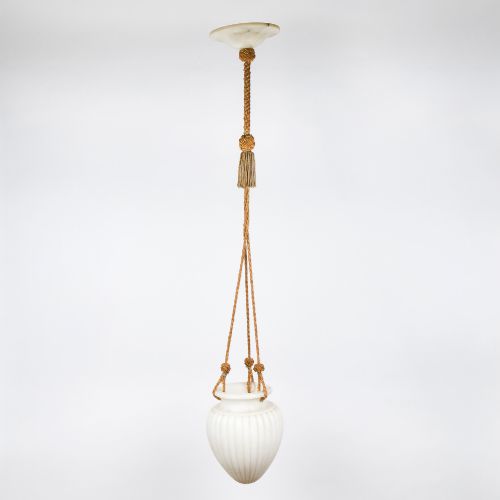
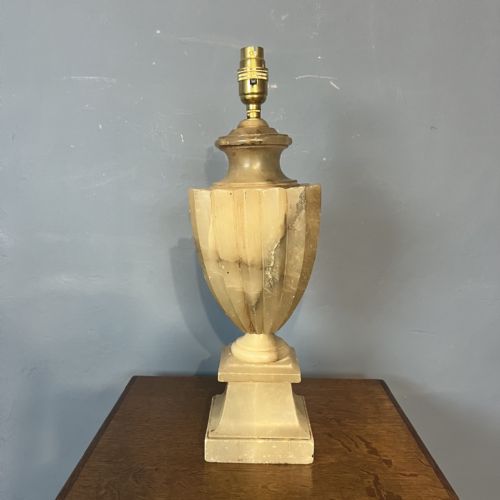
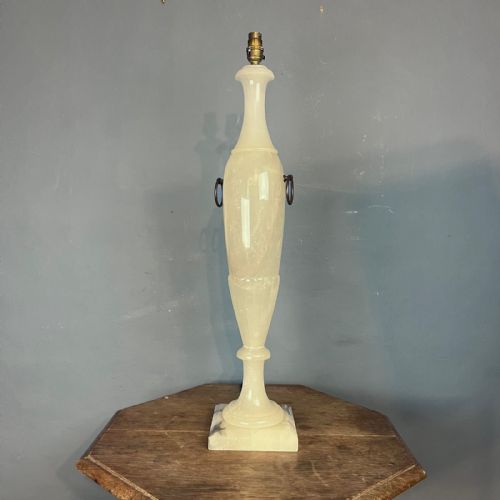
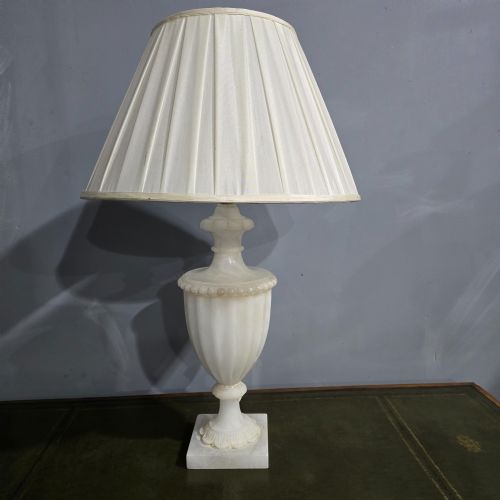
Carved stone urn lighting comprises table lamps and pendant lights fashioned from solid minerals into classical vessel shapes. These pieces transform traditional urn forms into domestic light sources through hollowed bodies and fitted internal wiring.
You are most likely to encounter alabaster, marble and white onyx table lamps dating from the early twentieth century. These domestic fixtures often employ classical revival and Edwardian design motifs, drawing on French and Italian stylistic traditions.
The selection ranges from single pendant lights hanging on braided cord to matched pairs of substantial table lamps. Makers utilised metal and brass mounts alongside glass components to complete the functional hardware of each piece.
How they were made
Craftsmen shaped solid blocks of alabaster, marble and white onyx on lathes or by hand to achieve the thin, translucent walls characteristic of stone urn lamps. This careful reduction allowed light to pass directly through the mineral body, illuminating the natural veining.
Makers integrated brass and metal collars, bases and fittings to secure the stone components and mount electrical hardware. Fabric shades and braided cord wiring completed the assembly, balancing the heavy stone bodies with softer textural elements.
Current listings feature alabaster, marble and white onyx pieces spanning the nineteenth century to 1930, presented as table lamps and pendant lights.
What varies in quality
The fineness of the stone carving and the intensity of its natural translucency distinguish superior examples from heavier, opaque pieces. Purity of material and subtlety in the rendering of classical revival details set the best specimens apart.
Proportion and the integration of metal or brass mounts dictate the overall visual balance of an urn lamp. Matched pairs demonstrating uniform veining and symmetrical turning represent the highest standard within this category.
The Carved Stone Urn Lighting Glossary
- Alabaster
- A fine-grained, translucent stone used extensively for carved lighting. Its soft appearance allows light to diffuse evenly through the body of the lamp.
- Cassolette
- A decorative urn or vase with a removable lid, frequently adapted into nineteenth-century table lamps. This form echoes classical antiquity.
- Neoclassical
- A style drawing inspiration from the classical art and culture of ancient Greece and Rome. It prioritises symmetry, proportion and restraint.
- White Onyx
- A banded variety of chalcedony prized for its pale coloration and translucency. It provides a luminous surface when illuminated from within.
- Braided Cord
- A textile-wrapped electrical cable used in period lighting. It adds an authentic finishing touch to early twentieth-century pieces.
Carved Stone Urn Lighting: Frequently Asked Questions
What periods do these lamps come from?
The available lighting spans the late nineteenth century through to the 1930s. Edwardian examples and pieces from the 1920s feature prominently.
Italian and French workshops produced the majority of these carved stone urns, reflecting prevailing neoclassical tastes of the era.
How do alabaster lamps diffuse light?
Alabaster possesses natural translucency that allows light to pass directly through the stone body. This creates a soft, ambient glow rather than harsh directional illumination.
Internal bulbs illuminate the veining and natural variations within the mineral, highlighting the carved contours of the urn.
Are these lamps found as pairs?
Matched pairs frequently appear alongside single table lamps and hanging pendant lights. Pairs were typically designed to flank a mantelpiece or console table.
Finding a balanced pair depends on the natural consistency of the stone veining and matching brass or metal mounts.
How do I care for stone urn lighting?
Dust alabaster, marble and white onyx gently with a dry, soft cloth to protect the polished surface. Avoid harsh chemical cleaners that can damage porous minerals.
Check the internal wiring and metal mounts periodically to ensure the historical components remain secure.