
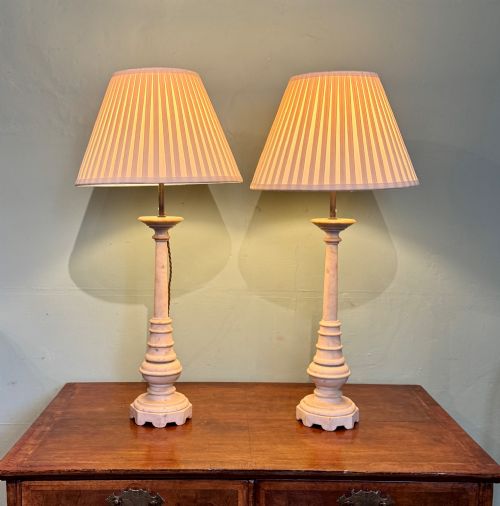
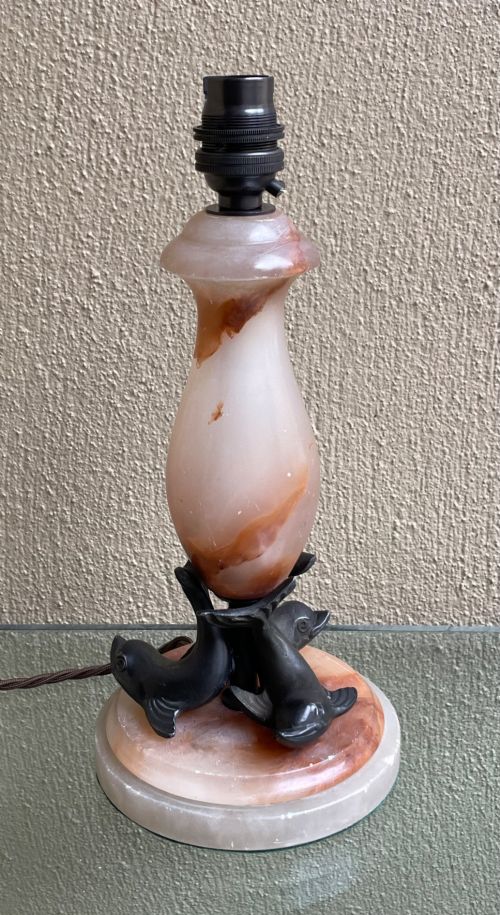
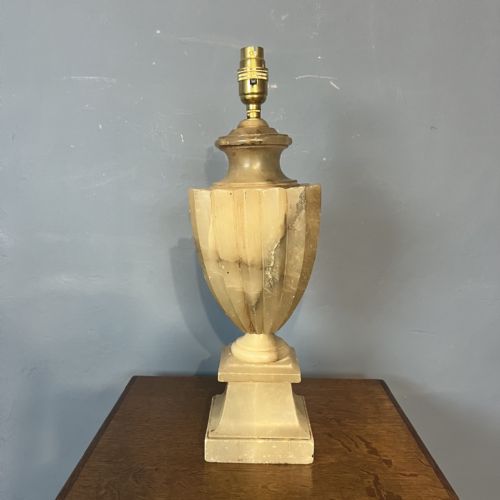
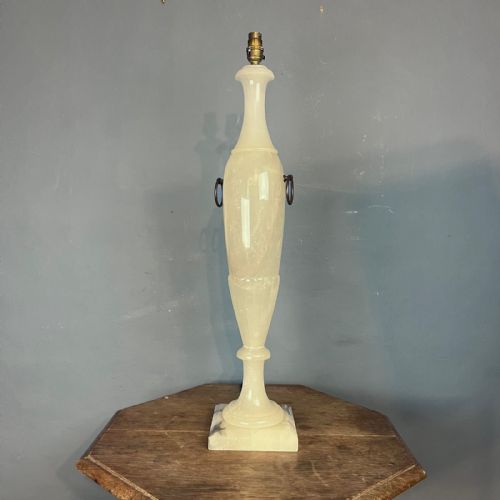
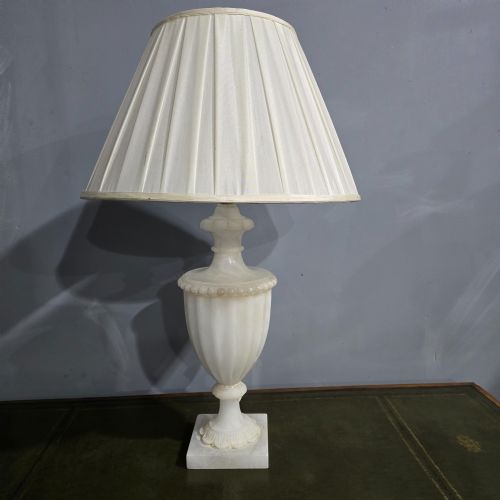


Carved Alabaster Desk Lamps
These carved alabaster desk lamps bring a warm, diffused glow to a study, built from translucent stone that catches the light.
Carved Alabaster Desk Lamps
Carved alabaster desk lamps combine functional illumination with sculptural stone carving, predominantly taking the form of table lamps. When you search for carved alabaster desk lamps, you encounter pieces designed to sit on a desk or table, providing both direct light and a soft glow through the stone itself.
The selections available span from the late Victorian period and Edwardian era through to the 1920s and 1930s. Art Deco and Neoclassical styles appear alongside classical revival pieces, showing how makers adapted the soft stone to changing tastes across decades.
How they were made
Craftsmen shaped soft alabaster, marble, and white onyx by hand or on a lathe, hollowing the stone to let light pass through its crystalline structure. This stonework was then mounted with brass, patinated metal, and other metals to secure the electrical fittings or original burner hardware.
Many examples incorporate glass and fabric elements to complement the carved stone bodies. The varied weights and density of the stone dictated how deeply the carver could cut without compromising the structural integrity of the lamp.
What varies in quality
Quality rests primarily on the translucency and grain of the stone itself, alongside the crispness of the carving. Finer pieces display a uniform clarity without cloudy inclusions that block the passage of light.
The integration of the stone body with the metal mounts also defines the tier of craftsmanship. Superior examples feature well-fitted brass or patinated metal hardware that holds the heavy stone securely without awkward gaps.
The Carved Alabaster Desk Lamps Glossary
- Alabaster
- A fine-grained, translucent stone that accepts intricate carving and lets light diffuse gently through its surface. It was widely utilised across the nineteenth and early twentieth centuries for decorative lighting.
- Onyx
- A banded variety of chalcedony quartz often used interchangeably with alabaster in lamp bases. Its natural striations create distinct patterns across the body of the piece.
- Neoclassical
- A style drawing inspiration from classical antiquity, featuring formal symmetry and clean architectural lines. Lamps of this design often incorporate classical motifs into the stone base.
- Art Deco
- A decorative style from the interwar period characterised by streamlined forms and geometric precision. Pieces from this era often lean into bold silhouettes.
Carved Alabaster Desk Lamps: Frequently Asked Questions
Are these lamps heavy to place on a desk?
Yes, solid stone construction makes these lamps substantially heavier than ceramic or wooden alternatives. They require a sturdy surface to support their weight safely.
This heft ensures the lamp stays firmly planted in place once positioned on a desk or table.
How do I clean carved alabaster?
Alabaster is a soft and porous stone that absorbs moisture easily, so water should be avoided during cleaning. A dry, soft cloth is sufficient to remove dust from the carved surfaces.
Using cleaning fluids can permanently stain or dissolve the surface polish of the stone.
Can I use modern light bulbs?
Most desk lamps from these periods accept standard modern bulbs, provided the wattage matches safe heat limits for enclosed stone. It is wise to check the existing lampholder specifications.
LED bulbs work particularly well because they emit less heat, protecting the historic stone and internal wiring.
How do I date an alabaster lamp?
Dating relies on stylistic clues such as Neoclassical or Art Deco motifs, alongside the type of metal fittings and wiring components used. Edwardian and Victorian pieces often show heavier classical detailing.
Comparing the turned stone profile against known manufacturing periods helps narrow down the decade of production.