


Carved Spoon Back Chair
A carved spoon back chair brings a deeply curved, comfortable timber frame and rich upholstery into a room.
Carved Spoon Back Chair
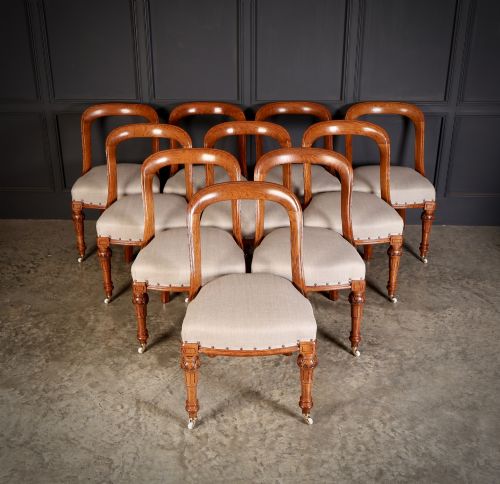
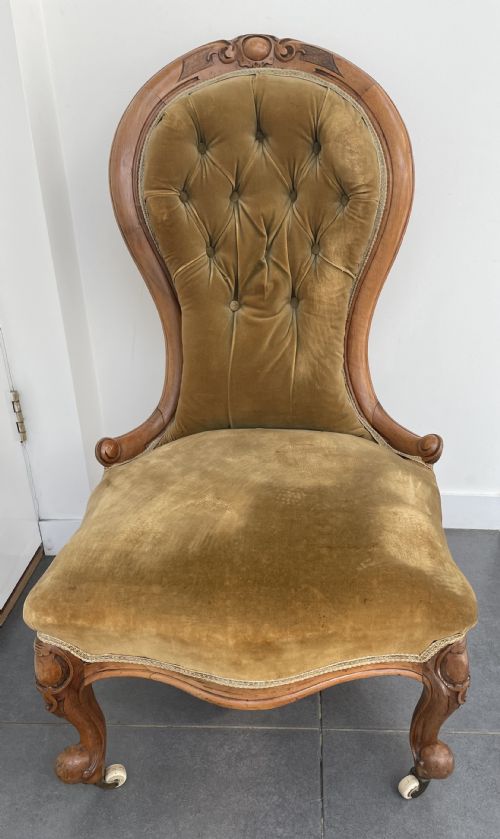
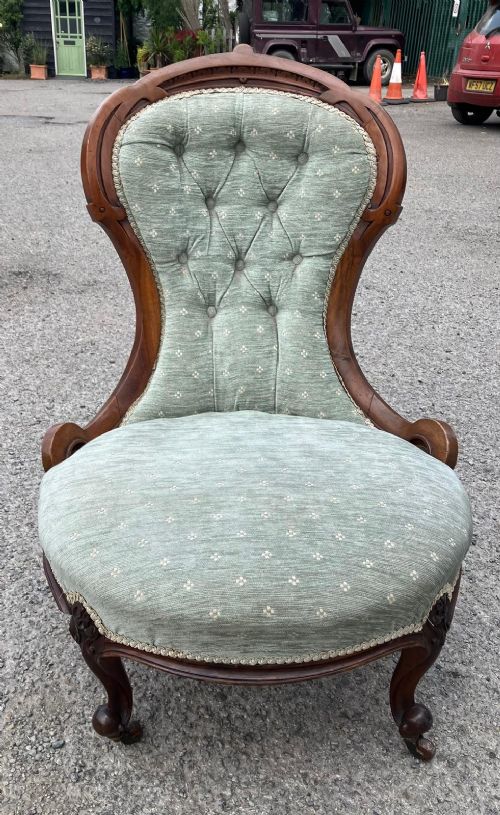
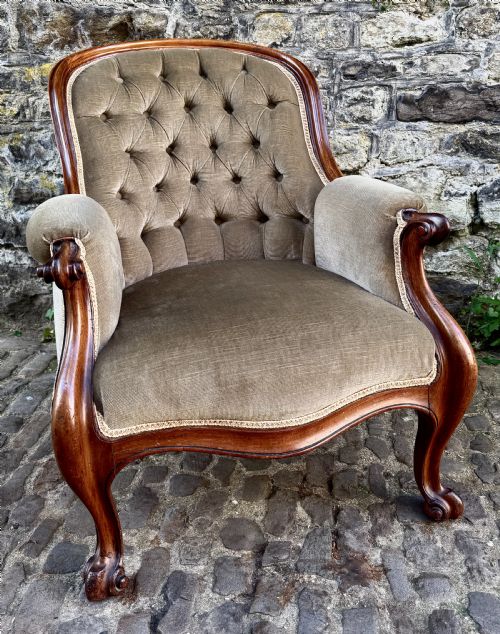
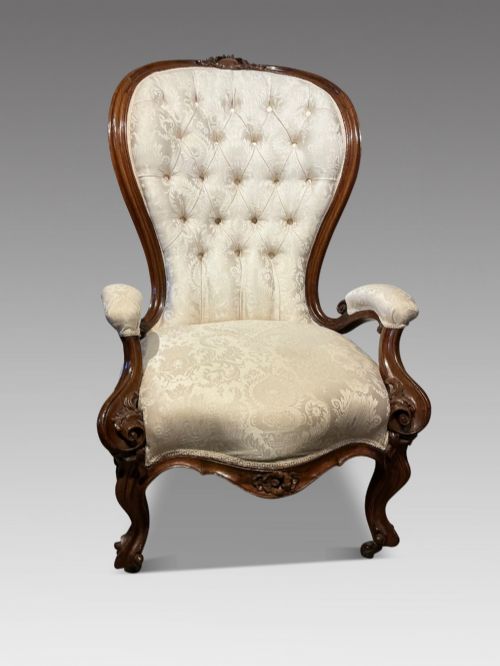
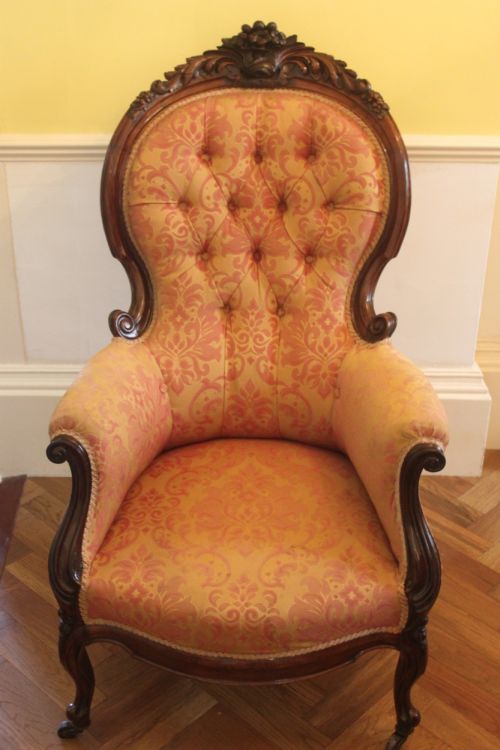
A carved spoon back chair is an upholstered seat featuring a concave, paddle-shaped wooden backrest designed to cradle the human form. Buyers searching this phrase most frequently encounter Victorian walnut and mahogany examples from the mid to late nineteenth century.
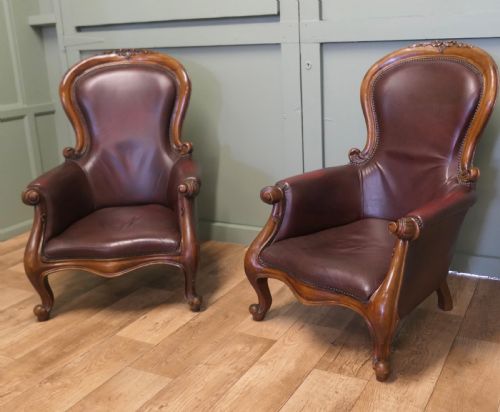
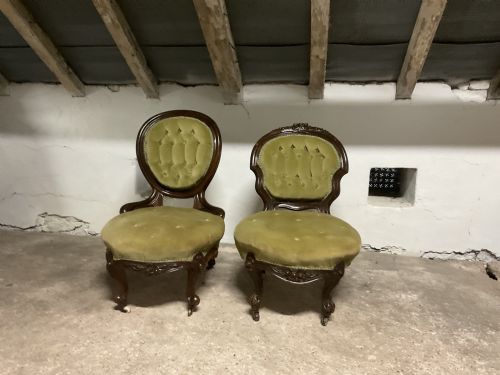
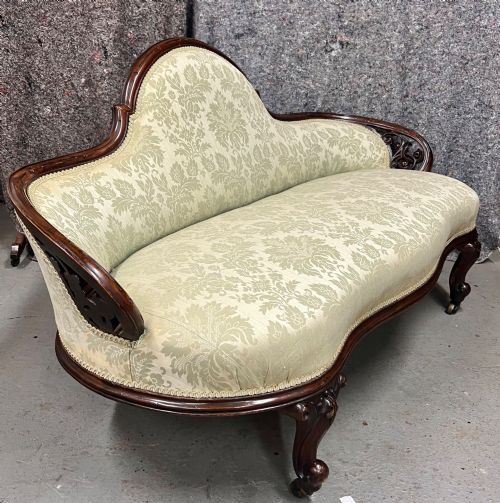
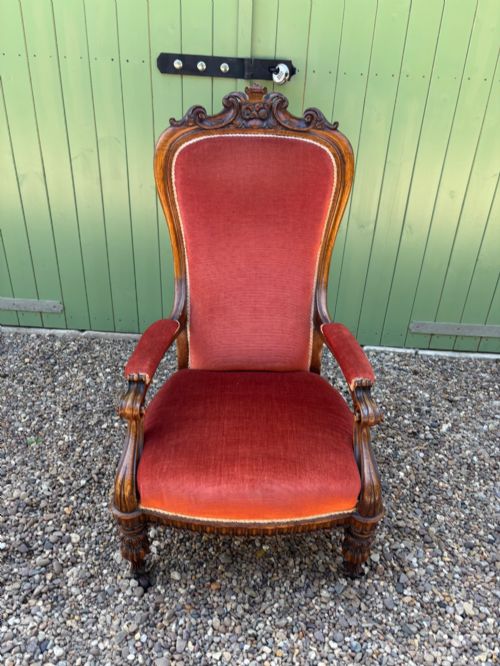
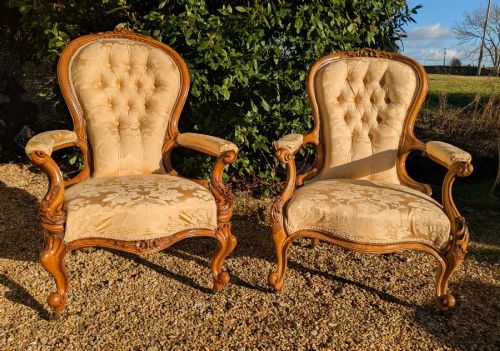
The selection ranges from low nursing and slipper chairs to open armchairs, gentleman's chairs, and larger salon suites. These pieces served primarily for parlour socialising, reading, and dressing rooms, combining domestic comfort with formal nineteenth-century reception rooms.
While the vast majority belong to the Victorian period, including early Victorian and Rococo Revival interpretations, occasional items reference earlier seventeenth-century motifs or Regency styling. The core of the selection centres on rich timber frames paired with plush fabric or leather upholstery.
What varies in quality
The distinction between standard domestic seating and exceptional library or gentleman's chairs lies in the ambition of the timber carving and the weight of the solid walnut or mahogany frame. Deeply undercut relief work on the crest rail and refined cabriole legs separate workshop output from mass production.
Proportion and structural integrity dictate the standing of a piece, particularly how well the curved back integrates with the seat rail and legs. Examples retaining their original show wood finish and balanced proportions demonstrate superior cabinet making.
The selection spans diverse seating forms, ranging from single library armchairs and nursing seats to complete multi-piece salon suites.
The Carved Spoon Back Chair Glossary
- Spoon back
- A concave, ovoid upholstered backrest shaped to resemble the bowl of a spoon. This ergonomic nineteenth-century design supported the spine of the sitter.
- Show wood
- Polished hardwood framing left exposed around the upholstered padded sections of a chair. It displays the grain and carved ornamentation of the timber.
- Nursing chair
- A low-seated upholstered chair designed for comfort during nursery duties or sitting near bedroom fires. They often lack arms to accommodate voluminous nineteenth-century dresses.
- Cabriole leg
- A furniture leg that curves outward at the knee and tapers inward toward the foot, often ending in a scroll or pad. It is frequently seen on mid-Victorian revival seating.
- Button upholstery
- A technique where depressions are created in padded upholstery by pulling twine tightly through the stuffing and securing it with covered buttons. This forms a distinctive diamond pattern across the backrest.
Carved Spoon Back Chair: Frequently Asked Questions
What is a spoon back chair?
A spoon back chair is a nineteenth-century seat featuring a concave, ovoid wooden frame and upholstered back designed to fit the curve of the human spine.
Most examples seen today date from the Victorian era and utilise rich timbers like walnut or mahogany.
Where were these chairs used?
These chairs were placed in nineteenth-century drawing rooms, parlours, dressing rooms, and libraries for formal reception or quiet reading.
Lower models functioned as nursing or slipper chairs beside bedroom hearths.
How do I identify a Victorian piece?
Victorian examples display characteristic dark hardwoods like walnut or mahogany, often decorated with floral carvings and paired with serpentine or cabriole legs.
Button-tufted upholstery and curved wooden show wood frames are standard hallmarks of this period.
Are these chairs comfortable for daily use?
Their padded backs and sprung seats provide a supportive upright posture well suited to sitting at a desk or in a reception space.
Low nursing chairs offer a relaxed, informal seating position close to the floor.