





Carved Spanish Table
A carved spanish table brings deep historical timber and heavy character into a room, forged across centuries of Iberian craft.
Carved Spanish Table
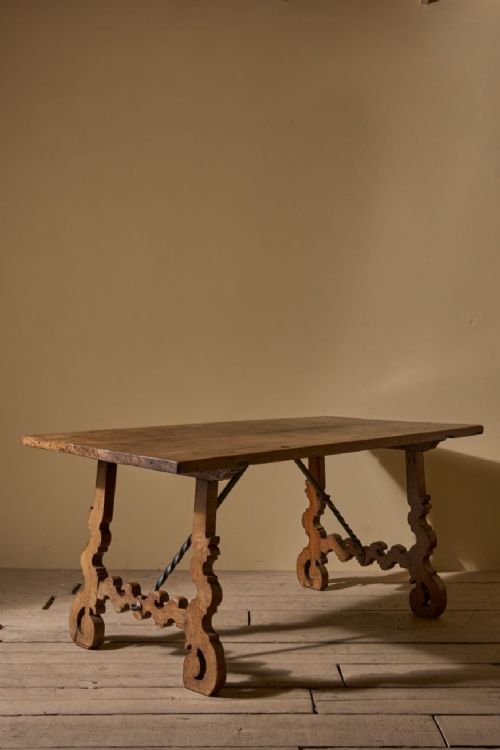
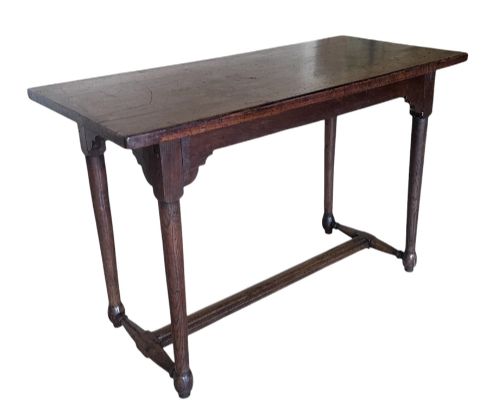
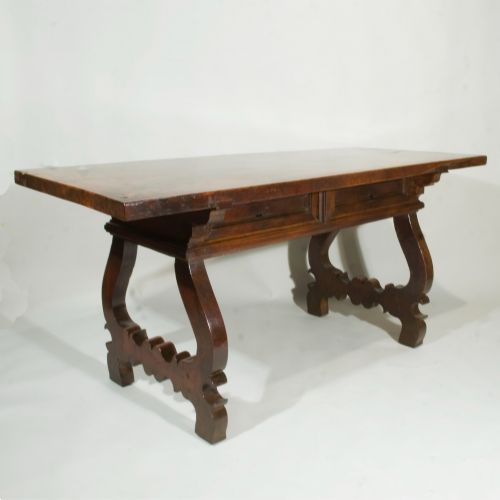
A carved spanish table encompasses dining tables, side tables, console tables, and centre tables spanning from the seventeenth century through to the early twentieth century. Walnut and oak dominate the material record, frequently appearing alongside fruitwood, chestnut, and pine in both early period pieces and later revival iterations.
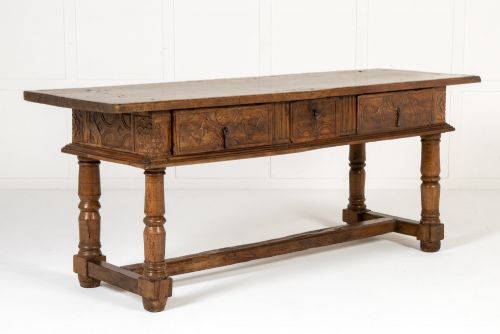
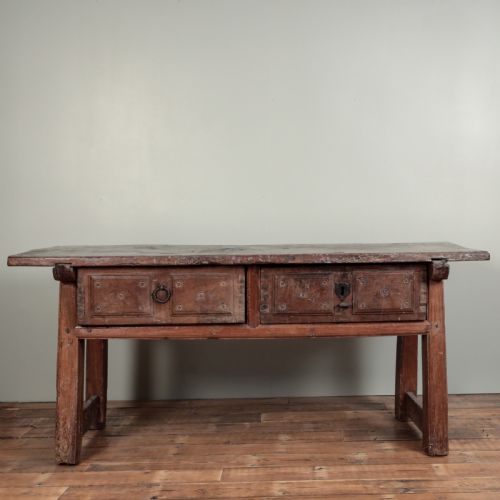
The version most commonly encountered on this page is the seventeenth or eighteenth century walnut table, often formed as a trestle or side table with straightforward structural lines. Alongside authentic early examples, the selection includes Spanish revival and rustic interpretations produced around the late nineteenth and early twentieth centuries.
Beyond standard tables, related forms such as console tables, coffee tables, and brazier tables appear within the wider typology. These objects reflect regional domestic traditions and utility, carrying varied decorative surface carving rather than uniform ornamentation.
How they were made
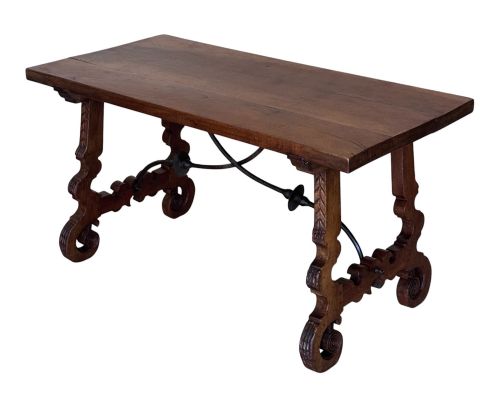
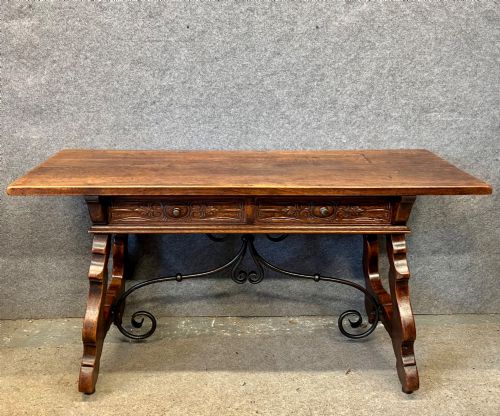
Makers utilised solid timbers, principally walnut and oak, joined with pegged mortise and tenon construction to withstand heavy daily use. Wrought iron stretchers frequently brace the wooden legs, adding both structural stability and a characteristic industrial contrast.
Surfaces received hand-chiselled carving and simple moulded edges executed directly into the dense wood. Natural finishes, patination, and occasional painted or gilded treatments developed over decades of domestic handling.
Wrought iron appears regularly as a structural stretcher material supporting timber tops across multiple periods.
What varies in quality
The integrity of the timber and the depth of the original surface patination distinguish the finest examples from simpler or later pieces. Solid walnut construction with deep, untouched age-related wear commands greater appreciation than heavily restored or later revival pieces.
The crispness and restraint of the hand-carved detailing separate superior tables from coarser workshop production. Proportion and the integration of ironwork stretchers also dictate the visual balance of the piece.
Whytock and Reid
The Carved Spanish Table Glossary
- Walnut
- A dense, dark hardwood prized for its rich grain and stability, used extensively in seventeenth and eighteenth century Iberian furniture.
- Console table
- A table designed to stand against a wall, frequently bearing decorative carving along the front apron.
- Trestle table
- A form consisting of two or more supports connected by a horizontal beam or stretcher, holding a solid wood top.
- Brasero
- A traditional heating brazier, sometimes incorporated into a table frame with a metal insert.
- Patina
- The surface sheen and colour acquired by wood and metal through decades of use and polishing.
Carved Spanish Table: Frequently Asked Questions
How do I identify a seventeenth century table?
Seventeenth century examples typically utilise solid walnut with pegged joinery, heavy timber planks, and minimal decorative carving limited to simple moulding or geometric panels.
Over centuries of use, these pieces develop a distinct dry patina and wear patterns around the foot and stretcher areas that later revival furniture struggles to replicate.
What is a Spanish revival table?
Revival pieces are later interpretations produced during the late nineteenth or early twentieth centuries, drawing direct inspiration from earlier baroque and rustic designs.
While they utilise traditional motifs and dark woods, their construction methods and internal hardware often reveal a more recent date of manufacture.
How should I clean a walnut table?
Maintain the surface using a soft, dry cloth to remove dust without disturbing the aged wax or dry timber finish.
Avoid modern liquid polishes or silicone sprays, as these can penetrate open grain and alter the historic appearance of the wood.
Where were these tables used?
These tables served central roles in domestic Iberian interiors, functioning as dining surfaces, writing desks, or wall-anchored console furniture.
Their robust construction allowed them to withstand heavy daily tasks in both grand houses and rural farmhouses.