
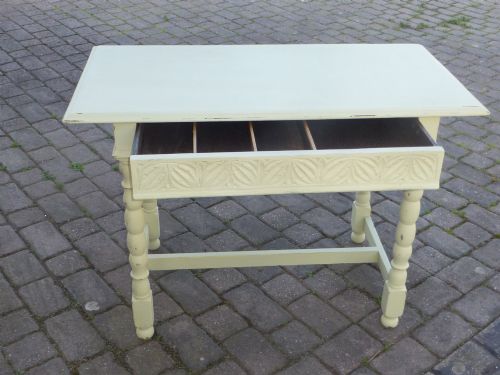


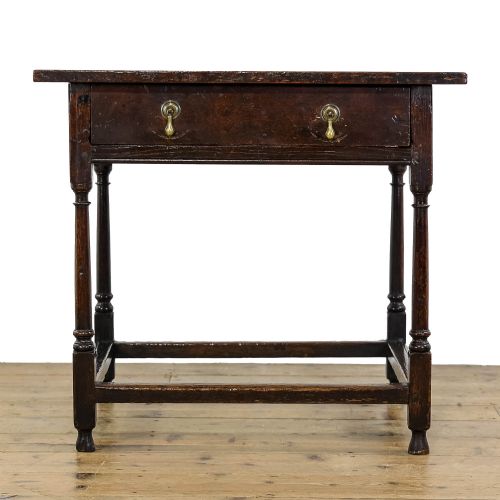
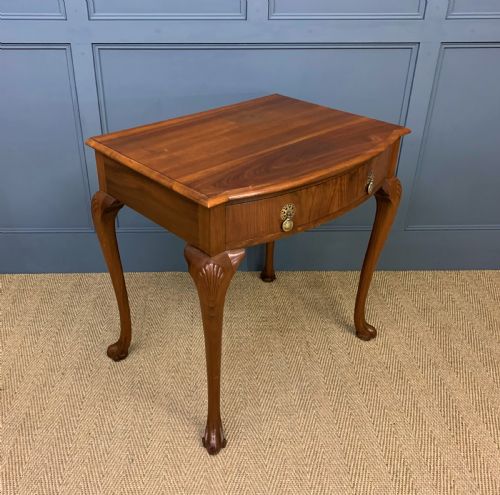

Carved Single Drawer Table
A carved single drawer table brings compact utility and traditional craftsmanship to any room, offering neat surface space alongside discreet storage.
Carved Single Drawer Table
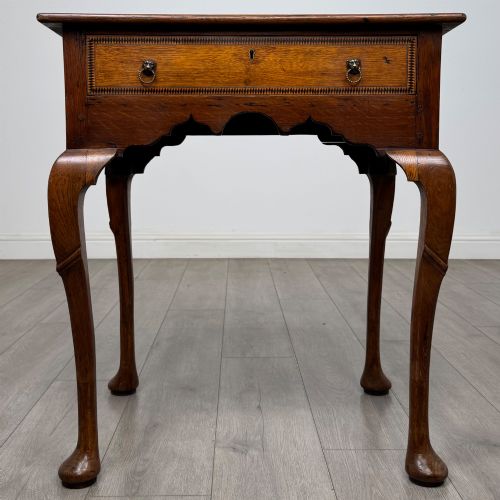
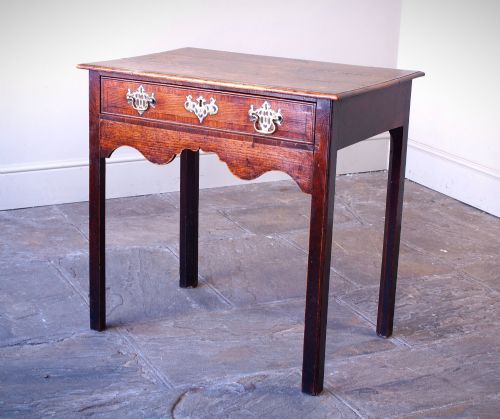
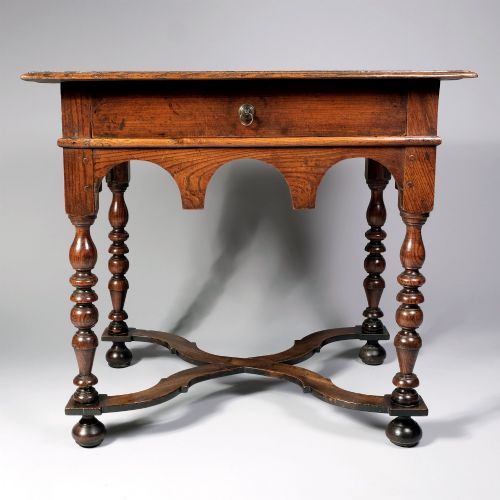
When you search for a carved single drawer table, you are looking at practical surface furniture designed for domestic use across multiple centuries. These pieces appear in forms ranging from side tables and lowboys to writing desks and bedside cabinets, originating from periods spanning the seventeenth century through to the mid-twentieth century.
The oak variants dominate the selection, often reflecting Georgian, William and Mary, or country traditions with straightforward proportions and structural integrity. Alongside these, mahogany, elm, walnut, and beech examples offer alternative timbers suited to both formal interiors and rustic settings.
Regional styles broaden the selection, including Irish Georgian pieces, French Provincial designs, and nineteenth-century Scandinavian interpretations. Whether acting as a hall console or a bedroom desk, each piece combines a functional upper drawer with timber framing.
How they were made
Makers utilised solid timbers such as oak, mahogany, elm, and walnut, often pairing structural hardwoods with decorative veneers like burr birch or burr walnut on the surfaces. Joinery relied on traditional techniques to house the single drawer securely within the apron of the table.
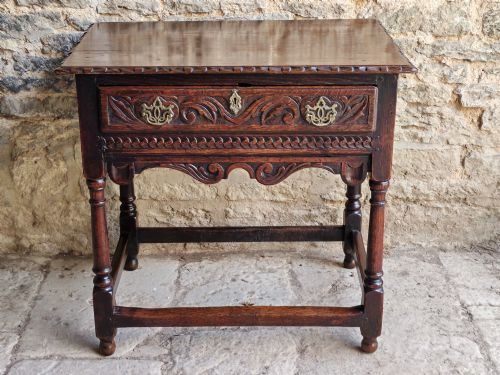
Carving was executed by hand directly into the timber, utilising gouges and chisels to create geometric patterns, foliate motifs, or figurative elements like the Green Man. Surface finishes ranged from natural wax polishes on hardwood to applied paint and leather inserts on writing desks, complemented by brass handles.
Listings feature items spanning the 17th, 18th, 19th, and 20th centuries, constructed from oak, mahogany, elm, walnut, and beech.
What varies in quality
The refinement of the hand carving dictates much of the distinction between standard items and superior examples, with crisp, deep relief work showing greater artisan skill. Timber selection also separates pieces, particularly where figured veneers like burr walnut or burr birch are matched across the top and drawer front.
Proportion and structural balance define the upper tier of these tables, where the relationship between the height of the frieze drawer and the turned or tapering legs demonstrates careful design. Original brass hardware and the retention of early surfaces further elevate the standing of a piece.
The Carved Single Drawer Table Glossary
- Lowboy
- A small table with one or more drawers, standing on relatively tall legs, frequently used as a dressing table or side table in the eighteenth century.
- Frieze
- The horizontal band or rail beneath the top of a table, which typically houses the single drawer.
- Burr
- A growth on a tree resulting in distorted grain, sliced into decorative veneer with intricate swirling patterns used on tabletops.
- Serpentine
- A curved line that dips inward in the centre and bows outward at the ends, often seen on the front edge of Georgian tables.
Carved Single Drawer Table: Frequently Asked Questions
Where should I put a carved single drawer table?
These tables fit easily into hallways, living rooms, or bedrooms due to their compact footprints and shallow depths. They work effectively against a wall as a console or beside a chair where surface space is needed.
The single drawer provides convenient storage for small household items, letters, or keys, keeping surfaces clear of clutter.
How do I care for antique timber tables?
Maintain the wood by applying a natural beeswax periodically to nourish the grain and protect the finish from drying out. Avoid placing the table in direct sunlight or near heat sources to prevent the timber from warping or splitting.
Use coasters and felt pads beneath objects placed on the surface to guard against moisture rings and scratches.
How can I tell a Georgian table from a Victorian one?
Georgian pieces often display restrained classical proportions, straightforward oak or mahogany construction, and understated mouldings. Victorian examples frequently feature heavier proportions, darker finishes, and more elaborate, deep-relief carving.
Examining the secondary timbers inside the drawer and the method of joint construction also helps clarify the period of manufacture.
What is the difference between a side table and a lowboy?
A side table is a general term for any small table designed to stand against a wall, varying widely in height and drawer configuration. A lowboy specifically refers to a low table featuring one or two tiers of drawers, originating in the late seventeenth and eighteenth centuries.
Lowboys traditionally stood on slender cabriole or turned legs, serving intimate personal functions in dressing rooms or parlours.