
Carved Shield Back Seating
These carved shield back seating options combine neoclassical elegance with sturdy timber construction, offering a distinct silhouette for dining rooms and halls.
Carved Shield Back Seating
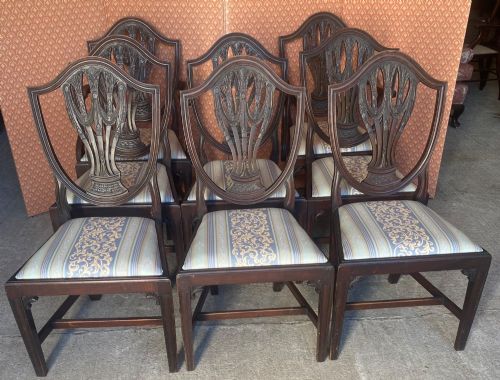
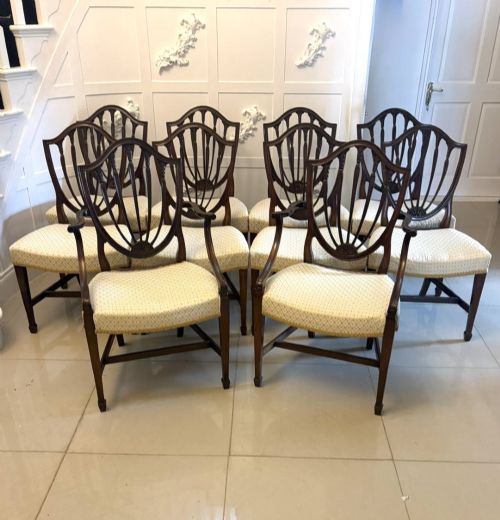
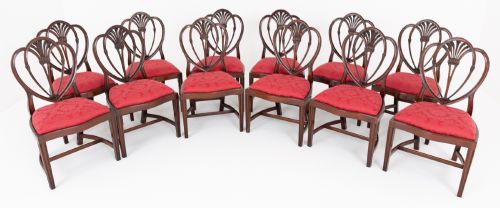
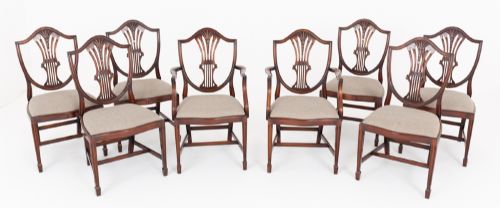
When you search for carved shield back seating, you encounter a refined group of chairs and reception seats defined by their characteristic open backrest shaped like a tapered shield. The pieces span several centuries of design, with origins traceable through Georgian, Victorian, and Edwardian periods.
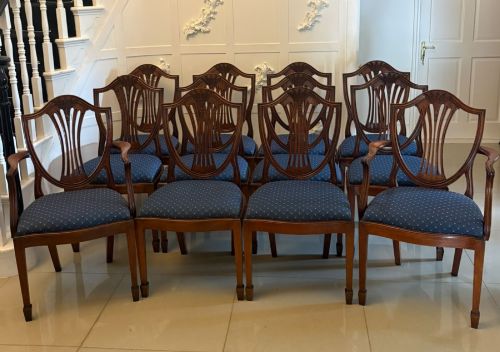
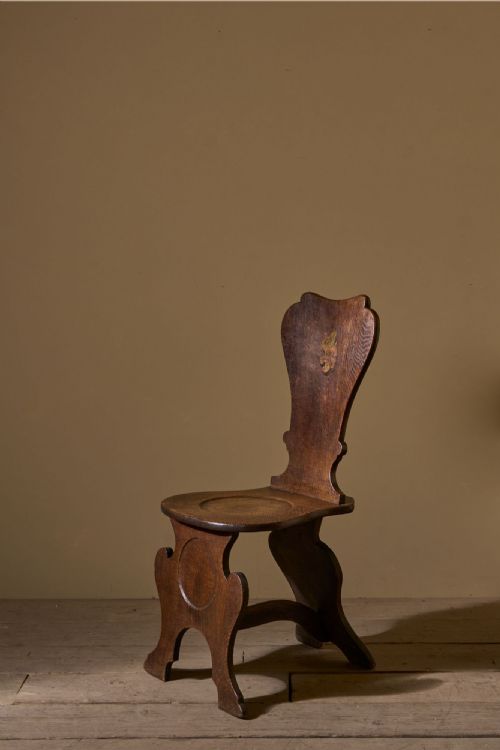
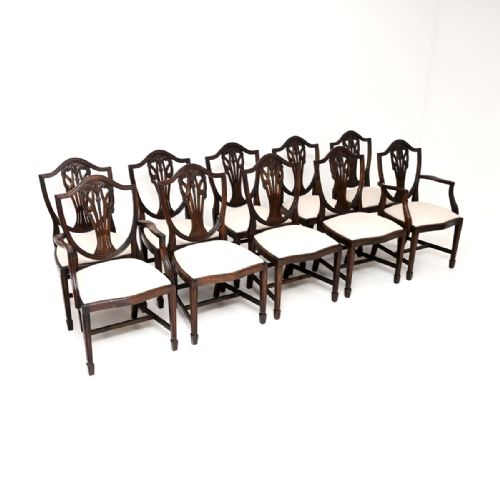
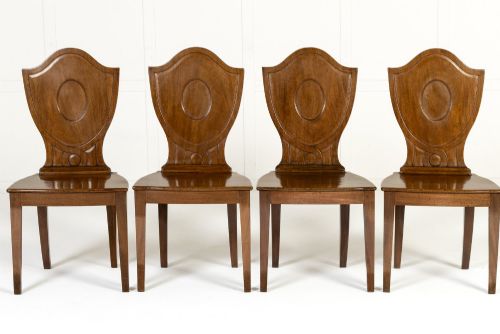
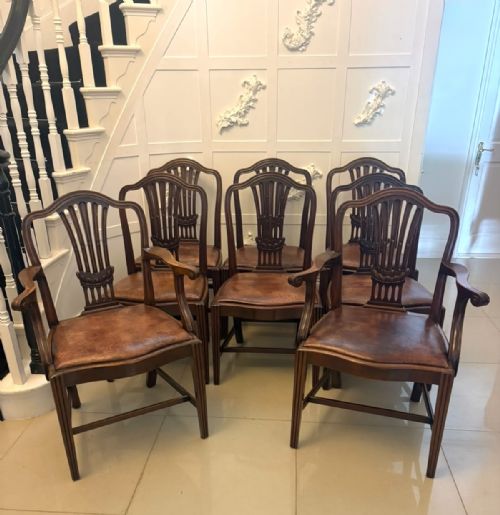
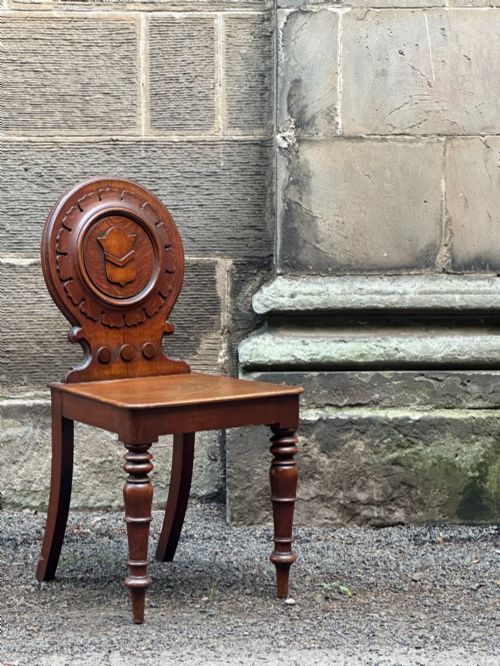
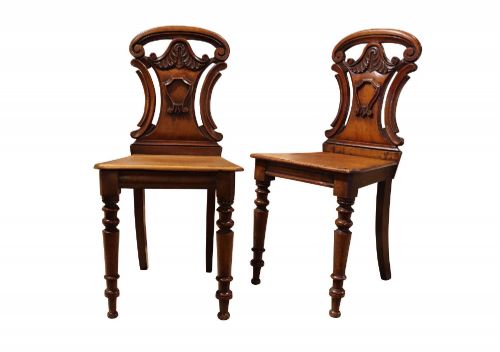
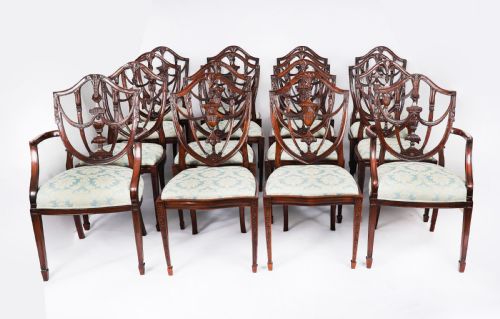
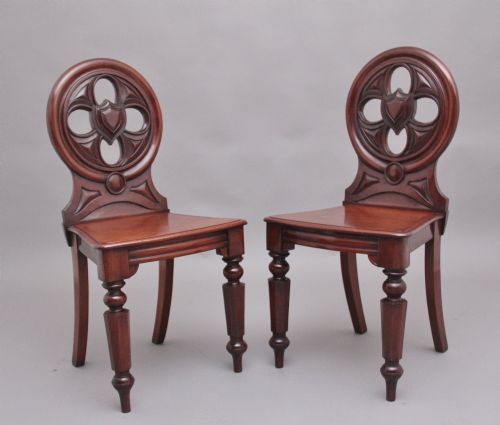
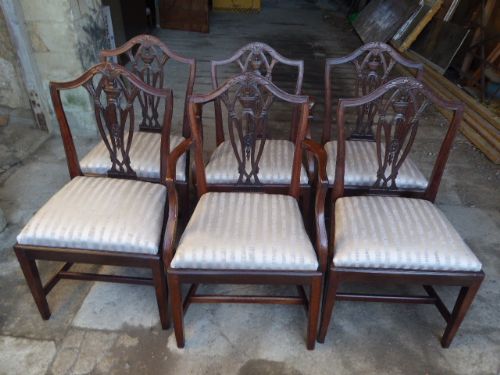
You are most likely to meet mahogany dining chairs configured in large sets, alongside individual or paired hall chairs fashioned from oak, walnut, or mahogany. These objects serve both practical seating functions and decorative roles, drawing heavily upon Hepplewhite and Sheraton aesthetic traditions.
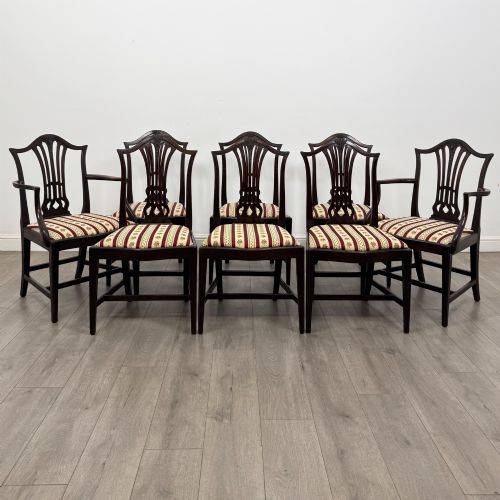
The form frequently incorporates pierced splats within the curved frame, sometimes accented with carved motifs such as Prince of Wales feathers or heraldic shields. Sets often include matching carvers alongside standard side chairs to accommodate formal dining arrangements.
How they were made
Joiners and cabinet makers relied predominantly on dense hardwoods such as mahogany, oak, and walnut to construct the rigid frames necessary for supporting the open shield design. These timbers were selected for their grain strength, allowing the back splats to be carved into intricate pierced patterns without compromising structural integrity.
Upholstered versions utilised drop-in pads or fixed seats covered in leather, velvet, or traditional woven fabric, secured with brass tacks. Wood surfaces were finished with polishes that enhanced the natural colour and figure of the timber.
Listings feature mahogany, oak, and walnut timbers across Georgian, Victorian, and Edwardian periods.
What varies in quality
The standard of carving defines the upper tier of these pieces, distinguishing crisp, deep relief work on the shield splats from simpler, flatter execution. The selection of timber grain, particularly matched mahogany or figured walnut across a large set of dining chairs, indicates superior workshop production.
Cohesion within larger suites separates uniform original sets from assembled collections. The structural joinery of the back frame where it meets the seat rail also dictates long-term durability and the integrity of the design.
Maple & Co·Gillows
The Carved Shield Back Seating Glossary
- Shield back
- A chair backrest design shaped like an inverted shield, popularised in the eighteenth century by designers such as George Hepplewhite. This silhouette tapers toward the seat and frequently contains a pierced central splat.
- Carver
- An armchair designed with open arms, typically created to match a set of smaller side chairs for use at the head of a dining table. These pieces share the same decorative shield back motif.
- Splat
- The vertical wooden strip positioned in the centre of a chair backrest between the top rail and the seat. In these pieces, the splat is often pierced and carved within the shield outline.
- Hall chair
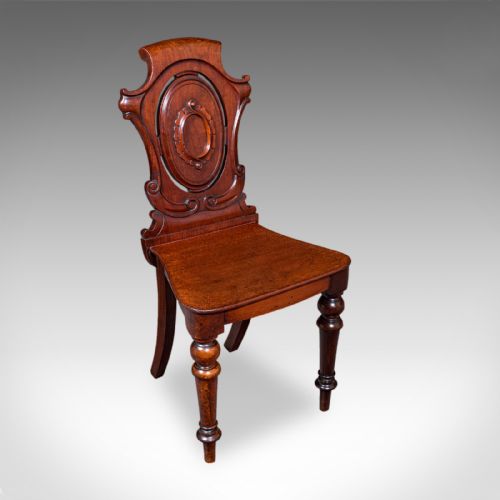
- A rigid wooden seat intended for placement in an entrance hallway rather than for prolonged dining use. They frequently feature solid wooden seats and carved armorial or shield motifs.
- Revival
- A later period style that imitates or adapts historical designs from earlier centuries. Edwardian and twentieth-century examples frequently revive Hepplewhite aesthetics.
Carved Shield Back Seating: Frequently Asked Questions
How do I date a shield back chair?
Dating these chairs involves examining the timber species, construction methods, and stylistic revival cues. Georgian originals display eighteenth-century joinery and hand-carved details, while Victorian and Edwardian revival pieces often utilise heavier timbers and machine-assisted finishing.
Comparing the secondary woods and the wear patterns on the seat rails also helps determine whether a piece belongs to the eighteenth century or its later nineteenth-century revivals.
Were shield back chairs used in halls?
Shield back chairs were frequently produced as hall chairs, particularly during the Victorian period in oak or mahogany. These reception seats generally omitted upholstery in favour of solid carved wooden seats.
Many hall chair variants incorporated heraldic shields or family crests carved directly into the wooden backrest for display in grand entrance spaces.
How many chairs come in a dining set?
Dining chair sets listed in this category vary widely, ranging from small groupings of four or six up to extensive suites of twelve or sixteen pieces. Larger sets often comprise a combination of standard side chairs and paired carver armchairs.
Matching larger sets require careful inspection of timber grain and carving consistency across all pieces to ensure uniform origin.