
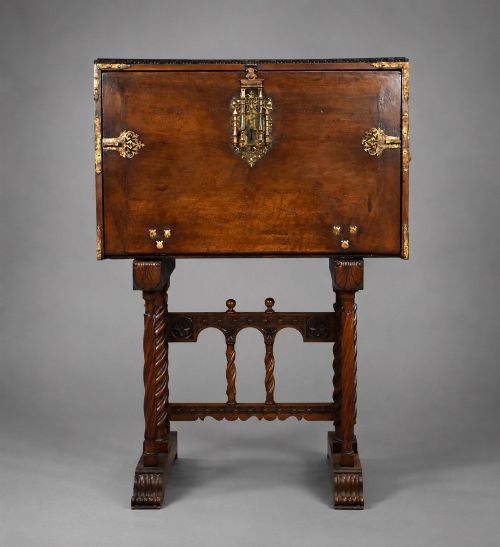


Carved Secretary Desk
A carved secretary desk brings drop-front writing surfaces and concealed compartments into domestic rooms, combining display space with practical storage.
Carved Secretary Desk
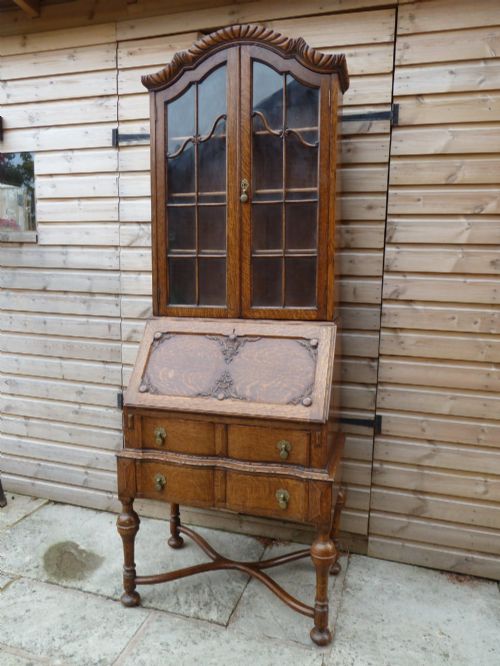
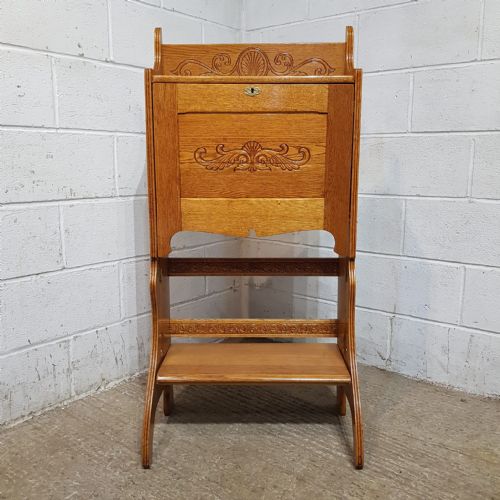
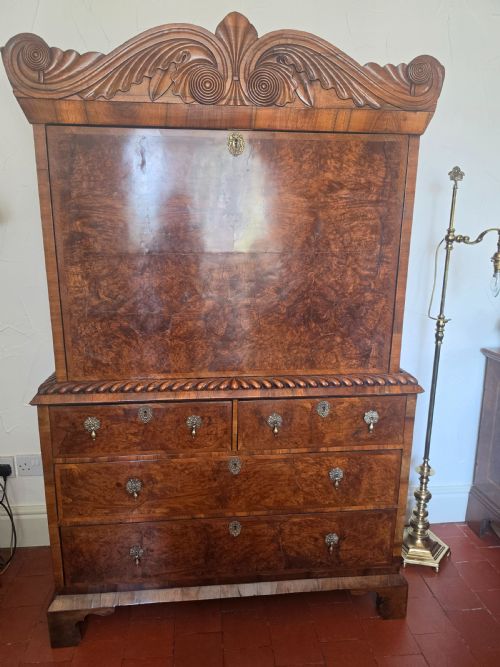
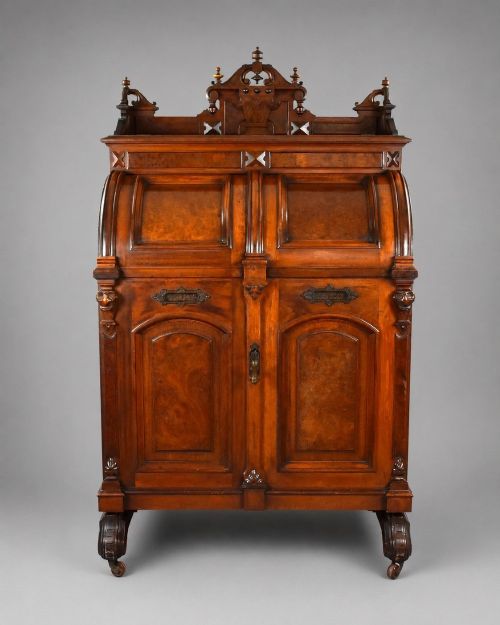
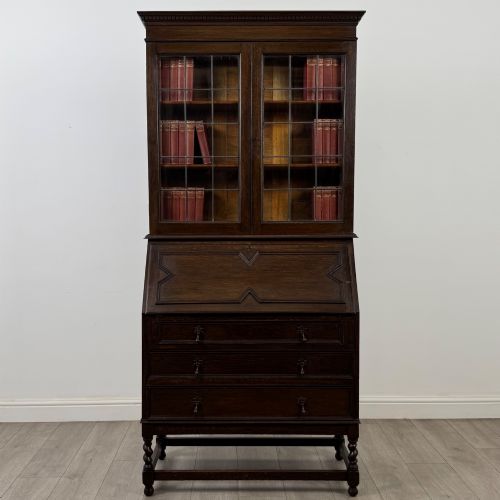
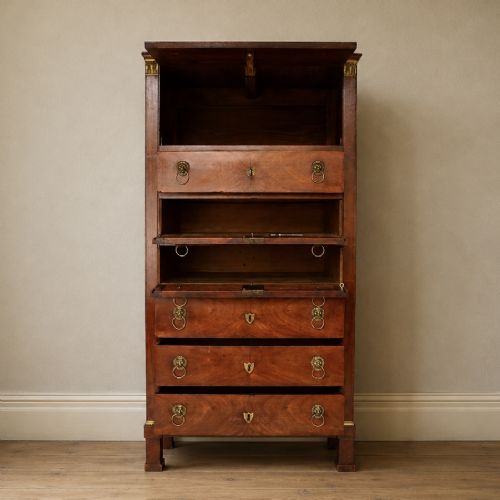
A carved secretary desk encompasses bureau bookcases, fall-front writing desks, and secretaire cabinets originating from centuries of cabinetmaking tradition. Buyers looking for a carved secretary desk find variations ranging from 17th-century Spanish walnut bargueño cabinets and 18th-century mahogany bombe shapes to sturdy Edwardian and Victorian oak iterations.
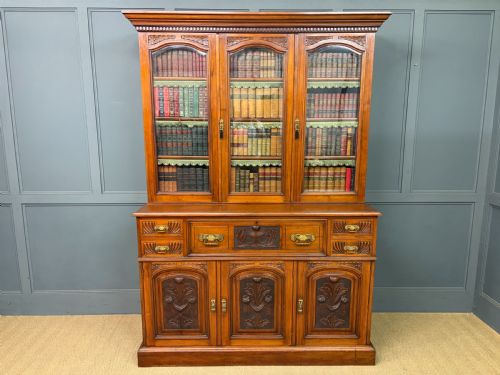
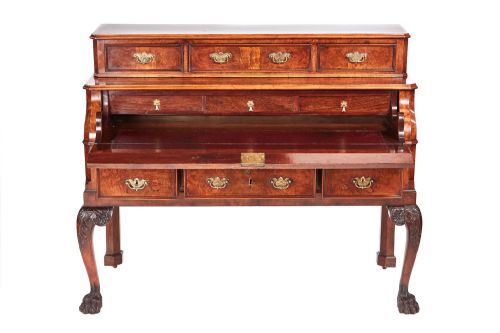
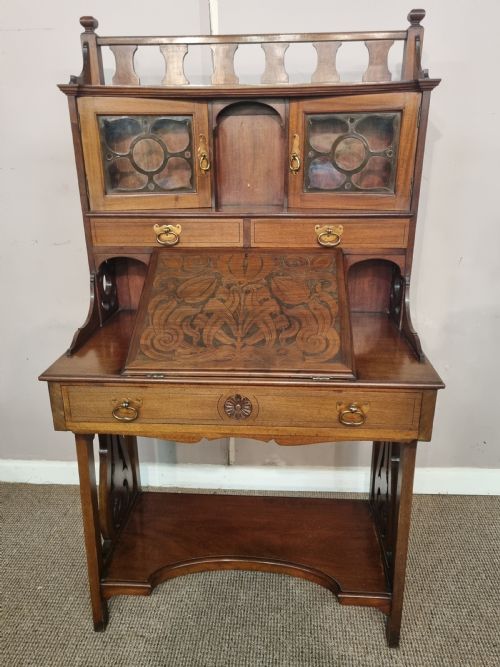
The primary forms on this page include drop-front bureaux, bureau bookcases with upper shelving, and cylinder desks designed for correspondence and document storage. These pieces combine fitted internal pigeonholes and small drawers with larger external storage compartments, resting on bracket feet, plinths, or carved paw feet.
Origins stretch across English, French, Dutch, and Spanish workshops, utilising regional timber supplies and stylistic revivals such as Jacobean and Tudor. The selection spans compact lady's writing desks to imposing walnut and mahogany secretaire bookcases intended for principal reception rooms.
Evaluating the Craftsmanship
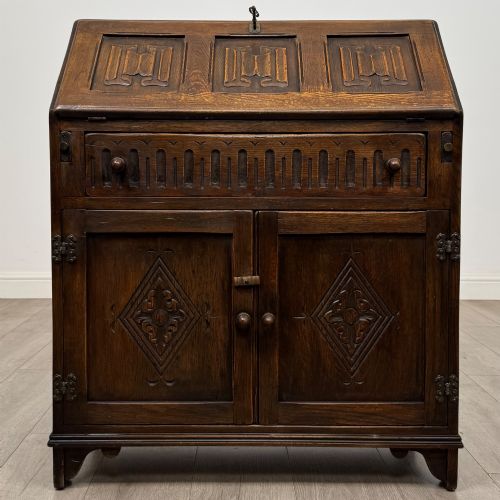
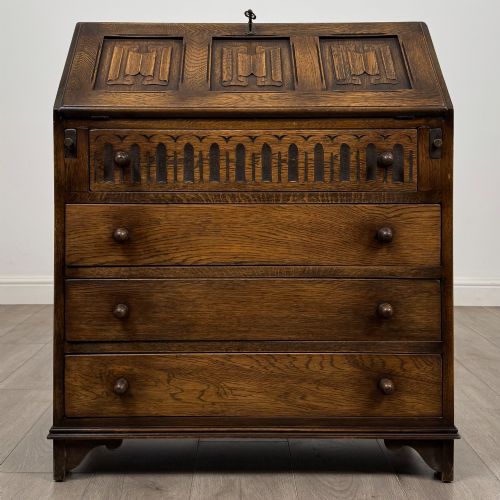
Quality reveals itself in the selection and bookmatching of burr walnut or flame mahogany veneers across expansive surfaces and fall fronts. Superior examples display crisp, hand-cut carving rather than shallow machine-milled detailing, maintaining sharp relief along linenfold panels and floral motifs.
Internal engineering distinguishes finer pieces, particularly the smooth action of sliding cylinder lids, balanced fall-front hinges, and tightly fitted interior prospect doors with concealed document wells. The integrity of the original brasses, locks, and internal pigeonhole construction further determines the standing of each piece.
Listings feature structural timbers including oak, walnut, burr walnut, and mahogany, complemented by brass fittings and glass paneling.
Edwards & Roberts·Morris & Co·George W Jack·Robert Mouseman Thompson·Wells Fargo
The Carved Secretary Desk Glossary
- Bureau
- A sloping drop-front desk that encloses a fitted interior of small drawers and pigeonholes. When closed, the fall-front conceals the writing surface.
- Secretaire
- A cabinet or bookcase containing a pull-out or drop-front drawer configured as a writing desk with internal compartments. It allows a tall case piece to function for correspondence.
- Marquetry
- Decorative patterns formed by fitting together thin veneers of various woods, ivory, or shell onto a structural carcase. Floral and geometric motifs dominate these surfaces.
- Bombe
- A swelling, bulging furniture contour characteristic of 18th-century Dutch and continental cabinetmaking. The sides and front curve outward in convex sweeps.
- Linenfold
- A style of wood carving representing folded vertical strips of parchment or linen. It appears frequently on panels of early oak furniture.
- Pigeonhole
- Small, open compartments fitted inside a desk interior for sorting letters and papers. They often surround a central lockable cabinet or prospect door.
Carved Secretary Desk: Frequently Asked Questions
How do I use a drop-front desk safely?
The hinged writing flap requires support from internal wooden arms or structural side lopers before any weight rests on the leather or wood writing surface. Pulling these supports out fully protects the antique hinges and prevents strain on the fall-front.
Keep heavy ledgers and modern desktop equipment to a minimum, utilising the interior pigeonholes strictly for light correspondence and small items as originally intended.
Where should I place a secretary desk?
Position the piece away from direct sunlight and active heating vents to protect vulnerable wood veneers and solid oak or walnut panels from shrinking and splitting. Stable indoor humidity preserves the old glues and keeps the secret drawers from binding.
Allow sufficient clearance in front of the unit for the drop-front to open completely and for a chair to slide comfortably underneath without crowding the room.
How do I tell an 18th-century bureau apart from a Victorian revival?
Examine the secondary woods inside the drawer linings, such as oak or pine, alongside the hand-cut dovetail construction methods. Earlier 18th-century pieces often display irregular dovetailing and timber movement consistent with hand tools, while Victorian revivals show more uniform machine-assisted precision.
Hardware placement, lock types, and the specific style of secondary carving also offer clear chronological markers, distinguishing Georgian restraint from later Jacobean or Tudor revival exuberance.