




Carved Scroll Hall Chair
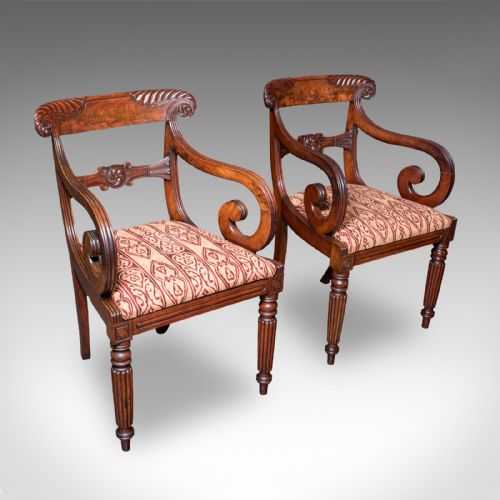
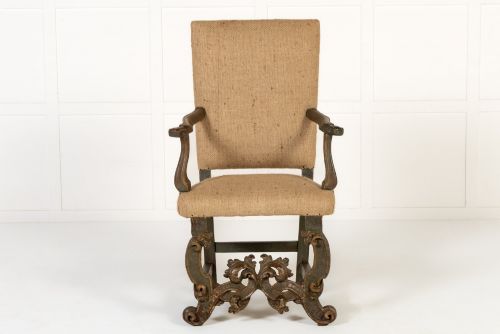
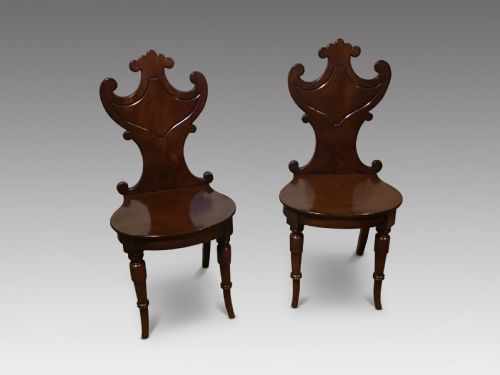
A carved scroll hall chair delivers immediate architectural presence to an entranceway, combining sturdy timber construction with ornamental relief work.
Carved Scroll Hall Chair
A carved scroll hall chair is typically encountered in mahogany, oak, or walnut, spanning periods from the seventeenth century through to the Victorian era. These upright seats were designed primarily for occasional use in grand reception spaces rather than long periods of sitting.
The selection on this page encompasses distinct regional variations, including English mahogany examples, Scottish walnut pieces from law chambers, and Irish designs featuring elaborate carved details. Alongside dedicated hall chairs, the listings include related reception seating such as armchairs, side chairs, and elbow chairs sharing similar carved scroll motifs.
Materials and construction
Cabinetmakers utilised dense hardwoods such as mahogany, oak, and walnut to ensure the framework could withstand regular use in public areas of a house. These timbers were selected for their stability and capacity to hold crisp, deep-relief carving along the backrests and legs.
Joinery methods relied on traditional mortise and tenon joints to secure the upright stiles to the seat planks and rails. Decorative elements, particularly the characteristic scrollwork, were hand-carved directly into the solid wood rather than applied as separate mouldings.
Some nineteenth-century makers evidently expected visitors to have stiff spines, building hall chairs with angles designed purely for immaculate posture.
Distinctions in quality
The primary distinction across these pieces lies in the crispness and depth of the timber carving, where sharper execution denotes greater skill by the maker. Finer examples display harmonious proportions and careful timber selection, avoiding heavy or clumsy joinery.
Wear patterns and structural integrity also separate standard regional pieces from high-workshop production. Original surface patination on hardwoods like mahogany and oak remains an important indicator of untouched condition.
Gillows
The Carved Scroll Hall Chair Glossary
- Hall chair
- A rigid wooden seat traditionally placed in an entrance hall or reception room, often bearing carved family crests or decorative backs.
- Backstool
- An early form of seating without arms, effectively an upholstered or wooden chair predecessor to the modern side chair.
- Carolean
- A seventeenth-century style spanning the reigns of Charles I and Charles II, characterised by rich carved scrollwork and turned legs.
- Stile
- The upright vertical member of a chair back into which the rails and splats are tenoned.
Carved Scroll Hall Chair: Frequently Asked Questions
Where were hall chairs used?
Hall chairs were traditionally placed in the grand entrance halls, corridors, and reception spaces of large country houses and town residences. They served as functional seating for callers and visitors waiting to be announced.
Because they were meant for brief use rather than lounging, these chairs were constructed with upright wooden seats and supportive high backs, keeping visitors in a formal posture.
How do I date a wooden chair?
Dating a wooden chair involves examining the tool marks, timber species, and construction joints used in the frame. Earlier pieces from the seventeenth century often feature pegged oak joints and hand- cleft boards, while nineteenth-century examples display more uniform machine-sawn components.
Stylistic cues such as turned legs, stretcher placements, and the configuration of the carved scroll motifs also provide reliable indicators of the period in which the piece was manufactured.
Are hall chairs comfortable to sit on?
Traditional hall chairs generally feature solid wooden seats without upholstery, designed for short periods of sitting rather than relaxation. Their primary purpose was architectural and decorative, making a strong visual statement in an entranceway.
While some variations incorporate upholstered pads or elbow rests, most remain firm and upright, reflecting the formal etiquette of historical reception rooms.
How do I care for antique timber?
Maintaining antique mahogany, oak, or walnut requires keeping the pieces away from direct heat sources and rapid humidity changes, which can cause the wood to split. Regular dusting with a soft, dry cloth helps protect the surface patination.
Application of traditional beeswax can nourish the timber periodically, though heavy modern polishes and silicone-based sprays should be avoided to preserve the original finish.