

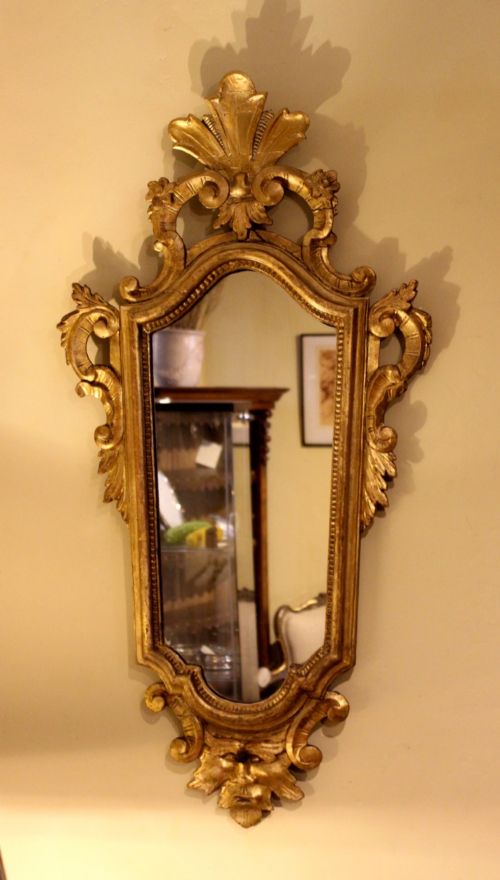
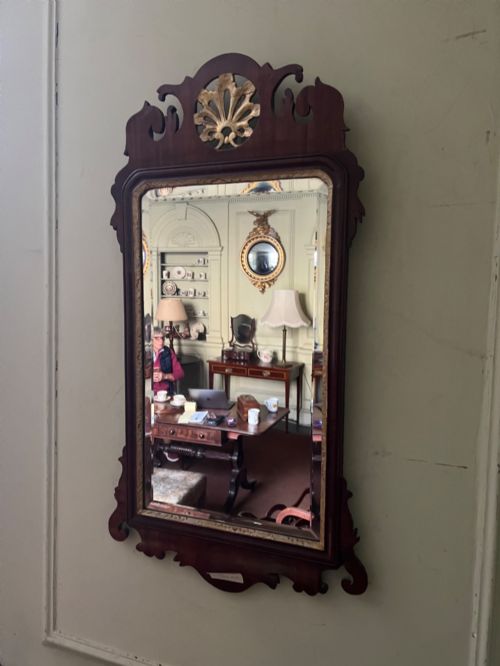
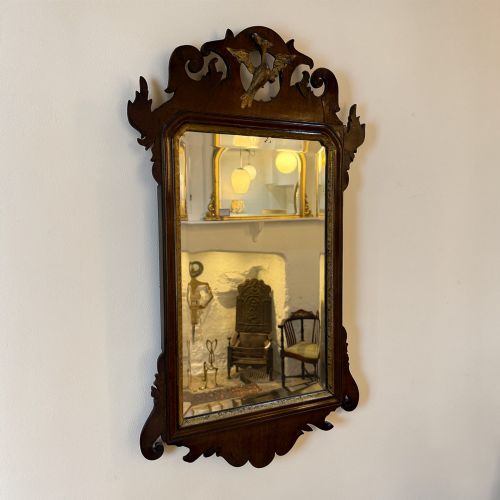
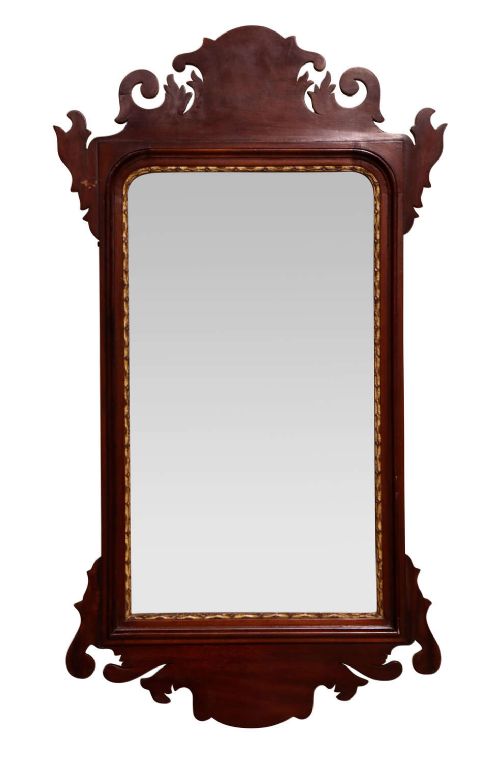
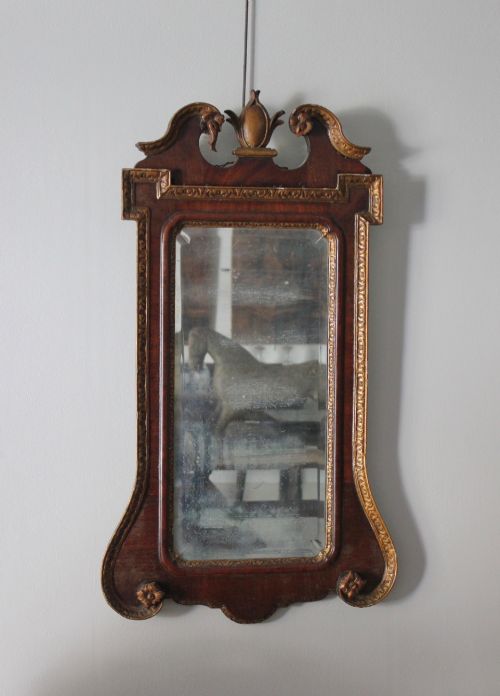


Carved Scroll Cresting Mirror
A carved scroll cresting mirror brings historic elegance to a room through traditional woodwork and shaped framing.
Carved Scroll Cresting Mirror
A carved scroll cresting mirror is a wall hanging or overmantel piece defined by shaped wooden upper frames and classical scrolling. When searching this phrase, buyers encounter examples spanning the eighteenth century through to the early twentieth century.
The selections on this page feature forms rooted in Georgian, Victorian Chippendale Revival, and Rococo traditions. Wall mirrors and overmantel mirrors appear alongside specific variations such as fretwork designs and shield-shaped timber frames.
Originating largely from English workshops alongside French and Welsh examples, these pieces utilise traditional timber construction. Walnut and mahogany dominate the selection, accompanied by giltwood, gesso, paint, and carved pine.
How they were made
Cabinetmakers constructed these frames using solid hardwoods like mahogany and walnut, frequently applying fine veneers to create rich surface grain. Timber fretwork was carefully hand-cut with fretsaws to form intricate pierced scrollwork patterns along the crests.
Gilding techniques involved applying layers of gesso to a wooden base before laying metal leaf, which was then burnished to a bright finish. Painted and carved pine alternatives demonstrate simpler regional joinery alongside ornate Rococo stylings.
Carved Scroll Cresting Mirror Retail Price Guide 2026
Typical asking prices for carved scroll cresting mirror among the pieces listed under this phrase on Sellingantiques today, from the lower quarter to the upper quarter. They describe what is for sale here now, not the wider market.
Several mirrors feature the celebrated 'HoHo Bird' perched within their carved mahogany crests.
What varies in quality
The refinement of the hand-carved scrollwork dictates much of the visual success in these frames. Crisp, deep undercut carving on mahogany and walnut crests separates superior items from softer, mechanically produced revival pieces.
Surface preservation significantly influences the character of the mirror. Original untouched finishes, aged glass plates with natural foxing, and intact gilding or veneer retain the historical integrity of the piece more effectively than later restorations.
The Carved Scroll Cresting Mirror Glossary
- Cresting
- The decorative upper portion of a mirror frame, often shaped with scrolls and carved details. This prominent feature draws the eye and defines the period style.
- Fretwork
- Openwork ornamentation cut from a thin board of timber, commonly seen in geometric or scrolling patterns. It provides a lightweight yet decorative border.
- Gesso
- A plaster-like mixture applied to wood surfaces to prepare them for gilding or painting. It accepts fine detail work before metal leaf is laid.
- Overmantel
- A large mirror designed specifically to hang above a fireplace mantel. These pieces frequently span greater horizontal widths than standard wall mirrors.
- Rococo
- An ornate design style characterised by asymmetrical curves, C-scrolls, and naturalistic shell motifs. It heavily influenced mid-eighteenth-century mirror frames.
Carved Scroll Cresting Mirror: Frequently Asked Questions
How do I hang a heavy antique mirror?
Heavy carved timber and giltwood mirrors require secure wall fixings distributed evenly across the primary structural frame rather than relying on old cords or rings.
Consult a professional restorer or installer to ensure the wall anchors match the weight and age of the specific piece.
Where should I place an overmantel mirror?
An overmantel mirror sits naturally directly above a fireplace mantel to reflect light and anchor the vertical space of the chimney breast.
Ensure the width of the frame balances proportionally with the mantel shelf below it.
How do I clean an antique mirror glass?
Clean the glass gently using a soft microfibre cloth slightly dampened with distilled water or a mild, ammonia-free glass cleaner.
Avoid spraying liquid directly onto the glass to prevent moisture seeping behind the plate and damaging the historic silvering or wooden rabbet.
How do I date a walnut fretwork mirror?
Examine the timber species, the construction of the backboards, and the tool marks left on the reverse of the fretwork scroll cresting.
Eighteenth-century examples display hand-cut precision and period fixings, whereas later revival pieces from the Victorian era exhibit more uniform machine processing.