



Carved Scroll Chairs
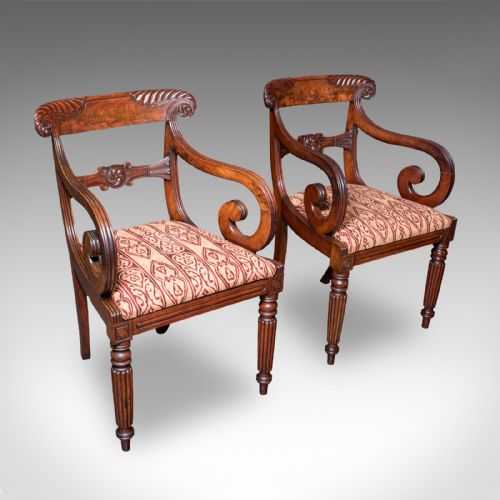
Carved scroll chairs bring dynamic linear movement to a room, uniting structural timber frames with fluid carved ornament.
Carved Scroll Chairs
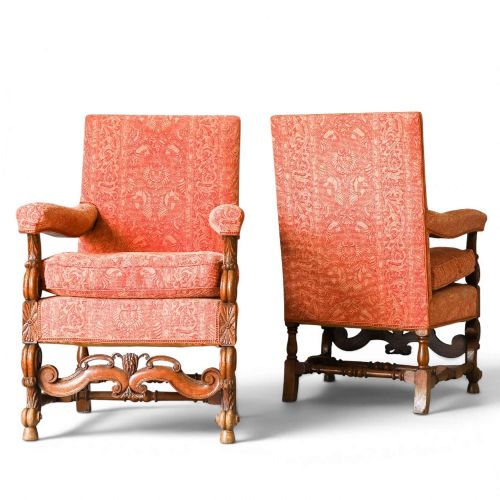
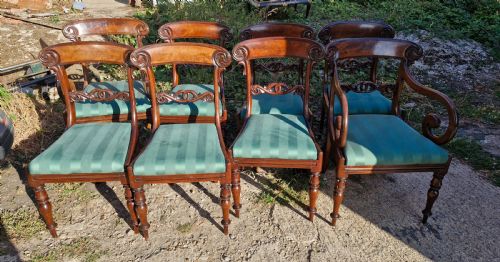
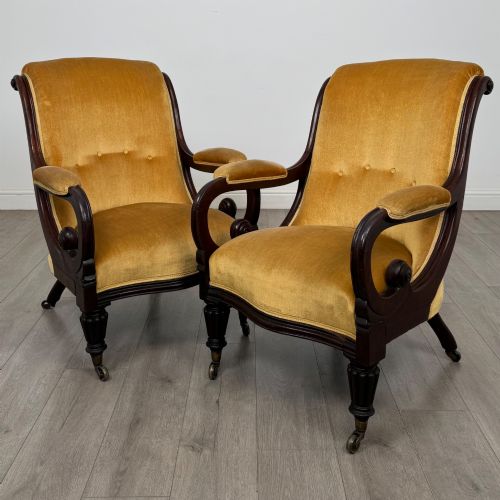
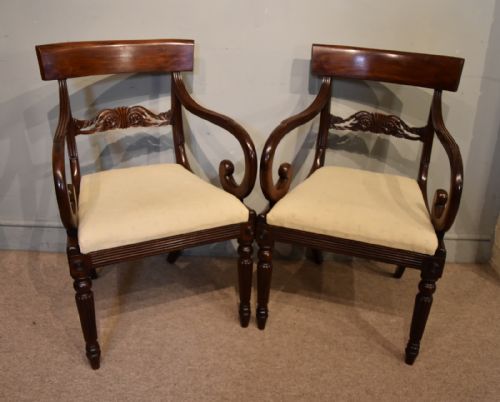
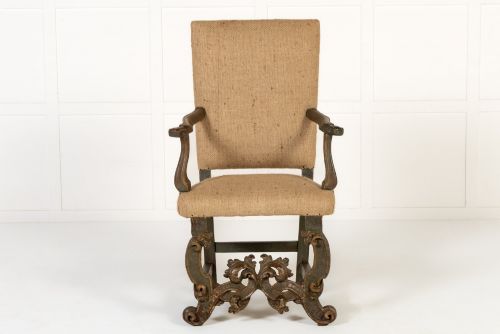
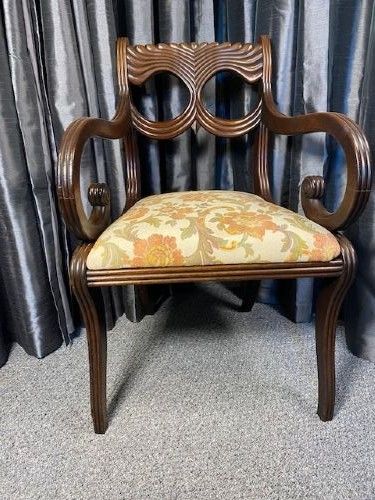
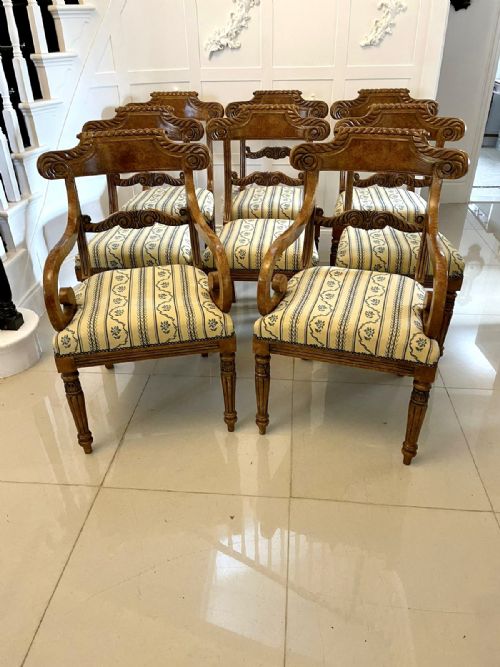
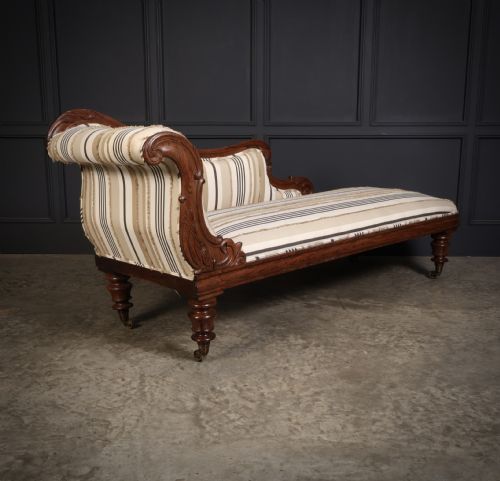
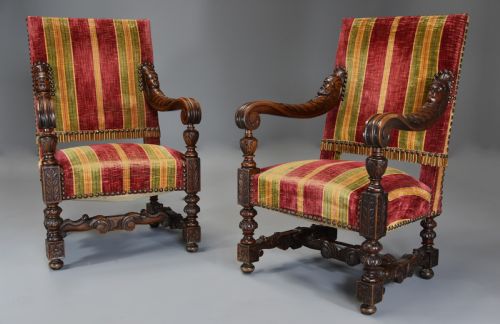
Carved scroll chairs encompass dining chairs, carvers, elbow chairs, and library armchairs originating across the seventeenth, nineteenth, and early twentieth centuries. These seats appear in varied stylistic revivals, including Regency, William IV, Victorian, Carolean, and French Renaissance.
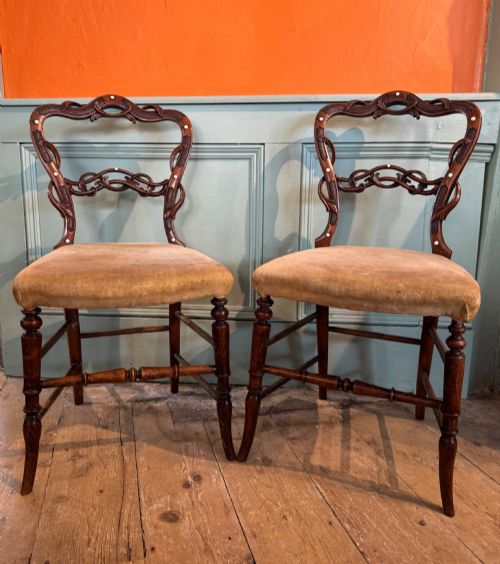
The version most commonly encountered on this page is the nineteenth-century mahogany dining chair or carver, often featuring upholstered elements and distinct scroll-carved arm terminals or backs. Rosewood and oak alternatives also surface regularly, spanning formal dining sets to single occasional seats.
Materials and Construction
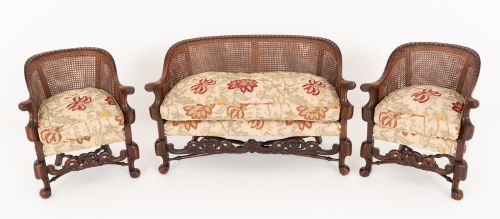
Makers utilised dense hardwoods such as mahogany, rosewood, walnut, and oak to form the robust structural frames necessary for cantilevered scroll arms and high backs. These primary timbers are frequently complemented by secondary applications of brass inlay or cane weaving.
Upholstery techniques applied to these forms involve traditional stuffing covered in fabric, velvet, or tapestry, secured alongside brass castors on specific nineteenth-century iterations.
Mahogany and rosewood dominate the timber selections across the nineteenth-century listings.
Distinctions in Quality
Quality rests upon the crispness and depth of the carved scroll work, where hand-chiseled definition on timber surfaces differentiates superior examples from mechanical or flat moulding. The integration of the scroll motif into the structural arm or crest rail must demonstrate proportional balance rather than awkward attachment.
The integrity of the timber frame and the fidelity of period styling further separate standard production from exceptional pieces, particularly in matched dining sets and individually fashioned carvers.
Gillows
The Carved Scroll Chairs Glossary
- Carver
- An armchair designed with open sides to accommodate voluminous period clothing, typically matching a set of smaller dining chairs.
- Regency
- A British design period spanning the early nineteenth century characterised by classical revival motifs and refined proportions.
- William IV
- A transitional nineteenth-century style known for heavy, robust proportions, scrolled details, and rich rosewood or mahogany timbers.
- Cane
- Strips of rattan or plant material woven in an open mesh pattern to form seat panels or backrests.
Carved Scroll Chairs: Frequently Asked Questions
Where should I place a scroll armchair?
These chairs suit reception rooms, studies, or bedrooms where their sculptural arm and back details can be viewed in the round. They function effectively as reading seats or as end chairs paired with a dining table.
Position them away from direct heat sources to protect the polished timber and traditional upholstery fabrics from drying out over time.
How do I care for antique mahogany frames?
Maintain the timber by applying a microcrystalline wax polish sparingly to nourish the grain and protect the polished surface. Avoid synthetic cleaning sprays that can degrade historic finishes.
Keep the seating out of direct sunlight to prevent the rich mahogany or rosewood tones from fading unevenly across the carved scrolls.
Are these chairs suitable for daily dining?
Dining sets and individual carvers from the nineteenth century are structurally sound for regular use provided the joints remain tight and stable. Period frames built from dense hardwoods offer durable support for modern seating.
Check that the upholstered seat webbing and stuffing provide adequate support before subjecting antique chairs to heavy daily service.
How can I distinguish Regency from Victorian examples?
Regency seating generally exhibits restrained classical lines, brass inlay, and lighter proportions derived from ancient Greek and Roman models. Victorian pieces tend to be heavier, featuring exuberant carving, balloon backs, or button upholstery.
Examining the turning on the legs and the execution of the scroll motifs often reveals the stylistic shifts between these two nineteenth-century eras.