


Carved Rosewood Writing Table
A carved rosewood writing table brings rich grain and solid nineteenth-century craftsmanship into a study or library.
Carved Rosewood Writing Table
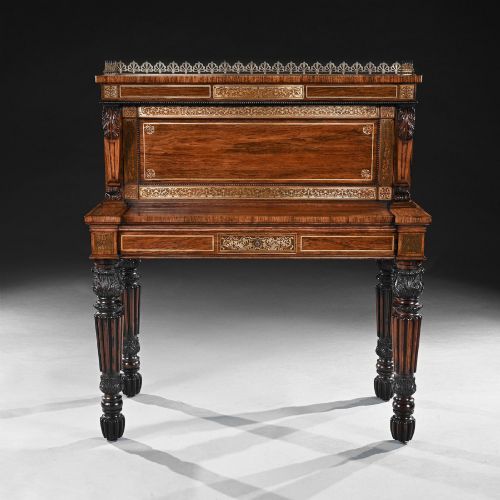
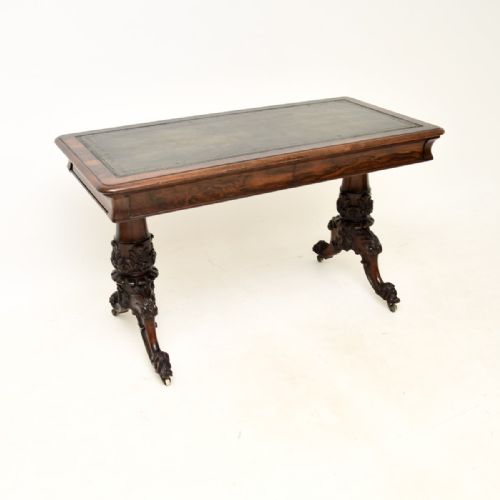
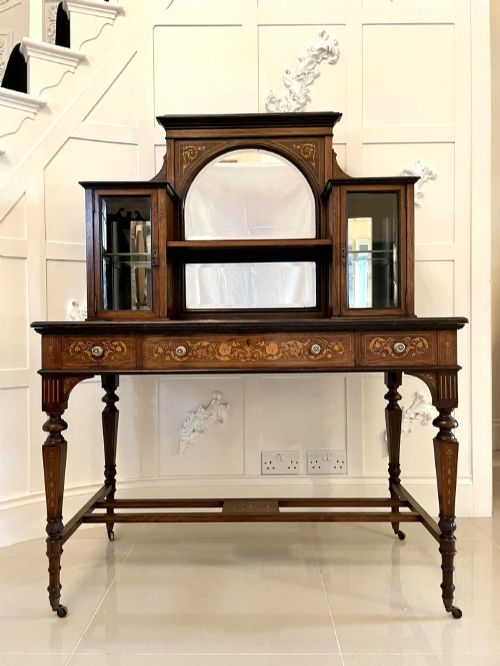
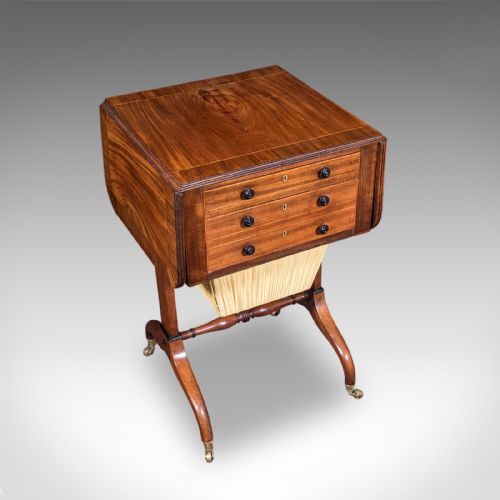
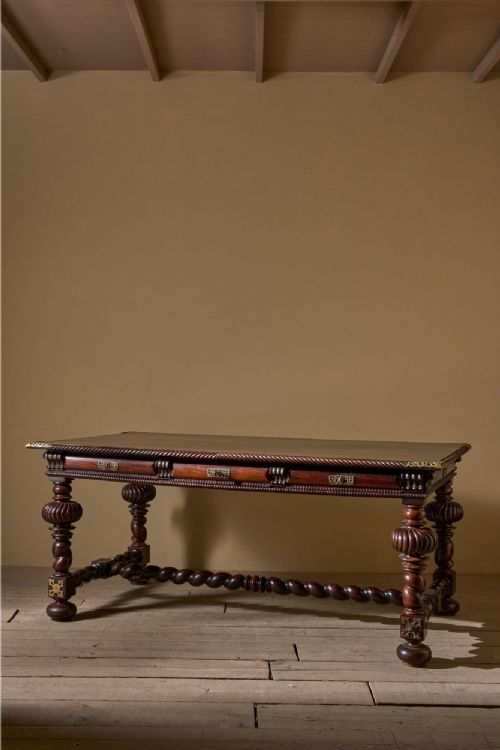
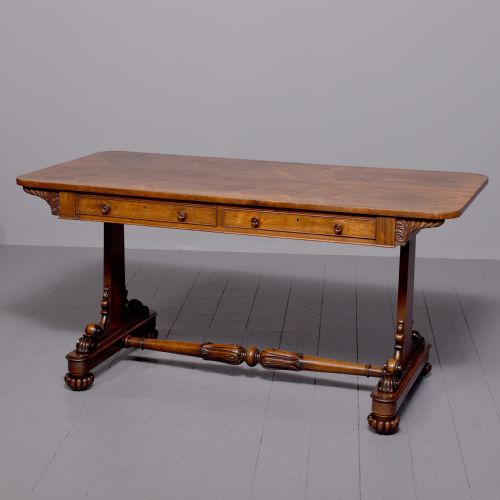
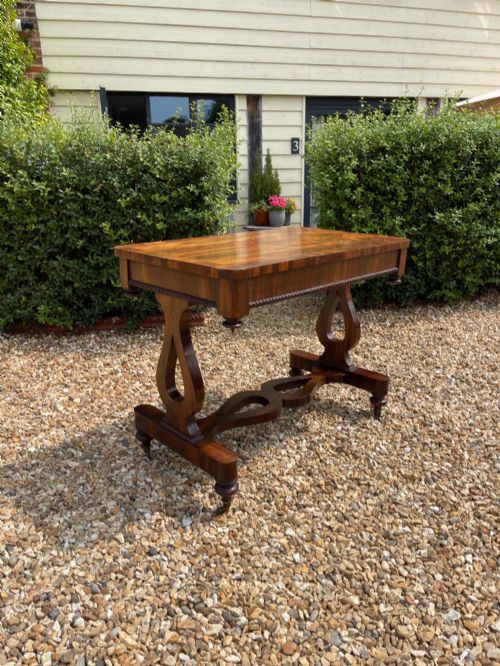
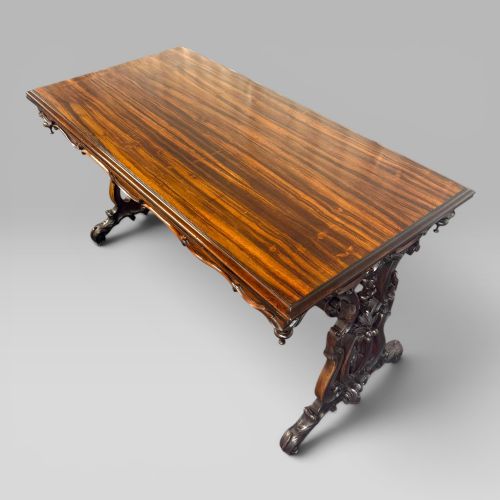
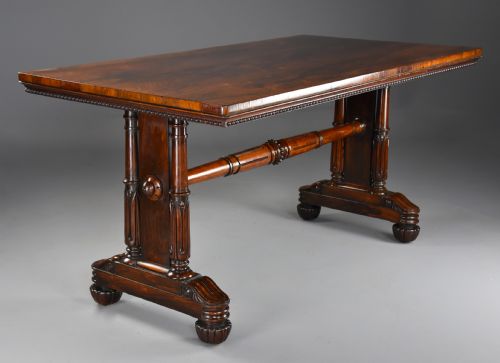
When you search for a carved rosewood writing table, you encounter diverse forms spanning the Georgian, Regency, William IV, and Victorian periods. Library tables, freestanding centre tables, and drop-leaf work tables all appear within these records, frequently displaying the dense timber and intricate carving characteristic of nineteenth-century cabinet work.
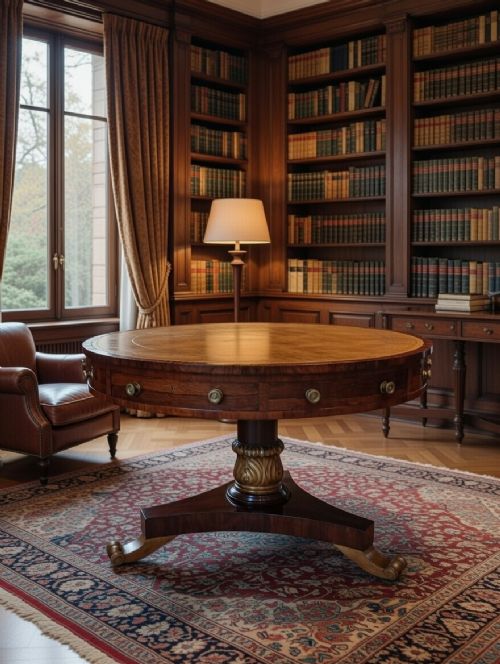
Portuguese Colonial and English workshops both contribute to the selection, alongside specific regional makers such as Mein of Kelso. Pieces range from compact ladies desks to large library drum tables, reflecting the varied domestic requirements of the nineteenth century.
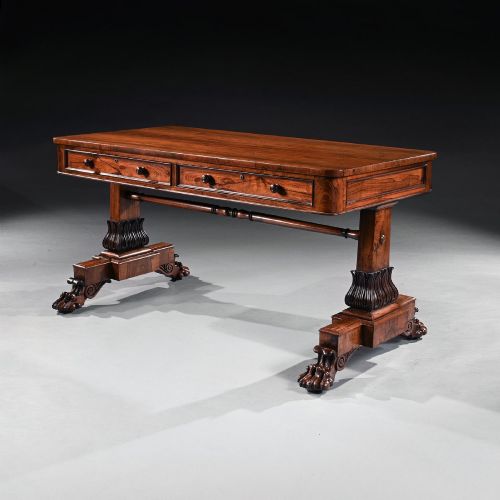
The most common examples on this page date from the William IV and Regency eras, often featuring pedestal bases or carved lion paw feet. These tables served both utilitarian writing purposes and decorative centrepiece functions in grand interiors.
Materials and construction methods
Makers utilised heavily figured rosewood veneers and solid timbers, often enhanced by contrasting brass inlay, marquetry, and zebrawood or Gonçalo Alves secondary woods. Leather inserts frequently provide the writing surface on desk tops.
Carved details such as lion paws and stretcher supports demonstrate skilled manual labour by period artisans. Freestanding capability required finished backs and polished timber on all sides, ensuring placement in the centre of a room rather than against a wall.
Some ladies work tables secretly doubled as sewing stations, housing hidden compartments for threads alongside writing slopes.
Distinctions in craftsmanship and finish
Quality rests upon the selection of timber figure and the crispness of the carved details on feet and pedestals. Superior pieces display seamless brass inlay and well-matched rosewood grains across the entire top surface.
Attribution to esteemed workshops like Gillows or makers such as Edwards and Roberts elevates a piece through documented execution and refined proportions. Lesser examples show simpler turning and plainer secondary timbers without special marquetry or inlay.
Gillows Oxford Street Workshop·Mein of Kelso·Edwards and Roberts·William Trotter
The Carved Rosewood Writing Table Glossary
- Rosewood
- A dense, heavily figured timber prized for its dark grain and polished finish. It served as the primary exterior material for high-status nineteenth-century tables.
- Library Table
- A large freestanding table designed for books and papers, finished on all sides. These pieces often feature pedestal bases or multiple drawers.
- Marquetry
- Decorative veneer work arranged in pictorial or geometric patterns. Makers utilised contrasting woods to create elaborate surface designs.
- Pedestal Base
- A central column support resting on feet, commonly seen on Regency and William IV tables. This construction allows greater legroom around the perimeter.
- Gonçalo Alves
- An exotic dense hardwood with striking contrasting grain patterns. Cabinet makers occasionally used this timber alongside rosewood for decorative effect.
Carved Rosewood Writing Table: Frequently Asked Questions
How do I distinguish a library table from a writing table?
Library tables are typically larger and freestanding, designed to sit in the middle of a room with access from all sides.
Writing tables often incorporate specific drawer configurations and leather-lined tops intended primarily for correspondence.
What periods do these rosewood tables come from?
The listings span the Georgian, Regency, William IV, and Victorian eras, primarily covering the nineteenth century.
Specific stylistic markers help assign pieces to these distinct design periods.
Can these tables be used as freestanding centrepieces?
Many examples are finished on all sides specifically to stand away from walls in the middle of a room.
Library and centre tables are engineered for this exact placement.
How do I care for antique rosewood surfaces?
Protect the polished timber from direct sunlight and excessive moisture to prevent fading and veneer lifting.
Regular dusting with a soft cloth maintains the natural lustre of the rosewood grain.