





Carved Reeded Leg Desk
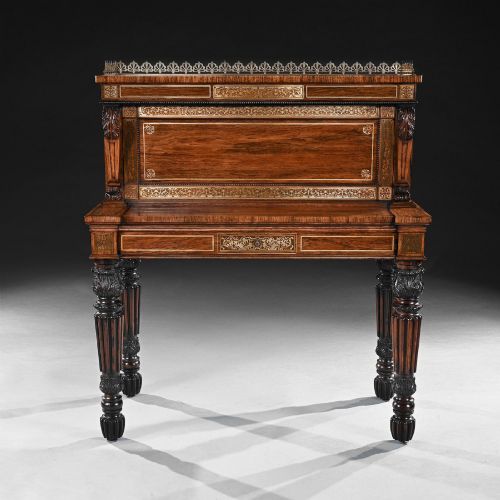
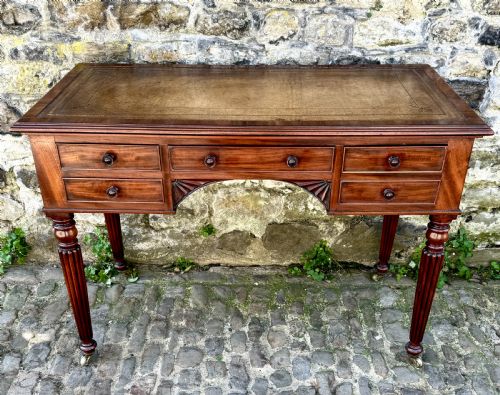
A carved reeded leg desk brings fine mahogany timber and precise architectural turning straight into a study.
Carved Reeded Leg Desk
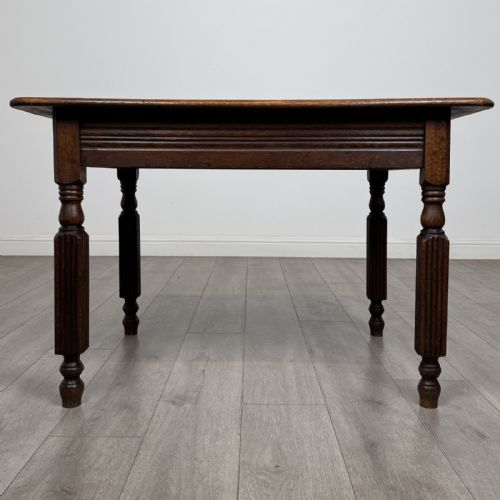
A carved reeded leg desk is a writing table or desk featuring linear carved mouldings along the supports. The evidence shows these items emerging primarily from the nineteenth century, encompassing Regency, George IV, and Victorian periods.
Buyers will encounter writing tables and desks among the object types, executed in dense timbers like mahogany and rosewood. These pieces often incorporate brass detailing, leather surfaces, or textile inserts to the writing plane.
The aesthetic bridges formal Georgian proportions and later nineteenth-century adaptations, including Gillows style influences. Many examples integrate drawer storage beneath the writing surface while retaining slender, turned legs.
Materials and construction
Cabinet makers utilised solid mahogany and rosewood for the primary frames and writing surfaces, ensuring durability and a deep natural grain. Timbers were selected for their rich colour and stability during construction.
Detailing involved precise manual turning to create the characteristic reeded columns alongside brass inlays and cast fittings. Writing surfaces frequently incorporated fitted leather or velvet inserts secured with subtle borders.
Carved Reeded Leg Desk Retail Price Guide 2026
Typical asking prices for carved reeded leg desk among the pieces listed under this phrase on Sellingantiques today, from the lower quarter to the upper quarter. They describe what is for sale here now, not the wider market.
Supper tables hide among the writing desks, ready to host midnight feasts.
Judging quality and craftsmanship
Superior examples display crispness in the hand-carved reeding and precise joinery that remains tight across the frame over centuries. The depth of timber selection and the integration of secondary woods dictate the overall integrity of the piece.
Subtlety in proportion and the quality of secondary materials, such as original brass hardware and fine leather top surfaces, separate standard workshop pieces from high-end cabinet work.
The Carved Reeded Leg Desk Glossary
- Reeded
- Parallel convex moulding strips carved into furniture legs, resembling bundles of reeds. This decorative technique adds texture and a classical columnar appearance to the supports.
- Mahogany
- A durable, reddish-brown tropical hardwood favoured by nineteenth-century cabinet makers for its stability and fine finish. It takes a high polish and resists warping.
- Regency
- A British design period spanning the early nineteenth century, characterised by classical Greco-Roman motifs, clean lines, and restrained ornamentation. Pieces from this era often feature elegant proportions.
- Pembroke table
- A small, drop-leaf table with hinged flaps on either side, useful for versatile placement. It typically includes one or more small drawers beneath the top.
Carved Reeded Leg Desk: Frequently Asked Questions
What periods do these desks date from?
The evidence records these pieces originating from the nineteenth century, including specific periods like Regency, George IV, and Victorian.
Craftsmanship from these eras often reflects classical influences, notably the George IV and Hepplewhite styles.
Which woods were used to build them?
Makers constructed these pieces primarily from dense timbers such as mahogany and rosewood, chosen for their strength and rich grain.
Secondary materials often include brass for inlays and hardware, alongside leather and velvet for writing surfaces.
How do I care for a mahogany surface?
Keep the timber away from direct sunlight and sudden temperature changes to prevent the wood from drying out or splitting. Dust regularly with a dry cloth and occasionally apply appropriate wax polish.
Protect leather or velvet writing inserts from moisture and sharp objects to preserve the original materials.
Are writing tables different from standard desks?
Writing tables generally feature lighter frames with one or more drawers beneath the top, designed primarily for correspondence rather than heavy administrative work.
They often stand freestanding in a room, displaying finished woodwork on all four sides.