


Carved Polychrome Saint
A carved polychrome saint brings centuries of devotion, colour and hand-carved timber straight from European chapels into your home.
Carved Polychrome Saint
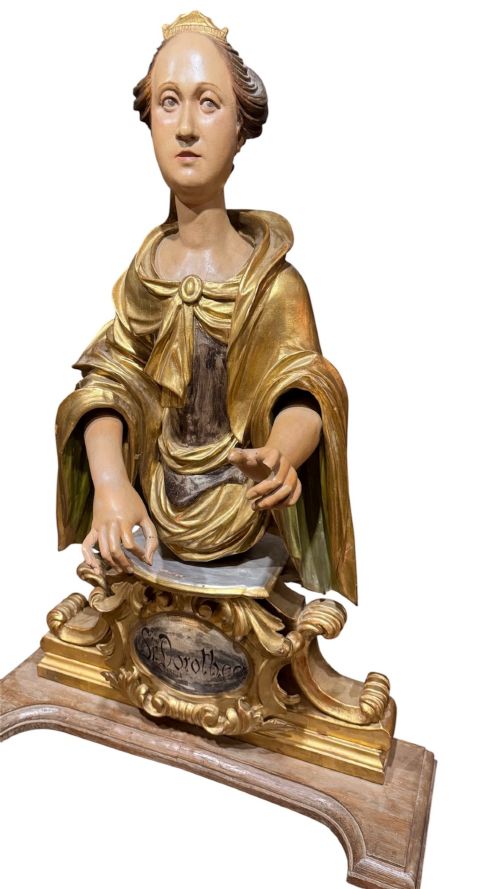
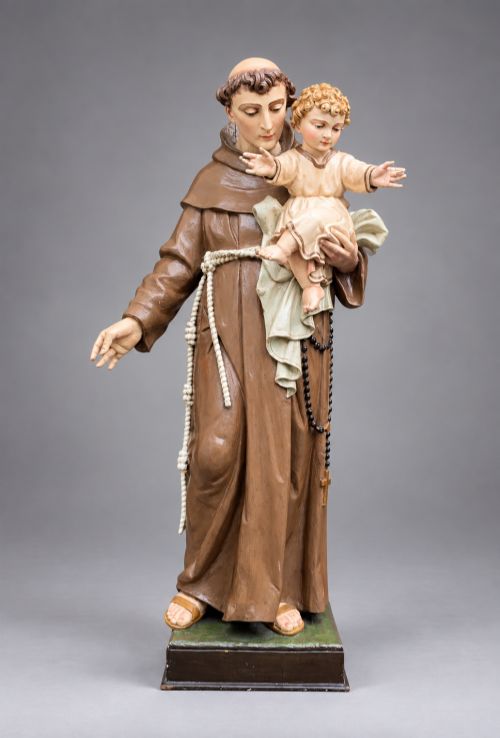
When you search for a carved polychrome saint, you encounter religious sculptures and statues created across several centuries, from pre-sixteenth century medieval pieces through to the nineteenth century. These ecclesiastical figures often depict specific figures like Saint John of Nepomuk, Saint Roch, Saint Barbara, or Saint Jude, fashioned as full-length statues, busts, or character heads.
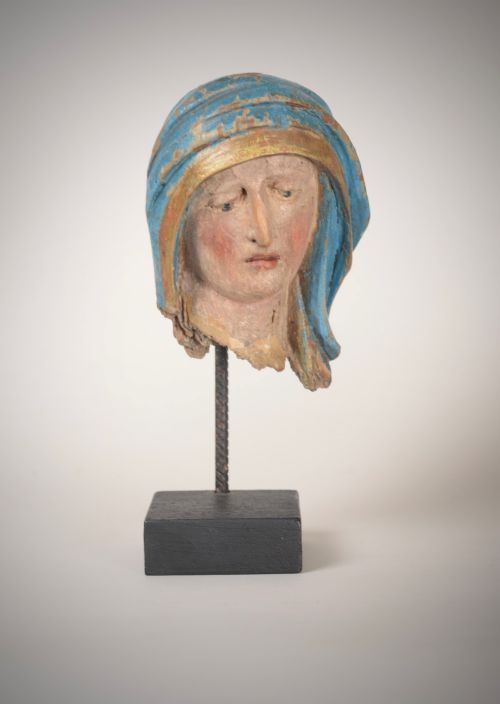
The most common examples you meet on this page hail from the seventeenth and eighteenth centuries, reflecting Baroque and Renaissance styles from Spain, Italy, and Germany. You will also find home altars, processional figures, and fragments such as carved wooden heads or specific representations like the Christ Child holding the orb.
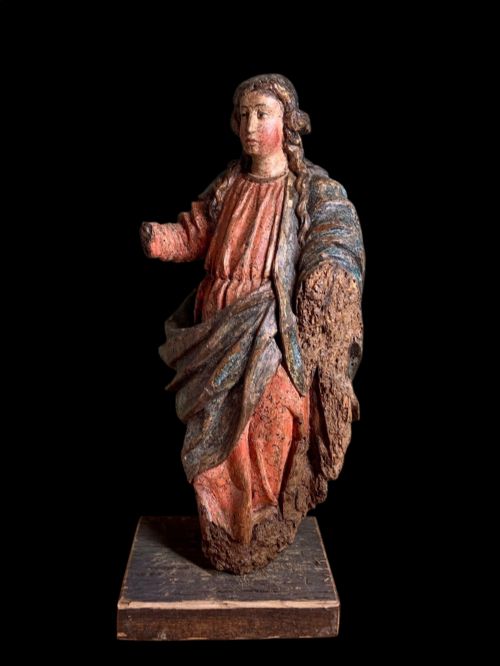
Originating largely from European workshops and churches, these works range from small devotional carvings to large church figures. They capture devotional art in wood, often retaining their original painted finishes and gilded surfaces.
How they were made
Carved wood forms the structural base for these sculptures, utilising timbers such as oak alongside other regional woods shaped by hand. Artisans then applied gesso as a smooth preparation layer directly onto the timber to receive subsequent decoration.
Polychrome paint and gold leaf bring these figures to life, creating layered surface finishes that combine pigments with gilded details. This traditional method allows the painted robes, flesh tones, and metallic highlights to age together over the centuries.
What varies in quality
The nuance and sensitivity of the hand-carved details separate finer sculptures from simpler folk art or provincial pieces. Facial expression, drapery folds, and anatomical proportion reveal the skill of the original hand behind the chisel.
The preservation and integrity of the original surface finishes dictate much of the character in these works. Pieces retaining undisturbed layers of early polychrome paint and gold leaf carry a stronger historical presence than those heavily repainted or stripped over time.
Bohumil Kafka
The Carved Polychrome Saint Glossary
- Polychrome
- Decorated in multiple colours. This term describes sculpture and wood carvings finished with various painted pigments.
- Gesso
- A plaster-like mixture applied to a wood base to prepare the surface for painting and gilding. It provides a smooth ground for fine detail work.
- Capipote
- A Spanish devotional figure with a carved head and hands attached to a framework body designed to be dressed in real textiles. These processional statues were often used in religious rituals.
- Giltwood
- Timber that has been decorated with a thin layer of gold leaf. This technique was widely utilised in Baroque and Renaissance ecclesiastical art to catch the candlelight.
- Ecclesiastical
- Relating to the Christian Church or its clergy. These objects were originally made for worship in chapels, churches, or domestic home altars.
Carved Polychrome Saint: Frequently Asked Questions
What is a polychrome saint?
A polychrome saint is a religious sculpture carved from wood and finished with multiple painted colours and often gold leaf. These figures were produced in Europe for centuries for church and domestic devotion.
They depict various biblical figures and saints, ranging from small fragments and character heads to large standing statues and processional figures.
Where were these figures made?
These sculptures originate predominantly from European countries, with strong representation from Italy, Spain, and Germany. Workshops in these regions produced ecclesiastical art following Gothic, Renaissance, and Baroque styles.
Many pieces spent centuries in churches, chapels, or home altars before entering the antiques market.
How do I date a wooden saint?
Dating relies on stylistic clues, tool marks, and the ageing of the underlying wood and gesso layers. Gothic and Renaissance pieces display different drapery and facial carving compared to seventeenth and eighteenth-century Baroque examples.
Paint analysis and the type of timber used, such as oak in earlier periods, also help determine the age of the carving.
How should I display a wooden figure?
Display these sculptures in stable indoor environments away from direct sunlight and extreme humidity fluctuations to protect the old wood and paint. Placing them on secure surfaces or within suitable display spaces ensures the fragile gesso and polychrome finishes remain undisturbed.
Allowing adequate clearance around larger statues or home altars highlights their craftsmanship and sculptural presence.