
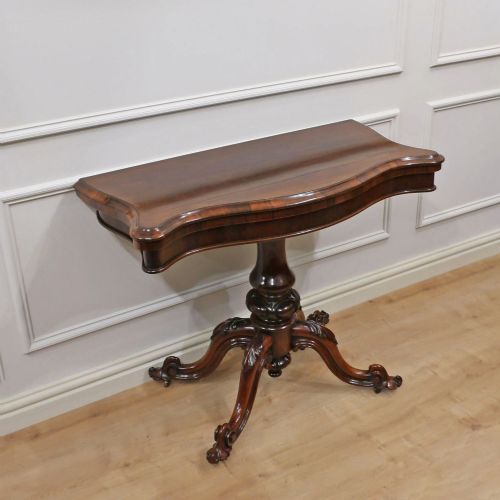
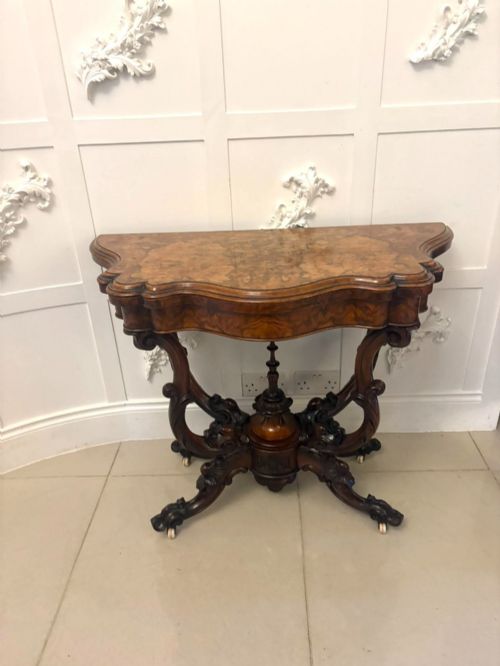
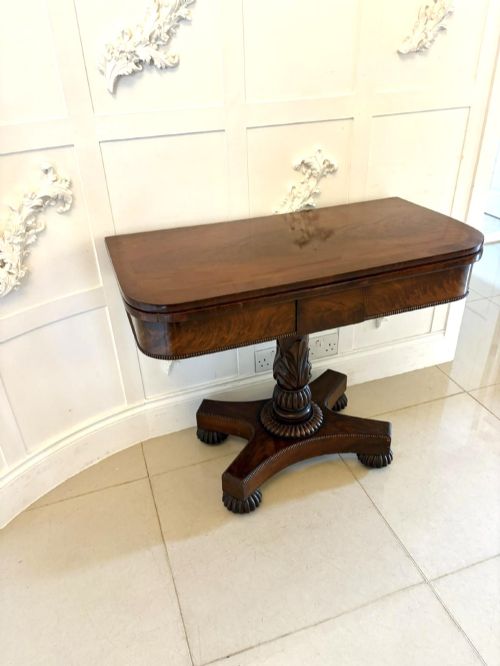
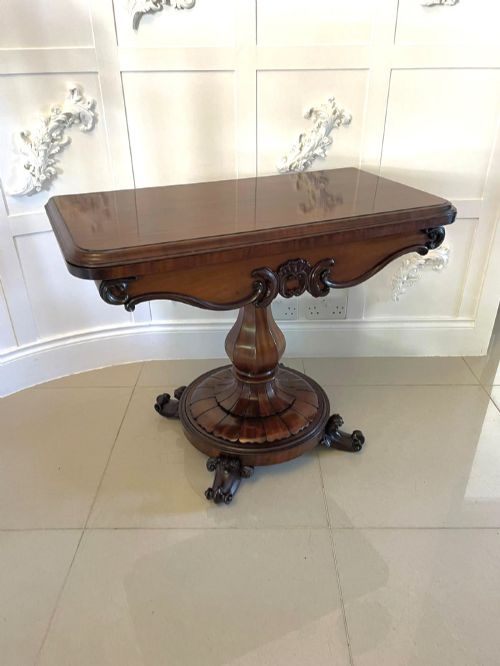

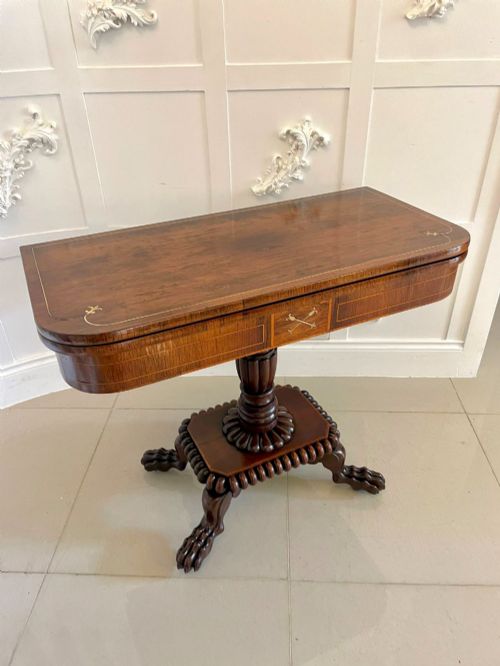
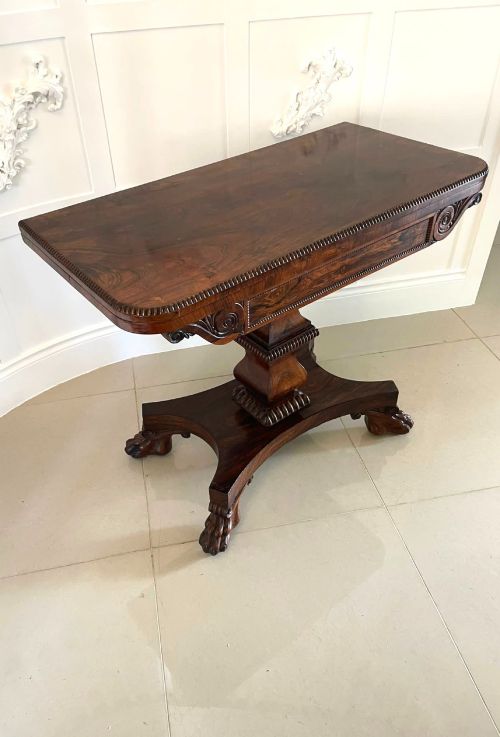
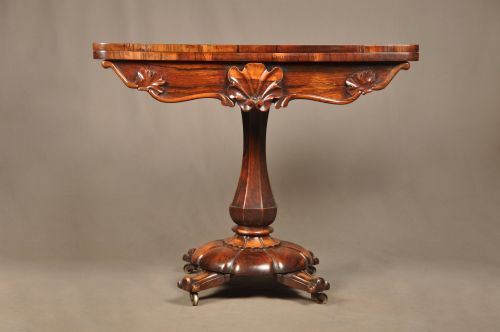
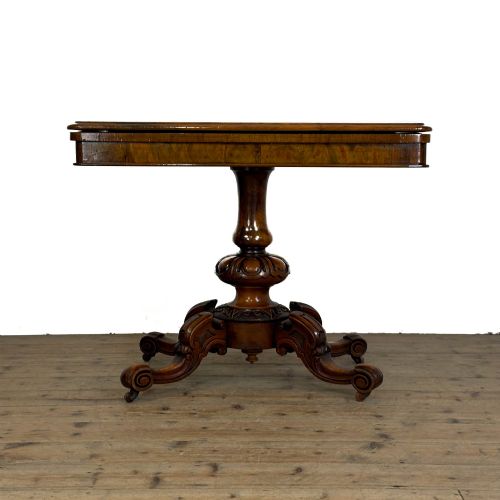
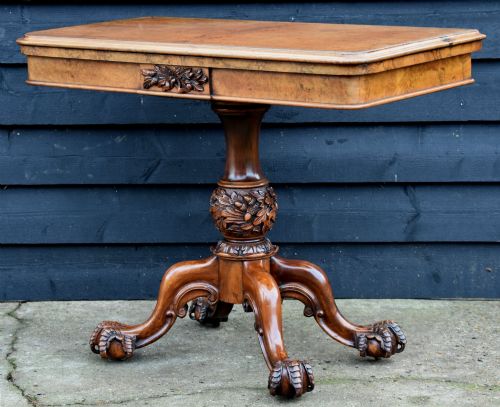
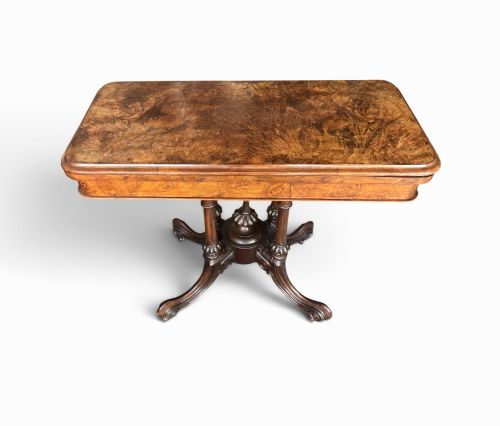
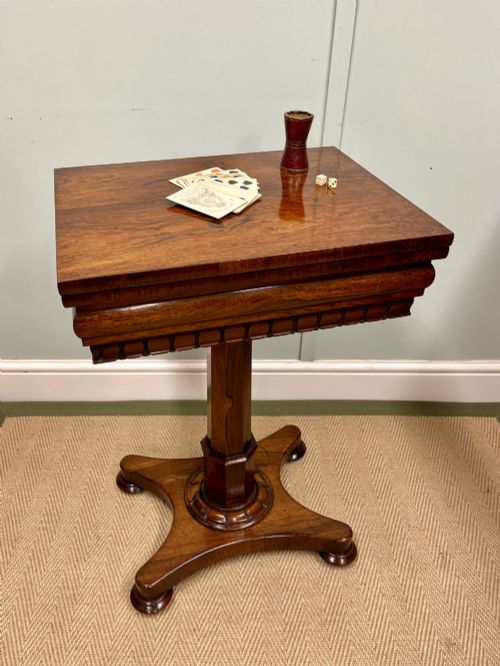
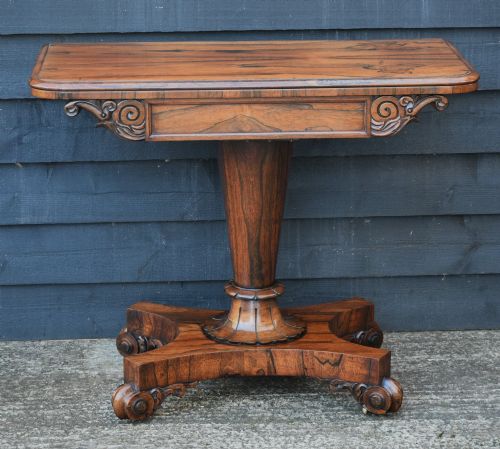
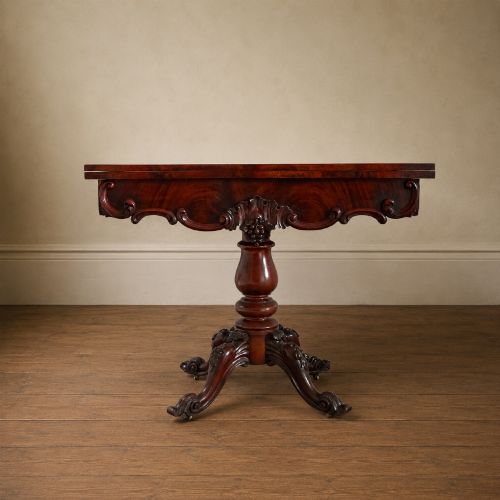
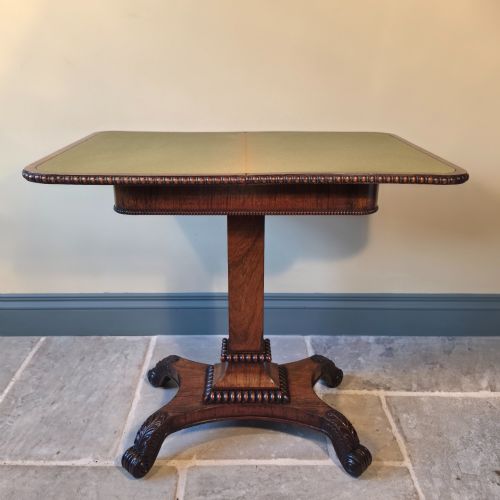
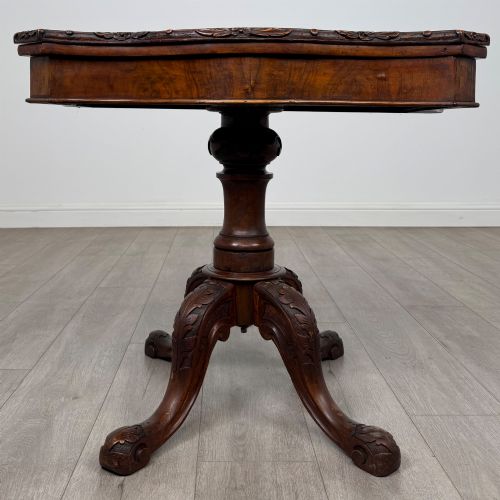
Carved Pedestal Games Table
A carved pedestal games table brings traditional craftsmanship to a room, offering foldover tops and clever storage for cards and chess.
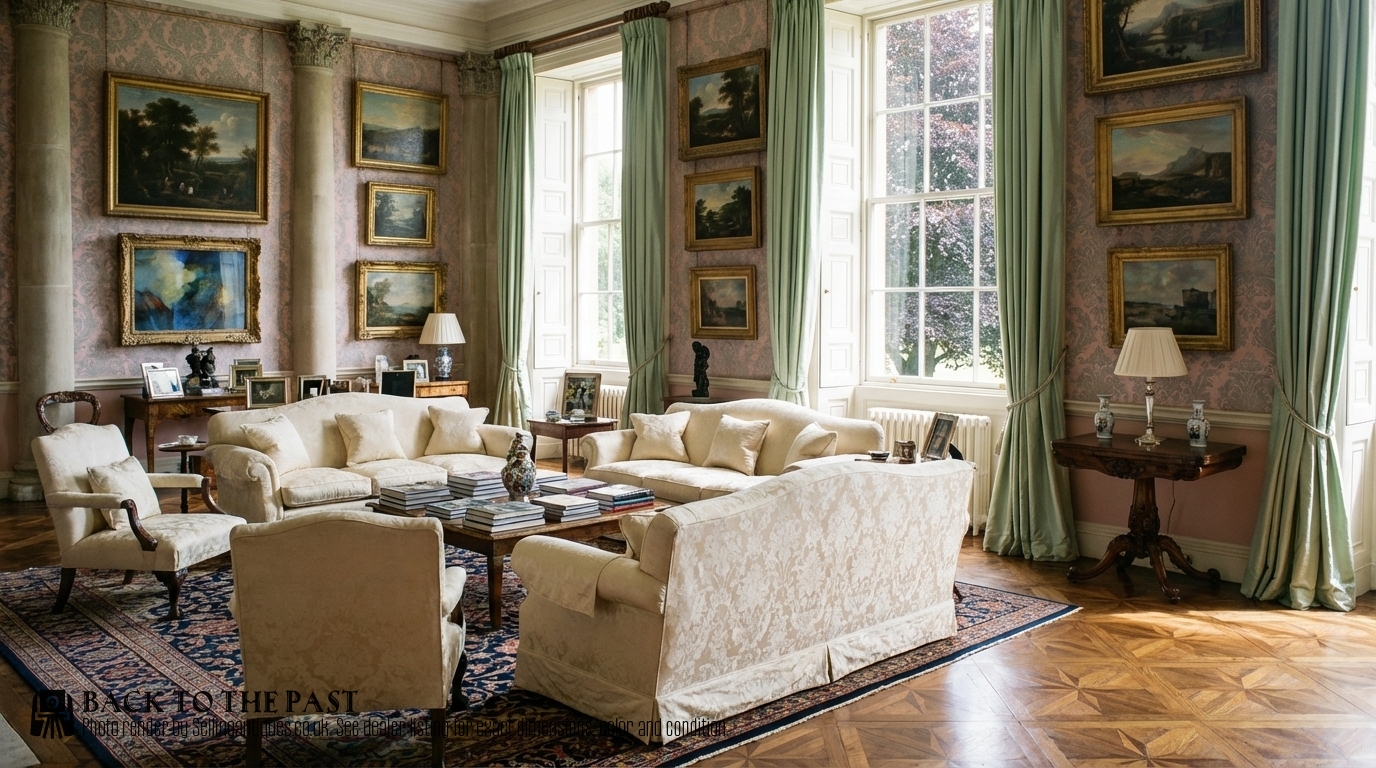
Carved Pedestal Games Table
A carved pedestal games table is a versatile piece designed for entertaining, featuring surfaces that fold or turn over to reveal playing surfaces lined with baize or fabric. These tables serve multiple functions in a room, often doubling as tea tables, side tables or console tables when closed.
The pieces seen most frequently on this page date from the nineteenth century, spanning the Regency, William IV and Victorian periods. Makers during these eras constructed robust pedestal bases, frequently incorporating carved details like baskets, dolphins or pillars to support the weight of the timber top.
Examples often combine practical internal compartments for gaming pieces or sewing materials with decorative wood veneers such as burr walnut, mahogany and rosewood. Buyers choose these items for their combination of functional design and period woodworking skill.
Materials and construction methods
Cabinet makers utilised dense hardwoods like mahogany, rosewood and walnut, frequently applying highly figured veneers such as burr walnut to create striking grain patterns on the tops. Solid timbers formed the structural frames and carved pedestal supports, ensuring stability for the pivoting or folding mechanisms.
Inlay work in brass was occasionally embedded into the timber surfaces during the Regency period, while later Victorian examples favoured elaborate carved pedestals and shaped edges. Interior compartments were constructed with lighter secondary woods, lined with fabric or baize for card playing.
Carved Pedestal Games Table Retail Price Guide 2026
Typical asking prices for carved pedestal games table among the pieces listed under this phrase on Sellingantiques today, from the lower quarter to the upper quarter. They describe what is for sale here now, not the wider market.
Listings feature pieces spanning the Regency, William IV and Victorian periods, constructed from rosewood, mahogany and burr walnut.
Factors determining quality
The selection of timber grain heavily influences the visual appeal of a carved pedestal games table, with highly figured burr walnut and rich rosewood marking higher-tier examples. Finer pieces display crisp, deep hand-carving on the central pedestal and base supports rather than soft or shallow moulding.
Mechanism precision separates standard tables from exceptional ones, particularly the smoothness of the hinges and the alignment of the foldover or turnover top when closed. Quality is also evident in the retention of original baize linings and fitted interior compartments for gaming pieces.
Gillows
The Carved Pedestal Games Table Glossary
- Baize
- A coarse woolen fabric used to line the playing surfaces of card and games tables. It provides a durable texture that prevents cards from slipping during play.
- Burr walnut
- A prized timber veneer obtained from the wart-like growths on walnut trees. It exhibits intricate, swirling grain patterns highly favoured in Victorian cabinet making.
- Foldover top
- A hinged tabletop design that doubles the surface area when opened. This mechanism conceals the gaming surface and storage compartments underneath.
- Pedestal base
- A central support column rising from a platform or feet, often heavily carved. It bears the weight of the tabletop while allowing legroom for seated players.
- Regency
- An architectural and decorative style spanning the early nineteenth century. Furniture from this period frequently incorporates classical motifs and rosewood timbers.
Carved Pedestal Games Table: Frequently Asked Questions
How do I use a carved pedestal games table?
These tables function as everyday side or console furniture when the top remains closed against the wall. Opening the hinge reveals a hidden baize-lined surface for card games, chess or sewing.
Many examples include internal wells beneath the folding top to store playing pieces, dice or counters safely when not in use.
What woods were commonly used?
Cabinet makers relied heavily on rich dark timbers such as mahogany and rosewood during the Regency and William IV eras. Victorian pieces frequently showcase highly figured walnut and burr walnut veneers.
Secondary woods like oak or pine appear in hidden structural areas, while brass inlay occasionally accents the primary timber surfaces.
How do I date a games table?
Dating relies on observing stylistic markers, such as the clean classical lines of Regency pieces versus the heavier, ornate carving characteristic of Victorian production. The choice of timber veneer also provides clues, with rosewood dominating earlier decades and burr walnut defining the mid-nineteenth century.
Hardware details and internal construction methods help narrow down the decade of manufacture when documentation is absent.
Can I use it as a dining table?
These tables are generally too narrow and delicate for formal dining use, as their folding mechanisms and pedestal bases are engineered for games and display. Placing heavy items or applying excessive downward pressure on the edges of an open leaf can strain the hinges.
They are best suited for occasional use, displaying decorative objects, or holding drinks during social gatherings.