
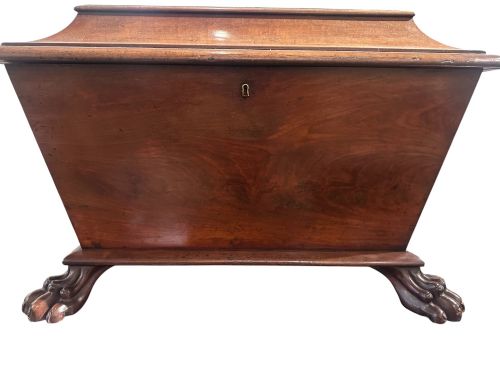


Carved Paw Foot Cellarette
A carved paw foot cellarette is a substantial timber wine cooler designed to keep bottles chilled, offering enduring practicality and robust period presence.
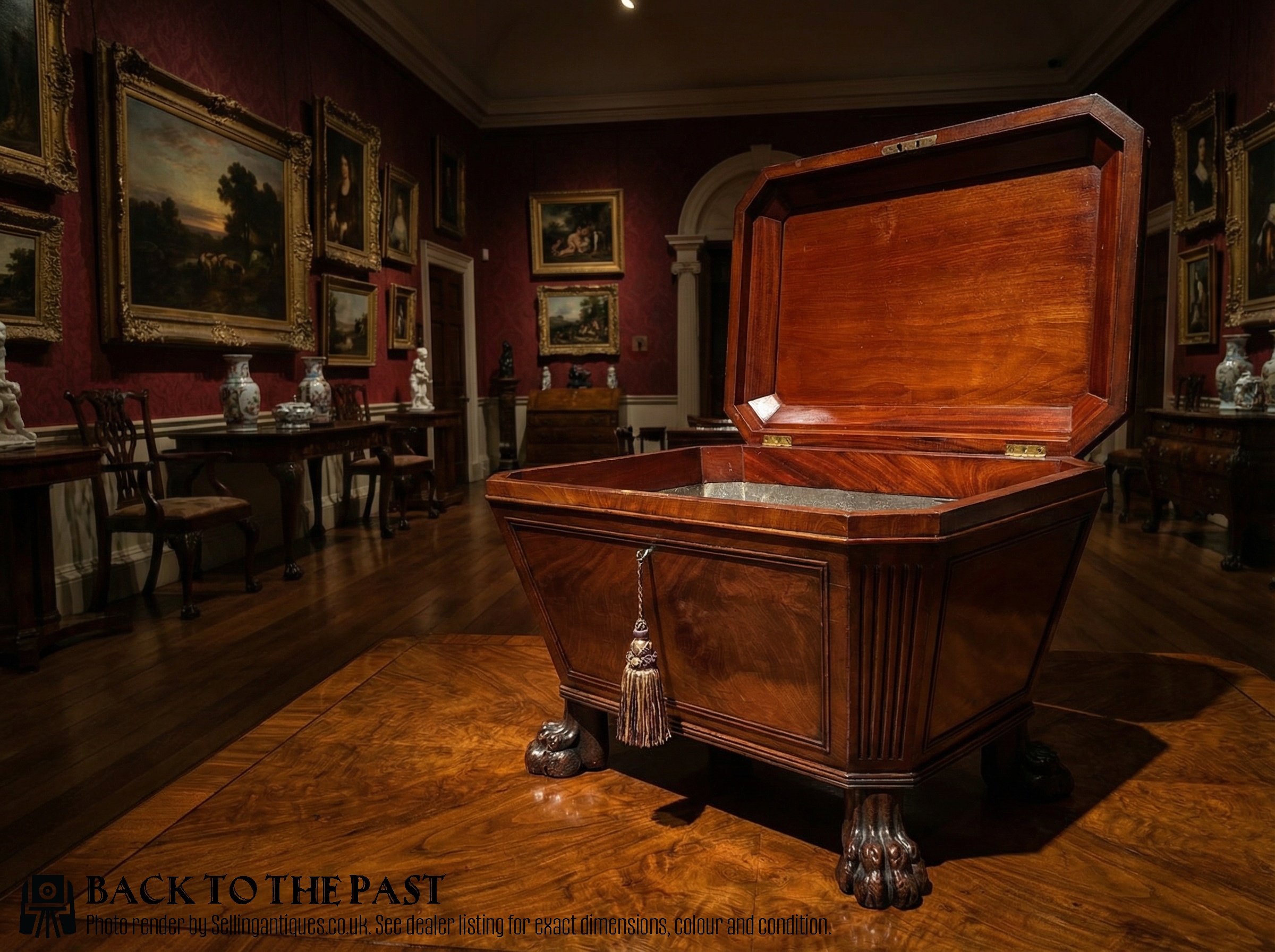
Identifying a carved paw foot cellarette
A carved paw foot cellarette appears primarily in mahogany across the nineteenth, eighteenth, and twentieth centuries, taking distinct sarcophagus and cooler forms. These pieces serve to store wine and bottles near the dining table, combining substantial proportions with formal period design.
The Regency and Georgian styles dominate these selections, showing structured timber grain and classical proportions. Pieces span from the early nineteenth century down to nineteen-thirty interpretations, preserving the heavy classical silhouette.
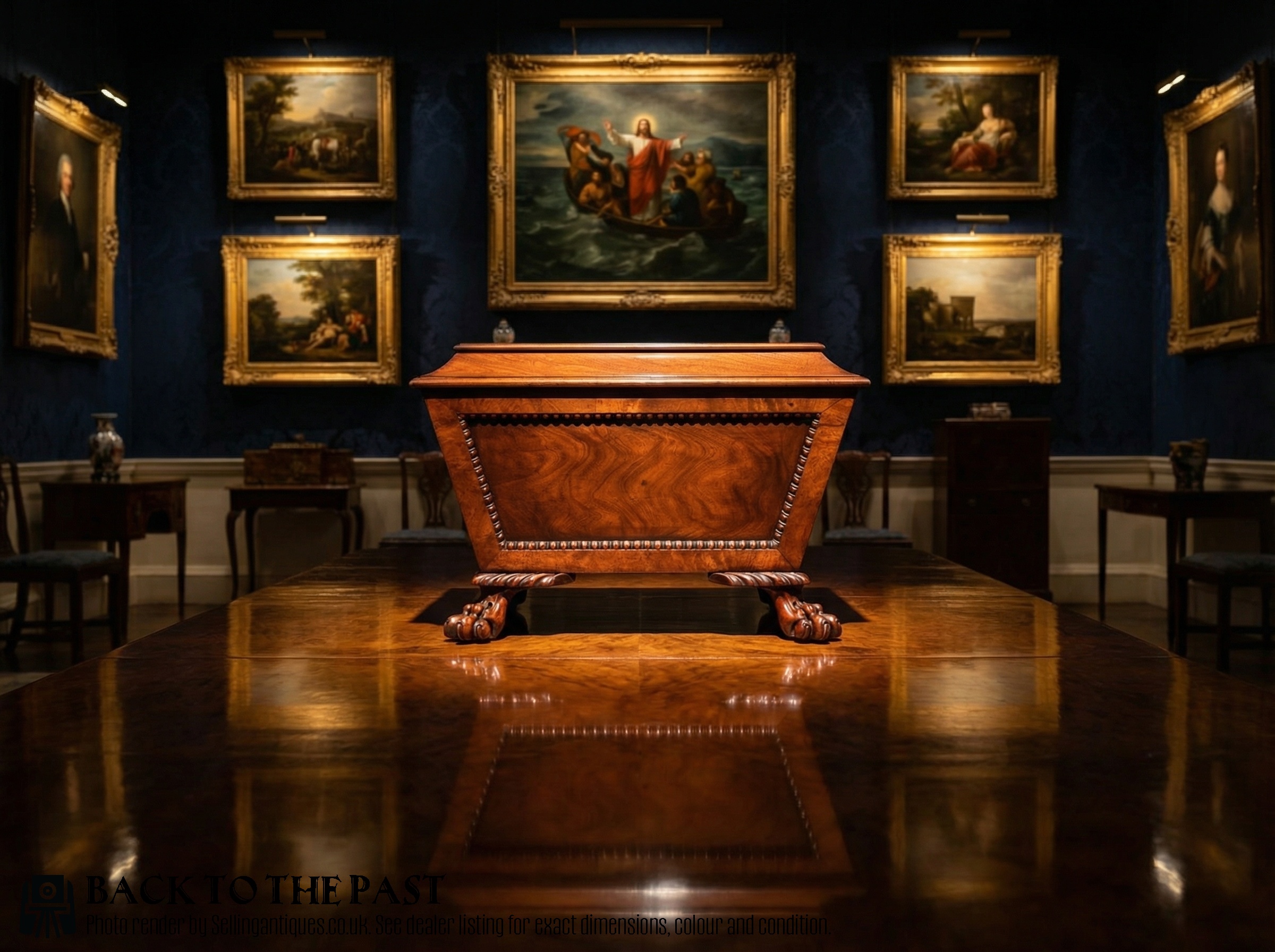
Materials and construction
Makers utilised solid mahogany and flame mahogany veneer, shaping dense timbers into heavy sarcophagus bodies. Brass and metal fittings reinforce the structural integrity and provide functional internal linings for ice and bottles.
Carved wooden paw feet anchor the base of the vessel, demanding skilled joinery to support the substantial weight of the timber and its contents. The exterior surfaces display the rich natural grain of the wood, finished to highlight the deep red-brown tones of the mahogany.
Retail Price Guide 2026
Typical UK retail prices for carved paw foot cellarette, calculated from the Sellingantiques database of over a million retail prices indexed since 2003. This retail price guide relies exclusively on Sellingantiques data; no external sources or auction records are used, so the figures do not describe the wider market.
The object forms span standard wine coolers, cellarettes, and sarcophagus-shaped vessels adhering to Regency and Georgian design.
Distinctions in quality
The distinction between standard and exceptional pieces rests upon the crispness of the timber carving on the paw feet and the selection of flame mahogany veneer. Superior examples exhibit tightly figured grain patterns and deep, sculptural relief work that elevates the furniture from a mere container to a focal point.
Proportion and scale dictate the visual weight of the piece, with finer vessels displaying balanced classical lines rather than clumsy bulk. The integration of original brass mounts and internal fittings further separates workshop standards.
The Carved Paw Foot Cellarette Glossary
- Cellarette
- A lockable container used for storing wine bottles near the dining table. These vessels often incorporate internal metal linings to hold ice.
- Sarcophagus
- A tomb-like coffin shape with a pitched or domed lid, widely adopted during the Regency and Georgian periods for large wine coolers.
- Flame mahogany
- A decorative timber veneer showing a fiery, undulating grain pattern. Craftsmen selected these boards for prominent exterior surfaces to create visual movement.
- Regency style
- A British design movement spanning the late eighteenth and early nineteenth centuries. It draws heavy inspiration from classical Greek, Roman, and Egyptian architecture.
Frequently Asked Questions
What is a cellarette used for?
A cellarette functions as a specialised piece of dining room furniture designed to hold wine bottles and ice.
Historically, they sat beneath the sideboard or beside the dining table to keep beverages cool during long meals.
How do I date a cellarette?
Dating relies on examining the timber species, veneer patterns, and the stylistic details of the carved feet and mounts.
Earlier eighteenth and early nineteenth-century pieces display hand-cut joinery and dense mahogany, while later twentieth-century interpretations reproduce these classical forms.
Where does the paw foot come from?
The paw foot is a classical furniture motif originating in ancient Greek and Roman design.
It was revived extensively during the Georgian and Regency periods to impart a sense of monumental strength to heavy serving pieces.
How do I care for mahogany timber?
Mahogany requires stable room temperatures away from direct sunlight and heat sources to prevent the wood from drying out.
Regular dusting and occasional application of appropriate furniture wax maintain the natural lustre of the polished surface.