


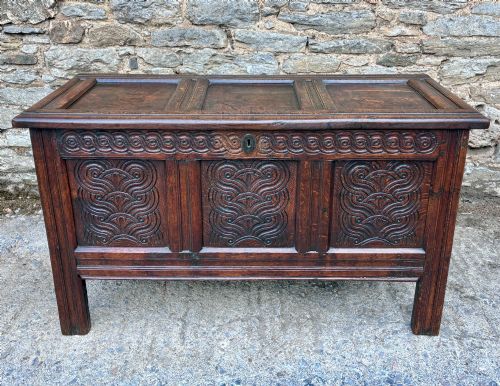
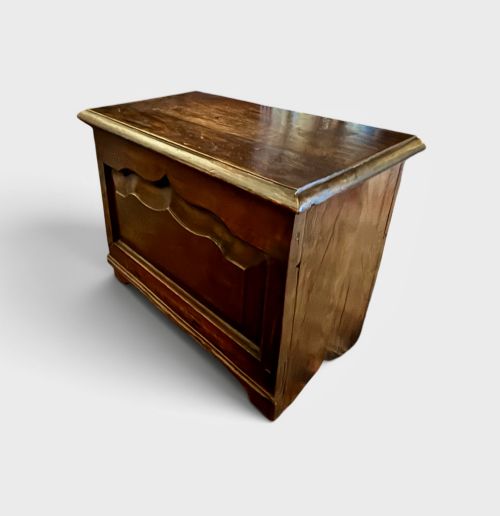
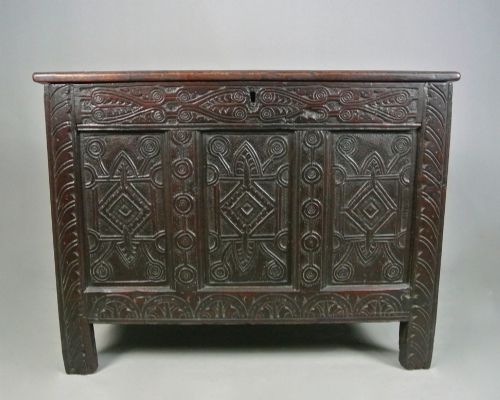
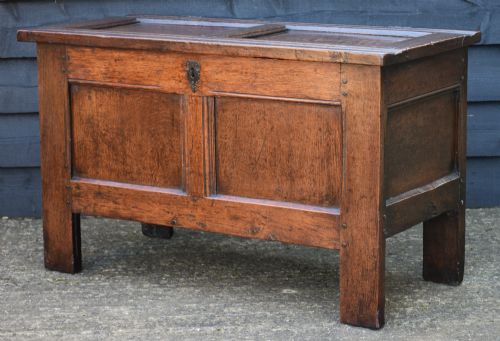
Carved Panel Coffer Chest
A carved panel coffer chest provides sturdy domestic storage built to last centuries, merging robust joinery with decorative woodwork.
Carved Panel Coffer Chest
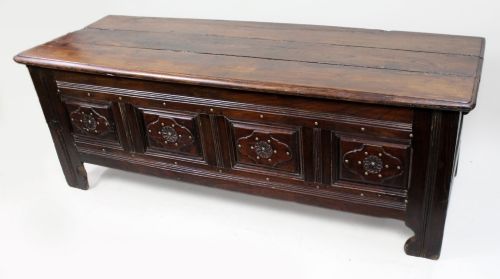
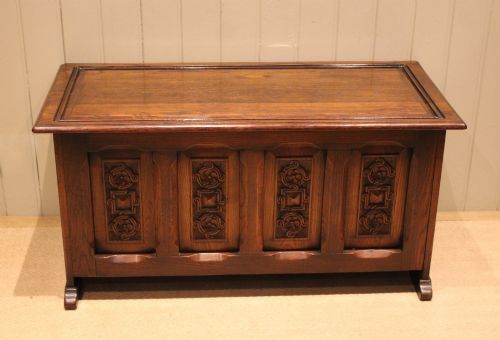
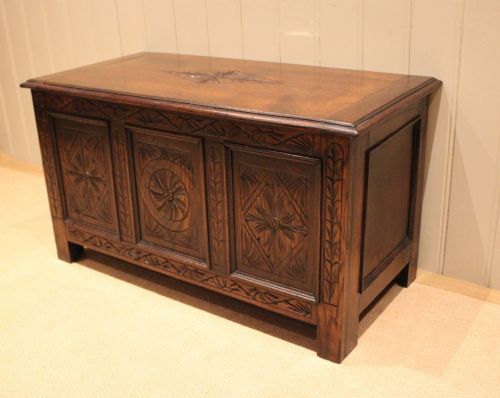
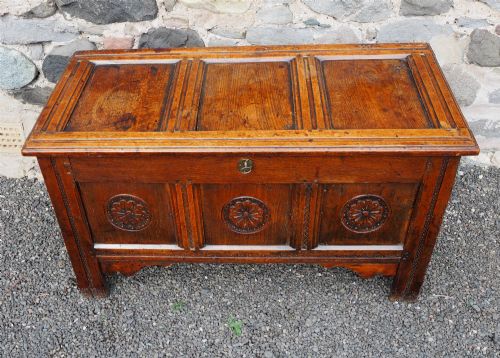
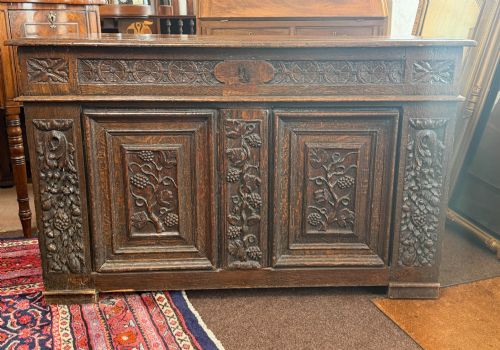
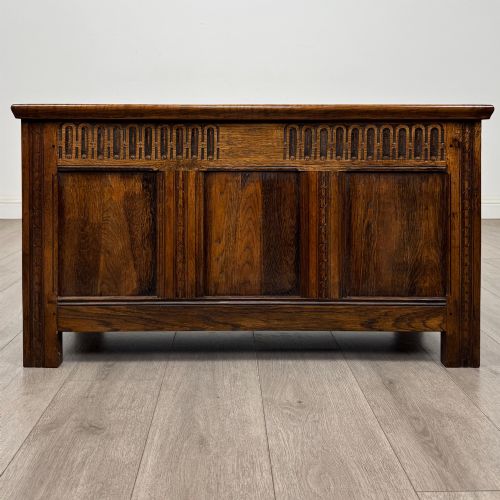
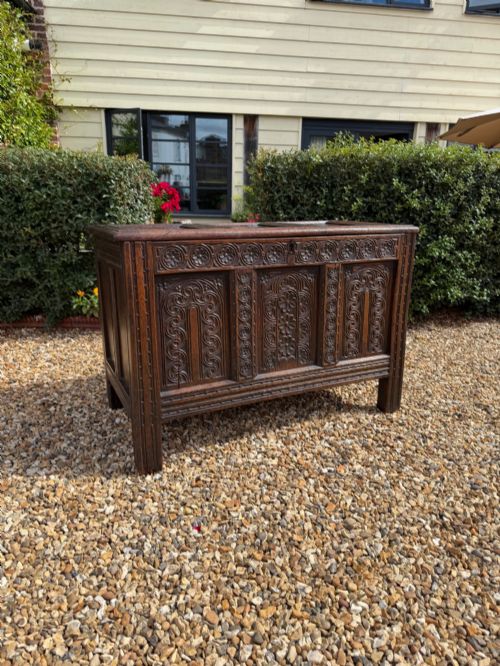
A carved panel coffer chest is a heavy storage box designed for household linens, valuables, and garments, frequently featuring hinged lids and raised framing around recessed wooden panels.
The versions most commonly met on this page span the seventeenth and eighteenth centuries, executed primarily in solid British or European timber with carved friezes, styles, or muntins.
Later reinterpretations from the Edwardian era and the early twentieth century also appear, replicating seventeenth-century Jacobean motifs and framing techniques in solid or dark-finished oak.
Materials and construction methods
Carpenters built these storage chests predominantly from solid oak, utilising pegged mortise and tenon joinery to construct the structural frame and surrounding panels.
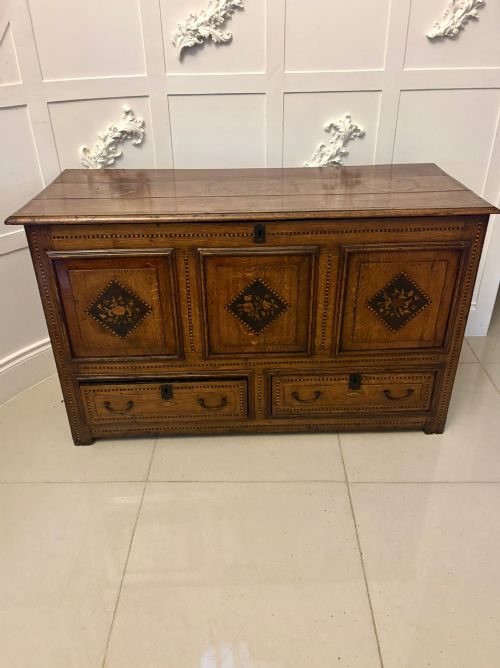
Surface decoration relies on chip-carved geometric patterns, scrolling foliage, or arcading applied directly to the timber, occasionally supplemented by marquetry inlay, wood inlay, or ebonised wood details.
Metalwork hardware such as iron hinges, latches, or brass mounts provide functional reinforcement to heavy lids and corners.
Several survival chests retain secret internal compartments affectionately known as till boxes, designed to hide coins from prying household servants.
Factors separating quality tiers
Quality varies according to the depth, crispness, and complexity of the carved ornamentation on the front panels, alongside the integration of contemporary timber rather than later replacement boards.
Proportion and scale distinguish finer regional examples, such as smaller Welsh or Cornish pieces, from larger, standard institutional or provincial domestic storage trunks.
The Carved Panel Coffer Chest Glossary
- Mule chest
- A storage chest equipped with one or more drawers beneath the main internal compartment. This form developed during the late seventeenth and eighteenth centuries.
- Panelling
- Construction method where flat wooden boards are fitted within grooved upright stiles and horizontal rails. This technique accommodates natural wood shrinkage without splitting.
- Marquetry inlay
- Decorative veneer work formed by fitting contrasting pieces of wood into cut-out recesses of a primary board. This technique creates complex pictorial or geometric patterns.
- Jacobean style
- English decorative arts style dating from the early seventeenth century, characterised by heavy proportions and geometric chip-carving.
Carved Panel Coffer Chest: Frequently Asked Questions
What were carved panel coffer chests used for originally?
These chests served primarily as secure household storage for valuable textiles, church vestments, and domestic documents before fitted wardrobes became common.
Their robust flat lids also allowed them to function as tables, benches, or window seats in domestic halls and chambers.
How do I care for an antique oak coffer?
Keep wooden storage chests away from direct heat sources and rapid temperature fluctuations to prevent the solid oak panels from splitting or warping.
Feed the timber periodically with traditional beeswax to maintain the surface sheen and protect the dry historic wood.
How can I tell a seventeenth-century coffer from a later revival piece?
Examine the interior construction marks, the oxidation of the timber, and the hand-riven nature of the oak boards rather than relying solely on the carved exterior surface decoration.
Twentieth-century revival pieces often display uniform machine-sawn tool marks and lighter internal framing compared to earlier joinery.
What is the difference between a coffer and a mule chest?
A standard coffer provides access exclusively through a top-hinged lid, requiring items to be lifted directly out from the single deep compartment.
A mule chest incorporates one or more external drawers beneath the main chest cavity, offering easier access to smaller garments.