

Carved Open Back Chairs
These carved open back chairs span centuries of woodworking skill, offering period character and substantial seating for any room.
Carved Open Back Chairs
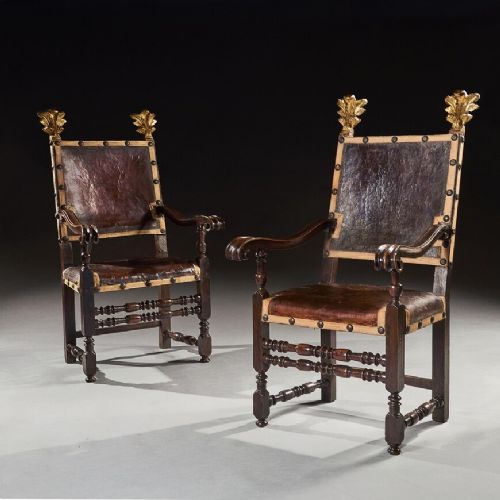
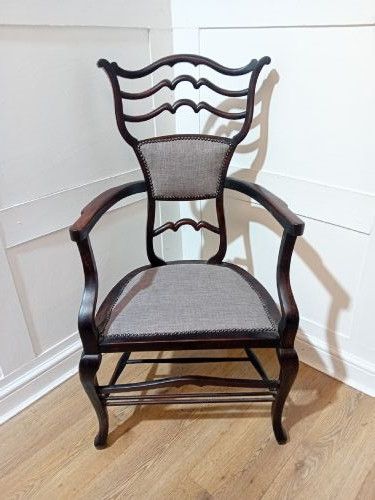
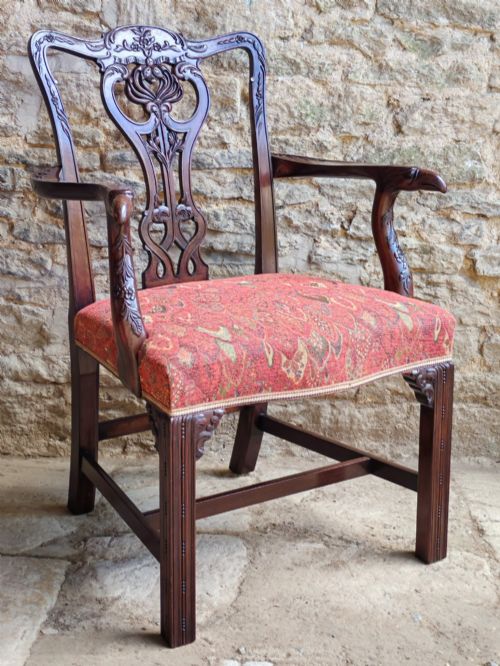
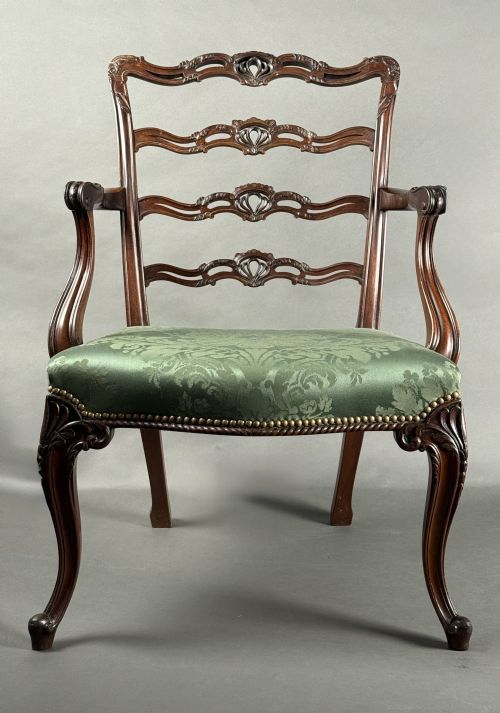
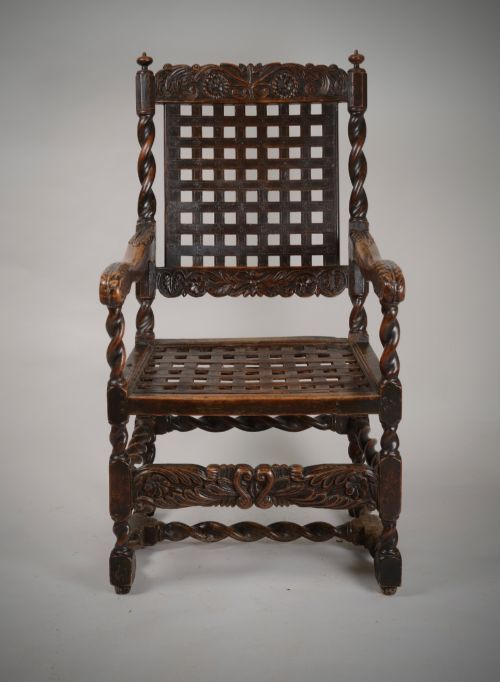
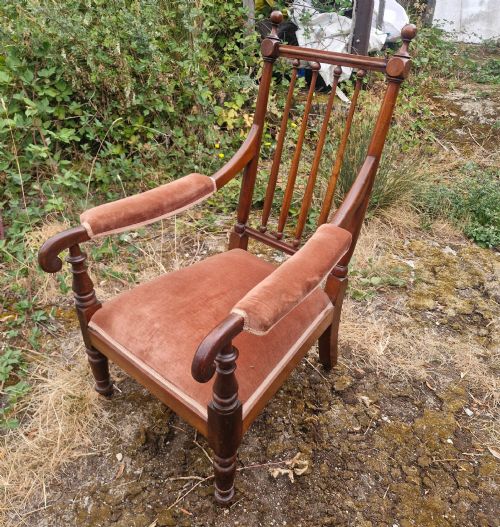
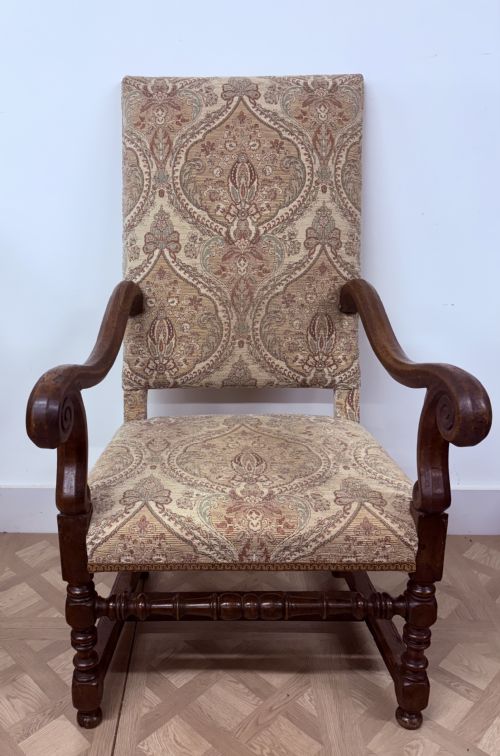
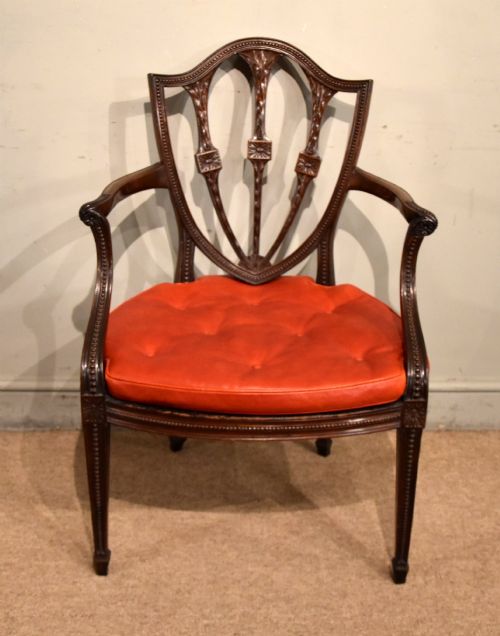
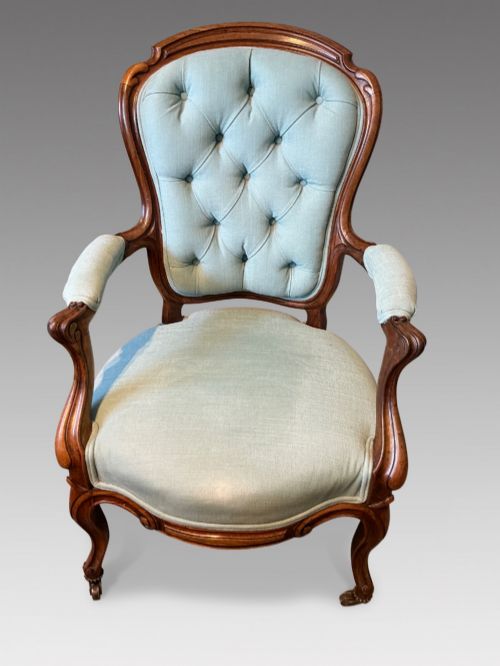
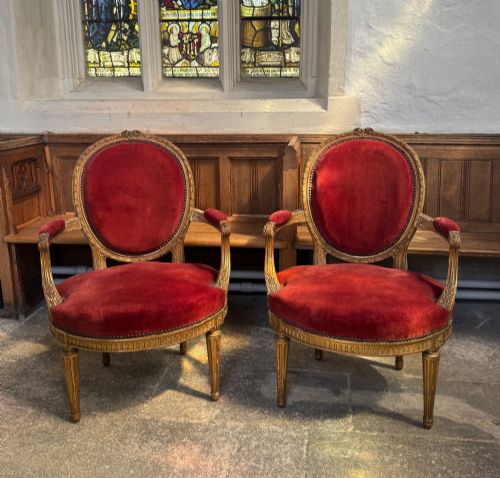
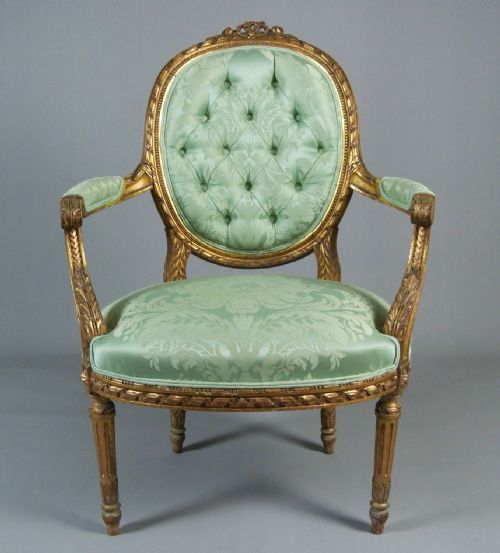
When searching for carved open back chairs, buyers encounter seating designed across the seventeenth, eighteenth, nineteenth, and early twentieth centuries. The selection includes dining chairs, salon chairs, and armchairs spanning periods from seventeenth-century Baroque and Carolean styles to Georgian, Victorian, and Edwardian revivals.
Mahogany and walnut form the core of the inventory, often accompanied by oak, giltwood, and satinwood. Upholstery materials include fabric, leather, velvet, and cane inserts, matching the diverse formal and domestic settings these chairs originally occupied.
How they were made
Cabinet makers utilised dense hardwoods like mahogany, walnut, and oak to construct sturdy frames capable of supporting intricate joinery and deep relief carving. Timber selection determined both the structural integrity of the open back and the crispness of the carved details.
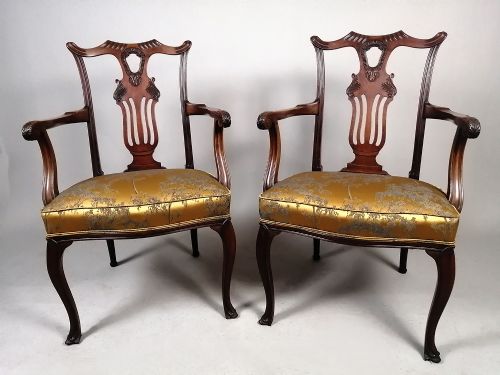
Surface decoration involved parcel-gilt highlights, painted finishes, and polished wood grains, while seats were traditionally webbed and stuffed with hair or pad materials before covering in leather, velvet, or woven cane.
Listings feature mahogany, walnut, and oak alongside giltwood frames, spanning seventeenth-century origins through to twentieth-century revival pieces.
What varies in quality
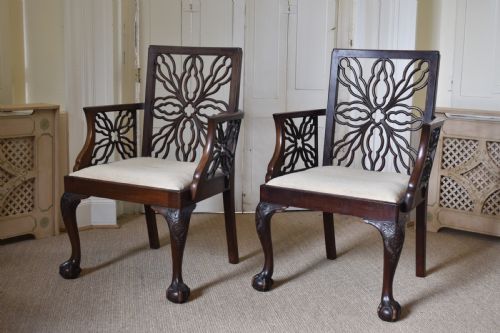
The standard of carving defines the upper tier of these pieces, distinguishing crisp, deep relief work from softer, shallower execution. Skilled hand-chiselling creates defined edges and balanced symmetry across the arms, rails, and open splats.
Timber selection and frame construction also separate regional vernacular pieces from high-workshop examples. Tighter grain, robust joinery without excessive secondary reinforcing, and original surface patination indicate superior original manufacture.
Thomas Chippendale·Howard and Sons·Hindley and Sons
The Carved Open Back Chairs Glossary
- Carver
- An armchair, typically designed en suite with a set of smaller dining chairs. These chairs feature open arms to accommodate formal dress.
- Wainscot chair
- An early form of wooden armchair constructed mostly from oak, featuring panelled backs and solid wooden seats. They represent substantial seventeenth-century domestic seating.
- Bergère
- An enclosed upholstered armchair with wooden framing exposed around the sides and back. French in origin, this form often incorporates cane panels.
- Parcel-gilt
- A decorative treatment where specific carved details or mouldings receive a thin application of gold leaf while the surrounding wood remains exposed.
- Splat
- The vertical central strip of wood in the middle of a chair back. In open back chairs, this component often carries the primary carved ornament.
Carved Open Back Chairs: Frequently Asked Questions
How do I identify seventeenth-century chairs?
Seventeenth-century examples typically utilise solid oak or walnut with heavy turned supports, stretchers, and linear carved panels. The construction relies on pegged mortise and tenon joints.
These pieces often display distinct patination and tool marks from hand-working, separating them clearly from later nineteenth-century revival interpretations.
What is a Gainsborough chair?
A Gainsborough chair is a wide, upholstered armchair with open arms, short cabriole or straight legs, and a padded back originating in the eighteenth century. They were designed for writing desks and drawing rooms.
The open arms allowed ample room for wide eighteenth-century skirts and coats during daily use.
Can I use these chairs daily?
Most period wooden chairs tolerate regular domestic use provided joints remain tight and stable. Solid mahogany and walnut frames offer strong structural support.
Upholstered components and cane panels require careful inspection and occasional professional maintenance to preserve their strength under frequent seating.
How do revival pieces differ?
Revival pieces replicate earlier styles such as Chippendale, Louis XVI, or Baroque during the Victorian and Edwardian eras. They utilise period-accurate motifs executed with machine-assisted precision.
Secondary woods and modern fastening techniques often reveal the true nineteenth or twentieth-century manufacturing date despite the older stylistic influence.