


Carved Office Desk
A carved office desk brings substance and rich timber grain to a room, offering a practical workspace shaped by Victorian and Edwardian craftsmanship.
Carved Office Desk
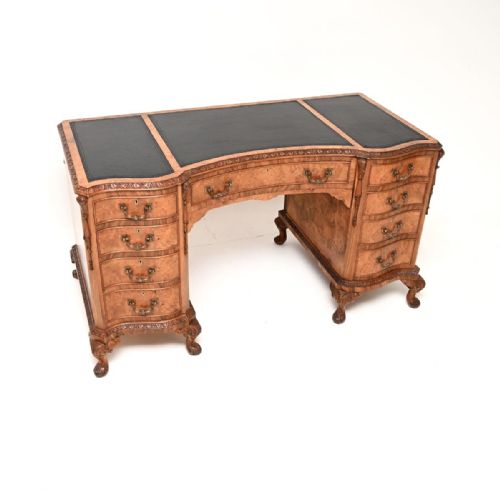
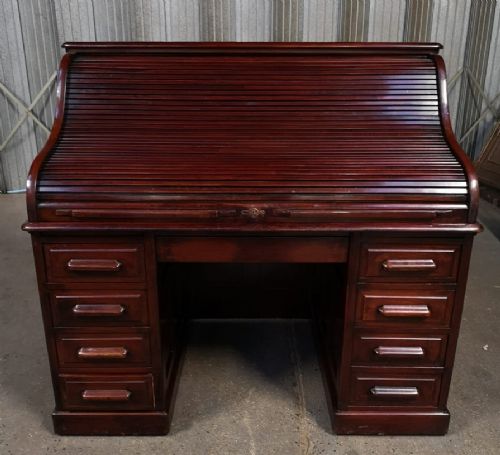
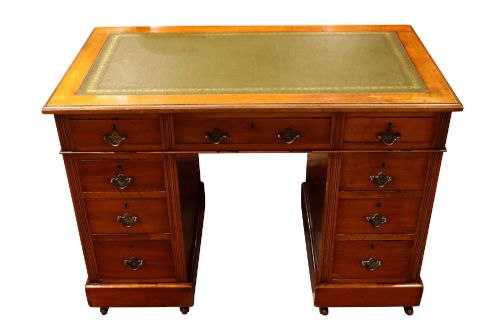
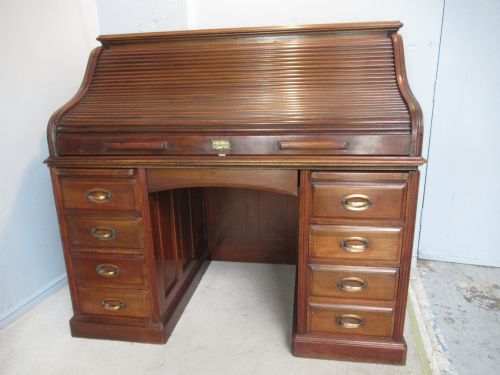
When searching for a carved office desk, buyers encounter robust nineteenth and early twentieth century writing tables, pedestal desks, and partners desks. These pieces originate from the Victorian and Edwardian eras, spanning years from eighteen-fifty to nineteen-thirty.
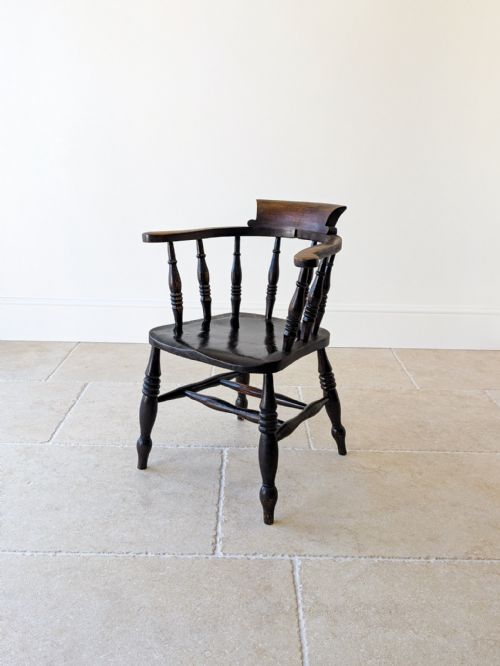
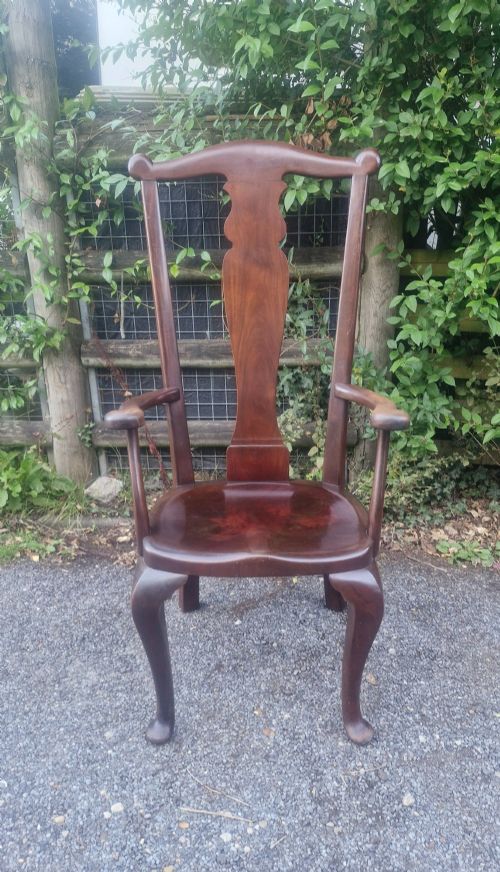
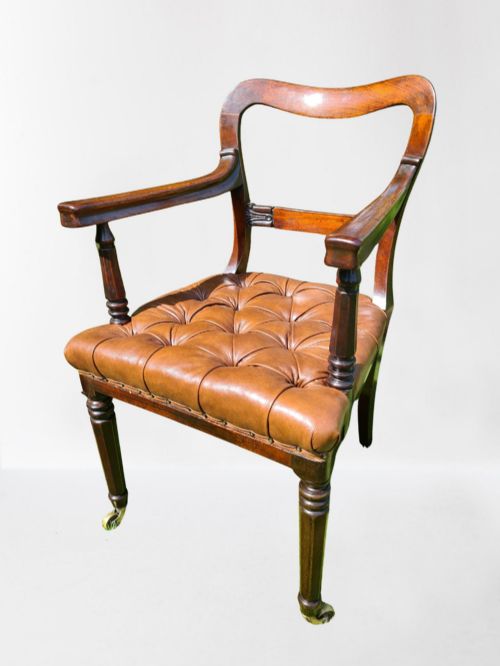
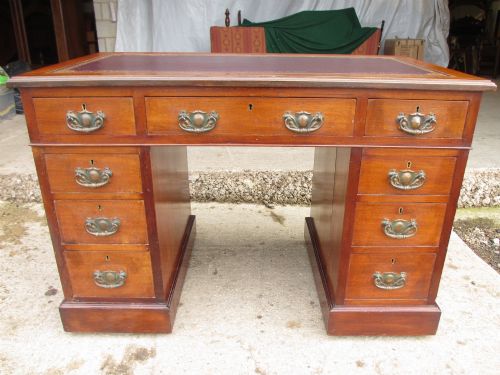
Pedestal desks and kneehole desks dominate the selection, often accompanied by matching swivel desk chairs and captains chairs. Oak, mahogany, and walnut form the structural core of these workspace furnishings, complemented by inset leather writing surfaces.
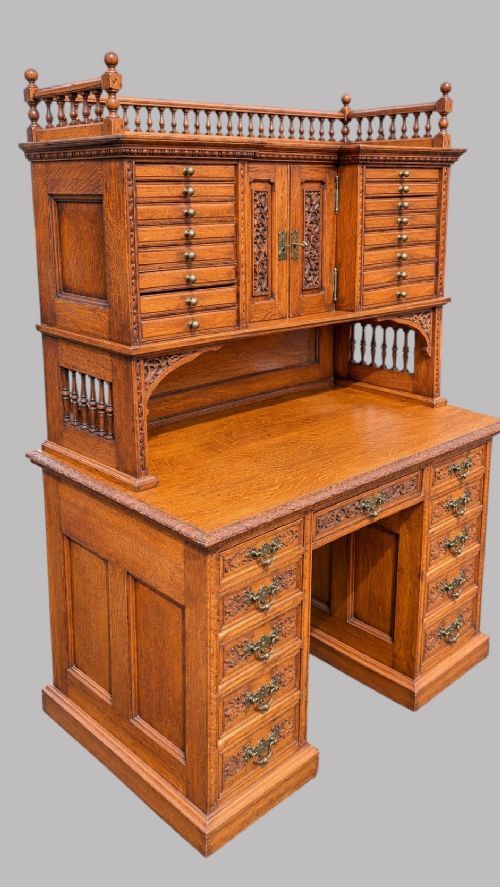
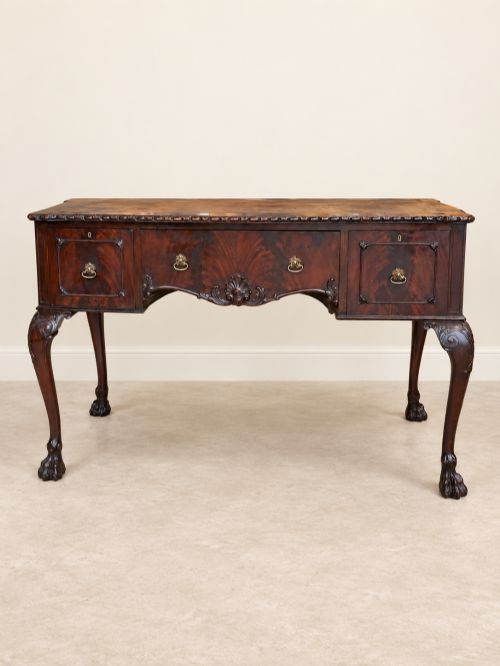
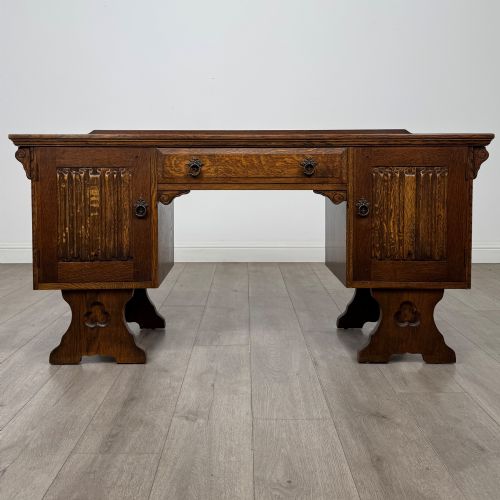
Design influences range from revival styles such as Chippendale and Gothic to plain functional variants with carved linenfold panelling. The forms vary from twin pedestal setups to compact writing tables and slope-front bureaux.
How they were made
Cabinet makers constructed these desks using dense hardwoods like mahogany, oak, and burr walnut, frequently pairing elm and ash for chair frames. Timber preparation involved careful seasoning to prevent warping in heated rooms.
Carving was executed by hand, producing motifs from simple linenfold panels to elaborate paw feet and scrolled armrests. Leather inserts were tooled with gold leaf borders and affixed to the desktop surfaces with adhesive.
Joinery relied on traditional dovetailed drawer construction and mortise and tenon framing to ensure durability under daily clerical use.
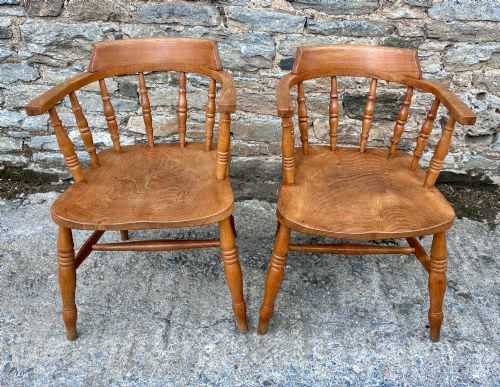
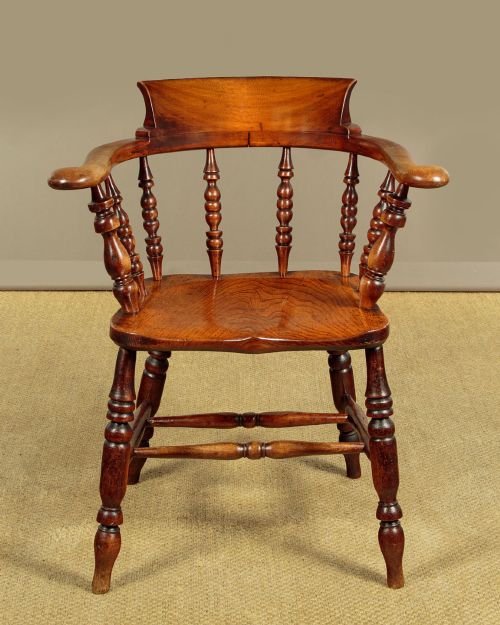
Several captains chairs show deep saddle seats carved to fit the user after long hours of ledger work.
What varies in quality
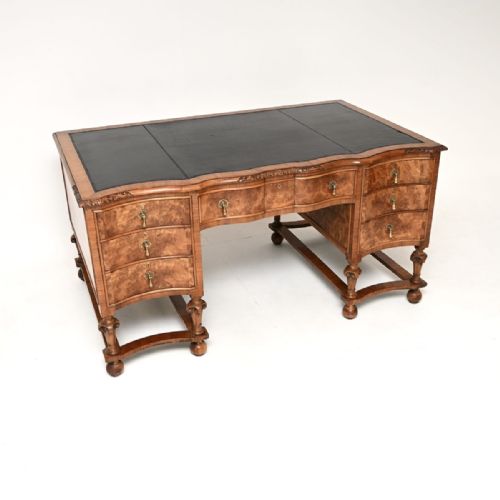
The choice of timber veneer dictates much of the visual merit, with highly figured burr walnut commanding attention over plain utility woods. Depth and crispness of the hand-carved detailing separate standard workshop production from exceptional cabinet work.
Internal secondary timbers and drawer linings reveal the standard of construction, where solid mahogany or oak interiors indicate superior manufacture. The retention of original tooled leather writing surfaces and matching swivel mechanisms preserves the integrity of the piece.
Maple and Co·Wylie and Lochhead Glasgow
The Carved Office Desk Glossary
- Pedestal desk
- A heavy writing table supported by two columns of drawers flanking a central kneehole. This form provides substantial storage capacity beneath the work surface.
- Kneehole desk
- A compact desk featuring a central recess for the legs with banks of drawers on either side. It represents a smaller scale version of the pedestal desk.
- Linenfold
- A style of relief carving imitating folded linen fabric. It appears frequently on early twentieth century oak panels.
- Captains chair
- A rounded wooden armchair with a low back and spindle supports. They often feature upholstered seats and serve as desk chairs.
Carved Office Desk: Frequently Asked Questions
What is a partners desk?
A partners desk is built to be used from both sides simultaneously, featuring banks of drawers facing front and back.
These large tables were traditionally designed for banking houses or shared studies.
How do I care for leather desk inserts?
Leather writing surfaces require periodic treatment with neutral wax or leather balm to prevent drying and cracking.
Avoid using harsh chemical cleaners or excessive moisture on the tooled gold borders.
What is the difference between an Edwardian and Victorian desk?
Victorian desks tend to feature heavier proportions, darker finishes, and deep relief carving in mahogany or walnut.
Edwardian examples often display lighter oak timbers, simpler lines, and revival styles influenced by earlier centuries.
Are revolving desk chairs period correct?
Revolving desk chairs with mechanical swivel bases were widely produced during the late nineteenth century.
They pair functionally with pedestal desks and incorporate timber frames matching the main writing table.