




Carved Oak Wing Chair
A carved oak wing chair brings substance and history to a room, offering robust timber frames and high upholstered sides designed to block draughts.
Carved Oak Wing Chair
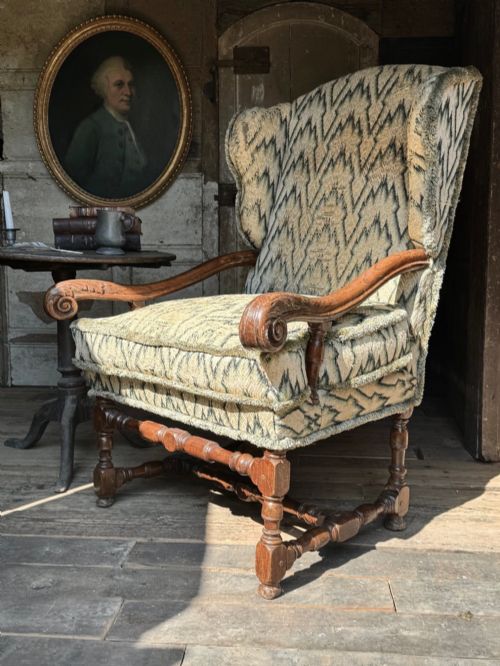
A carved oak wing chair unites sturdy timber framework with high protective wings, designed historically to shield the sitter from chilly draughts near open hearths. These seating pieces appear across multiple eras in the evidence, spanning 18th century vernacular country examples to elaborate Victorian revivals.
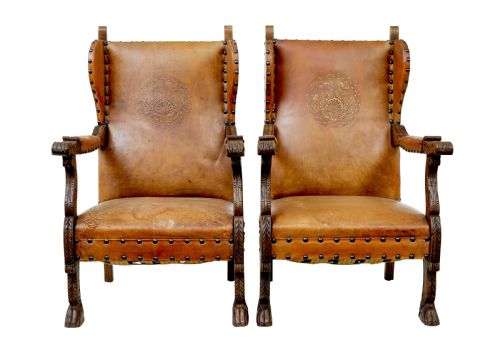
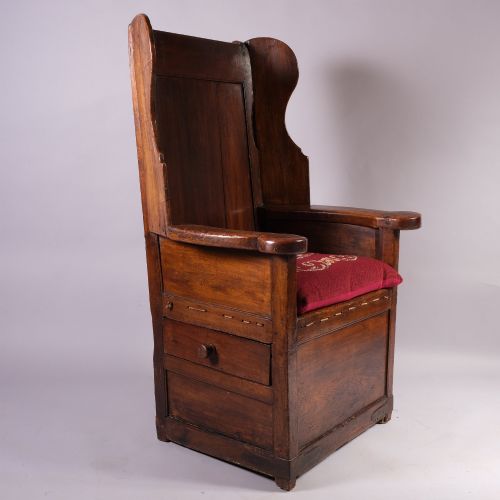
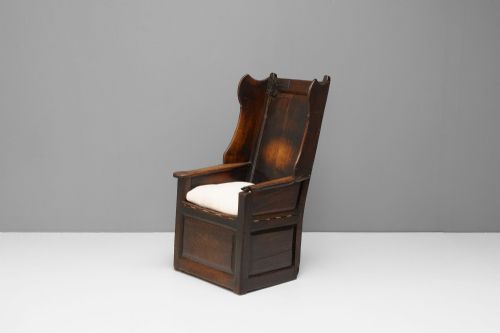
The version most commonly met on this page is the 19th century oak wingback armchair, frequently paired with embossed leather or textile upholstery. Alongside these traditional wing chairs, the listings also encompass related forms such as oak lambing chairs and library armchairs.
What varies in quality
Quality in these pieces rests upon the crispness and depth of the timber carving, alongside the structural integrity of the oak frame. Finer examples display harmonious proportions and careful joinery that resists the wobbles common in lesser pieces.
The standard of upholstery materials and the fidelity of historical revival styles further distinguish top-tier examples. Original or period-appropriate leather and textiles elevate a chair above those with unsympathetic modern replacements.
The listings span from the 18th century through the Edwardian era, incorporating oak, leather, velvet, and brass.
Thomas Hope
The Carved Oak Wing Chair Glossary
- Wingback
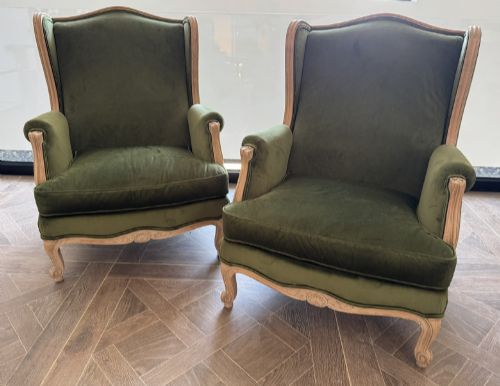
- An upholstered armchair with high side panels designed to trap heat around the head and shoulders. This defining feature kept sitters warm in draughty historic houses.
- Lambing chair
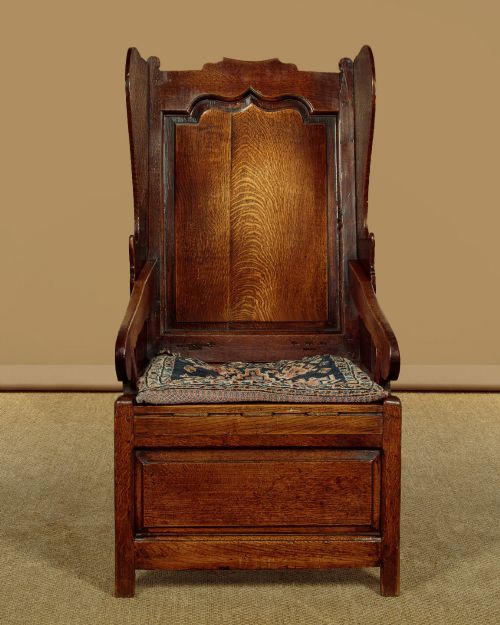
- A vernacular enclosed armchair, often featuring a solid oak hood or high sides and a storage compartment beneath the seat. These rural pieces date predominantly to the eighteenth century.
- Monopodia
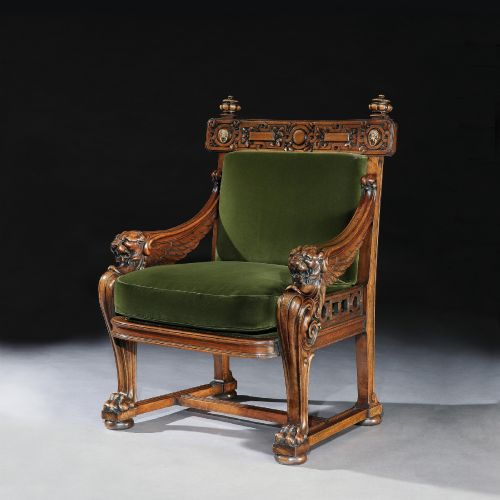
- A furniture support carved as a single animal leg, often terminating in a paw or claw. This classical motif appears on revival pieces influenced by ancient designs.
- Carolean style
- A revival of seventeenth century English aesthetic trends characterised by rich carved ornamentation and scrollwork. Pieces in this style often feature crown and scroll motifs.
- Grotesque
- Decorative ornamentation featuring fanciful human and animal forms intertwined with foliage. This style appears on nineteenth century carved woodwork.
Carved Oak Wing Chair: Frequently Asked Questions
What is a carved oak wing chair?
A carved oak wing chair is a sturdy timber armchair featuring high upholstered side panels designed to block cold air. These traditional seats combine solid wood frames with comfortable padding.
They have been produced across multiple centuries, evolving from functional eighteenth century country seating into ornate nineteenth century revival showpieces.
How were wing chairs used historically?
Historically, these chairs were positioned near fireplaces to protect sitters from drafts while trapping warmth around the upper body. The high wings and enclosed sides created a microclimate of heat in large, cold rooms.
Over time, they transitioned from utilitarian hearth seating into prominent library and drawing room furniture.
How do I style a carved oak wing chair?
A carved oak wing chair works well as a statement piece in a study, living room, or hallway, paired with complementary antique or transitional furnishings. Allowing adequate space around the chair highlights its substantial timber frame and carved details.
Layering the seat with traditional leather or textile upholstery helps anchor the historic aesthetic within a modern interior.
How do I tell an 18th century chair from a 19th century revival?
Eighteenth century examples typically display vernacular construction methods, hand-cut joinery, and patinated surfaces born from long domestic use. Timber seasoning and tool marks on early pieces differ noticeably from later workshop practices.
Nineteenth century revival pieces often adopt historical motifs with heavier proportions, machine-assisted elements, or distinct stylistic revivals such as Carolean or Gothic designs.