



Carved Oak Window Bench
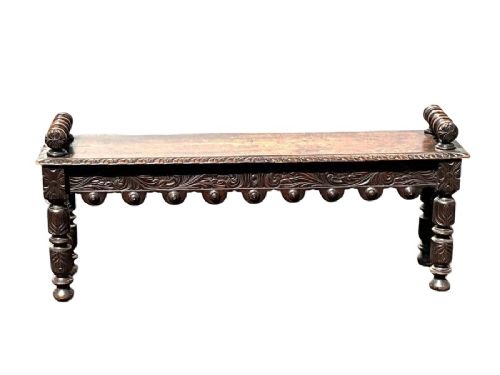
A carved oak window bench brings solidity and rich grain to a hallway or sunny bay.
What they are
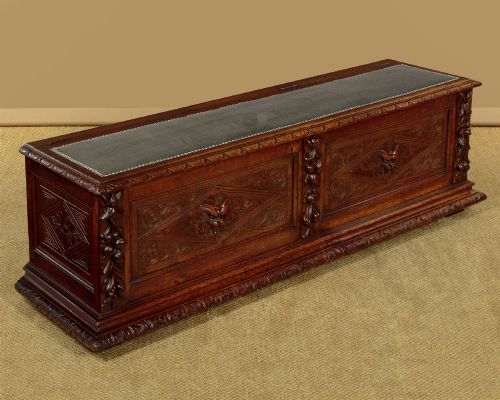
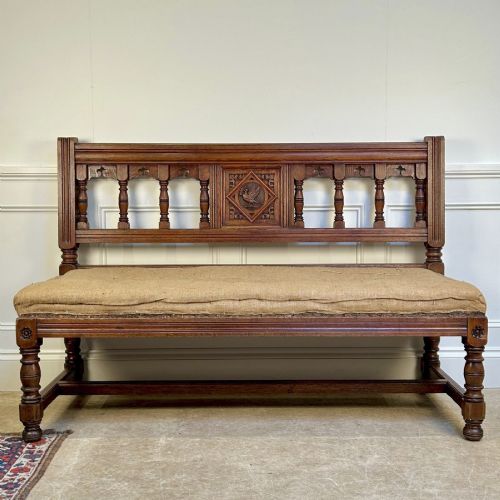
When you search for a carved oak window bench, you encounter seating built to fit narrow spaces and catch the light. These pieces serve double duty as hall benches and window seats, designed with substantial timber frames.
The examples gathered here span from the mid-nineteenth century up to nineteen-ten. They draw on Victorian, Reformed Gothic, Jacobean Revival, Renaissance Revival, and Gothic Revival styles.
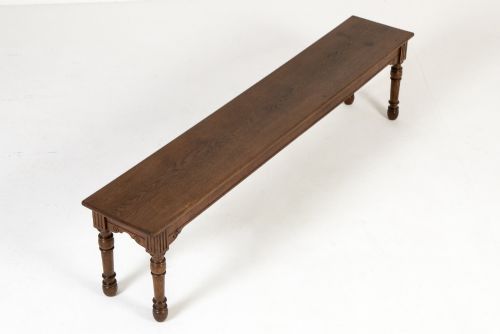
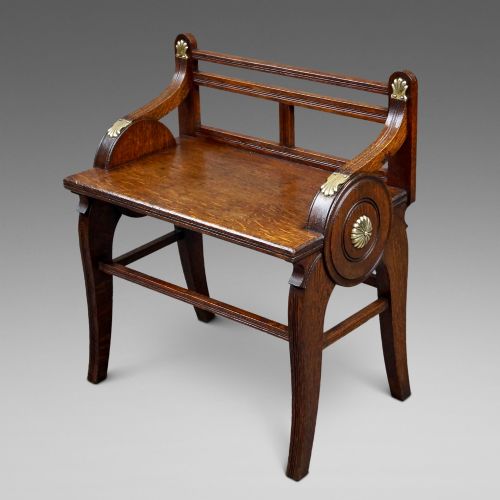
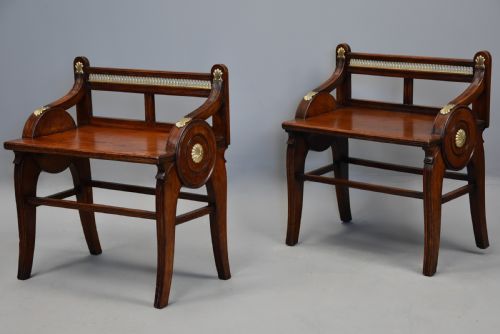
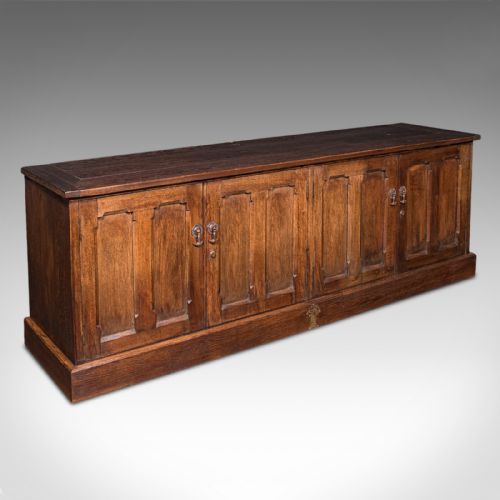
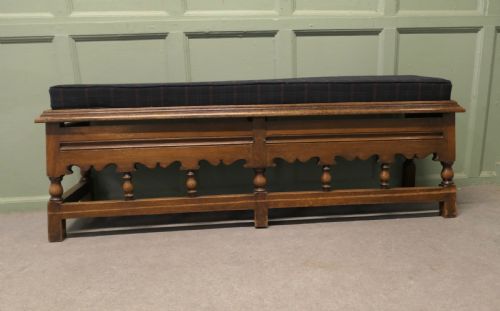
You find long forms, stools, and pairs intended for bay windows or entrance halls. The underlying structure relies on heavy oak boards joined for daily use.
How they were made
Cabinet makers utilised solid oak alongside burr elm and scrub oak for the primary framework. Metal fittings such as brass mounts appear on specific pieces to secure joints and accent the dark timber.
Carving defines the decoration, showing deep relief work, linenfold panels, or characteristic green man motifs. Upholstered surfaces use fabric or leather inserts to top the rigid wooden frames.
Retail Price Guide 2026
Typical UK retail prices for carved oak window bench, calculated from the Sellingantiques database of over a million retail prices indexed since 2003. This retail price guide relies exclusively on Sellingantiques data; no external sources or auction records are used, so the figures do not describe the wider market.
Listings feature oak paired with brass, burr elm, fabric, and leather.
What varies in quality
The depth and crispness of the carved ornament distinguish a standard commercial seat from a finer workshop production. Crisp edges on foliage and figural carvings indicate skilled hand execution rather than mechanical shaping.
The choice of secondary timbers and the integrity of the joinery mark the difference across the range. Selected burr elm accents and heavy brass hardware elevate the finish of individual pieces.
James Shoolbred And Co
The Carved Oak Window Bench Glossary
- Oak
- A hard, durable timber with prominent grain patterns used for heavy furniture construction. It accepts deep carving exceptionally well.
- Burr elm
- A knotted, highly figured wood often utilised for decorative panels and contrasting details. Its swirling grain catches the eye on seating surfaces.
- Reformed Gothic
- A nineteenth-century design style favouring geometric simplicity and structural honesty over excessive ornamentation. It strips away heavy revival clutter.
- Green man
- A sculptural face carved from foliage, frequently found on nineteenth-century revival seating. It represents rebirth and nature.
- Hall bench
- A narrow seat designed for an entrance passage, often featuring a high back or storage. These pieces accommodate transitory sitting.
Frequently Asked Questions
Where should I place a window bench?
These pieces fit naturally beneath low windows, along narrow hallways, or beside entrance doors where sturdy seating is practical.
Their narrow depth allows them to occupy circulation spaces without blocking movement through a room.
How do I care for oak furniture?
Keep wooden surfaces away from direct heat sources and strong sunlight to prevent the timber from drying and splitting.
Apply natural beeswax occasionally to nourish the grain and maintain a soft protective sheen.
What is a green man carving?
A green man depicts a human face emerging from or entwined with leaves and vines. It appears frequently on nineteenth-century revival woodwork.
This motif draws on ancient architectural traditions symbolising spring and renewal.
Are these benches comfortable for sitting?
Many examples feature flat wooden boards or simple upholstered pads designed for short periods of rest. Adding a loose cushion provides extra comfort for prolonged lounging.
The rigid frames prioritise structural endurance over cushioned softness.