

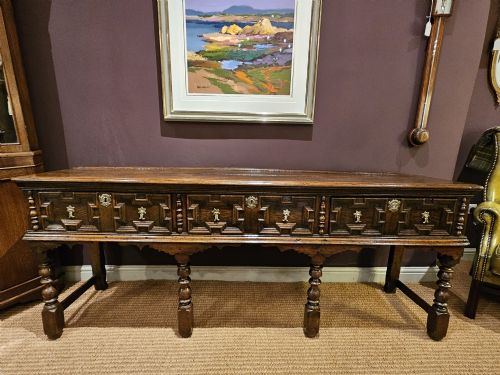
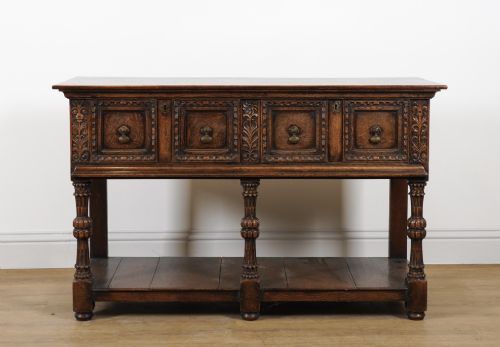
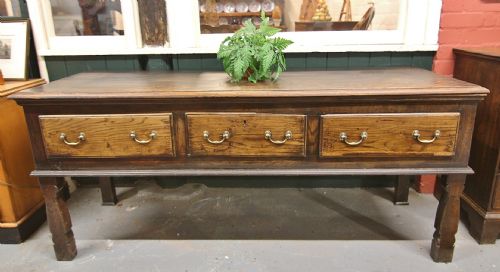
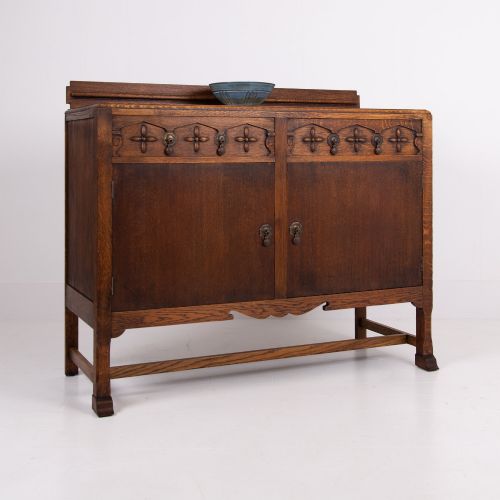
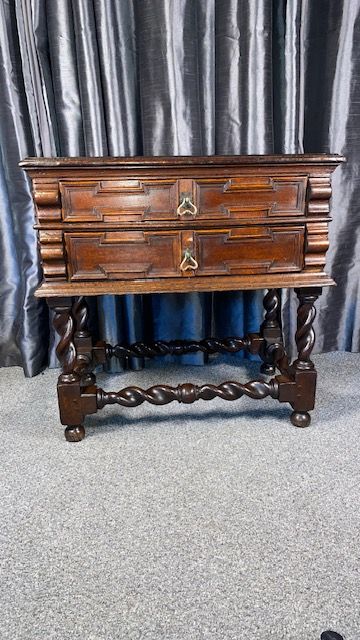
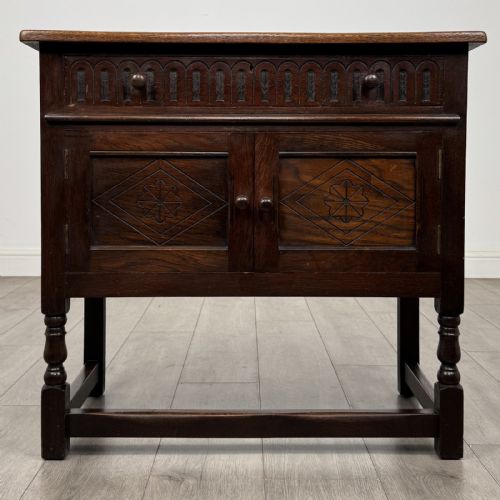
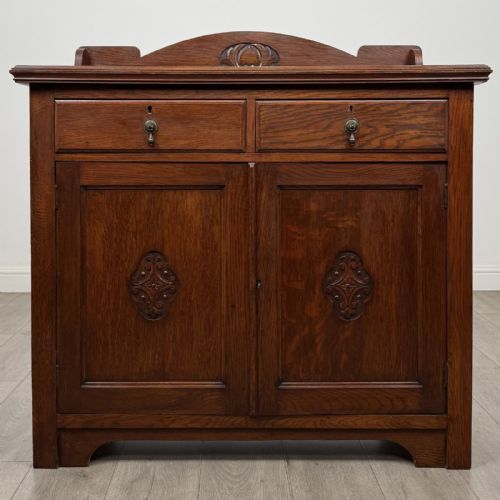
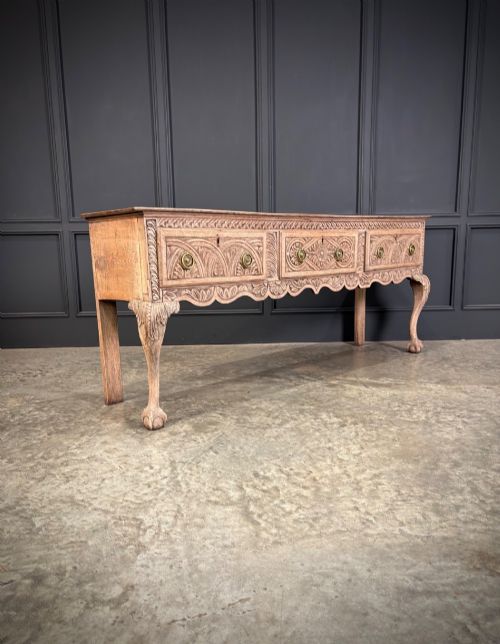
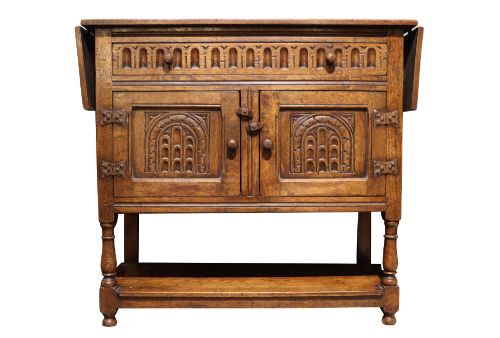
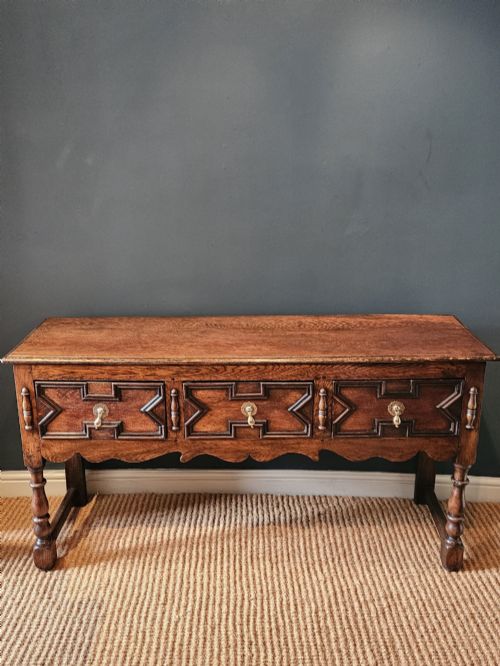
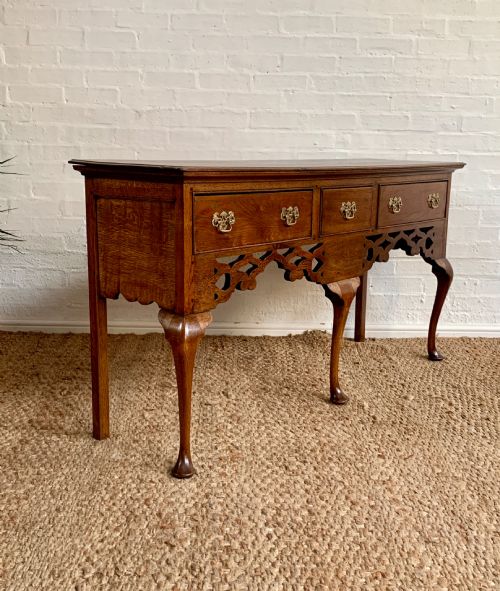
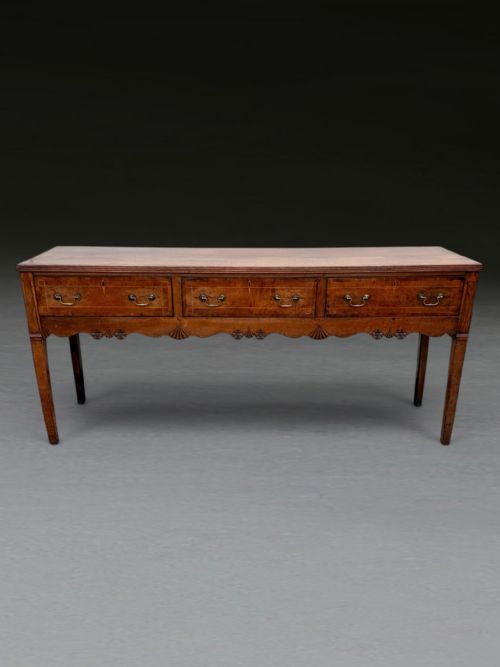
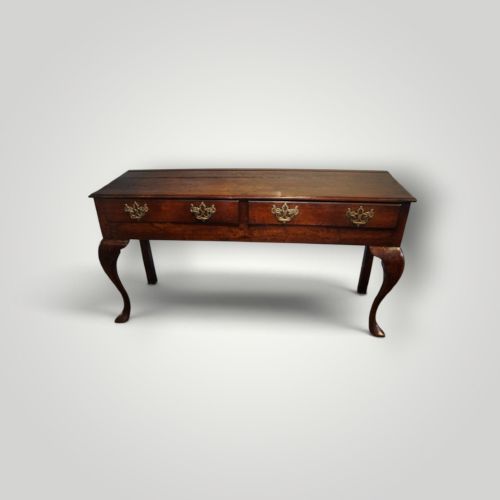
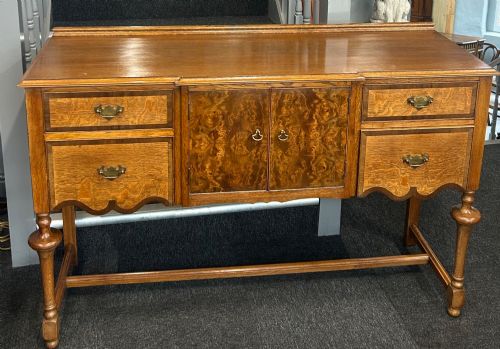
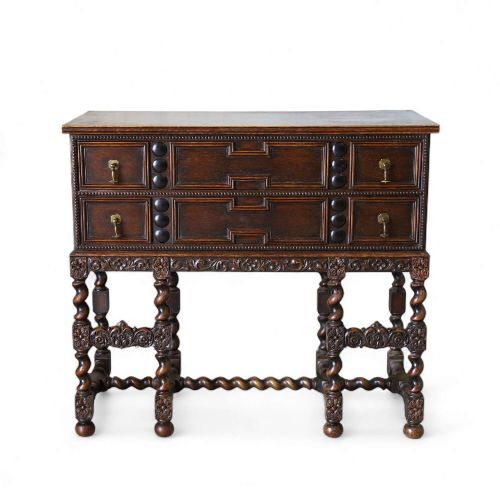
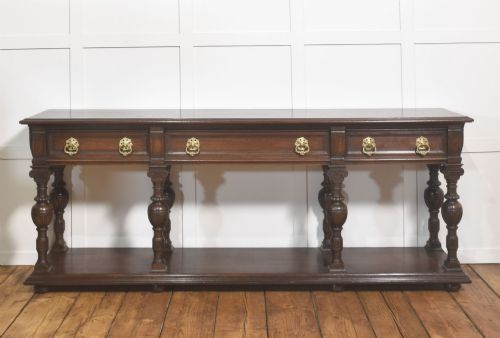
Carved Oak Sideboard with Drawers
A carved oak sideboard with drawers grounds a dining room or hallway with substantial storage and heavy timber presence.
Carved Oak Sideboard with Drawers
A carved oak sideboard with drawers brings together robust storage furniture built across multiple centuries, ranging from seventeenth-century low dressers to twentieth-century revival styles. These items function as serving tables, cupboards, and storage bases equipped with multiple drawers for household organisation.
The versions most commonly met on this page span the Edwardian period, the 1920s, and the 1930s, often drawing on English Country, Jacobean Revival, and Arts and Crafts traditions. Formats vary from small cottage dresser bases to large breakfront serving tables incorporating brass, pine, iron, and occasionally burr walnut or mahogany details.
Distinctions in quality
Quality rests on the crispness of the carved detail and the integrity of the timber selection across the drawer fronts and main body. Pieces featuring deeply undercut carving, well-matched grain patterns, and heavy proportions sit at the upper end of the range.
Construction depth also dictates standing, with hand-cut joinery and original hardware demonstrating superior craftsmanship compared to later secondary alterations. The balance of proportions between the drawer section and the supporting legs defines the visual success of each piece.
Carved Oak Sideboard with Drawers Retail Price Guide 2026
Typical asking prices for carved oak sideboard with drawers among the pieces listed under this phrase on Sellingantiques today, from the lower quarter to the upper quarter. They describe what is for sale here now, not the wider market.
Several items include deep drawers once destined for heavy linen storage, now quietly holding contemporary clutter.
Phillips Bristol
The Carved Oak Sideboard with Drawers Glossary
- Dresser base
- A low wooden storage unit featuring drawers along the upper section above cupboards or open potboards. This form served as a primary preparation and serving surface in historic dining spaces.
- Court cupboard
- An enclosed antique cupboard featuring upper and lower tiers, often with recessed upper sections supported by carved columns. These pieces provided secure storage for household valuables and textiles.
- Barley-twist
- A turned column or furniture leg carved in a helical, spiral twist resembling a twisted rope. This decorative turning became particularly popular during revival periods in the seventeenth and early twentieth centuries.
- Breakfront
- A piece of furniture where the central section projects forward from the flanking outer sections. This architectural arrangement creates varied depth and shadow across the drawer fronts.
- Geometric moulding
- Raised wooden mouldings applied to drawer fronts and cabinet doors in repeating geometric patterns. Artisans used this technique extensively in the seventeenth century to create surface relief.
Carved Oak Sideboard with Drawers: Frequently Asked Questions
How do I clean a carved oak sideboard?
Dust surfaces regularly with a soft, dry cloth to prevent particulate build-up in the carved recesses. Avoid silicone-based sprays and excessive moisture, applying a traditional beeswax polish sparingly to nourish the timber.
Allow the wax to dry before buffing gently with a clean brush or cloth to maintain a natural satin sheen. This routine protects the finish without altering the aged patina of the oak.
Where should I place a dresser base at home?
Position the piece in a dining room, hallway, or spacious living area where the depth and drawer storage can be utilised daily. Ensure the location remains away from direct heat sources and strong sunlight to prevent timber warping.
Allow sufficient clearance around the drawers and doors for unobstructed opening. The substantial presence of these items works best against solid walls rather than in tight corridors.
What is the difference between a sideboard and a dresser base?
A dresser base traditionally originates from earlier centuries as a kitchen or dining utility piece with heavy drawer storage and occasional potboard shelving below. Sideboards developed later as dedicated dining room furniture designed primarily for serving food and storing silver.
Both forms incorporate drawers and cupboards, but dresser bases often display more rustic construction and earlier revival styles. Sideboards frequently include more refined neoclassical or Victorian detailing depending on the manufacturing date.
How do I identify a 17th-century oak piece?
Seventeenth-century items display hand-split oak timbers, pegged mortise and tenon joinery, and heavy geometric mouldings on the drawer fronts. Tool marks left by pit saws and adzes remain visible on unexposed interior surfaces.
Revival pieces from later centuries mimic these historic characteristics but often feature machine-sawn lumber, standardised fixings, and different secondary woods inside the drawers. Examining the interior construction and timber shrinkage patterns helps clarify the true age.