
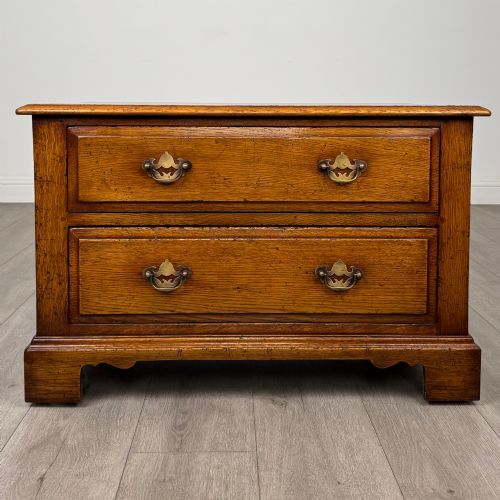
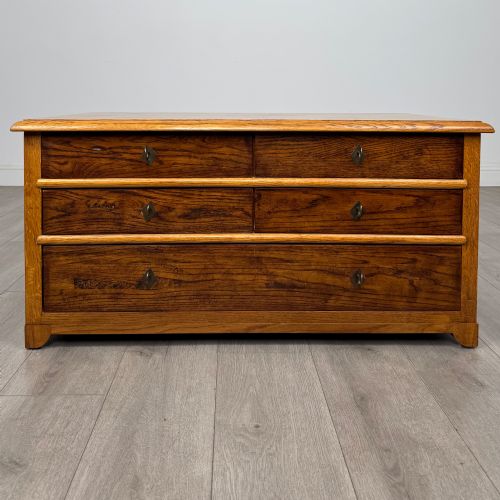
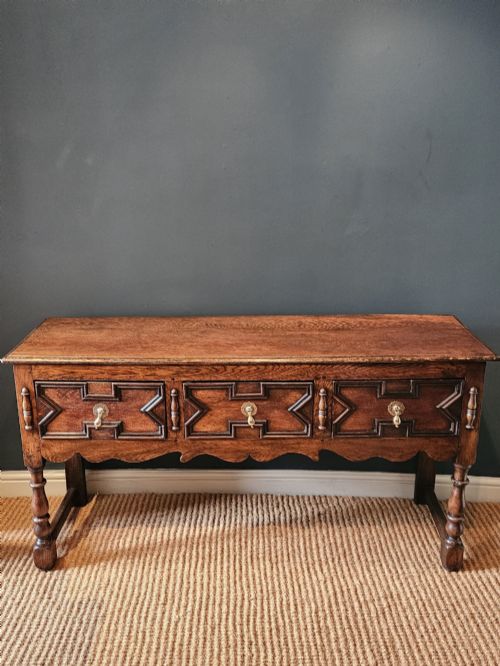
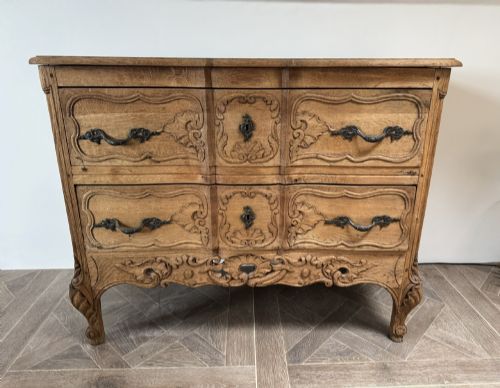
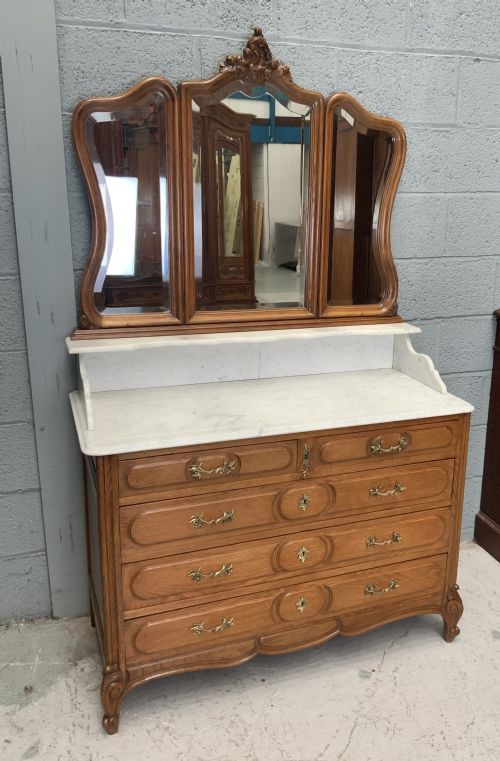
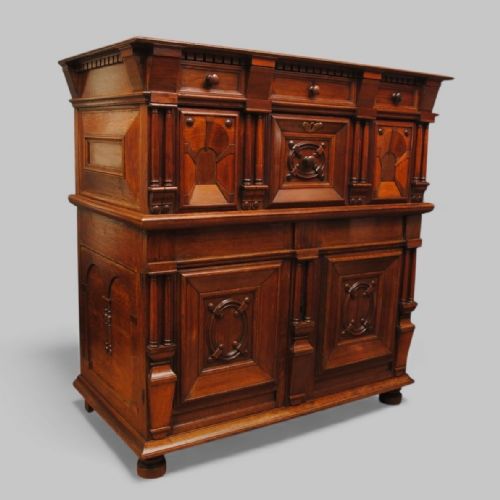


Carved Oak Sideboard Chest
These heavy, characterful pieces known as a carved oak sideboard chest bring centuries of domestic utility and robust joinery directly into modern rooms.
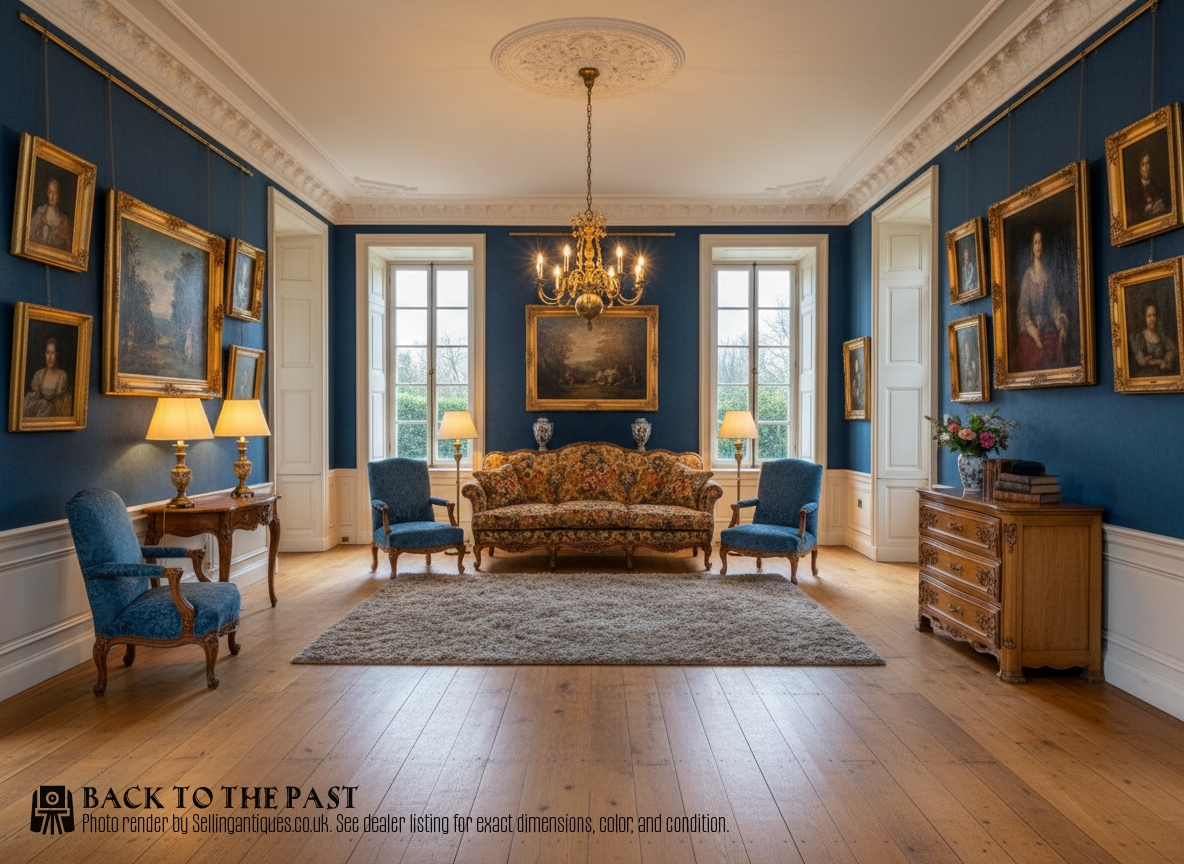
Carved Oak Sideboard Chest
When you search for a carved oak sideboard chest, you encounter a robust hybrid of storage furniture spanning several centuries of British and continental European craftsmanship. The pieces listed here range from early provincial forms to later revival interpretations, encompassing sturdy cupboards, dressers, and commodes.
The most common historical versions include seventeenth-century court and press cupboards alongside eighteenth-century dresser bases and mule chests. These items served as central storage fixtures in domestic kitchens and parlours, designed to hold household provisions, linens, and tableware.
Regional variations feature prominently across the selection, moving from English vernacular joinery to French provincial commodes and Welsh cupboards. Makers utilised local timber traditions to construct pieces that combined display surfaces with enclosed compartments.
Materials and Construction
Joiners relied primarily on solid oak as the structural backbone, frequently complemented by secondary timbers such as fruitwood, chestnut, and walnut in provincial examples. Carpenters employed mortise and tenon joints secured with wooden pegs to build heavy frames capable of withstanding generations of daily use.
Carving techniques defined the surface ornamentation, utilising chip-carving, gouge work, and geometric mouldings to create relief patterns along panels and friezes. Iron and brass hardware, including strap hinges and drop handles, provided functional support and contrast to the dark timber.
Listings span multiple centuries, ranging from seventeenth-century English press cupboards to 1930s limed oak furniture.
Distinguishing Quality
The distinction between standard utility items and superior examples rests upon the crispness of the hand-carving and the integrity of the original timber framing. Pieces that retain their initial surface patination, uncompromised by heavy modern stripping, command greater appreciation among collectors.
Proportion and structural balance also dictate worth, as skilled proportions in vernacular cabinetry prevent bulky forms from appearing heavy. The survival of original iron or brass mounts without extensive replacement parts signals a higher grade of preservation.
The Carved Oak Sideboard Chest Glossary
- Court cupboard
- An enclosed piece of furniture featuring upper and lower tiers, often recessed, used historically for storing food and utensils. These items frequently display elaborate carved panels.
- Mule chest
- A storage chest fitted with one or more drawers at the base, bridging the transition between a traditional blanket box and a chest of drawers. Early examples date to the seventeenth and eighteenth centuries.
- Commode
- A low French chest of drawers or cabinet originating in the seventeenth century. Continental versions frequently utilise fruitwood or bleached oak.
- Geometric moulding
- Raised wooden profiling applied in repeating patterns to drawer fronts and door panels. This decorative technique is particularly common on seventeenth-century pieces.
- Press cupboard
- A large enclosed storage furniture item designed for linens, typically featuring heavy panel doors and robust oak construction.
Carved Oak Sideboard Chest: Frequently Asked Questions
How do I clean carved oak?
Dust the surfaces regularly with a soft, dry cloth to prevent dirt accumulation in the carved recesses.
Apply a microcrystalline wax sparingly once or twice a year to nourish the timber without creating a sticky buildup.
Where should I place a heavy oak chest?
Position the piece away from direct heat sources such as radiators and out of strong direct sunlight to prevent the timber from warping or splitting.
Ensure the floor beneath can support considerable weight, as solid oak furniture is exceptionally heavy.
Can I use a court cupboard in a modern dining room?
These cabinets offer deep shelving and enclosed compartments that suit modern storage needs for tableware, glassware, and table linens.
The historical presence of the carving provides a strong focal point in contemporary interiors.
How do I distinguish seventeenth-century oak from later revivals?
Examine the construction marks inside the piece for hand-tool indicators like pit-sawing striations and pegged joints rather than modern screws.
Inspect the timber shrinkage and patination, which develop unique depth and colour over centuries of handling.