

Carved Oak Shelving Unit
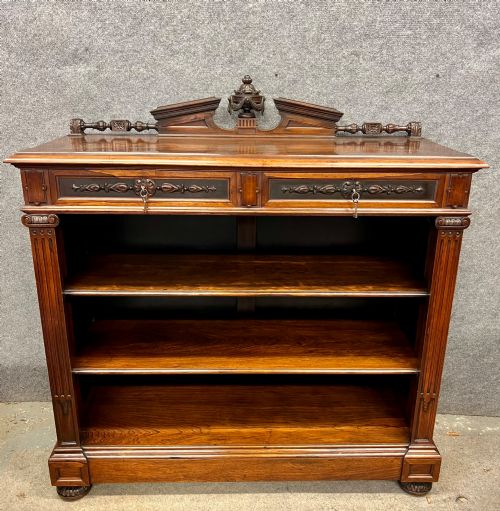
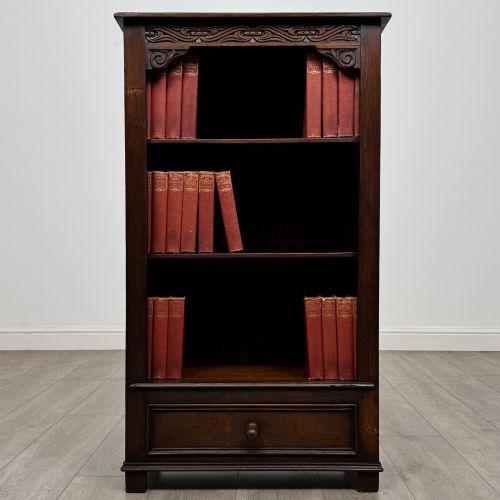
A carved oak shelving unit brings solid construction and rich grain into a room, serving as a practical home for books and objects.
Carved Oak Shelving Unit
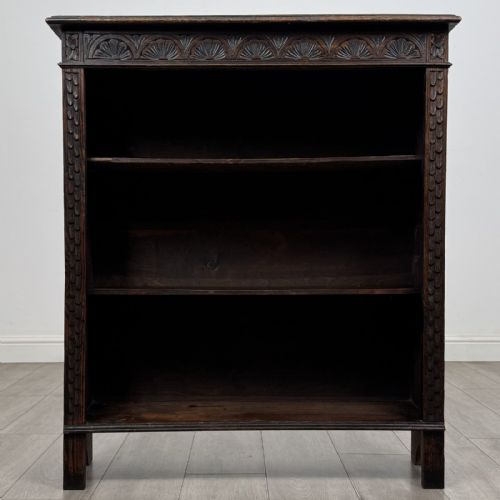
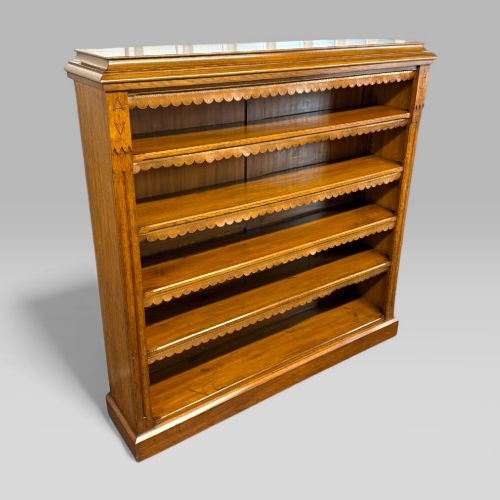
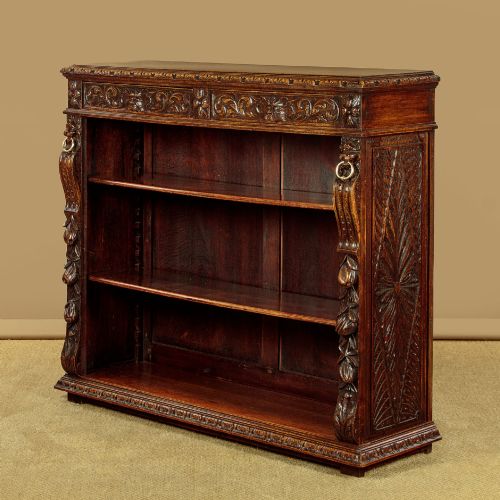
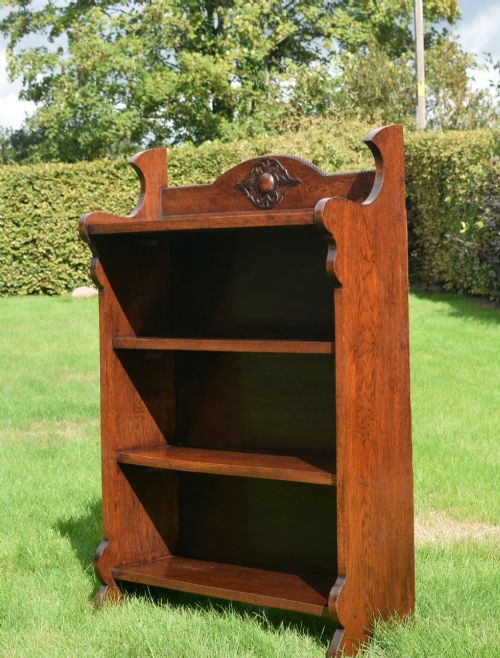
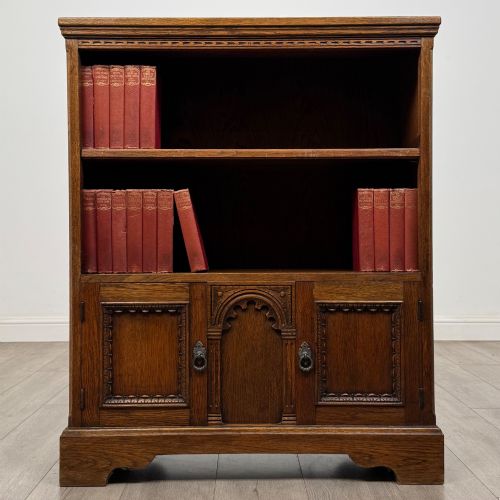
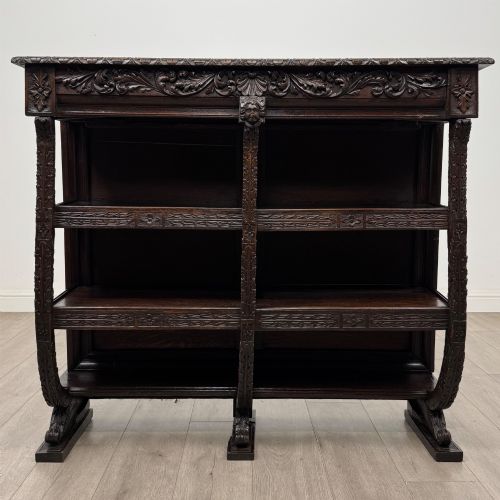
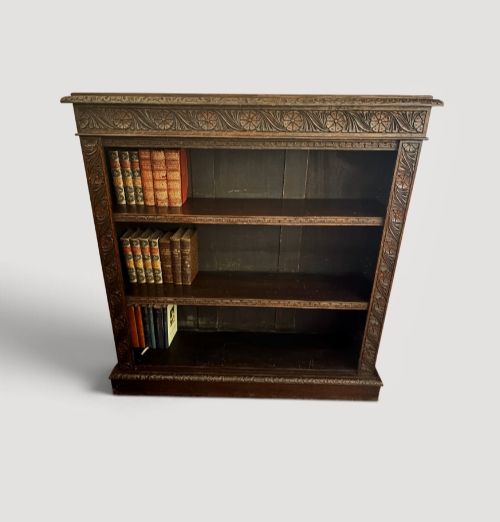
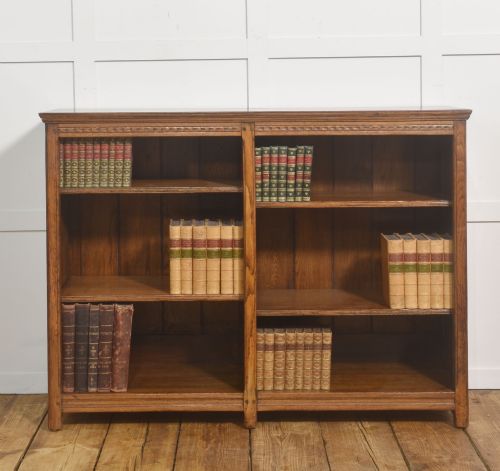
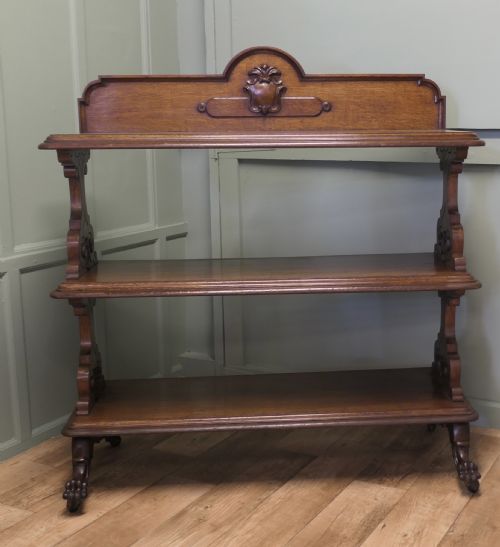
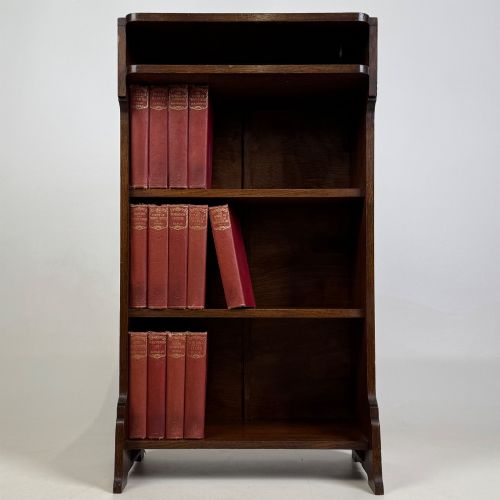
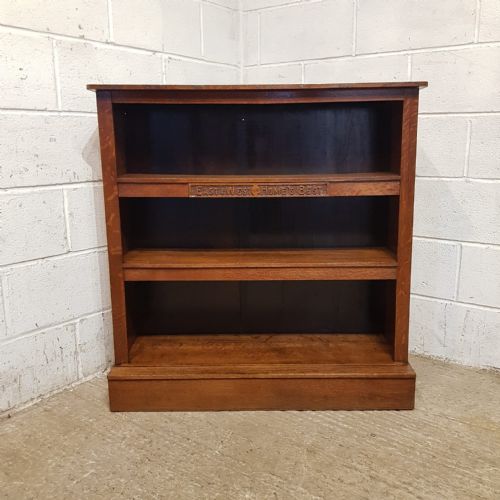
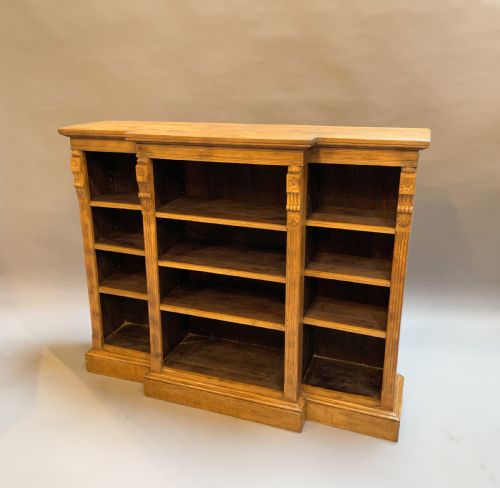
A carved oak shelving unit primarily takes the form of an open bookcase, wall hanging shelves, or a dwarf bookcase designed for domestic use. These pieces emerge across the nineteenth and twentieth centuries, spanning periods from the Victorian and Edwardian eras through to the nineteen-thirties.
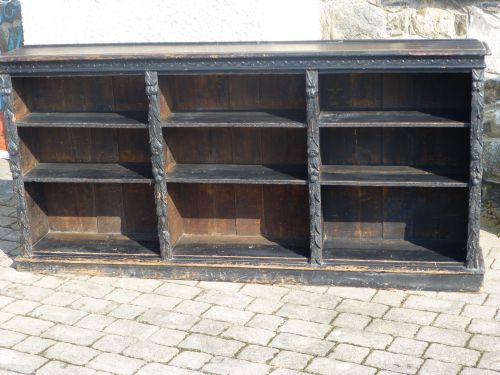
While many examples adhere to straightforward nineteenth century utilitarian forms, others incorporate decorative elements like fret-cut panels or ebonised surfaces. The prevailing format remains the open bookcase, offering accessible storage framed by carved mouldings.
Materials and construction methods
The primary material across these listings is solid oak, occasionally augmented by secondary timbers such as beech or accented with brass and iron hardware. Workshops utilised this dense hardwood for its durability and capability to hold deep relief carving.
Construction techniques involve traditional joinery to support heavy shelf loads, frequently paired with adjustable shelving mechanisms found in Victorian and Edwardian library pieces. Surface finishes range from natural bleached oak to dark ebonised treatments, highlighting the natural grain beneath surface decoration.
Listings feature solid oak and ebonised oak constructions spanning the Victorian, Edwardian, and nineteen-thirties periods.
Distinctions in standard and execution
Quality in a carved oak shelving unit rests upon the crispness of the chisel work and the depth of the timber's figure. Pieces from the Arts and Crafts and Gothic Revival movements often display superior hand-carved detailing compared to plainer utilitarian counterparts.
Structural integrity also separates standard items from finer examples, particularly the presence of solid oak backs, well-fitted adjustable shelf brackets, and balanced proportions that maintain stability under heavy volumes.
The Carved Oak Shelving Unit Glossary
- Breakfront
- A cabinet design where the central section projects forward from the flanking sections. This configuration adds architectural depth to larger library bookcases.
- Dwarf bookcase
- A low shelving unit designed to sit beneath window height or within smaller rooms. These pieces typically feature two or three tiers of open storage.
- Fret-cut
- A technique where thin timber is pierced with a fretsaw to create intricate decorative patterns. It appears on lighter Edwardian and twentieth-century display pieces.
- Ebonised
- Timber treated with a chemical stain or finish to imitate ebony. This dark surface treatment was popular during the Victorian period for dramatic contrast.
- Green man
- A sculptural architectural ornament depicting a human face entwined with foliage or vines. This motif frequently appears on carved revival furniture from the nineteenth century.
Carved Oak Shelving Unit: Frequently Asked Questions
How do I adjust the shelves?
Many nineteenth and twentieth century examples utilise side pilasters fitted with wooden or metal ratchets and studs. Shelves lift out easily to reposition along these vertical tracks.
Simpler constructions rely on fixed shelves or stationary side grooves, so checking the internal mechanism before purchase ensures it meets your storage needs.
Are these units suitable for heavy books?
Solid oak construction provides exceptional natural strength, making these pieces well suited for heavy volumes and large library collections. Thick timber planks resist sagging under prolonged weight.
Ensure that the shelf supports and uprights remain firm, particularly on larger Victorian breakfront or open bookcase formats designed for intensive utility.
How do I tell Victorian from Edwardian pieces?
Victorian examples often feature heavier proportions, deeper relief carving, and darker finishes associated with Gothic Revival or Aesthetic Movement styles. Brass or iron hardware tends to be robust and prominent.
Edwardian pieces generally present lighter forms, cleaner lines, and occasional Arts and Crafts influences. The timber is frequently brighter or treated with a softer wax finish.
Can wall shelves hold heavy loads?
Wall-hanging shelves require secure fixing directly into wall studs or masonry rather than relying solely on plaster. The weight of solid oak demands sturdy brackets or structural backplates.
Once properly anchored, these hanging units provide stable display space for lighter books, ceramics, and decorative objects without occupying floor area.