


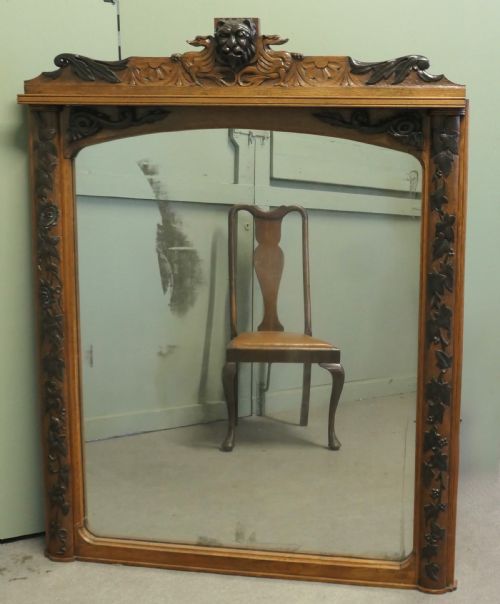
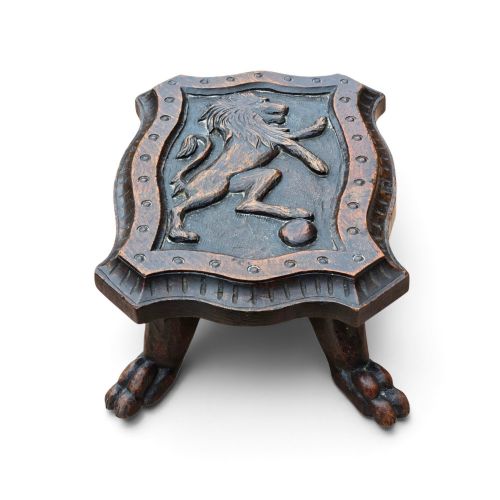
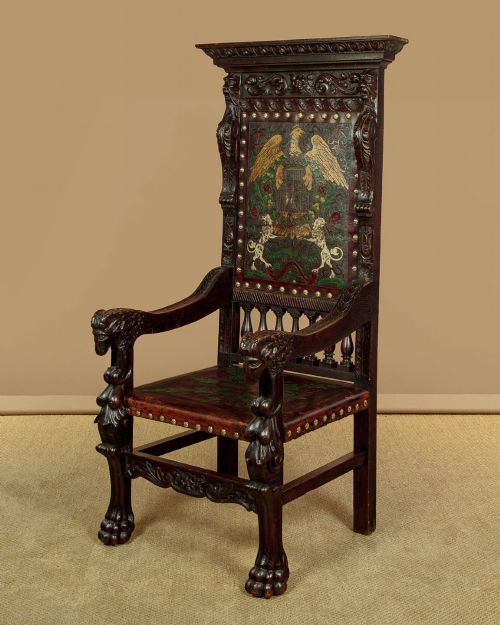
Carved Oak Lion
These carved oak lion pieces bring bold presence and deep historical form to a room.
Carved Oak Lion
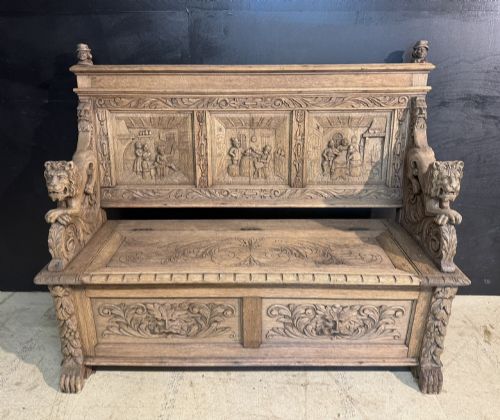
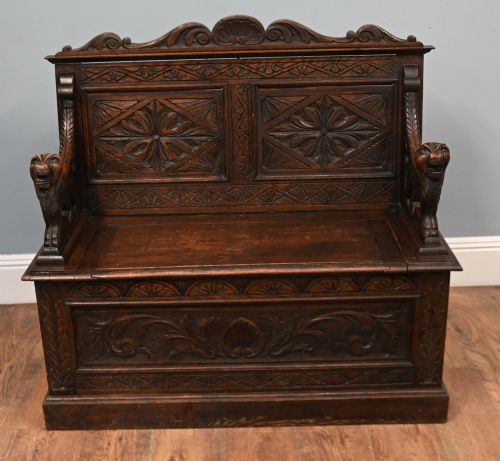
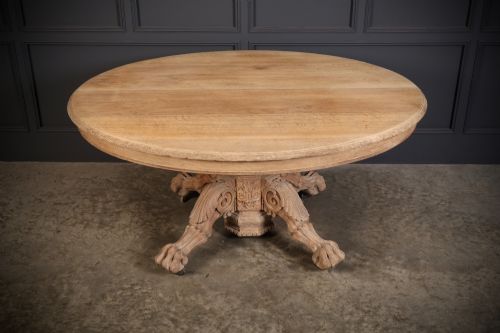
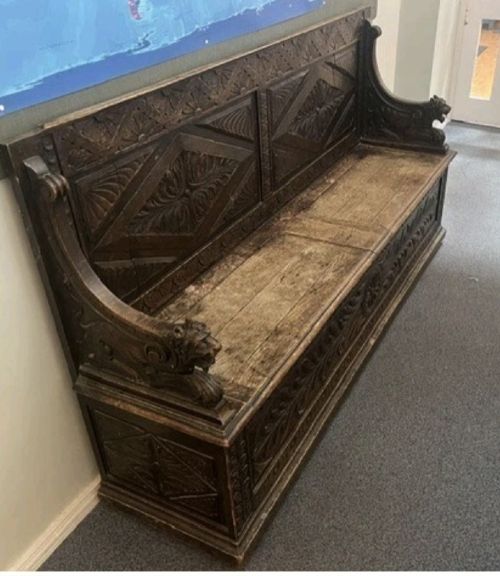
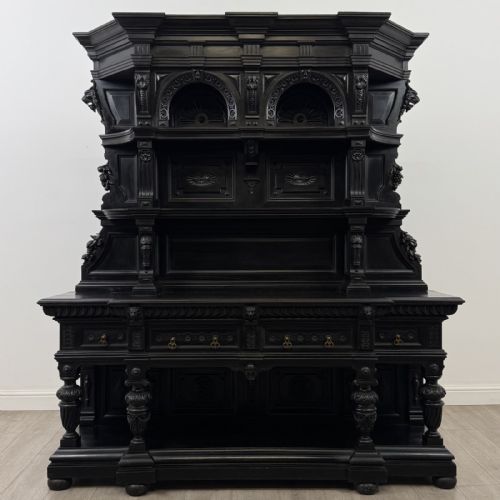
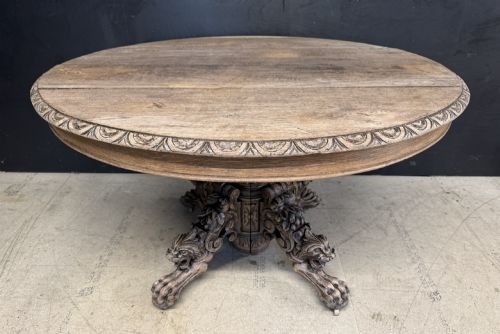
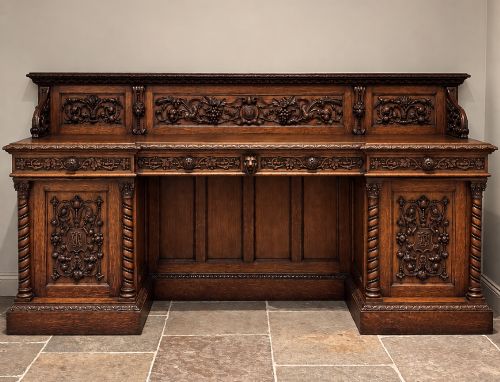
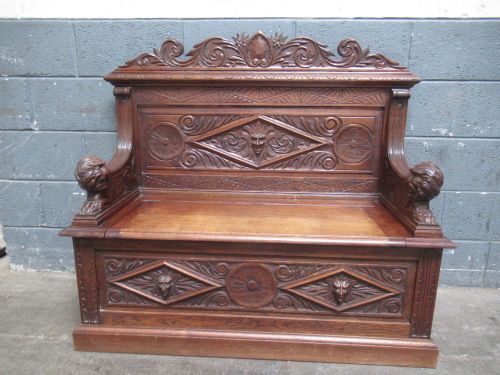
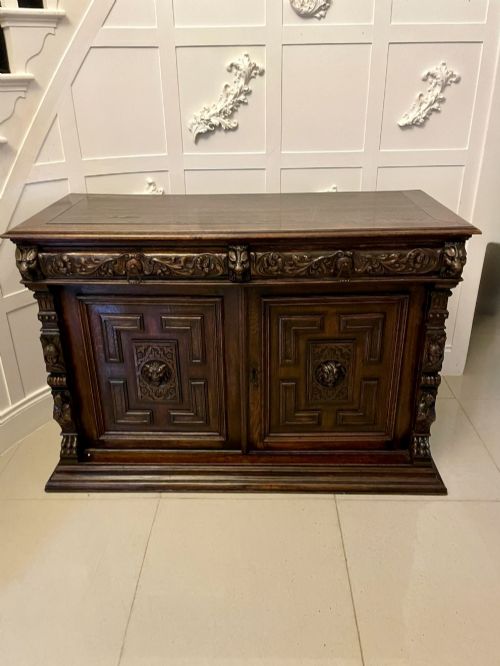
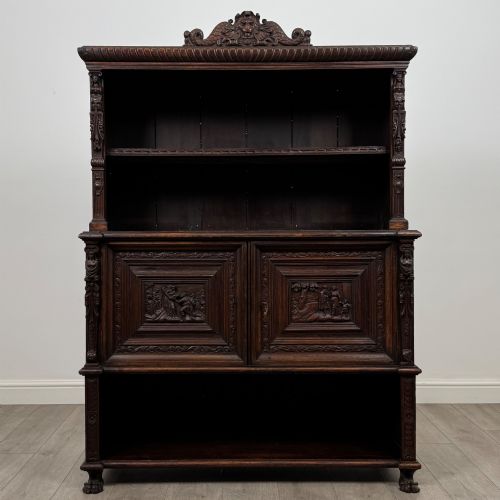
A carved oak lion represents a powerful motif spanning seating, heavy sideboards, desks, and architectural finials. The pieces on this page draw predominantly from the nineteenth century and Victorian periods, alongside earlier seventeenth-century elements and later revivals.
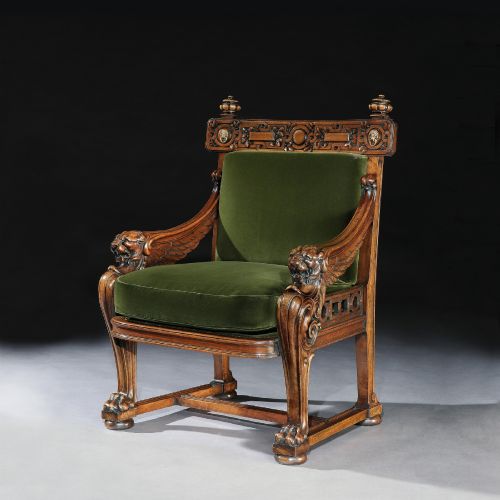
Buyers encounter substantial hall benches, armchairs with monopodia supports, and imposing cabinets adorned with fierce lion masks and heraldic motifs. This selection focuses on sturdy furniture and sculptural ornaments shaped from solid timber.
The aesthetic leans heavily toward Gothic Revival, Renaissance Revival, and Jacobean styles. These movements embrace deep relief carving, dark timber tones, and robust joinery designed to dominate domestic interiors.
How they were made
Cabinetmakers combined traditional mortise and tenon joinery with applied carvings and turned elements. Surfaces received hand-waxing or ebonising to accentuate the grain and the deep relief of the lion motifs.
Carved Oak Lion Retail Price Guide 2026
Typical asking prices for carved oak lion among the pieces listed under this phrase on Sellingantiques today, from the lower quarter to the upper quarter. They describe what is for sale here now, not the wider market.
What varies in quality
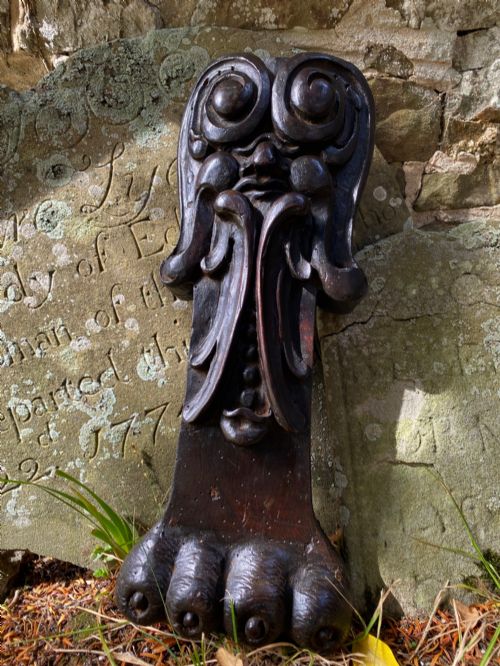
The distinction between ordinary and superior pieces rests on the depth and animation of the carving itself. Master carvers brought expression and anatomical realism to lion masks and paws, whereas lesser workshop output relies on shallow, repetitive chisel marks.
Proportion and structural integrity separate routine utility items from ambitious statement furniture. Pieces featuring integrated architectural elements and balanced sculptural supports demonstrate higher workshop ambition.
Bruce Talbert·Gillows·Wylie Lockhead Manufacturers·Thomas Hope
The Carved Oak Lion Glossary
- Monopodia
- A furniture support shaped as a single animal leg, often ending in a paw or claw. This classical form appears frequently on nineteenth-century armchairs.
- Newel Post
- The principal post at the foot of a staircase, or one terminating a stair railing. Carved lion finials often cap these structural timbers.
- Green Man
- A sculptural motif consisting of a face surrounded by or made from leaves and vines. It frequently accompanies lion carvings on Victorian hall benches and sideboards.
- Jacobean Revival
- A nineteenth-century architectural and furniture style emulating early seventeenth-century English design. It uses dark oak, geometric panelving, and bold strapwork.
Carved Oak Lion: Frequently Asked Questions
Where should I place a carved oak lion?
These substantial items suit reception halls, libraries, or studies where their dark timber and bold proportions anchor the room.
Pair a large hall bench or sideboard against a plain wall to let the deep relief carving stand out without visual clutter.
How do I care for antique oak furniture?
Dust the timber regularly with a soft, dry cloth and apply a quality beeswax sparingly to preserve the finish.
Keep pieces away from direct heat sources and strong sunlight to prevent the oak from drying out or splitting over time.
What periods do these carved pieces span?
The selection ranges from seventeenth-century architectural fragments to nineteenth-century revival furniture and early twentieth-century interpretations.
Victorian and Gothic Revival pieces dominate the inventory, reflecting a strong nineteenth-century interest in historicist design.
How do I distinguish revival styles from earlier work?
Examine the tool marks, timber seasoning, and construction methods used in the hidden joints and secondary framing.
Nineteenth-century revival items often combine machine assistance with hand finishing, whereas seventeenth-century originals display entirely hand-riven and pit-sawn timber traits.