


Carved Oak Linenfold Cupboard
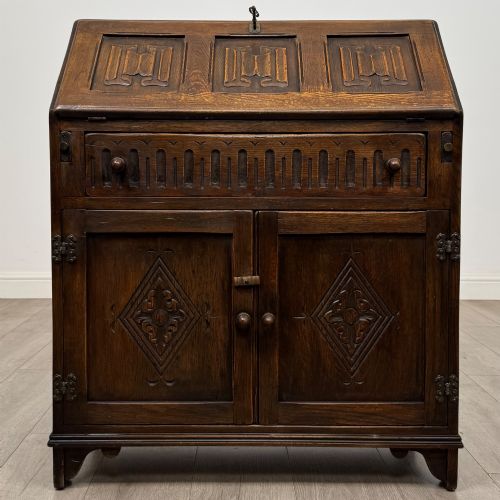
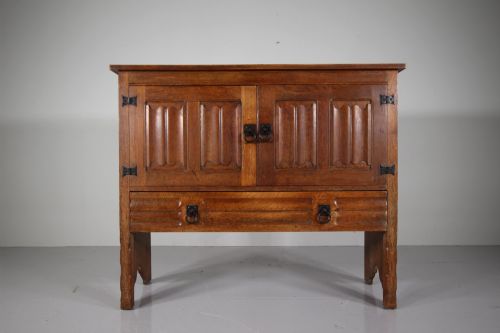
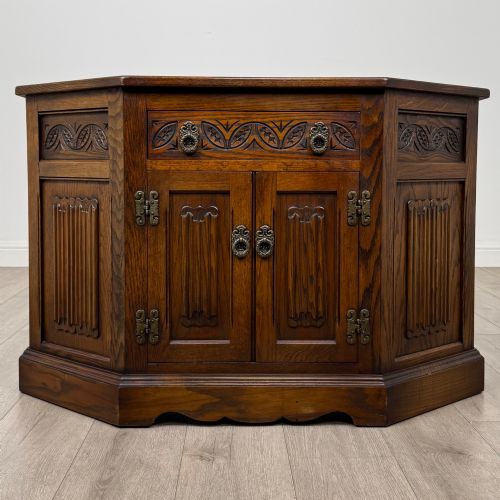
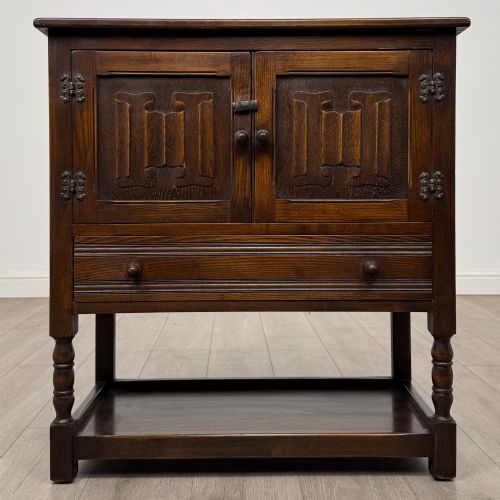
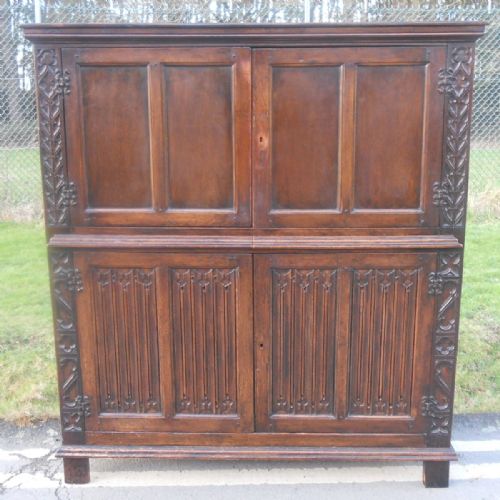
A carved oak linenfold cupboard brings tangible texture into a room, fashioned from solid timber to echo the folds of heavy fabric.
Carved Oak Linenfold Cupboard
When a buyer searches for a carved oak linenfold cupboard, they encounter timber pieces shaped by revivalist movements from the Victorian era through the Edwardian period and the early decades of the twentieth century. These items span various forms, from dedicated storage cupboards and hall robes to display cabinets and writing bureaus.
The pieces appearing on this page most commonly date from the Edwardian period and the early twentieth century, alongside nineteenth-century examples. They frequently display stylistic influences ranging from Gothic Revival and Tudor Revival to Jacobean and Renaissance Revivals.
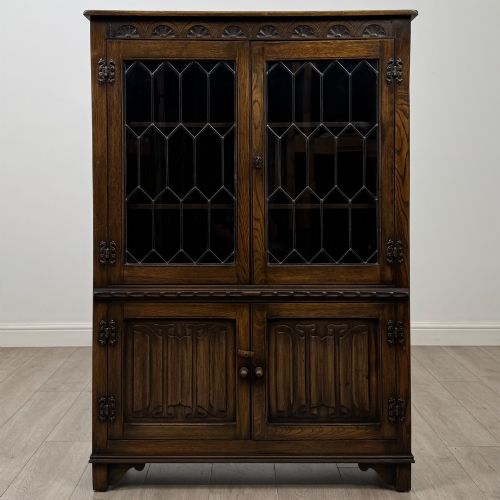
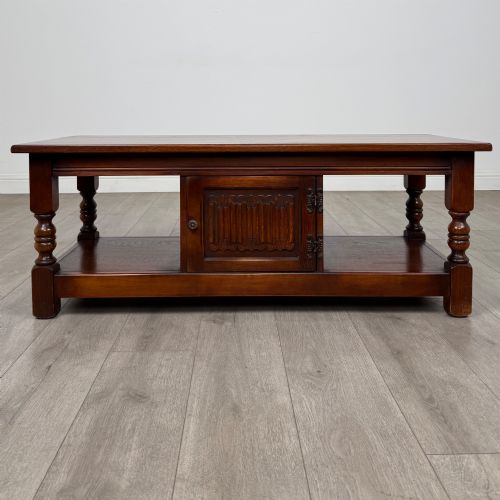
Buyers also encounter related oak forms such as bookcases, dressers, coffee tables, and corner cabinets that share the same material palette and revival aesthetic. Each piece relies on the weight and grain of oak to give presence to domestic interiors.
Materials and construction
These items rely on solid oak, chosen for its durability and responsiveness to hand-carving. Craftsmen shaped panels into stylized fabric folds, utilising iron, brass, and metal for hinges, handles, and structural hardware.
Glazing appears alongside lead and glass in display formats, while internal shelving occasionally incorporates fabric linings. Construction methods emphasise sturdy joinery designed to support heavy timber doors and upright frames.
Some hall robes feature hidden compartments behind the linenfold panels designed for stashing visiting cards.
Distinctions in quality
Quality rests upon the crispness of the linenfold carving and the selection of the oak timber. Crisp, deeply undercut folds demonstrate greater hand skill than shallow, machine-routed alternatives.
The integration of original brass or iron hardware and the stability of the solid oak panels separate standard utility pieces from finer revival examples. Proportion and balanced grain patterns across the doors dictate visual success.
The Carved Oak Linenfold Cupboard Glossary
- Linenfold
- A carved wooden panel motif resembling vertical folds of draped cloth or fabric. It gained popularity in late medieval joinery and saw revivals during the nineteenth and twentieth centuries.
- Gothic Revival
- An architectural and decorative style drawing inspiration from medieval forms, pointed arches, and heavy timber work. It heavily influenced nineteenth-century furniture makers.
- Revival
- A design movement that emulates historical aesthetics, such as Tudor, Jacobean, or Renaissance styles. Makers adapted these older motifs for contemporary Victorian and Edwardian homes.
- Hall Robe
- A tall, upright cabinet designed for entrance halls to store outerwear and accessories. They frequently feature carved panel doors and sturdy oak construction.
- Solid Oak
- Timber milled straight from the log rather than veneered onto secondary woods. It provides structural integrity and weight to cabinets and bookcases.
Carved Oak Linenfold Cupboard: Frequently Asked Questions
What is a linenfold cupboard?
A linenfold cupboard is a storage piece featuring wooden panels carved to imitate folded fabric. These items gained popularity during revival periods.
They serve as functional storage units while introducing architectural texture to domestic spaces through traditional woodworking techniques.
How old are these cupboards?
The pieces available span from the nineteenth century through the Edwardian era and the 1920s and 1930s. Many originate from revival movements that reinterpreted older styles.
Examining the construction methods, hardware, and timber helps determine the specific decade or period of manufacture.
How do I care for solid oak furniture?
Solid oak benefits from stable indoor humidity levels away from direct heat sources and strong sunlight. Regular dusting with a dry cloth maintains the finish.
Application of appropriate beeswax or furniture polish nourishes the timber grain over time without building up heavy residues.
Where were these cupboards used?
These cabinets function effectively in living rooms, hallways, and dining spaces for general storage or display purposes. Hall robes fit narrow entryways for coats.
Their substantial timber presence anchors a room's layout while offering enclosed shelving for household items.