





Carved Oak Leaf Frame
A carved oak leaf frame brings warmth and deep texture to a room, offering a sturdy yet ornate boundary for a mirror or canvas.
Carved Oak Leaf Frame
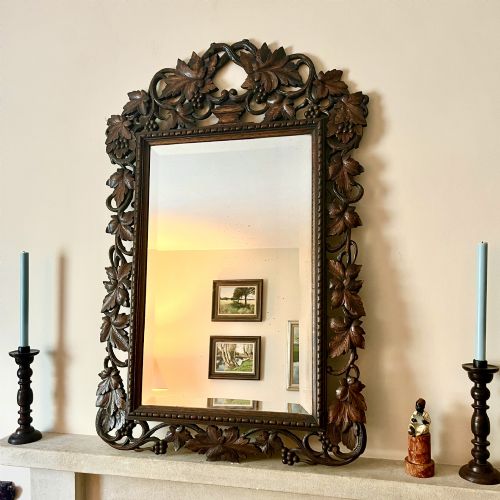
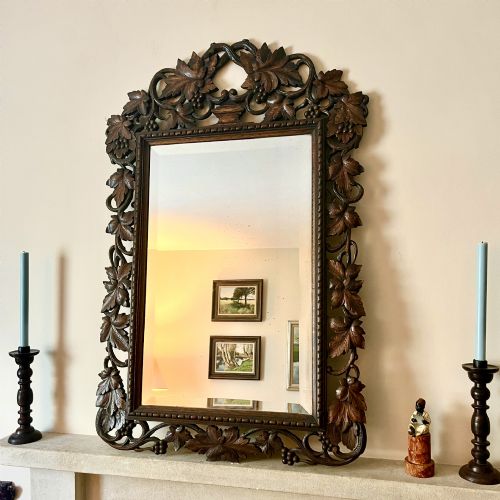
When you search for a carved oak leaf frame, you are looking at sturdy timber mouldings and surrounds shaped into botanical foliage and acorns. These pieces function primarily as picture frames or wall mirrors, designed to draw the eye with dimensional woodwork.
The versions you are most likely to meet on this page hail from the nineteenth and early twentieth centuries, spanning Victorian and Edwardian periods as well as revival styles. They range from simple cushion mouldings to heavily carved French Rococo and Renaissance revivals.
Makers often utilised solid timber, sometimes combining it with gesso or paint to highlight the deep relief of the carved leaves. Whether housing a mirror glass or an oil painting, each piece brings a tactile, organic weight to a wall.
How they were made
These items rely on solid oak selected for its grain and durability, carved by hand to achieve crisp leaf and acorn motifs. Artisans worked the timber directly, sometimes pairing it with gesso layers to build up intricate scrollwork and relief details.
Surface finishes vary from raw polished wood to gilded highlights and painted treatments. Craftsmen applied gold leaf over gesso grounds or used dark stains to accentuate the deep recesses of the carved foliage.
The listings here span the Victorian, Edwardian, and early twentieth-century eras, featuring both plain oak and gilded gesso finishes.
What varies in quality
The depth and sharpness of the carving separate standard workshop output from exceptional examples. Superior pieces show undercut leaves and finely detailed veins, whereas lesser items rely on shallow, mechanical stamping or heavy plaster gesso over softwood.
The integrity of the timber joints and the preservation of the original surface finish dictate the standing of a piece. Original gilding and untouched patination on the oak command greater interest than stripped or overly restored frames.
The Carved Oak Leaf Frame Glossary
- Gesso
- A plaster-based mixture applied to wood surfaces to create a smooth base for gilding or painting. It is often modelled into relief ornament before being finished.
- Cushion frame
- A broad, convex moulding profile resembling a stuffed cushion. This form provides a wide surface area to showcase prominent leaf and fruit carvings.
- Rococo Revival
- A nineteenth-century design movement mimicking the asymmetrical scrolls, C-curves, and naturalistic foliage of the eighteenth-century French style. It appears frequently in mirror frames of this era.
- Renaissance Revival
- A style drawing inspiration from fifteenth and sixteenth-century classical architecture and ornamentation. Frames in this manner often display heavier architectural structure and bold botanical motifs.
Carved Oak Leaf Frame: Frequently Asked Questions
How do I hang a heavy carved oak frame safely?
These frames carry significant weight due to the dense timber and mirror glass. Secure them directly into wall studs using heavy-duty picture hooks and braided steel wire rated well above the object's mass.
Avoid relying solely on plaster wall plugs without load-bearing backing. Professional mirror plates screwed securely into the vertical frame members offer the most stable support.
Can I place these frames in a bathroom?
Oak and gesso react poorly to high humidity and direct moisture. Steam from a shower causes the wood to swell and the gesso ground beneath gilding or paint to crack and lift.
Keep these pieces in dry living areas, hallways, or dining rooms where temperature and humidity remain relatively stable throughout the year.
How do I tell an 19th-century frame from a later copy?
Examine the reverse of the frame for the construction methods, tool marks, and the ageing of the timber. Nineteenth-century examples often feature hand-cut joinery, oxidized fixings, and dry, shrinkage-cracked wood.
Later reproductions typically display uniform machine milling, modern backing boards, and newer brass screws that lack the patination of older hardware.