



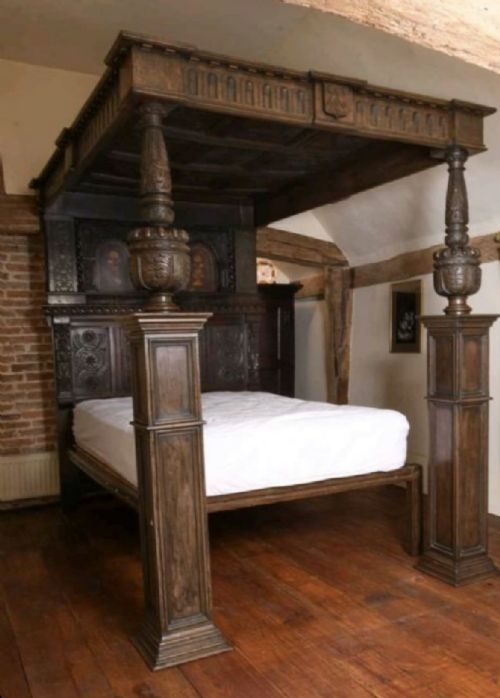


Carved Oak Headboard
A carved oak headboard brings solid timber grain and historic ornament directly into the bedroom, anchoring the space with presence.
Carved Oak Headboard
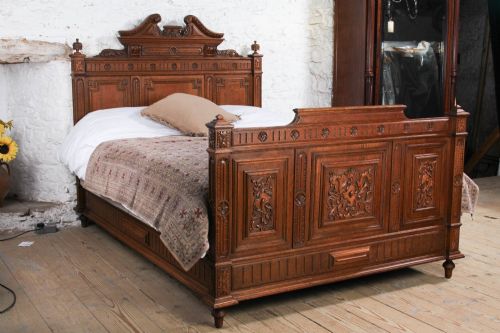
A carved oak headboard forms the central vertical panel of a bed frame, designed to sit against the wall and frame the pillows. When searching for a carved oak headboard, buyers encounter substantial timber constructions originating from periods spanning the seventeenth century through to the Edwardian era and the early twentieth century.
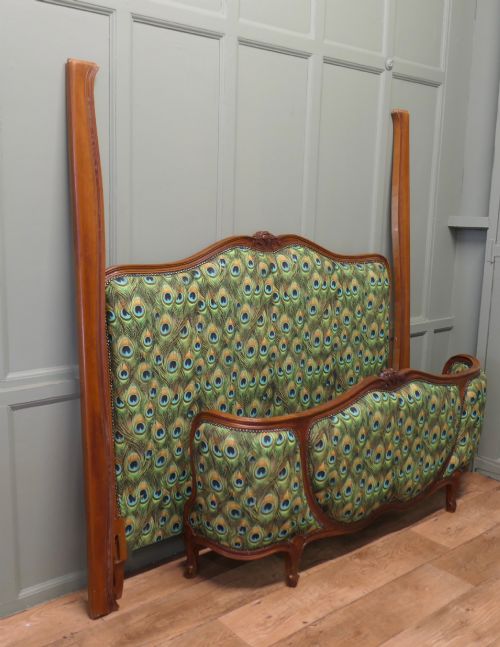
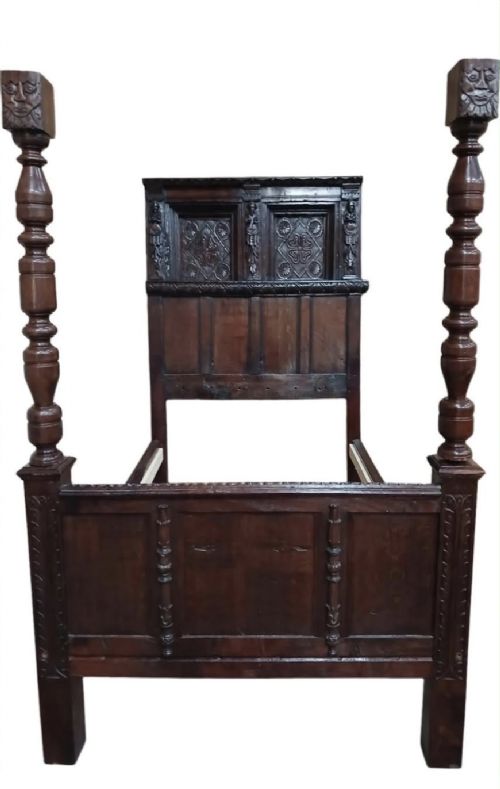
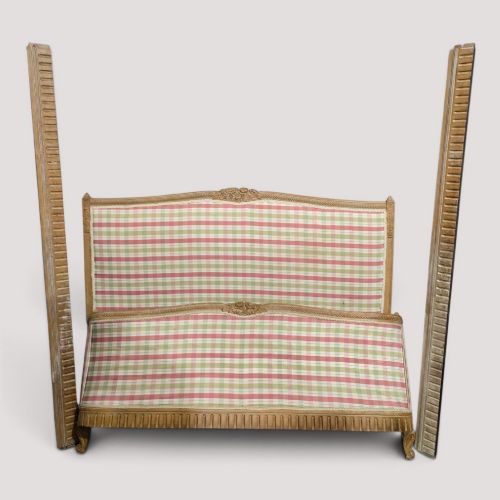
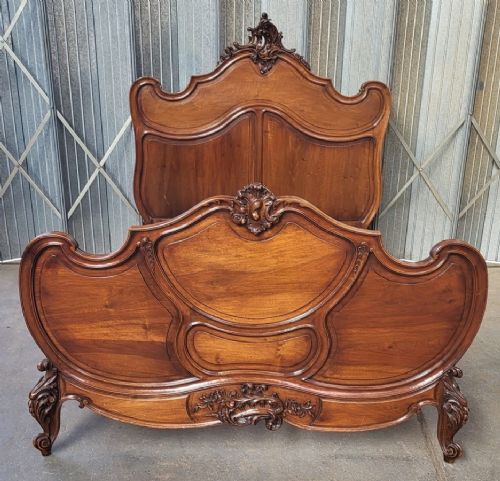
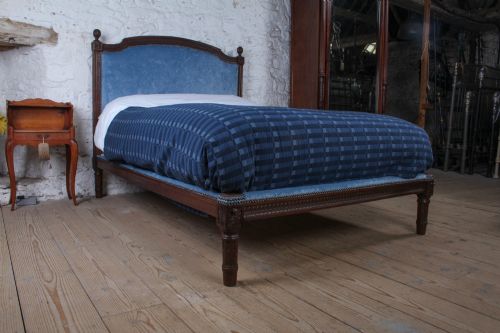
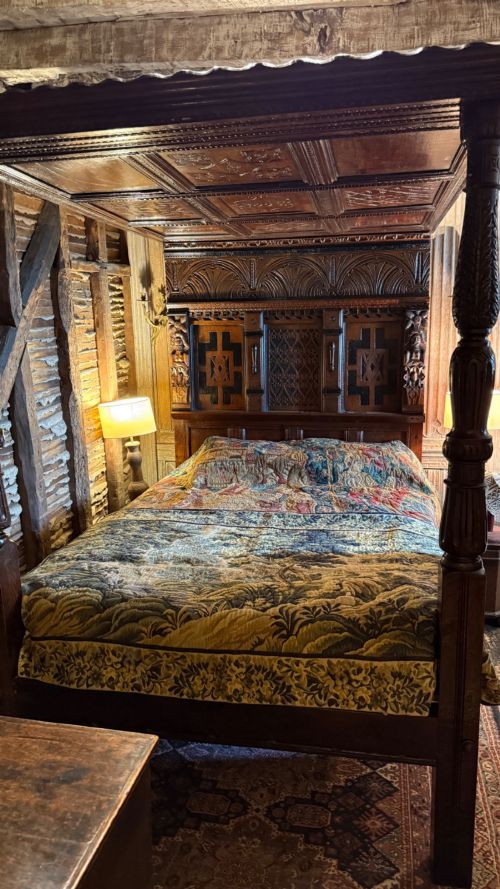
The selections on this page range from rustic seventeenth-century oak panels and tester beds down to later nineteenth-century, Edwardian, and 1920s interpretations including French styles. Many pieces utilise solid oak, hardwood, and carved wood alongside fabric upholstery.
Buyers regularly discover single, double, and king-size formats, occasionally incorporating fruitwood inlay or limed finishes. These variations reflect domestic cabinet-making traditions from different decades.
Materials and construction methods
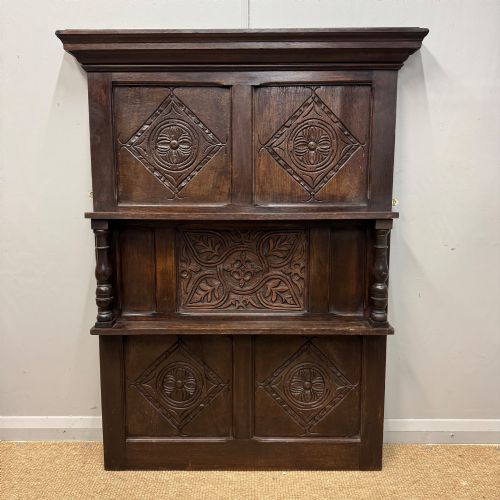
Makers constructed these pieces primarily using solid oak and allied hardwoods, selecting timber for density and durability. Woodworkers shaped panels through hand carving, producing low-relief motifs and panelled structures.
Joinery methods rely on traditional pegged mortise and tenon joints to secure uprights and rails. Surface finishes range from natural waxed timber to limed wood and bleached treatments, occasionally complemented by modern fabric upholstery.
Carved Oak Headboard Retail Price Guide 2026
Typical asking prices for carved oak headboard among the pieces listed under this phrase on Sellingantiques today, from the lower quarter to the upper quarter. They describe what is for sale here now, not the wider market.
Listings feature oak alongside walnut, fruitwood inlay, and upholstered fabric elements across periods from the seventeenth century to the 1920s.
Evaluating craftsmanship and condition
Quality rests upon the depth and crispness of the hand carving, where sharper chisel work distinguishes superior workshops from routine production. The choice of timber grain and the integrity of the original joints further separate standard examples from finer outputs.
Proportions and balance dictate visual success, particularly on larger scales where heavy timber requires careful handling. Alterations, replaced panels, and later surface treatments influence the historical integrity of older examples.
Heal & Son
The Carved Oak Headboard Glossary
- Tester
- A wooden canopy or soundboard positioned above a four-poster bed. It is supported by the headboard posts and foot posts.
- Panelling
- woodwork composed of rigid sections framed by stiles and rails. It provides structural strength and decorative depth to the headboard.
- Fruitwood inlay
- Ornamental pieces of fruitwood set into the oak surface to create contrasting patterns. It appears on select seventeenth-century pieces.
- Limed wood
- Timber treated with a special finish that highlights the open grain with a whitish paste. This technique lightened darker woods during the early twentieth century.
Carved Oak Headboard: Frequently Asked Questions
How do I measure for a carved oak headboard?
Measure the width of your mattress and bed base to ensure the headboard aligns correctly with the side rails. Account for clearance against skirting boards and wall sockets.
Check the height from the floor to the top of the carving to ensure proportions suit your room dimensions.
Are these headboards compatible with modern bed frames?
Many older wooden headboards were built as integrated parts of complete bedsteads rather than standalone panels. Adapting them to fit standard modern metal or wooden frames often requires bespoke brackets.
Confirm the fixing points and overall width with the listed dimensions before attempting installation.
How do I care for antique carved oak?
Dust carved surfaces regularly with a soft, dry cloth to prevent dirt settling in the recesses of the relief work. Avoid placing the timber near direct heat sources or strong sunlight.
Apply a microcrystalline wax sparingly once or twice a year to nourish the wood and maintain its natural lustre.
How do I distinguish seventeenth-century oak from later revival pieces?
Seventeenth-century examples display hand-cut joinery marks, peg construction, and heavy oxidisation acquired through centuries of exposure. The timber grain often shows distinct medullary rays typical of quarter-sawn English oak.
Revival pieces from the nineteenth and twentieth centuries typically feature more uniform machine tooling and lighter timber weight.