





Carved Oak Headboard Footboard
These carved oak headboard footboard sets bring substantial nineteenth and early twentieth century presence to a bedroom.
Carved Oak Headboard Footboard
A carved oak headboard footboard selection offers robust structural framing originating across the late nineteenth century and the early decades of the twentieth century. Buyers encounter double and king size proportions often styled after French provincial, Breton, and classical revival tastes.
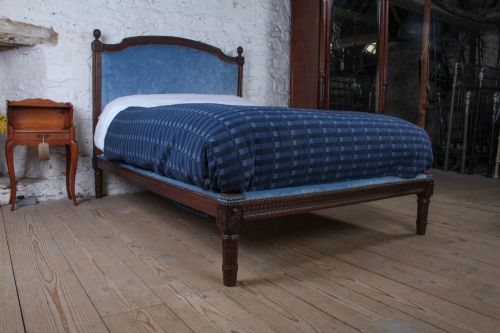
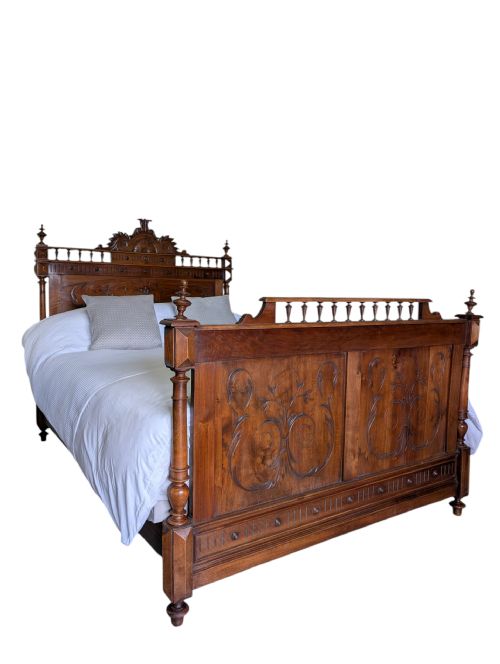
Most examples present substantial wooden panels joined with traditional framing techniques, frequently paired with low ends or high posts. The aesthetic spans from rustic Breton carving to refined Louis XVI symmetry executed in solid timber.
Pieces frequently emerge alongside walnut and limed wood variations, though oak remains the anchor of heavy framework construction. Dating generally clusters around the Edwardian era back through the late eighteen eighties.
Construction and materials
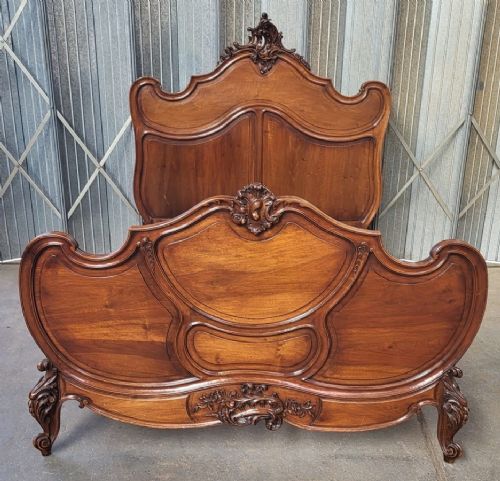
Workshops relied on solid oak and walnut timbers, shaped through hand chiselling and traditional joinery to form rigid bedstead frames. Carvers applied deep relief motifs directly into the dense wood grain of the headboards and footboards.
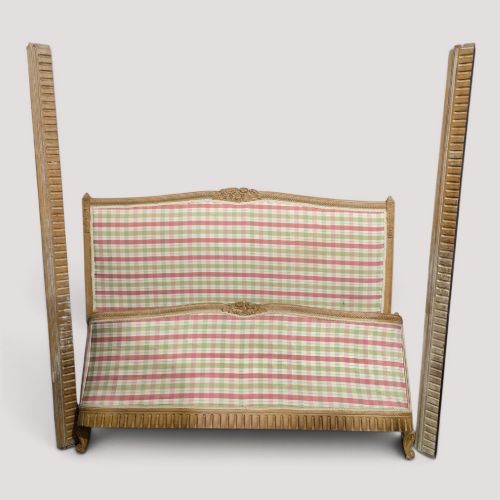
Secondary elements include textile upholstery added to newly covered panels, combining rigid carved surrounds with soft padded surfaces. Limed wood finishes appear alongside natural oiled or polished timber treatments to alter the surface tone.
Current listings span periods from eighteen eighty through nineteen thirty, utilising solid oak, walnut, and limed timber.
Assessing quality in carved timber beds
Quality rests primarily in the depth and crispness of the hand carving rather than mechanical replication. Superior pieces display intricate undercut foliage or figures that retain sharp edges across the oak panels.
The integrity of the timber joints and the weight of the solid wood structure dictate longevity and stability. Heavier framing with well-preserved joinery separates fine regional workshop pieces from simpler output.
The Carved Oak Headboard Footboard Glossary
- Headboard
- The upright vertical panel positioned at the top of a bedstead. This component usually carries the most elaborate carved decoration.
- Footboard
- The lower structural barrier at the base of the bed. It echoes the stylistic motifs established by the matching headboard.
- Limed wood
- Timber treated with a specialised pigment or finish that highlights the open grain. This technique lightens the overall colour of the oak.
- Louis XVI style
- A classical French design movement characterised by straight lines and symmetrical ornamentation. It contrasts with heavier provincial carving.
Carved Oak Headboard Footboard: Frequently Asked Questions
How do I date these beds?
Dating relies on stylistic indicators combined with construction methods visible in the timber framing. Pieces typically span from the late nineteenth century through the nineteen thirties.
Earlier nineteenth century examples show heavier regional carving, whereas nineteen twenties and thirties pieces often adopt cleaner proportions or limed finishes.
Are these beds standard sizes?
Listings feature double and king size proportions tailored to historical dimensions rather than strict modern standards. Buyers should check exact internal mattress measurements before purchasing.
Many antique frames accommodate modern mattresses with appropriate slat support systems or slight adjustments.
What is French Breton style?
Breton furniture originates from northwestern France and is distinguished by vigorous folk carving. These pieces frequently incorporate traditional figural scenes and panelled woodwork.
The style brings a distinct rustic character to the bedroom through deep relief work in solid oak.
How do I care for carved oak?
Maintaining solid oak requires regular dusting with a dry cloth to prevent accumulation in the carved crevices. Avoid harsh chemical cleaners that strip the historic finish.
Applying natural beeswax periodically preserves the lustre of the timber without building up heavy residues.