



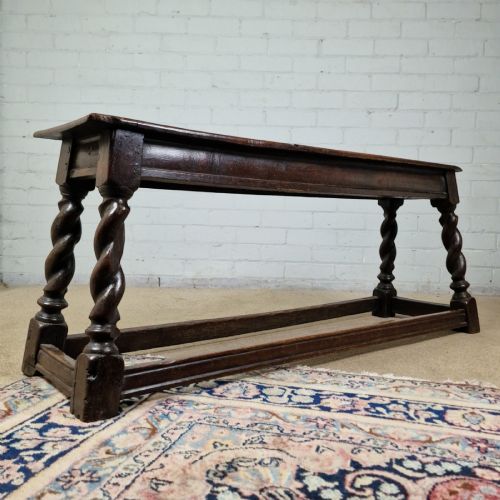
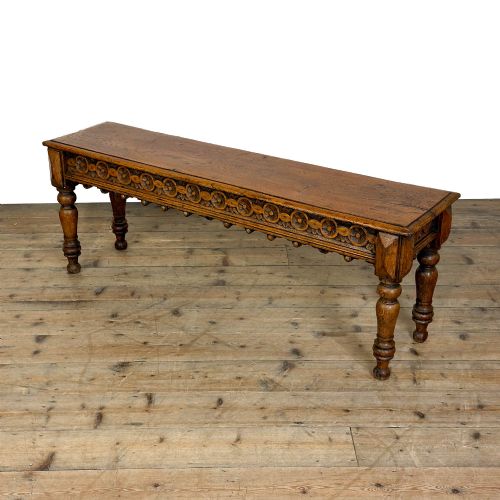
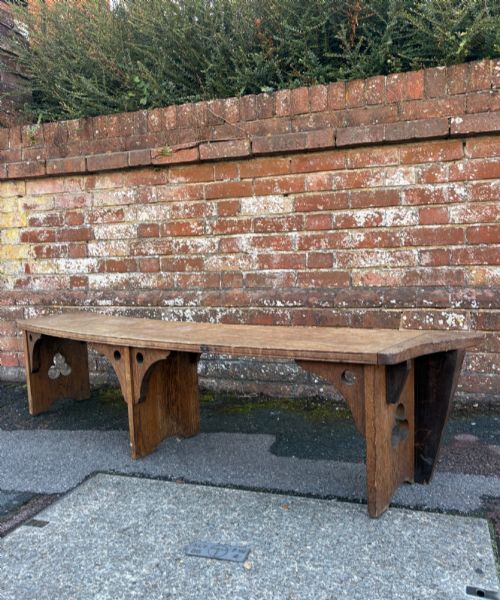
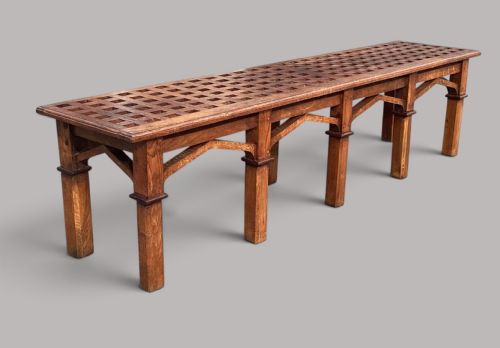
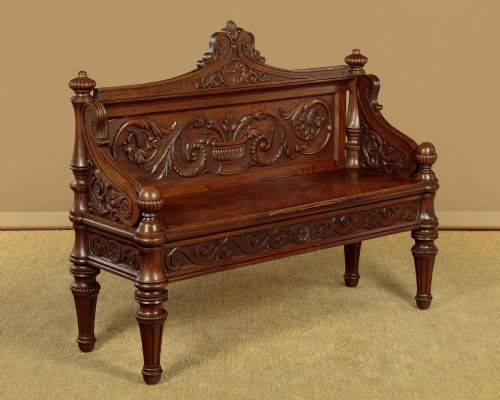
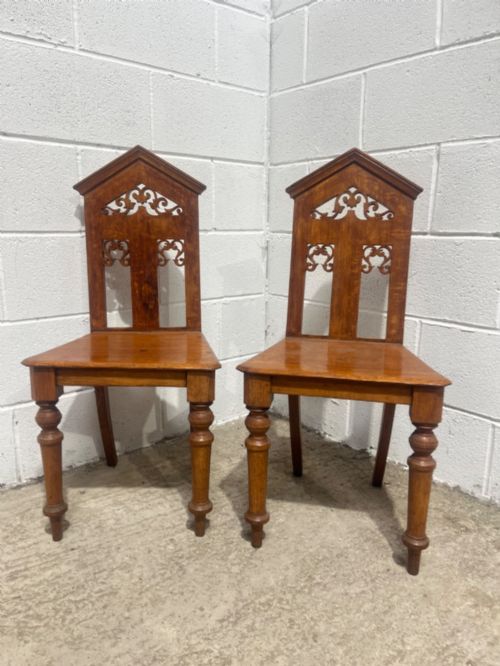
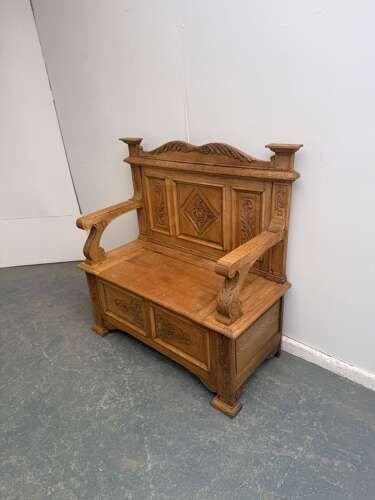
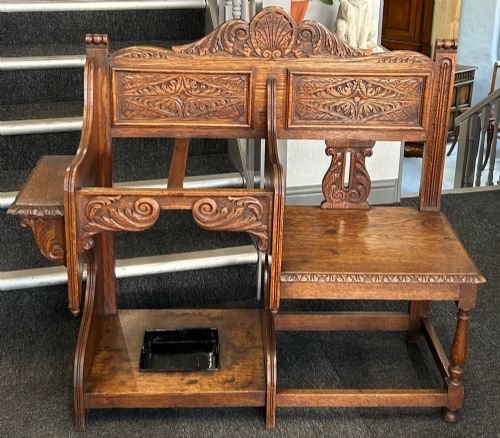
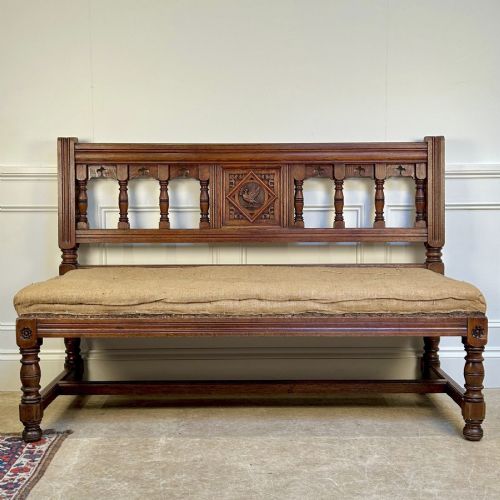
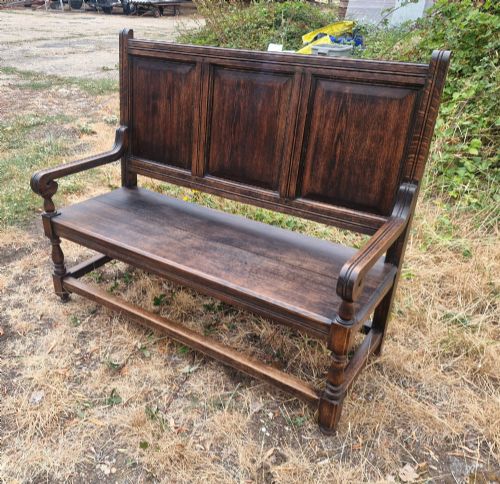
Carved Oak Hallway Seat
A carved oak hallway seat brings character and practical storage to an entrance, spanning periods from the seventeenth century through to the twentieth.
Carved Oak Hallway Seat
Makers and periods vary widely, with pieces ranging from Georgian designs featuring tulip decoration to substantial nineteenth-century baronial settles. Buyers select them for their robust construction and historical presence in domestic interiors.
What varies in quality
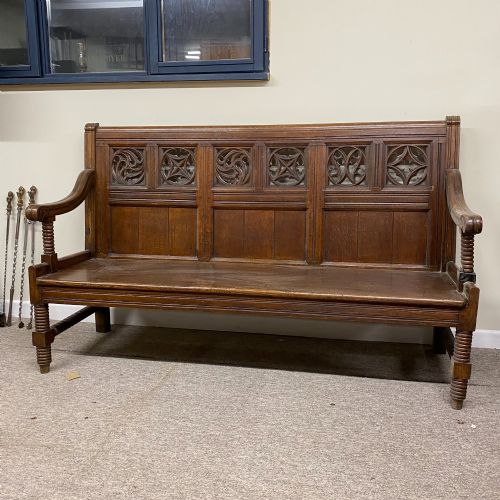
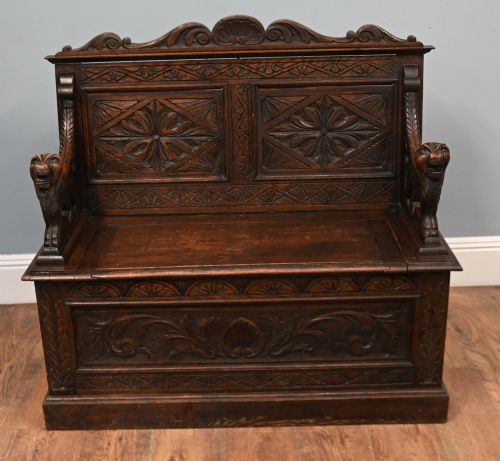
The distinction between ordinary and superior examples rests on the crispness of the hand-carving and the integrity of the original oak timber. Pieces featuring detailed heraldic shields, complex tracery, or signed work by notable makers command greater interest than plain utility items.
Structural preservation also determines quality, particularly the retention of original hinges on lift-up box seats and the stability of panelled backs. Examples that retain their authentic surface patination and period brasswork stand apart from heavily restored or later married pieces.
Carved Oak Hallway Seat Retail Price Guide 2026
Typical asking prices for carved oak hallway seat among the pieces listed under this phrase on Sellingantiques today, from the lower quarter to the upper quarter. They describe what is for sale here now, not the wider market.
Materials recorded across the inventory include solid oak, brass, iron, leather, fabric, hessian, and elm.
Gillows·James Shoolbred & Co·Shapland & Petter·Liberty·Wylie Lockhead Manufacturers
The Carved Oak Hallway Seat Glossary
- Settle
- A wooden bench with a high back, solid arms, and often a box seat compartment beneath for storage. It was traditionally placed near the hearth or in hallways to block draughts.
- Monks Bench
- A multifunctional piece featuring a hinged top that converts the backrest into a table surface. This form appears frequently in dark oak revival styles.
- Box Settle
- A seat incorporating a concealed storage box beneath the hinged or lift-up wooden squab. These served a practical purpose for storing boots and textiles in entrance halls.
- Gothic Revival
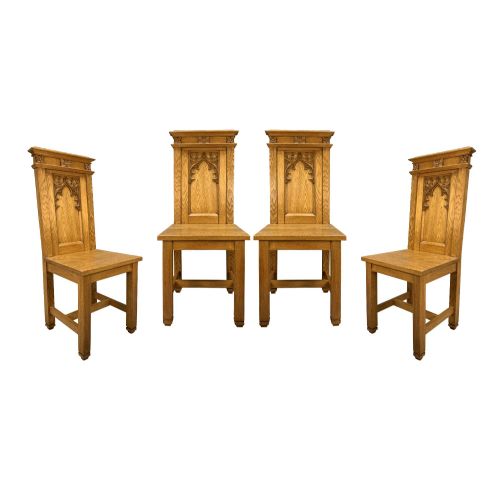
- An architectural and decorative style popular during the nineteenth century, characterised by pointed arches, trefoils, and heavy carved tracery. It heavily influenced hallway seating of the period.
- Jacobean Revival
- A nineteenth-century style emulating seventeenth-century English design with geometric panelling, strapwork, and robust proportions. It remains common among oak hallway seating.
Carved Oak Hallway Seat: Frequently Asked Questions
What is a carved oak hallway seat used for?
These pieces served as functional seating and storage in traditional entrance halls, providing a sturdy spot for removing boots or waiting. Many incorporate built-in compartments under the seat or integrated stick stands for umbrellas and walking canes.
Today, they continue to function as practical entrance furniture while adding historical character to a hallway or reception space.
How do I tell Victorian pieces from earlier ones?
Victorian and revival pieces often feature heavier, more theatrical carving inspired by Gothic or Jacobean styles, alongside machine-sawn timber elements. Earlier seventeenth and eighteenth-century examples display hand-tool marks, pegged joinery, and simpler structural proportions.
Examining the underside, hinges, and the nature of the timber shrinkage helps clarify the age of the piece.
Are box seats and settle storage original?
Most box settles and hallway benches with lift-up lids were designed originally to store outdoor garments, boots, and textiles. The interior construction and matching timber grain usually confirm whether the storage compartment is contemporary with the rest of the piece.
Careful inspection of the pivot points and interior boards reveals if the box section was added later.
How do I care for antique oak furniture?
Solid oak benefits from occasional applications of traditional beeswax to nourish the wood and maintain its protective surface. Keeping the timber away from direct heat sources and sudden temperature changes prevents the oak from splitting.
Routine dusting with a soft, dry cloth is sufficient for daily upkeep.