




Carved Oak Hall Mirror
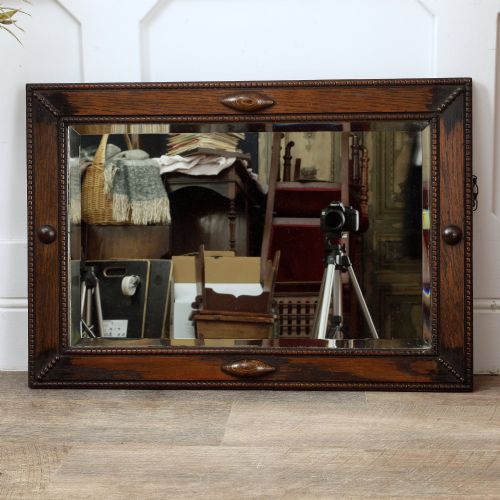
A carved oak hall mirror combines practical utility with robust nineteenth and early twentieth century joinery.
Carved Oak Hall Mirror
A carved oak hall mirror serves as a functional entranceway fixture designed to reflect light and provide hooks for garments. These items emerge frequently in Victorian, Edwardian, and Arts and Crafts iterations.
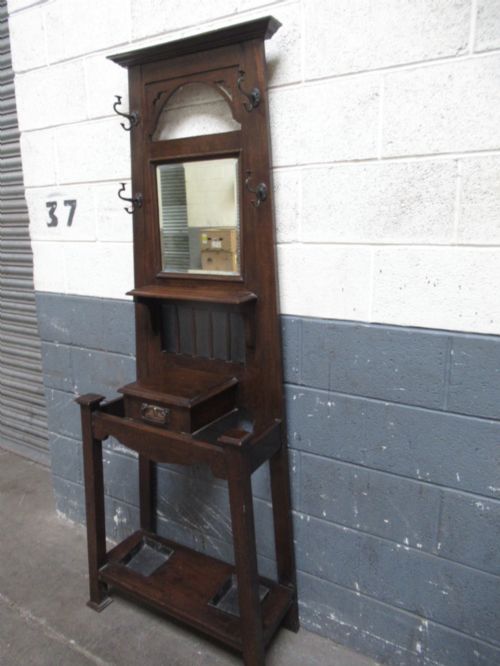
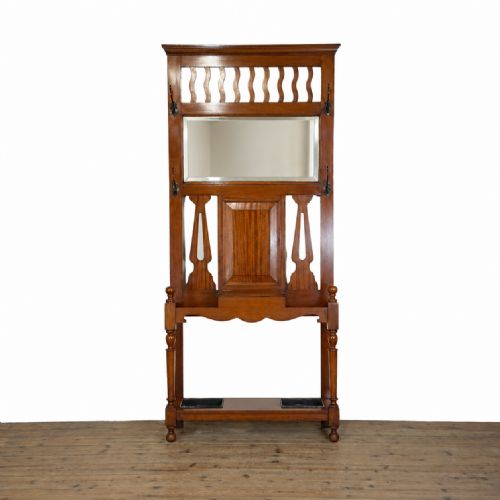
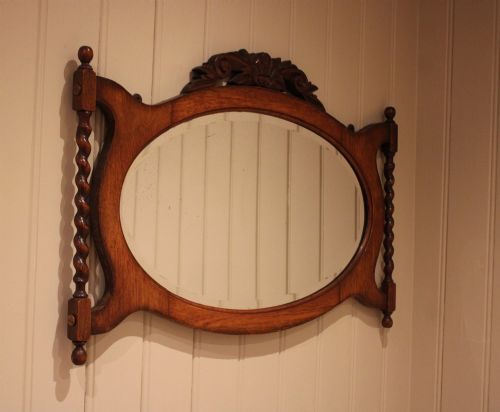
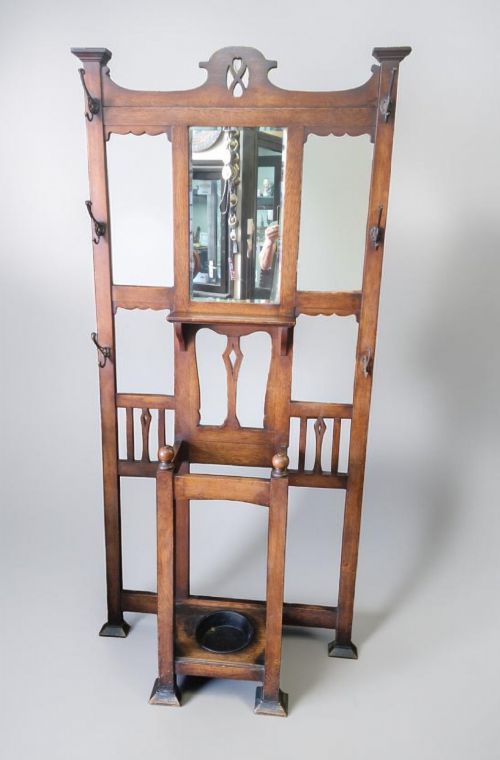
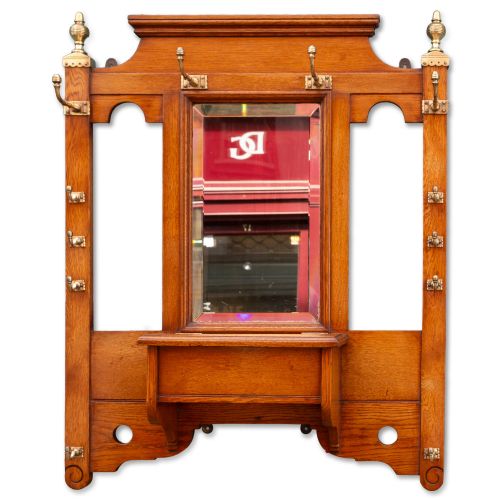
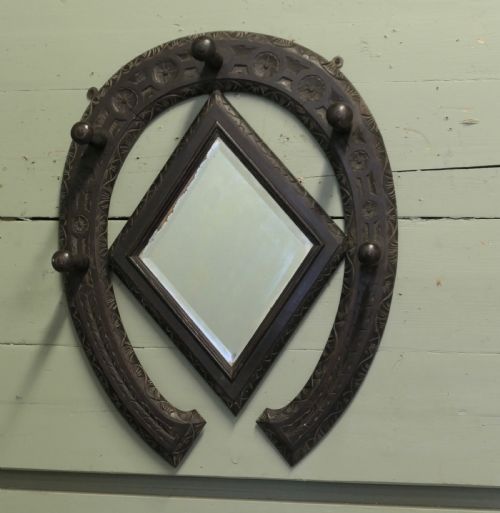
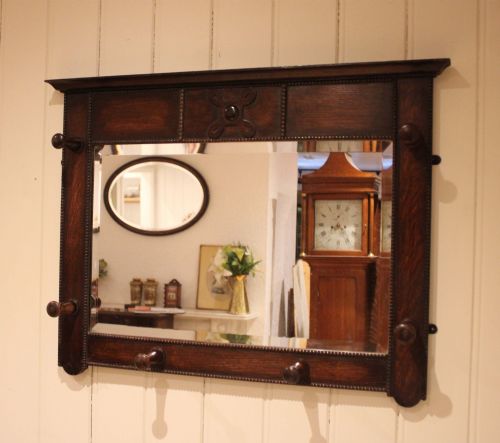
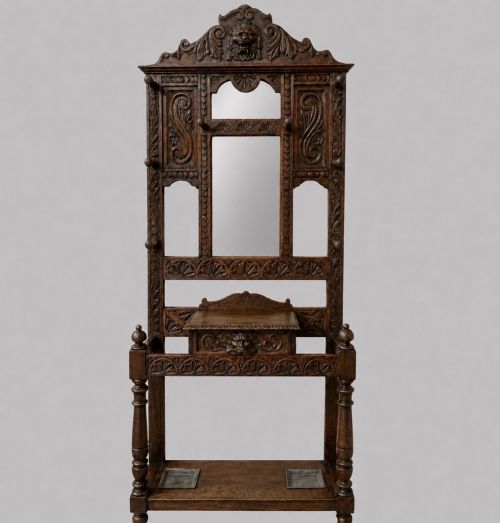
The inventory ranges from compact wall-mounted looking glasses to substantial hall stands incorporating coat hooks, stick racks, and occasionally small shelves or cupboards. Pieces appear in various regional interpretations including Gothic Revival and French Rococo Revival styles.
Buyers encounter solid timber construction paired with bevelled glass plates, brass hardware, and iron attachments. The selection spans simpler early twentieth century frames alongside elaborately carved nineteenth century examples.
How they were made
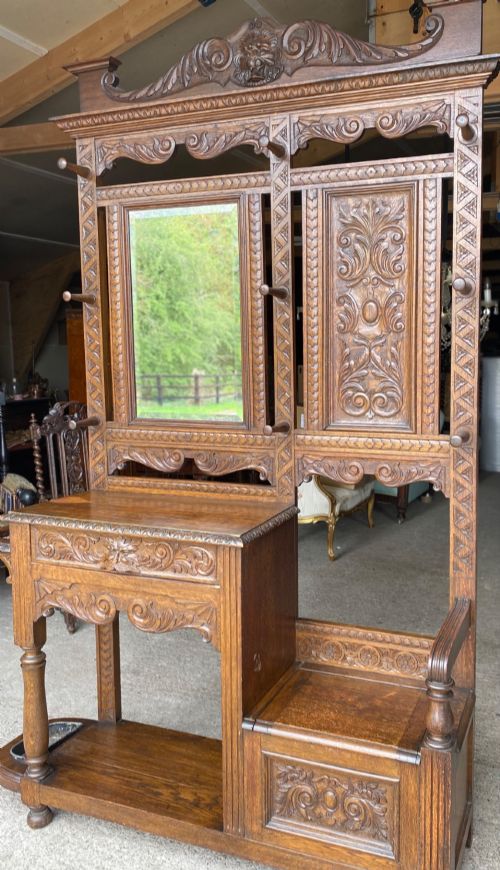
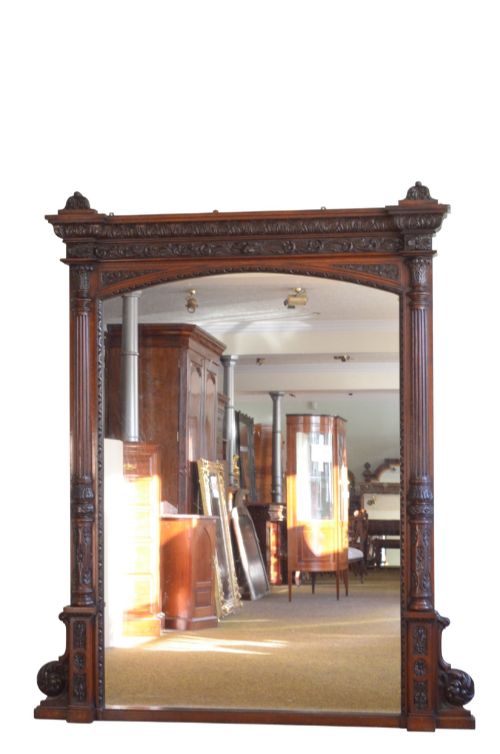
Craftsmen utilised seasoned oak, selecting quarter-sawn timber for its durable grain and stability in domestic hallways. Frames and structural elements often feature hand-carving, ranging from geometric strapwork to detailed foliage and figural motifs such as Green Man masks.
Assembly relied upon traditional joinery techniques including mortise and tenon joints, secured with wooden pins or metal fixings. Brass and cast iron hooks were screwed directly into the timber or mounted on backboards to support the weight of heavy coats and hats.
Carved Oak Hall Mirror Retail Price Guide 2026
Typical asking prices for carved oak hall mirror among the pieces listed under this phrase on Sellingantiques today, from the lower quarter to the upper quarter. They describe what is for sale here now, not the wider market.
Several examples feature spirited Green Man carvings keeping a watchful wooden eye over incoming guests.
What varies in quality
The distinction between tiers rests upon the depth and precision of the wood carving, the weight of the timber, and the presence of original fittings. Pieces displaying crisp, deep-relief carving and substantial solid oak frames command greater attention than lighter, mechanically produced alternatives.
Preservation of original glass, intact brass or iron hardware, and stable structural joinery determine the overall integrity of the piece. Subtle details such as bevelled mirror plates and well-executed stylistic flourishes elevate the character of individual examples.
The Carved Oak Hall Mirror Glossary
- Bevelled glass
- A mirror plate with an angled, polished edge that catches light and adds depth to the reflection. This finish indicates a finer grade of manufacture.
- Green Man
- A sculptural architectural ornament depicting a human face disgorged from foliage. It appears frequently in nineteenth century carved woodwork.
- Arts and Crafts
- A design movement prioritising traditional craftsmanship and simple forms over industrial mass production. Pieces from this aesthetic often display honest joinery and minimal ornamentation.
- Gothic Revival
- An architectural and decorative style drawing inspiration from medieval design. It is characterised by pointed arches, tracery, and robust proportions.
- Hall stand
- A composite entranceway furniture form combining a mirror, coat hooks, umbrella wells, and sometimes a small seat or glove drawer.
Carved Oak Hall Mirror: Frequently Asked Questions
Where were these hung?
These items were traditionally placed in the entrance hall or vestibule of a home. They provided a final check of appearance before departure.
Positioning near the main entrance also allowed visitors to deposit outerwear and hats conveniently upon arrival.
How do I date an oak mirror?
Dating relies upon stylistic cues, construction methods, and the type of mirror glass present. Victorian examples often feature heavy ornamentation, while Edwardian or later pieces tend towards simpler geometric framing.
Backboards, screw types, and the bevel of the glass offer further clues to the period of manufacture.
Are the mirrors original?
Many retain their original silvered glass, which can exhibit characteristic light foxing or speckling from age. Replacement glass appears occasionally where older plates suffered damage.
Examining the backboards and fixings helps determine whether the glass has remained undisturbed since production.
How do I care for the oak?
Maintenance requires occasional dusting with a soft cloth and minimal application of appropriate furniture wax. Direct sunlight and excessive heat fluctuations should be avoided to protect the timber and finish.
Preserving the natural grain involves avoiding silicone-based polishes that build up a residue over time.