



Carved Oak Hall Cupboard
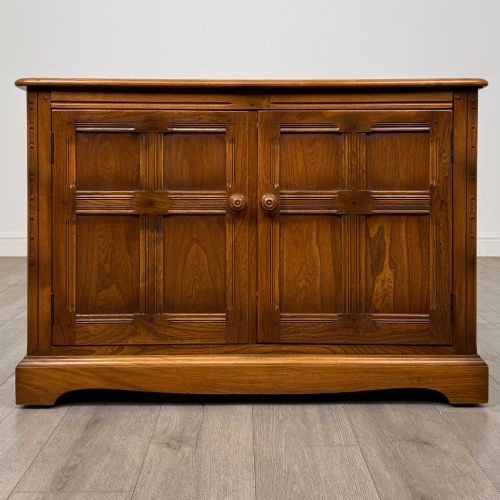
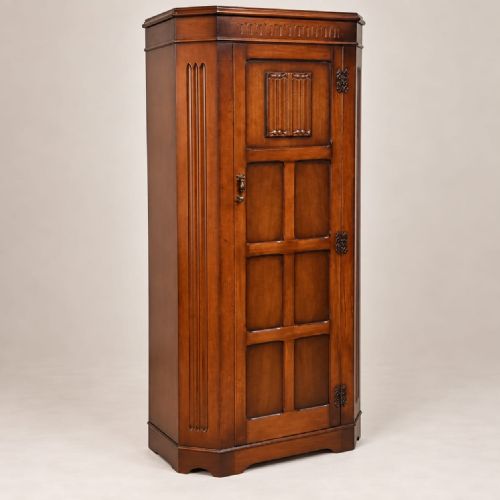
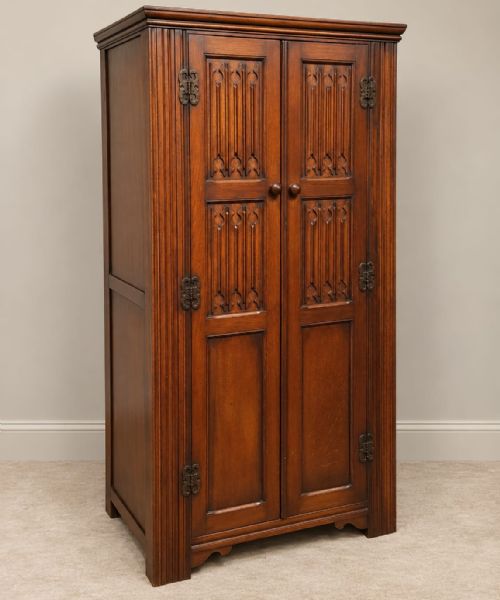
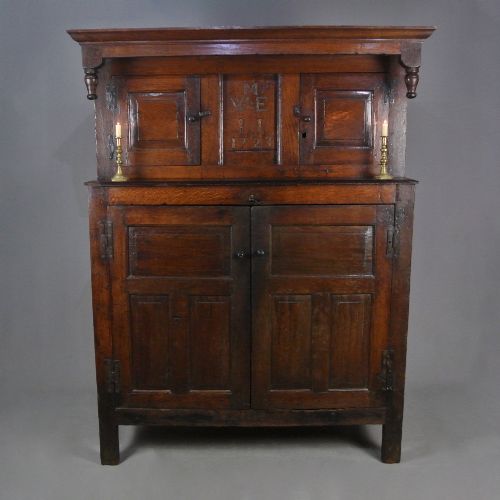
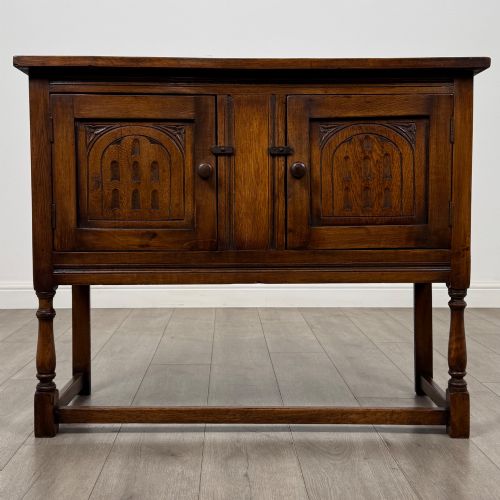
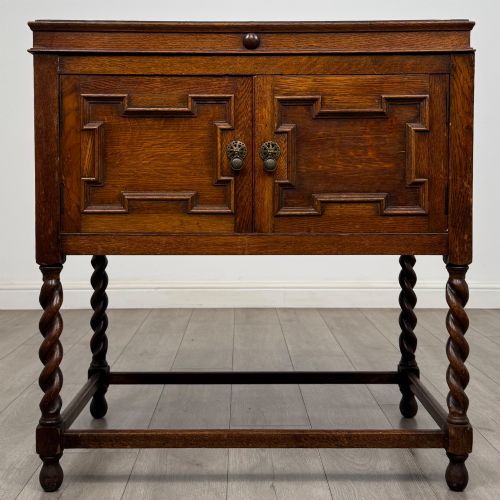
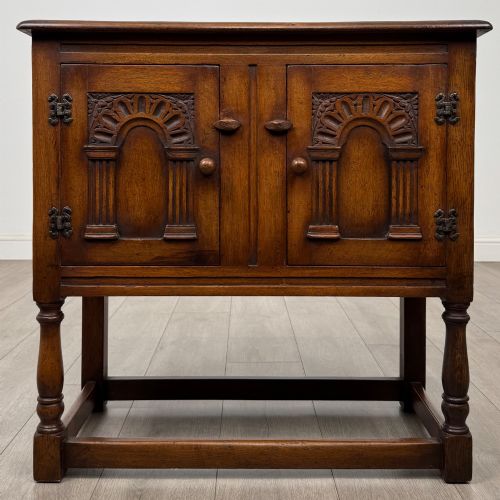
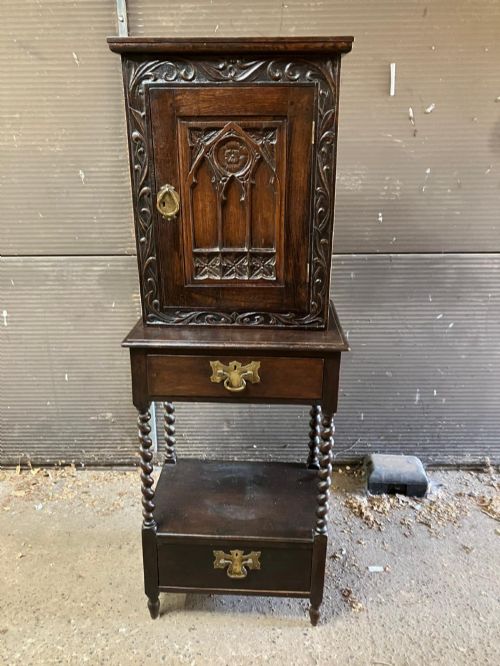
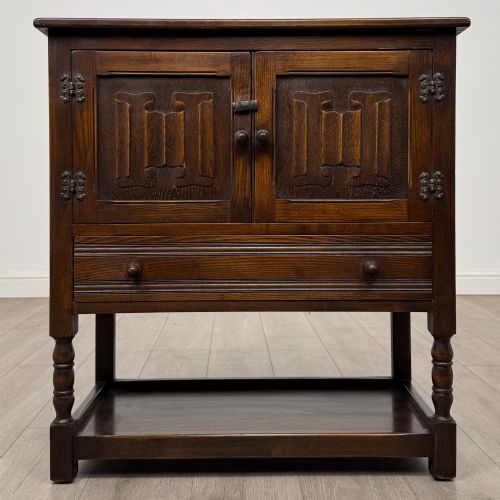
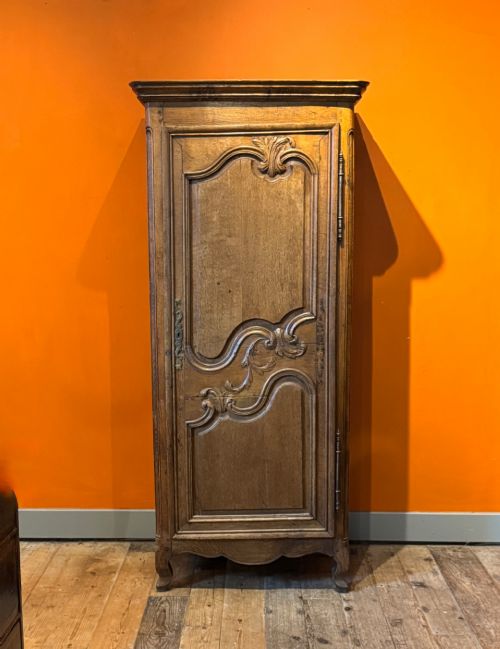
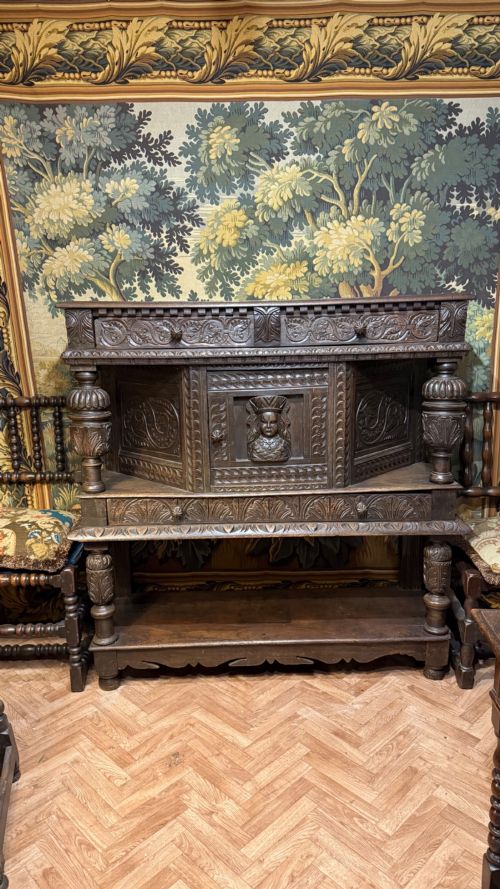
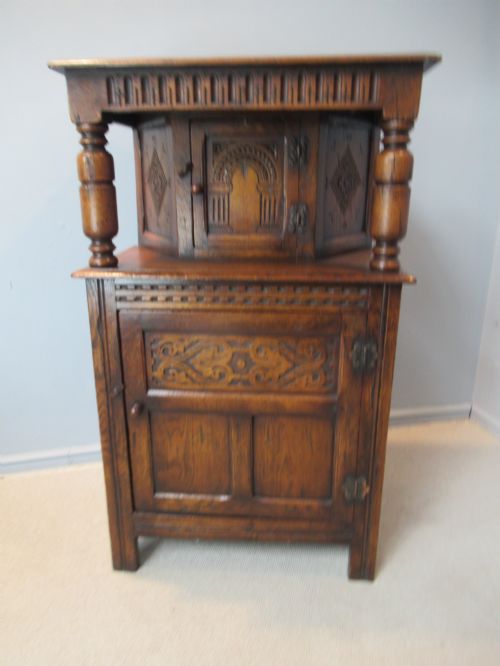
These carved oak hall cupboard examples combine heavy timber construction with deep relief carving, offering substantial entrance storage.
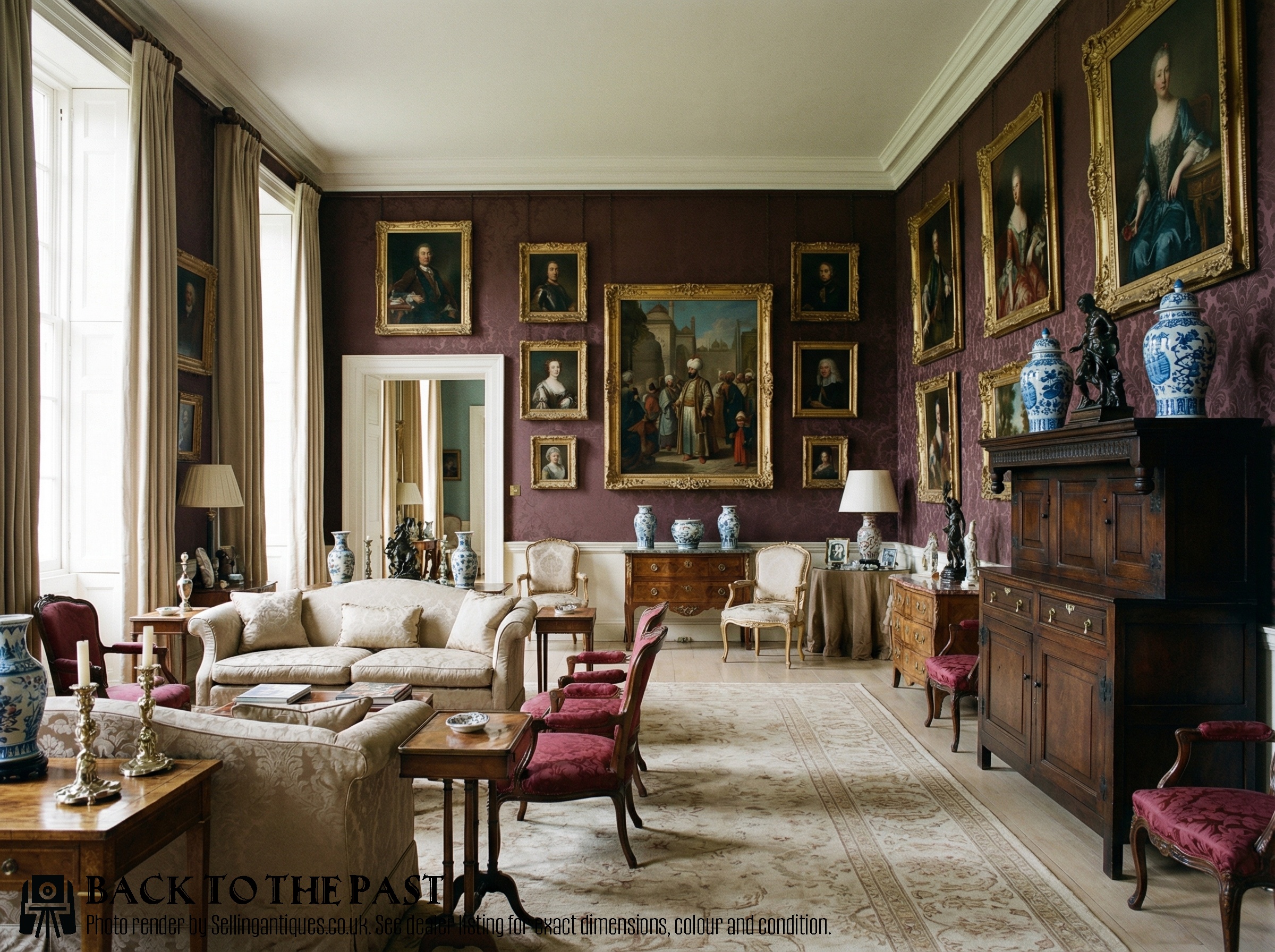
Identifying Carved Oak Hall Cupboard Styles
A carved oak hall cupboard is a substantial storage piece designed for an entranceway, utility space or boot room. These items appear in formats ranging from tall court cupboards to compact side cabinets and combined stick stands.
The pieces on this page span the seventeenth century, nineteenth century and the nineteen thirties. Buyers meet authentic seventeenth century joined furniture alongside nineteenth century revival interpretations and later nineteen thirties pieces.
Forms vary significantly across the inventory, including livery cupboards, housekeepers cabinets, hall robes and Breton or Flemish regional variations. Each configuration offers distinct interior depth and surface decoration tailored to historic domestic needs.
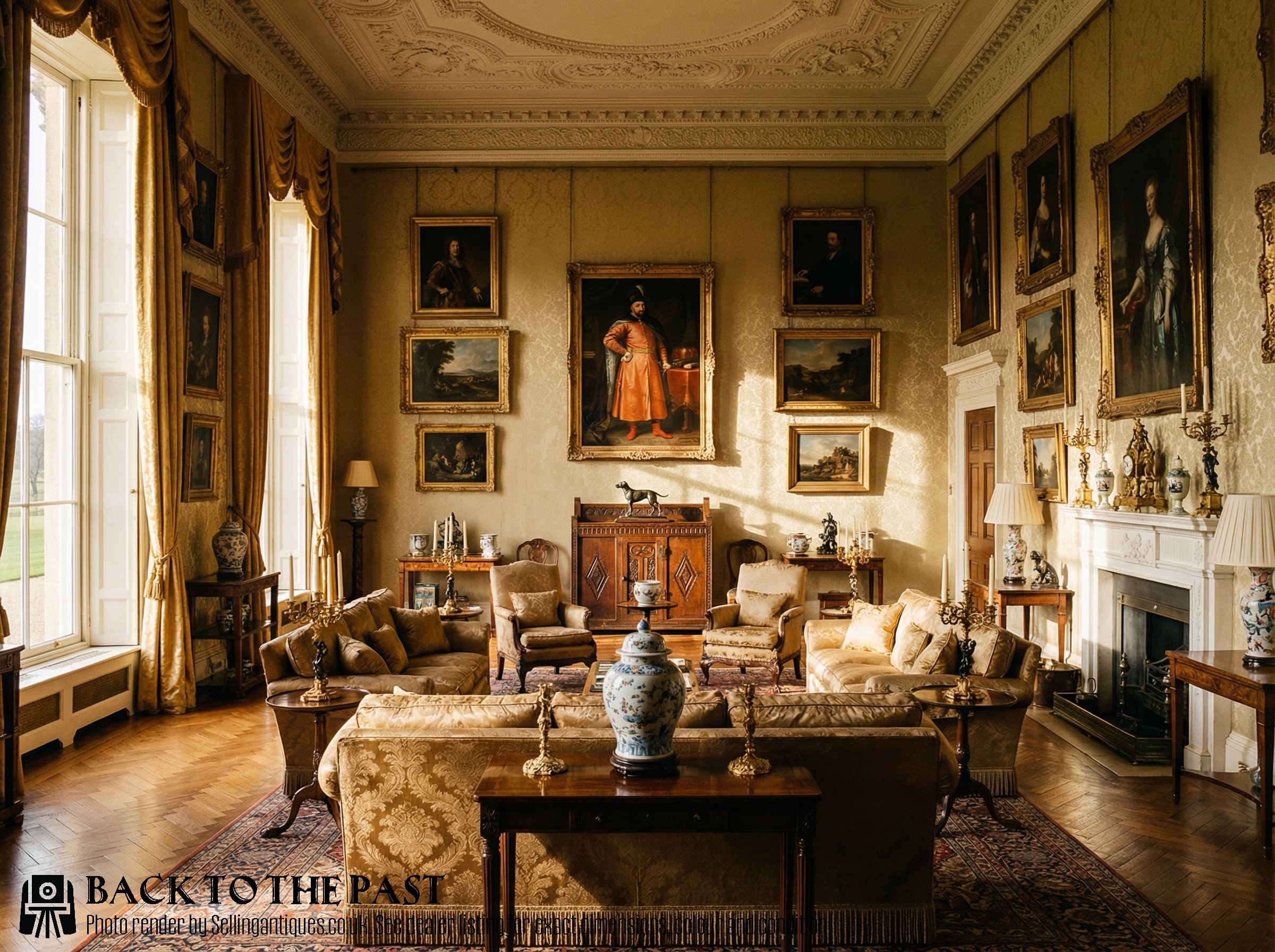
Construction and Materials
Every piece relies on solid oak timbers, often worked using traditional frame and panel construction methods. Structural integrity depends on pegged mortise and tenon joints that allow the heavy wood to move naturally with seasonal humidity changes.
Surface decoration relies entirely on hand carving executed directly into the solid timber substrate. Iron and brass hardware, including strap hinges and drop handles, fasten the heavy doors and drawers securely to the main carcase.
Retail Price Guide 2026
Typical UK retail prices for carved oak hall cupboard, calculated from the Sellingantiques database of over a million retail prices indexed since 2003. This retail price guide relies exclusively on Sellingantiques data; no external sources or auction records are used, so the figures do not describe the wider market.
The inventory records regional interpretations originating from France, Flanders and Wales alongside British examples.
Judging Quality in Historic Oak
Quality rests upon the crispness and depth of the hand carving rather than the mere presence of decoration. Superior examples display confident chisel work with well defined mouldings, while lesser pieces rely on shallow, mechanical stamping or later recutting.
The choice of timber grain and the honesty of the construction dictate value. Pieces retaining their original brass or iron hardware and uncompromised internal boarding stand apart from those altered or rebuilt during later centuries.
The Carved Oak Hall Cupboard Glossary
- Court cupboard
- A heavy seventeenth century storage piece with an upper recessed cabinet supported by pillars above a larger lower section.
- Livery cupboard
- An early enclosed piece of furniture traditionally used for storing food or provisions before deployment in domestic halls.
- Jacobean revival
- A nineteenth century decorative style that copies the heavy proportions, geometric mouldings and strapwork of the early seventeenth century.
- Frame and panel
- A method of wooden construction where a central floating panel sits within a grooved outer frame to prevent splitting.
- Strapwork
- A decorative carving motif resembling flat interlaced bands of leather arranged in geometric patterns.
Frequently Asked Questions
How do I care for solid oak furniture?
Maintain the timber by applying traditional beeswax periodically to nourish the dry wood and preserve the surface sheen. Avoid placing the cupboard near direct heat sources or in fluctuating damp environments to prevent splitting.
Dust regularly with a soft, dry cloth rather than using silicone sprays that build up residue over time.
Are seventeenth century and nineteenth century pieces different?
Seventeenth century pieces utilise pegged joinery, hand sawn boards and period specific ironwork reflecting early domestic requirements. Nineteenth century revival pieces often feature softer oak and machine assisted elements beneath their decorative carving.
Examining the interior construction and tool marks helps differentiate between authentic early periods and later revival interpretations.
What is the difference between a hall robe and a court cupboard?
A hall robe provides full height vertical hanging space behind doors for coats and garments. A court cupboard utilises tiered compartments with an open or enclosed upper section suited for display and general storage.
Internal configurations vary depending on whether the piece originated as a housekeepers cupboard, a sideboard or a dedicated entrance stand.