
Carved Oak Entryway Seat
These carved oak entryway seat examples bring heavy timber and centuries of regional joinery straight into the hall.
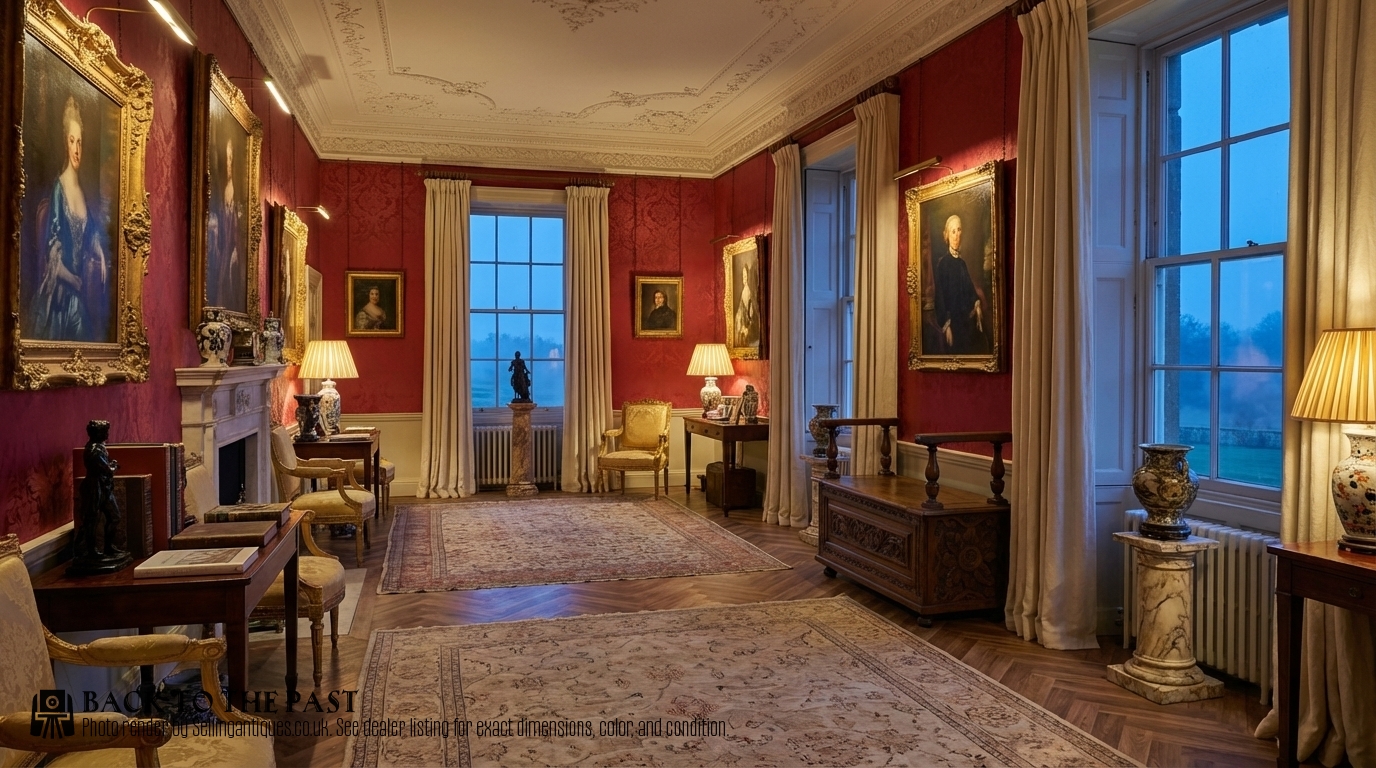
Carved Oak Entryway Seat
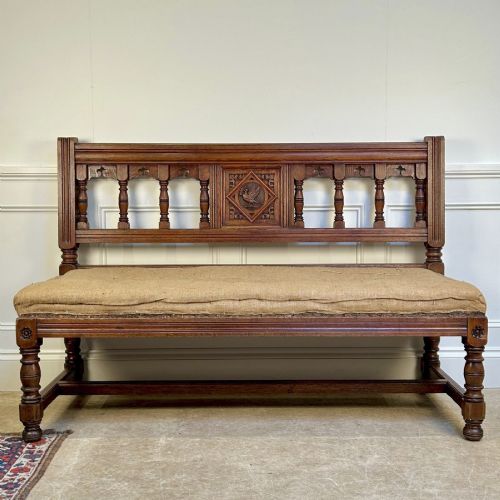
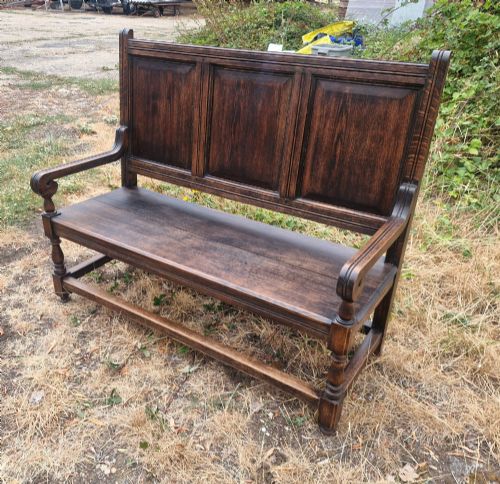
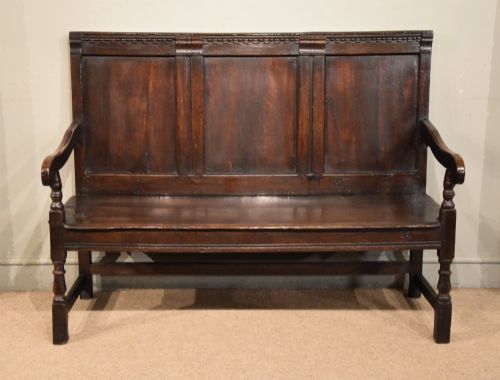
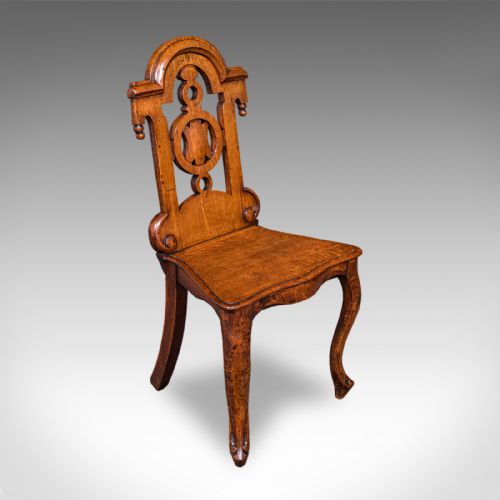
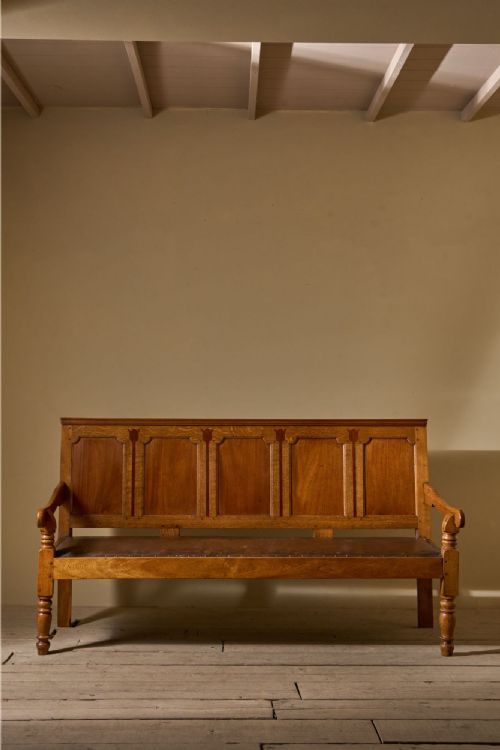
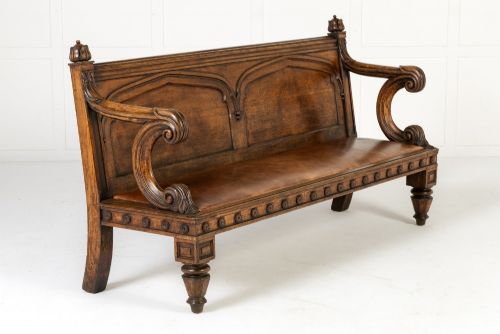
A carved oak entryway seat spans heavy timber settles, panelled box benches, and upright hall chairs designed for the corridor or vestibule. The forms found here range from robust eighteenth-century country settles to elaborate nineteenth-century Gothic Revival and Jacobean Revival hall benches.
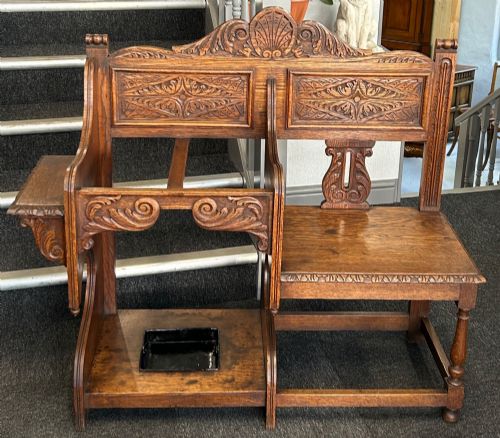
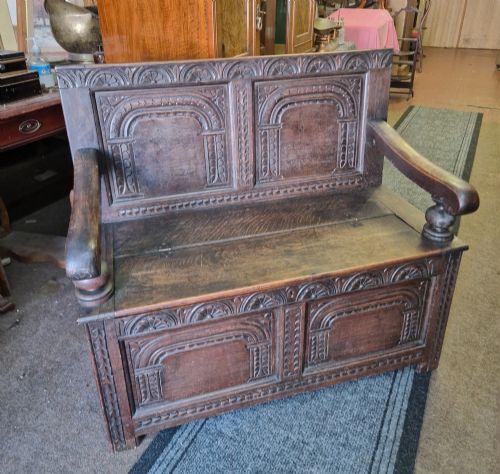
Buyers meet sturdy nineteenth-century pieces alongside Georgian and earlier provincial examples built for heavy everyday use near the front door. Many incorporate hinged lids for storage, high panelled backs, or integrated stick and umbrella stands.
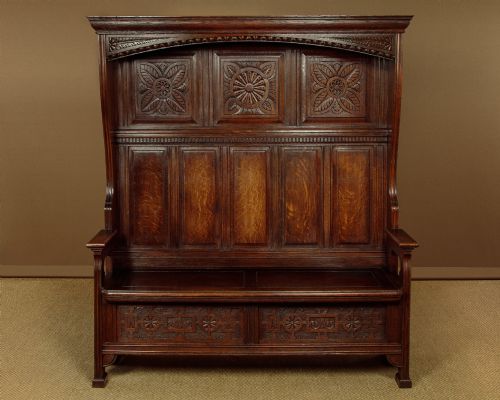
The styles shift from plain vernacular country framing to deeply carved heraldic shields, linenfold panels, and architectural tracery. These items served practical purposes in grand houses and farmhouses alike, providing a formal spot for visitors to wait.
What varies in quality
Quality rests in the depth and crispness of the hand-carving and the choice of dense, straight-grained timber. Pieces displaying integrated storage boxes or canopy tops show more complex architectural joinery than simple side chairs.
Makers such as Gillows or James Shoolbred & Co introduce refined proportions and precise detailing that elevate standard utility furniture into notable cabinetwork. The integrity of the original joints and the retention of honest surface patination set the better examples apart.
Some entryway seats double as boot stores and umbrella stands, keeping muddy wellies hidden beneath the caller.
GIllows·James Shoolbred & Co.
The Carved Oak Entryway Seat Glossary
- Settle
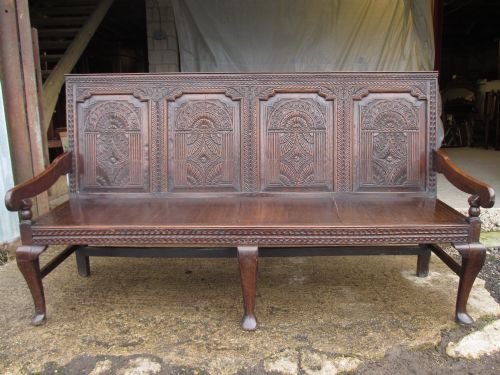
- A wooden bench with a high panelled back, solid arms, and often a box seat for storage. This form kept drafts away from the door in older hallways.
- Box settle
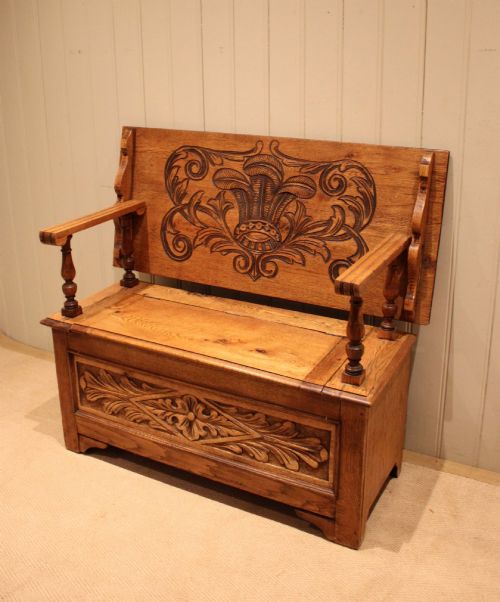
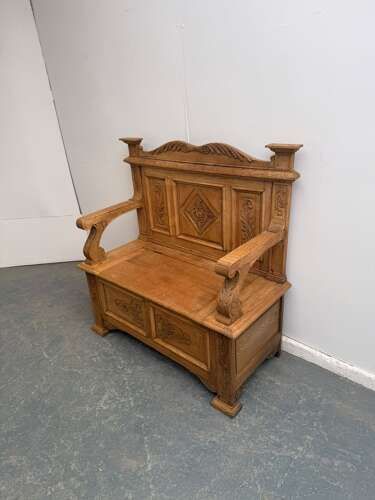
- A bench featuring a hinged seat lid that opens to reveal a compartment beneath. These provided practical storage for boots, heavy garments, and blankets.
- Hall chair
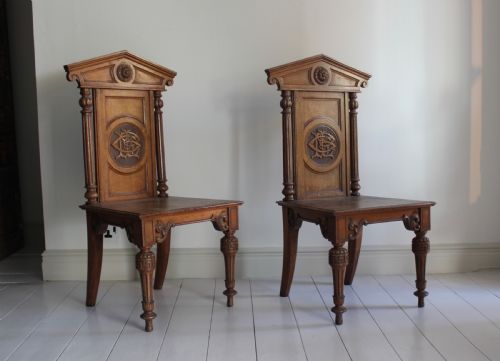
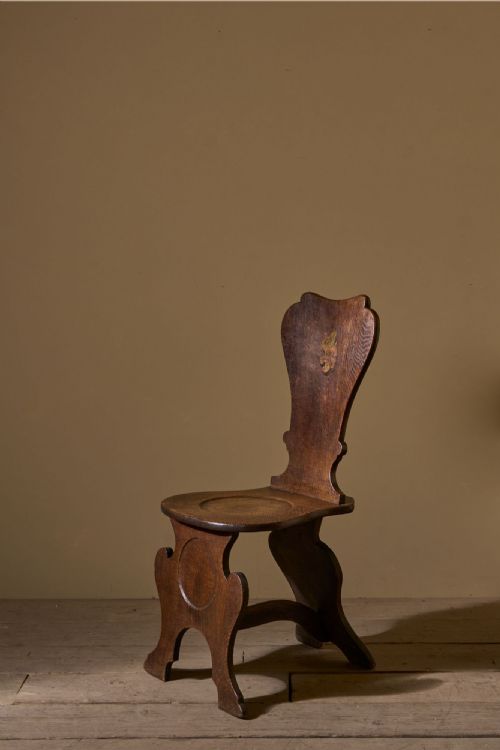
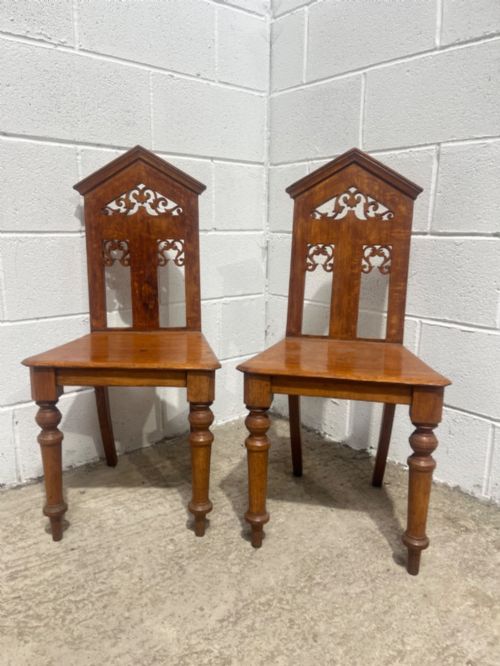
- An upright wooden seat designed for an entrance hall, typically featuring a solid timber seat and a carved or panelled back bearing a crest. They were built for brief waiting rather than long lounging.
- Gothic Revival
- A design style drawing on medieval architectural motifs such as pointed arches, tracery, and quatrefoils. It found favour across Victorian interior furnishings.
- Jacobean Revival
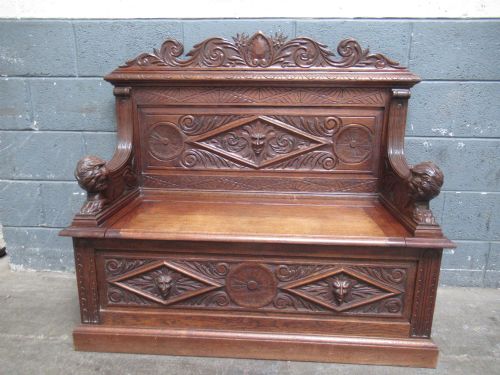
- A nineteenth-century style imitating seventeenth-century English decoration through geometric mouldings, strapwork, and deep chip-carving. Furniture in this manner mimics the heavy joined oak of the Stuart period.
Carved Oak Entryway Seat: Frequently Asked Questions
What is a box settle?
A box settle is a heavy wooden bench featuring a lidded seat compartment and a high back. It served as a secure storage chest for outdoor gear while blocking cold draughts near the entrance.
These pieces combined seating with utility, making them central to historical hallway organisation before fitted wardrobes existed.
How do I identify a hall chair?
Hall chairs are upright, rigid wooden seats without upholstery, designed specifically for lobbies and corridors. They usually display a carved crest, shield, or family cipher on the backrest.
Because they were meant for short use, comfort was secondary to displaying the owner's status or heraldry to arriving guests.
Are these seats suitable for daily use?
Solid oak construction and pegged joints give these benches and chairs remarkable structural durability. They handle heavy daily traffic in modern entryways just as they did centuries ago.
Care simply involves maintaining the wax finish and avoiding placement directly against intense heat sources that might dry the timber.
What periods do these pieces span?
The selection includes provincial pieces from the eighteenth century alongside extensive Victorian and Edwardian revival furniture. Later nineteenth-century examples often revive earlier Gothic or Jacobean styles.
Construction methods and decorative carving styles help distinguish eighteenth-century vernacular work from nineteenth-century factory or workshop production.