
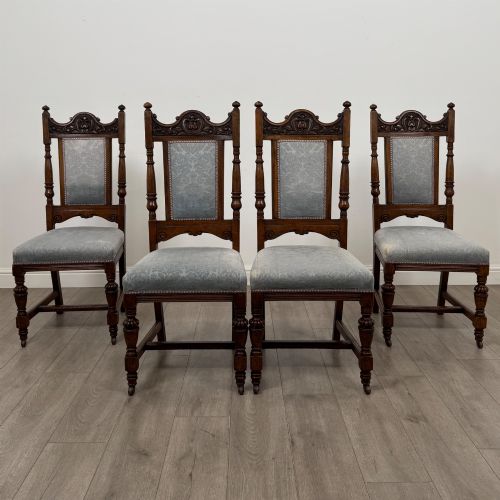
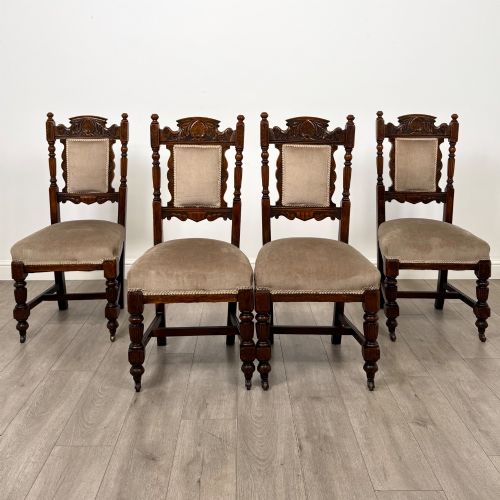
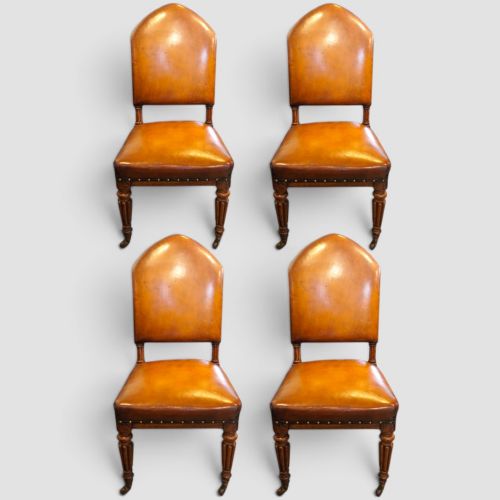
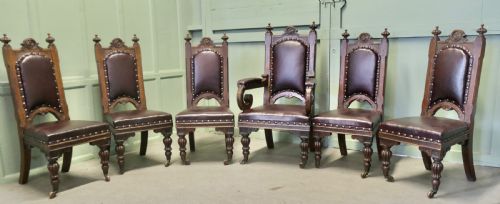
Carved Oak Dining Seats
These carved oak dining seats bring heavy timber grain and period craftsmanship straight to the table.
Carved Oak Dining Seats
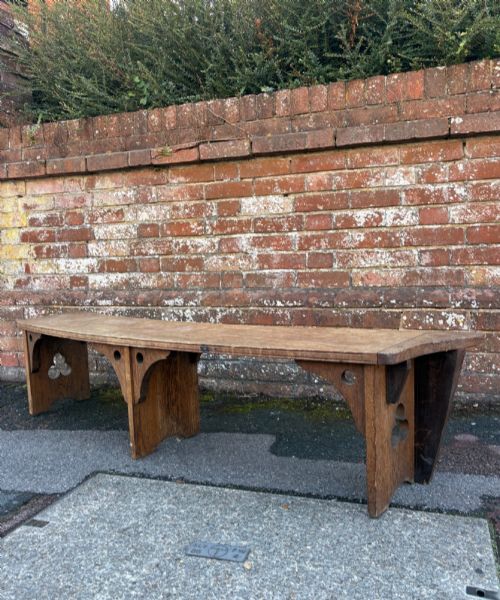
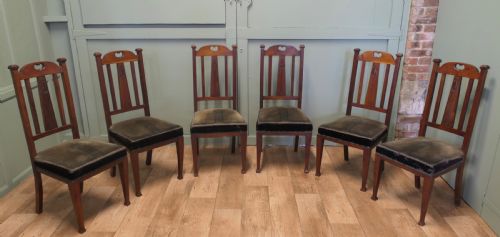
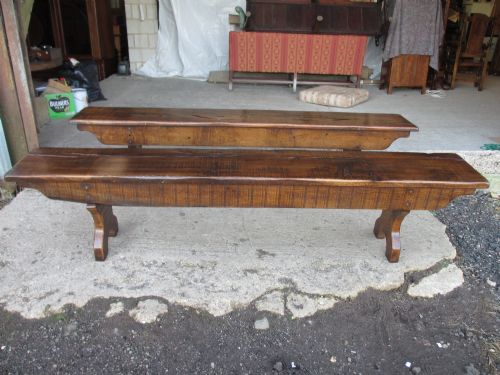
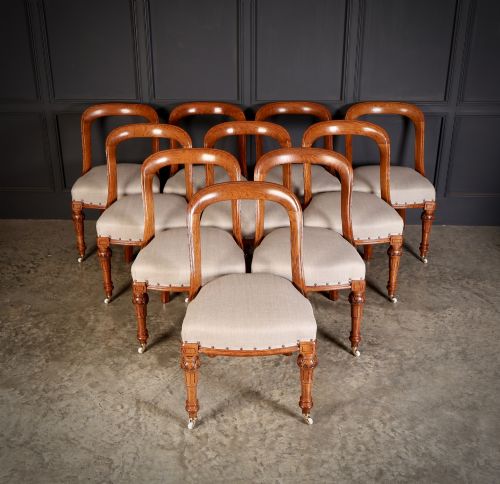
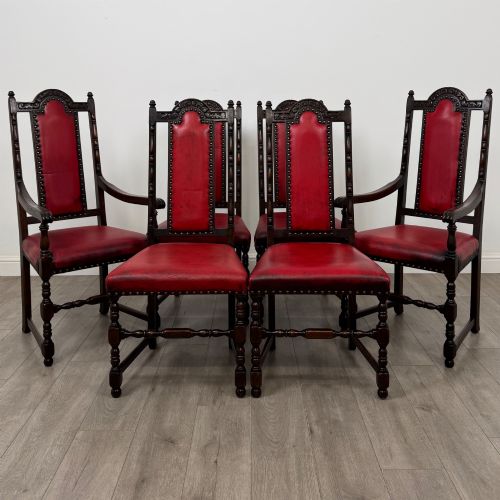
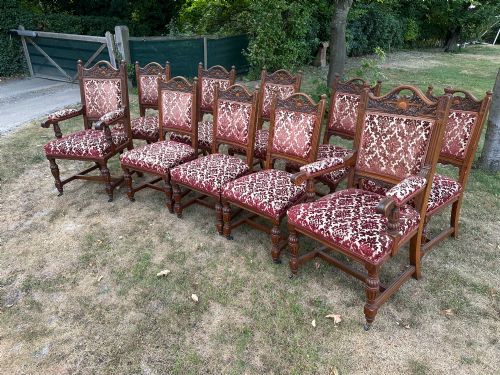
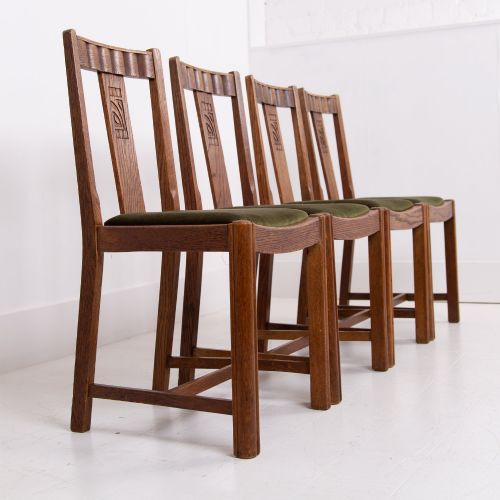
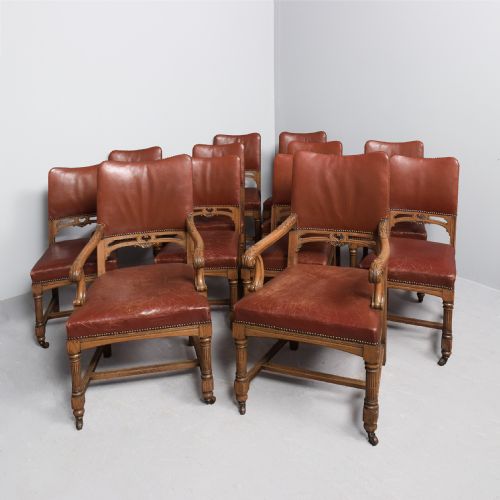
Carved oak dining seats include dining chairs, side chairs, armchairs, and benches originating from the seventeenth century through to the twentieth century. These sturdy wooden furnishings appear in styles such as Gothic Revival, Jacobean, Arts and Crafts, and English Country.
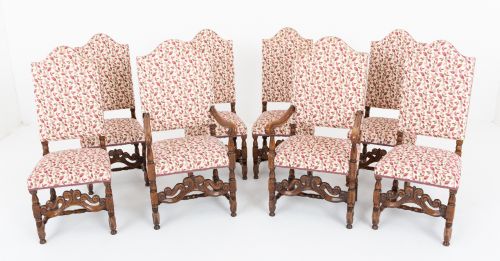
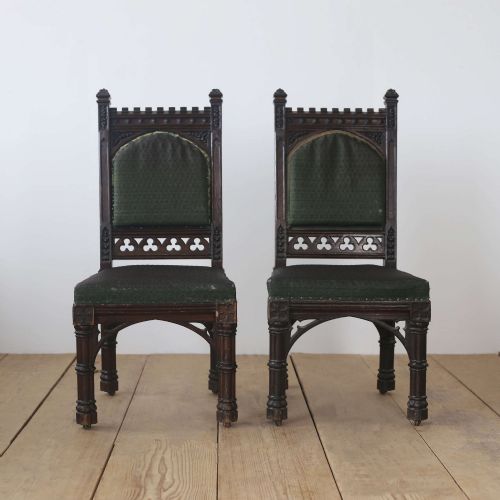
Sets of four, six, eight, ten, and twelve chairs dominate the selection, alongside pairs and individual armchairs. Buyers find everything from high-back Gothic chairs with trefoil carvings to twist-leg Edwardian examples and kitchen Windsors.
The materials paired with the oak timber include leather, brass, fabric, velvet, and elm or beech secondary woods. Many pieces feature upholstered seats or backs finished with studs or heraldic crests.
How they were made
Joiners and cabinet makers constructed these seats using solid oak timber, frequently augmented by elm, beech, or brass fittings. Timber preparation involved sawing and planing local or imported oak, which was then joined using traditional pegged mortise and tenon joints.
Decoration relied heavily on hand carving, producing relief patterns, armorial crests, and Gothic details such as trefoils and pointed arches. Upholstered elements utilised leather, fabric, or velvet secured with metal studs over stuffing materials.
Listings feature oak combined with velvet, leather, brass, elm, and beech across periods spanning the seventeenth to the twentieth century.
What varies in quality
The depth and crispness of the hand carving distinguish finer examples from plain production work. Crisp linenfold, geometric strapwork, or intricate Gothic tracery indicate superior workshop execution.
Originality of timber and structural integrity dictate the standing of a set. Matching timber grain across a matched or larger set of chairs reflects careful initial selection by the maker.
Strahan of Dublin
The Carved Oak Dining Seats Glossary
- Jacobean Revival
- A nineteenth-century style imitating seventeenth-century English furniture. It employs heavy turning, flat carving, and panelled backs.
- Barley Twist
- A woodworking technique where timber is turned into a helical screw shape. It appears frequently on chair legs and stretchers.
- Trefoil
- A three-lobed decorative ornament resembling clover leaves. Cabinet makers carved this motif into Gothic panels and chair supports.
- Smokers Bow
- A sturdy low-backed Windsor armchair popular in nineteenth-century domestic settings. These feature steam-bent rails and turned spindles.
- Derbyshire Chair
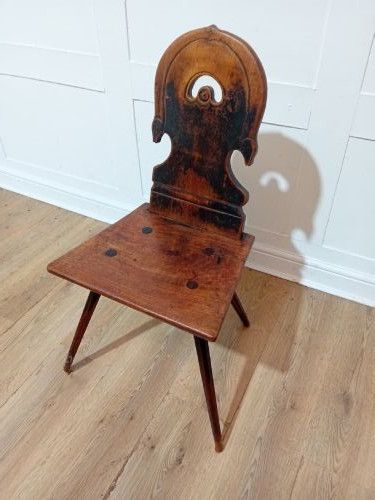
- A seventeenth-century style of oak chair characterised by open carved backs and boarded seats. Later revival versions copy these distinctive Yorkshire and Derbyshire motifs.
Carved Oak Dining Seats: Frequently Asked Questions
How do I care for antique oak?
Keep wooden furniture away from direct heat sources and sudden humidity changes to prevent the timber from splitting. Feed dry oak periodically with traditional beeswax to maintain the finish.
Avoid commercial silicone sprays that build up and attract dust over time. Gentle dusting with a soft dry cloth preserves the patina.
Are these chairs comfortable for daily use?
Many periods offer supportive high backs and padded seats upholstered in leather or fabric. Solid wood seats accept loose squabs or cushions easily if extra padding is required.
Seat heights and depths vary across centuries, so checking measurements helps ensure a good match for modern dining tables.
How do I spot a marriage in a set?
Examine the timber colour, grain patterns, and wear marks across all pieces in a dining set. Slight inconsistencies in carving depth or stretcher height can reveal where chairs from different sources were gathered together.
Matching sets often share identical tool marks and internal construction methods visible underneath the seat frames.
What is a Glastonbury chair?
A Glastonbury chair is a pegged folding armchair with an inclined panel back and sloping armrests. This ecclesiastical form derives from a sixteenth-century design associated with Glastonbury Abbey.
Revival versions from the nineteenth and twentieth centuries frequently incorporate Gothic trefoil carvings and solid oak construction.